Spray Paint

2 artworks

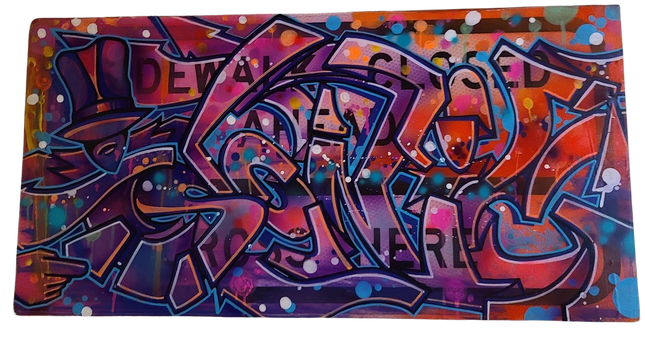
  • Sale -15% Sidewalk Closed Wood Original Mixed Media Street Sign Painting by Sonic Bad

    Sonic Bad Sidewalk Closed Wood Original Mixed Media Street Sign Painting by Sonic Bad

    Sidewalk Closed- Wood Original Mixed Media Graffiti Artist Modern Pop Art on Real Street Sign by Sonic Bad. 2018 Signed Original Spray Paint & Mixed Media on Wooden New York City NYC Sidewalk Closed Vintage Sign Artwork Size 21.5x11.5 The Artistic Alchemy of Sonic Bad: Reimagining Public Notices Sonic Bad's 'Sidewalk Closed - Wood' is an exemplary showcase of modern pop art manifested through the lens of street sensibilities and graffiti culture. Created in 2018, this signed original piece is a vibrant declaration of the transformative power inherent in street pop art and graffiti artwork. The fusion of spray paint and mixed media on a wooden canvas that once served as a New York City sidewalk sign encapsulates the artist's penchant for repurposing the functional into the visually extraordinary. Technique and Symbolism in Sonic Bad's Work The artwork, measuring 21.5x11.5 inches, is a testament to Sonic Bad's mastery over mixed media. The piece harmoniously integrates the textures of wood with the fluidity of spray paint, achieving a layered effect that adds depth and complexity to the composition. The choice of a 'Sidewalk Closed' sign is significant; it takes an object that signifies obstruction and transforms it into a portal of creative expression, thus inviting reflection on the role of public space and the rules that govern it. Sonic Bad's approach to the sign is subversive yet playful, disrupting its original intent and engaging viewers in a dialogue about the accessibility of art and public communication. The vibrant color palette and intricate design work serve to capture the gaze and provoke thought, a hallmark of effective street pop art. The way the letterforms and characters are interwoven with the sign's warning embodies a kind of artistic alchemy, turning the mundane into the magical. Impact and Reception of Sonic Bad's Street Sign Artwork The 'Sidewalk Closed - Wood' piece by Sonic Bad does not simply occupy space; it commands attention and interaction. Its existence in a gallery or a private collection continues to challenge perceptions of street art's place within the art world hierarchy. Sonic Bad's work is celebrated for its unabashed embrace of street art aesthetics while simultaneously pushing the boundaries of what such art can communicate and how it is perceived. Sonic Bad, an artist who remains an enigmatic figure in the graffiti art scene, utilizes anonymity as a tool, allowing the work to speak for itself. The artist's contributions to street pop art are measured by the vibrancy of the pieces left in public view and the conversations they ignite. The influence of such work extends beyond the streets, infiltrating popular culture and challenging traditional art's status quo. Sonic Bad's Legacy in Street Pop Art Sonic Bad's 'Sidewalk Closed - Wood' is not merely a piece of reclaimed street furniture but a microcosm of street art's potential to redefine the aesthetics of urban living. This work stands as a cultural artifact, a piece of New York City's story told through the eyes of a street artist. Sonic Bad's legacy is enshrined in every color splash and line twist, a testament to the enduring allure and social commentary of street pop art and graffiti artwork. The legacy of artists like Sonic Bad is often measured by the endurance of their work in the public imagination and their ability to inspire future generations of artists. By turning a sidewalk sign into a canvas, Sonic Bad has not only altered the sign's trajectory but also contributed to the narrative of street art as a form of modern pop art. This piece will continue to be a point of reference for discussions about the interplay between public space and artistic freedom, embodying the spirit of street art that refuses to be sidelined.

    $1,698.00 $1,443.00

  • Escape Original Mixed Media Painting by Snik

    Snik Escape Original Mixed Media Painting by Snik

    Escape Original Mixed Media Painting by Snik One of a Kind Artwork Framed on Panel by Street Art Pop Artist. 2018 Signed Mixed Media Painting Original Artwork Size 15.5x9.5 Framed 18.5x11.5 Escape by Snik – Frozen Descent and Poetic Stillness in Street Pop Art & Graffiti Artwork Escape is a 2018 original mixed media painting by the UK-based artist duo Snik, measuring 15.5 x 9.5 inches and presented in a custom frame at 18.5 x 11.5 inches. Executed with meticulous stencil layering and spray technique on panel, this one-of-a-kind work captures a suspended female figure mid-fall or mid-flight, her body arched in a moment of release, struggle, or transcendence. The blackened background becomes a void, while the figure, rendered in stark tones and delicate surface detail, floats like a ghost tethered to the edge of control. Known for their hand-cut stencil mastery and emotionally charged portraiture, Snik creates a composition in Escape that embodies tension, grace, and haunting visual poetry. In the space of Street Pop Art & Graffiti Artwork, the piece speaks to physical fragility and spiritual rupture using only the language of form and light. Layered Craftsmanship and Dimensional Emotion Snik’s signature process is grounded in precision: each layer of stencil is hand-cut and individually sprayed, allowing for a depth of detail and realism that transforms the spray medium into something near sculptural. In Escape, the folds of the subject’s dress, the flowing strands of her hair, and the delicate articulation of her limbs are all built through this exacting method. Her body is both grounded and weightless—tied in places, partially obscured, with limbs caught between movement and stillness. The tension created by the ropes suggests confinement, yet her airborne posture evokes release. This duality is central to Snik’s visual language: moments of beauty held within systems of restraint. In Street Pop Art & Graffiti Artwork, this emotional precision redefines what is possible with spray-based portraiture, pushing beyond the visual into the psychological. Blackened Void and Emotional Isolation The dark void that surrounds the figure in Escape is not merely background—it is conceptual space. It isolates the subject from any specific setting or context, forcing the viewer to focus only on form and feeling. This stark negative space amplifies the floating quality of the figure, making her appear suspended in thought or dream, rather than trapped by gravity. Subtle surface textures, fine spray line edges, and highlights along the limbs and fabric folds reveal a practiced control of light and atmosphere. The blackness becomes a mirror to the unknown—symbolic of trauma, transcendence, or the silent aftershock of an escape long attempted. This use of minimalism within Street Pop Art & Graffiti Artwork shows how absence can become as emotionally potent as visual excess. Snik and the Anatomy of Release Escape distills everything Snik is known for: masterful technique, female-centered storytelling, and a persistent exploration of emotional stillness through physical motion. The work is theatrical but never overdone, symbolic but rooted in real feeling. It reflects themes of vulnerability, personal confinement, and the bittersweet sensation of letting go. With Escape, Snik reaffirms their ability to create work that is both compositionally exact and emotionally unflinching. The piece invites viewers to interpret their own version of what is being fled from or toward, using only the pose, the silhouette, and the void. As a singular expression within Street Pop Art & Graffiti Artwork, Escape proves that beauty, when rendered with patience and purpose, can speak softly and still leave a lasting mark.

    $1,750.00

Spray Paint Graffiti Street Pop Art

The Role of Spray Paint in Street Pop Art and Graffiti

Spray paint, the quintessential medium of street pop art and graffiti has been an indispensable tool for urban artists around the globe. Its rise from a tool for simple markings to a respected artistic medium is a testament to the transformative power of street art. Spray paint offers unparalleled versatility, allowing for quick execution, a vibrant palette, and an ability to bridge the gap between fleeting street expressions and enduring pop art phenomena. Within street art, spray paint has evolved to embody the voice of the unheard and the spirit of the rebellious. It has provided artists the means to command public attention, converting blank walls into canvases that communicate personal and political messages. The fluidity and ease of use inherent to spray paint make it ideal for graffiti art's swift and often secretive nature. Its application ranges from precise stenciled works to expansive murals that adorn cityscapes, each telling its own story. The impact of spray paint extends beyond the streets and into pop art, where artists have used it to create pieces that reflect the commercialized and media-saturated environment of contemporary culture. Spray paint's ability to cover large areas and create bold, quick, graphic images has made it a favorite among pop artists looking to mirror the same mass-production techniques used in advertising and consumer goods. In essence, spray paint is not just a medium but a symbol of the street pop art and graffiti movement. It represents a democratization of art-making, proving that great art can emerge outside traditional spaces and without conventional tools. The cultural significance of spray paint in art will continue to be a topic of discussion as long as artists take to the streets to express their visions and voices.

The Evolution of Spray Paint in Artistic Expression

Spray paint has journeyed from the shelves of hardware stores to the studios of the world's most recognized street and pop artists, marking a significant evolution in its use and cultural significance. It has transitioned from a practical tool for utilitarian marking to a respected medium in the artist's toolkit, especially in street pop art and graffiti. This evolution reflects the changing landscapes of artistic expression and public space utilization.

Spray paint is an essential tool in both graffiti art and pop art. In graffiti art, spray paint is often the primary medium for creating large-scale murals and tags. Graffiti artists use spray paint because it is quick-drying, highly pigmented, and allows them to work quickly and efficiently on walls and other surfaces. They can create intricate designs and lettering using different nozzle tips, pressure, and angles to create various effects such as fades, drips, and gradients. Graffiti artists may also use other tools like markers and paint rollers, but spray paint is the most commonly used tool in this art form. Spray paint is also used in pop art to create bold and graphic designs. Pop artists often use stencils and spray paint to create repeated patterns and images that are highly stylized and instantly recognizable. The use of bright colors and bold lines is characteristic of this art form, and spray paint allows artists to achieve this effect quickly and efficiently. Spray paint can also create a textured and layered effect, adding depth and interest to pop art pieces. Spray paint is essential in graffiti and pop art, allowing artists to create bold and impactful designs quickly and efficiently. Graffiti and pop art have different origins and styles, but both use spray paint uniquely. In graffiti art, spray paint is often used to make political and social statements or express the artist's identity. Graffiti artists often work in public spaces, and spray paint allows them to create large-scale murals quickly and precisely. They may also use other materials, such as stencils or stickers, to add additional layers of meaning to their work. In pop art, spray paint creates images inspired by consumer culture and popular media. Pop artists often use bold graphic designs inspired by advertising and commercial art. Spray paint is an essential tool in creating the sharp, clean lines that are characteristic of this style, and it can also be used to add texture and depth to the artwork. Both graffiti art and pop art have had a significant impact on contemporary art, and the use of spray paint is an integral part of their respective styles. While some may view graffiti as vandalism, many artists see it as a legitimate form of self-expression, and spray paint is a vital part of this art form.

Defining the Aesthetic of Street Pop Art and Graffiti

On the other hand, pop art is often seen as a celebration of consumer culture, and spray paint is an essential tool in creating the bold, colorful designs that are characteristic of this style. There are several popular brands of spray paint makers for graffiti art, each with its unique characteristics and advantages. Here are some of the most well-known brands: Montana Cans is a German-based company offering various colors and finishes. They are known for their high-quality paint and easy-to-use nozzles. Ironlak is an Australian company that provides high-quality, low-odor paint for indoor and outdoor use. They also offer a wide range of colors and finishes. Krylon is a US-based company that offers affordable spray paint with a quick-drying formula and a wide range of colors. They are known for their smooth and consistent coverage. Belton Molotow is a German-based company that offers a range of high-quality, professional-grade spray paints. They are known for their vibrant colors and durable finishes. Rust-Oleum is a US-based company that provides a range of affordable spray paints with various finishes, including metallics and glitter. They are also known for their durable, long-lasting formula. These are just a few of the popular brands of spray paint makers for graffiti art. Each brand has unique characteristics, and finding the one that works best for your particular project and style is essential. The distinctive characteristics of spray paint define the aesthetic of street pop art and graffiti. Its quick-drying nature, bright colors, and ease of layering make it ideal for the dynamic visuals associated with these art forms. Spray paint has given street artists the ability to produce works quickly, a critical factor in the often illicit nature of graffiti art. Moreover, the portability of spray cans allows artists to carry their tools as they traverse urban environments, creating spontaneous and responsive art to the immediate surroundings. Spray paint has been pivotal in democratizing art. Its relatively low cost and high availability have empowered individuals from all walks of life to engage in artistic endeavors. In the hands of street artists, spray cans have become a means to challenge the status quo, making statements on societal issues while bypassing traditional gatekeepers of the art world. This accessibility has made spray paint a key player in the explosion of street pop art and graffiti across the globe.

Technical Innovation and Artistic Mastery

Technical innovation in spray paint has expanded its potential as a medium for fine art. Artists have mastered shading, texturing, and complex layering techniques, pushing the boundaries of what can be achieved with a can of paint. The precision and control exhibited by seasoned artists rival that of brushwork, allowing for intricate and sophisticated pieces that challenge previous misconceptions about the capabilities of spray paint. The perception of spray paint has shifted from being associated with vandalism to being valued as a legitimate artistic medium. As more artists adopt spray paint and more artworks gain recognition and value, the conversation around graffiti and street art is changing. The very medium that was once used to deface is now used to create pieces respected and sought after by collectors and art enthusiasts alike. Environmental considerations have also influenced the use of spray paint in art. As awareness of ecological impact grows, artists and manufacturers are seeking out and developing more sustainable and less toxic varieties of spray paint. This progression ensures that spray paint in street pop art and graffiti remains relevant and responsible, in line with contemporary concerns about the health of our planet. In conclusion, spray paint stands at the intersection of street credibility and pop art allure, embodying the raw energy of urban expression while holding its own in the gallery space. Its continued use and evolution in the art world signal a change in how art is made and how it is perceived by society. With each press of the nozzle, artists continue to challenge, engage, and redefine our times' visual and cultural landscape.
Footer image

© 2025 Sprayed Paint Art Collection,

    • Amazon
    • American Express
    • Apple Pay
    • Bancontact
    • Diners Club
    • Discover
    • Google Pay
    • iDEAL
    • Mastercard
    • PayPal
    • Shop Pay
    • Visa

    Login

    Forgot your password?

    Don't have an account yet?
    Create account