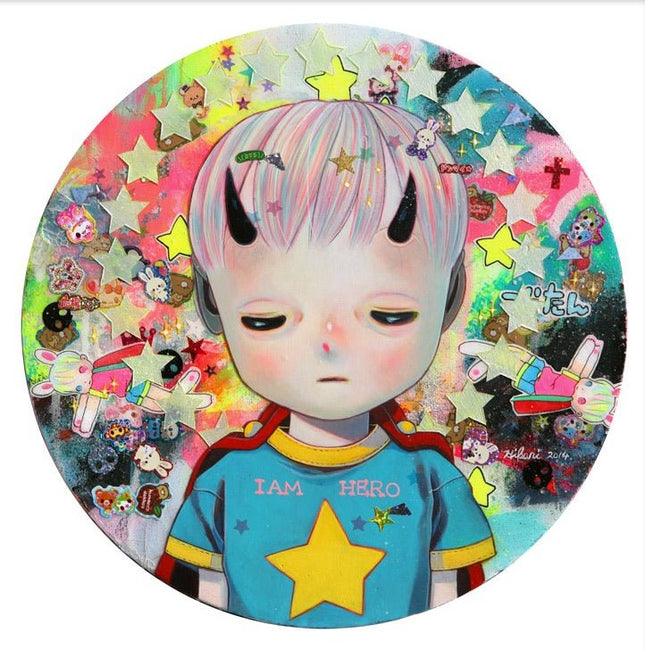
Solitary Child 3 Limited Edition Archival Pigment Prints on 310gsm Fine Art Paper by Hikari Shimoda Graffiti Street Artist Modern Pop Art.
2016 Signed & Numbered Limited Edition of 50 Artwork Size 12x12
"Solitary Child is a series of works, focused on my original theme of the inevitability of the Apocalypse. In this series, I am offering a new savior for humankind- she is a magical girl (Solitary Child #1) and a little boy hero (Solitary Child #3). In the world of my paintings, humanity has perished, as seen in the collage background, where there is an expressed chaos throughout. In these images, my saviors have come upon the dying human race. After the death of man, the world has found some relief from the turmoil that he has brought upon it. Meanwhile, mankind selfishly dreams of newfound happiness in his afterlife. In the mythology of my work, as humanity is destroyed, only one figure remains and that is the Messiah represented as a child. The magical girl was the first to be left alone after humanity was destroyed, left to deal with the despair and damage he left behind. Her eyes are shining and sparkling, but her stare is blank. In contrast, my hero’s eyes are closed ever so gently. To him, everything in the world is very chaotic and overwhelming. He feels all of its happiness, despair, hope, sadness, everything… in such a state, even the world’s savior must shut his eyes to it." - Hikari Shimoda
Solitary Child 3 Archival Pigment Print by Hikari Shimoda
Solitary Child 3 by Hikari Shimoda is a vivid embodiment of emotional symbolism and post-apocalyptic narrative rendered through the lens of Japanese Street Pop Art & Graffiti Artwork. Released in 2016 as a signed and numbered archival pigment print limited to 50 editions, the artwork measures 12x12 inches and is printed on 310gsm fine art paper. This circular piece, like its counterpart Solitary Child 1, presents a child as a spiritual savior in the wake of humanity’s collapse. However, where the magical girl of the first installment gazes outward with shining eyes, Solitary Child 3 closes his eyes to the world, weighed down by its chaos and sorrow.
The Child Hero as a Symbol of Emotional Overload
The central figure is a young boy depicted with softly closed eyes, a vacant expression, and flushed cheeks. His pale, almost ghostlike complexion contrasts with the electric vibrancy of the chaotic collage behind him. The boy wears a star-laden shirt with the phrase I AM HERO emblazoned across the chest. This phrase is not a declaration of ego but a burden of responsibility in a world shattered by human error. With small black horns rising from his head and a solemn composure, the character straddles the line between innocence and burdened divine messenger. Hikari Shimoda’s universe exists in a fantastical space where childlike visuals are infused with heavy existential themes. The surrounding background in Solitary Child 3 is littered with neon stars, stickers, anime-inspired creatures, and cultural flotsam. The visual chaos symbolizes the overstimulation of modern society and the debris left behind after its collapse. The messianic child stands amid this wreckage, absorbing it all in quiet contemplation. Unlike heroes who fight with swords or powers, this savior’s resistance lies in his inward emotional experience.
Aesthetic Tension Between Kawaii and Catastrophe
Shimoda blends traditional Japanese pop culture imagery with deeply contemporary anxieties. The work’s aesthetic borrows heavily from kawaii sensibilities—cute characters, colorful motifs, childlike wonder—but it is filtered through a lens of apocalypse, grief, and spiritual ambiguity. The character is not smiling. His closed eyes speak to a need to shut out the pain of the world, even as he must stand as its redeemer. The artist challenges the viewer to question what innocence means when it exists in the shadow of destruction, and what heroism requires when the world has already ended.
Pop Iconography Transformed Through Spiritual Narrative
Solitary Child 3 situates itself within the new wave of Street Pop Art & Graffiti Artwork by merging painterly techniques, manga aesthetics, and conceptual symbolism. Hikari Shimoda’s work challenges traditional Western ideas of what children represent in visual culture. Here, the child is not naive or oblivious but rather deeply aware, spiritually complex, and emotionally overwhelmed. The use of archival pigment print on heavy fine art paper preserves both the vibrancy and the texture of the original, allowing collectors to experience the intimacy and power of Shimoda’s vision. This print serves as a profound statement within Shimoda’s mythological continuum. It reminds the viewer that amid ruin, the last figure standing is not a politician or warrior, but a child—silent, enduring, and burdened with the sorrow of a fallen world.
Read
more
less