
Subway Train & Railroad

3 artworks

  • Wicker Park Chicago Silkscreen Print by Ian Ferguson- Hydeon

    Ian Ferguson- Hydeon Wicker Park Chicago Silkscreen Print by Ian Ferguson- Hydeon

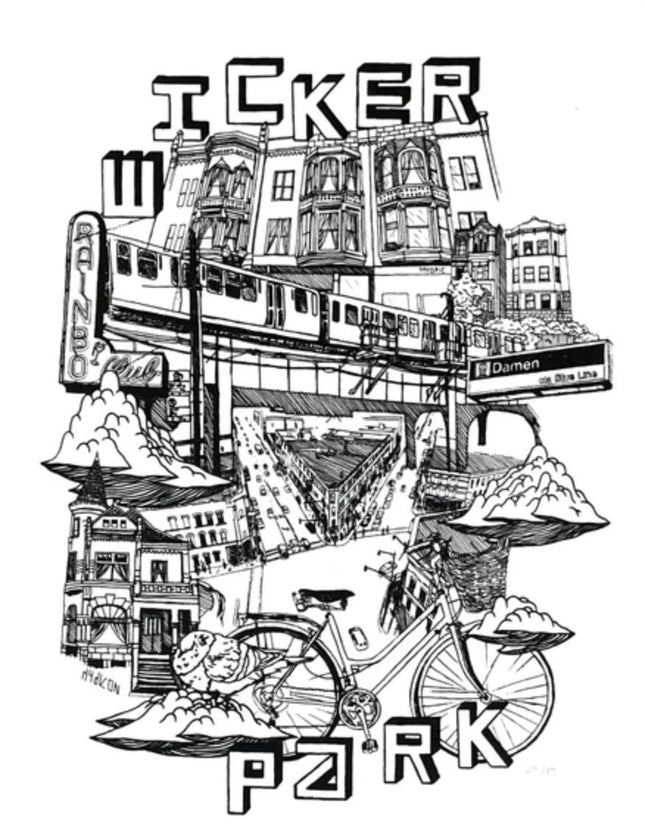
    Wicker Park Chicago Silkscreen Print by Ian Ferguson- Hydeon 1-Color Hand-Pulled Limited Edition on Fine Art Paper Rare Street Art Famous Pop Artwork Artist. 2013 Signed & Numbered Limited Edition of 35 Artwork Size 16x20 Neighborhood Art Series by Ian Ferguson. Wicker Park Silkscreen Print by Ian Ferguson – Hydeon The Wicker Park silkscreen print by Ian Ferguson, known artistically as Hydeon, is a striking representation of one of Chicago’s most iconic neighborhoods. This one-color hand-pulled limited edition silkscreen print from 2013, measuring 16x20 inches, captures the architectural and cultural vibrancy of Wicker Park through an intricate and surreal composition. As part of Ferguson’s Neighborhood Art Series, this piece blends detailed urban landscapes with elements of street pop art & graffiti artwork, offering a visually compelling exploration of the city. The Architectural Complexity of Wicker Park Wicker Park has long been known for its historic architecture, diverse creative community, and bustling streets, all of which are intricately depicted in Ferguson’s artwork. His highly detailed line work brings out the ornate features of vintage Chicago buildings, brownstones, and storefronts, creating a layered cityscape that feels alive with history and movement. The elevated Damen Blue Line train plays a central role in the composition, visually cutting through the print and grounding the neighborhood’s well-known connectivity to the broader Chicago landscape. Ferguson’s ability to meld perspective and scale results in an architectural collage that defies traditional linear space. Buildings appear to bend, streets converge at surreal angles, and the typography of “Wicker Park” integrates seamlessly into the structure of the print. This style recalls classic urban etchings, yet Ferguson’s interpretation includes surreal elements that make the neighborhood feel both familiar and dreamlike. Cultural References and Symbolism Beyond its architecture, Wicker Park has a rich cultural identity rooted in its music, art, and street scene, and Ferguson nods to these aspects through various visual motifs. The presence of a bicycle, vintage cars, and classic signage all serve as references to the neighborhood’s history and evolving subcultures. Ferguson’s choice to include the Rainbow Club sign further acknowledges the importance of local businesses in shaping Wicker Park’s creative landscape. The imagery also includes floating clouds, exaggerated depth, and layered urban elements, adding a dreamlike quality to the piece. The decision to use black and white emphasizes the depth of detail and creates a timeless effect, making it feel like an archival document of the neighborhood’s energy. Ferguson’s approach highlights both the reality and mythology of Wicker Park, turning it into a symbolic representation of urban creativity. The Influence of Ian Ferguson in Street Pop Art & Graffiti Artwork Ian Ferguson’s Neighborhood Art Series places him firmly within the street pop art & graffiti artwork movement, using silkscreen techniques to reinterpret the visual landscapes of major urban spaces. Unlike traditional mural-based street art, Ferguson’s work translates these urban narratives into limited-edition fine art prints, allowing collectors to engage with his interpretations on a more intimate scale. His work resonates with fans of both architectural illustration and urban surrealism, as he transforms familiar cityscapes into dynamic compositions filled with movement and storytelling. The Wicker Park silkscreen print serves as both a tribute to the neighborhood and an exploration of how cities evolve, making it a significant piece within Ferguson’s broader artistic practice. This print stands as a visual love letter to one of Chicago’s most iconic areas, preserving its cultural essence through a highly detailed and meticulously crafted artwork.

    $146.00

  • Wicker Park Chicago AP Silkscreen Print by Ian Ferguson- Hydeon

    Ian Ferguson- Hydeon Wicker Park Chicago AP Silkscreen Print by Ian Ferguson- Hydeon

    Wicker Park Chicago 1-Color Hand-Pulled Limited Edition Silkscreen Print on Fine Art Paper by Ian Ferguson- Hydeon Rare Street Art Famous Pop Artwork Artist. AP Artist Proof 2013 Signed & Marked AP Limited Edition Wicker Park by Ian Ferguson 1-Color Screen Print Size: 16" x 20" Wicker Park, Chicago, Illinios. Wicker Park AP Silkscreen Print by Ian Ferguson. Neighborhood Art Series Wicker Park Silkscreen Print by Ian Ferguson – Hydeon Wicker Park is a striking one-color hand-pulled silkscreen print by Ian Ferguson, also known as Hydeon, a renowned figure in street pop art & graffiti artwork. This signed and marked artist proof from 2013 is a rare and highly sought-after limited edition piece that captures the energy and architectural character of Wicker Park, a vibrant neighborhood in Chicago, Illinois. Measuring 16x20 inches, this intricate composition highlights Ferguson’s signature illustrative style, blending urban storytelling with meticulous line work and detailed cityscapes. This piece embodies Hydeon’s ability to merge historical, architectural, and surreal elements into a cohesive visual experience. The print showcases elements of Wicker Park’s well-known streets, vintage signage, historic buildings, and the iconic elevated train, all woven together in an elaborate and layered perspective. The black-and-white aesthetic further emphasizes the intricate craftsmanship and adds a timeless quality to the piece, making it both a tribute to the neighborhood and an outstanding example of contemporary urban art. The Architectural Complexity of Wicker Park Ian Ferguson’s fascination with urban architecture is evident in the detailed structures and layered composition of Wicker Park. This print brings together a variety of elements that define the neighborhood, including vintage storefronts, historic residential buildings, and the elevated transit system that runs through the heart of the area. His approach to architectural illustration is far from conventional; rather than rigidly replicating the scene, he reconstructs it in an imaginative, almost dreamlike arrangement that encapsulates the essence of the location. The depth and perspective in this piece create a visual journey through Wicker Park, guiding the viewer’s eye from the bustling streets to the elevated train tracks above. The warped and exaggerated structures give the impression of movement, as if the city itself is alive and shifting. This dynamic rendering is a hallmark of Hydeon’s style, transforming static buildings into vibrant and expressive components of the urban landscape. Symbolism and Everyday Urban Life Beyond its architectural focus, Wicker Park also incorporates symbolic imagery that reflects everyday life in the neighborhood. A bicycle, a common mode of transportation in Chicago’s creative communities, is prominently featured in the foreground, reinforcing the area’s reputation as a hub for artists, musicians, and independent thinkers. An ice cream cone adds a playful element, suggesting a sense of nostalgia and local culture. These details help personalize the scene, capturing both the physical and cultural identity of Wicker Park. By integrating elements of daily life into the piece, Ferguson creates a work that feels immersive and relatable. The inclusion of street signs, cars, and scattered urban textures further enhances the authenticity of the scene. The choice to render these details in a single color keeps the focus on the composition and line work, allowing the viewer to appreciate the craftsmanship without distraction. Hydeon’s Artistic Influence in Street Pop Art & Graffiti Artwork Ian Ferguson’s work under the Hydeon moniker stands out in the street pop art & graffiti artwork landscape due to his commitment to intricate hand-drawn compositions and narrative-driven urban scenes. Wicker Park exemplifies his talent for capturing the soul of a location while maintaining a unique and artistic perspective. Unlike traditional graffiti, which often prioritizes bold color and speed, his work takes a more meticulous approach, reminiscent of historical engravings and architectural sketches. Hydeon’s work continues to push the boundaries of what street pop art & graffiti artwork can achieve, blending classical illustration techniques with contemporary urban themes. Wicker Park is not just a representation of a neighborhood; it is a celebration of its culture, history, and artistic spirit. This print remains a standout example of how detailed illustration and urban storytelling can merge, creating a lasting impression in the ever-evolving world of street art.

    $200.00

  • What A Graffiti Writer Sees Archival Print by LushSux

    LushSux What A Graffiti Writer Sees Archival Print by LushSux

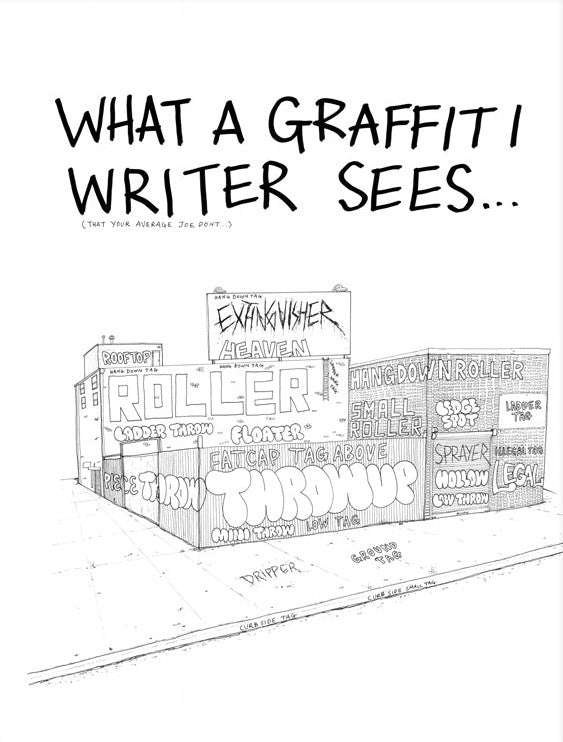
    What A Graffiti Writer Sees Limited Edition Archival Pigment Prints on 310gsm Museum Natural Fine Art Paper by LushSux Graffiti Street Artist Modern Pop Art. Signed & Numbered Limited Edition of 40 Artwork Size 16x20 Graffiti Urban Industrial Street Scene Depicting Various Graffiti Throw Ups & Tags in Black & White. Insight into LushSux's "What A Graffiti Writer Sees" LushSux, the notorious graffiti street artist, presents a candid visualization of the urban landscape through the eyes of a graffiti writer with his work "What A Graffiti Writer Sees." This limited edition artwork, produced in a series of 40 archival pigment prints on 310gsm Museum Natural Fine Art Paper, measures 16x20 inches and is a signed and numbered offering from the artist. In black and white, the piece depicts a street scene brimming with various graffiti throw-ups and tags, capturing the raw essence of the graffiti artist's vision. Decoding the Urban Canvas in LushSux's Art The artwork is a monochromatic tribute to the graffiti culture, embodying the visual language and symbols that graffiti writers imbue in the urban environment. In this piece, buildings are not merely structures but potential canvases, bristling with opportunity and awaiting the artist's mark. LushSux translates the three-dimensional world into a flat surface yet retains the depth and complexity of the graffiti artist's perspective. Each element, from the roller tags to the dripping paint, is rendered authentically, highlighting the artist's intimate understanding of this art form. LushSux and the Graffiti Narrative Through "What A Graffiti Writer Sees," LushSux makes a poignant statement about perception and the often overlooked details in our surroundings. The piece transcends a simple depiction of graffiti; it explores the artist's psyche, the subcultural codes, and the often invisible dialogue between graffiti writers. It is a reflective piece, inviting the viewer to step into the shoes of those who see the city as a playground of expression. LushSux, as both a participant and observer in the graffiti scene, uses his artwork to bridge the street and the gallery, merging the visceral experience of street pop art with the contemplative space of fine art viewership. This artwork is not just a representation of a physical space; it is a window into the cultural and social underpinnings of the street art movement, a modern pop art phenomenon that continues to evolve and provoke.

    $352.00

Subway Train & Railroad Graffiti Street Pop Artwork

Subway and Train Graffiti: The Movement of Underground Art

Subway and train systems have long served as the backdrop for an art movement that is as transient as it is permanent. In the tumultuous urban landscapes of the 1960s and 1970s, particularly in New York City, the subway became the pulsating artery through which the lifeblood of graffiti art flowed. This movement was not merely about the artistry of lettering or the boldness of color; it was a social statement, a form of communication, and a voice for the voiceless. The trains became moving galleries, exhibiting the work of marginalized communities to a citywide audience. The early graffiti artists who began this movement were pioneers, not just in technique but in transforming public perception of what art could be. Their canvases were the sides of subway cars, the platforms, and the stations themselves. These artists took the concept of street pop art and graffiti artwork and propelled it into a global phenomenon, using the subway system as a catalyst for their expressions.

Evolution of Train Graffiti: From Subway Tags to Freight Murals

The graffiti on trains started as simple tags, a way for individuals to mark their presence in a city that often felt indifferent to their existence. But as time progressed, these tags evolved into intricate art pieces, with artists spending hours, sometimes days, creating elaborate murals on the sides of train cars. The graffiti movement of the trains tells a story of not just artistic evolution but of the socio-economic conditions that fostered the need for such expressions. The move from subway to freight train graffiti marked a significant shift in the landscape of street art. As the crackdown on subway graffiti became more aggressive, artists migrated to the expansive canvases provided by freight trains. These trains carried the messages and the art across the country, from the East Coast to the West, spreading the ethos of the street art movement far and wide.

Freight Trains: A New Frontier for Graffiti Art

Freight train graffiti became a culture within a culture, with some artists dedicating their entire work to these mobile canvases. The freight train movement encapsulated the spirit of rebellion and freedom central to street art. Each car offered a fresh start, a new journey, and an opportunity to connect with a different audience. This movement wasn't just about disseminating art; it was about sharing an experience and a message with a community much more significant than any city could hold. This form of street pop art and graffiti artwork has not only endured but has flourished. Today, train graffiti is recognized as an integral part of the history of street art. It is a testament to the creativity and resilience of artists who use their surroundings to reflect their realities, challenge societal norms, and engage with a broader public dialogue. The marks made by these artists are not just on the metal surfaces of trains but in the annals of art history, forever linked to the cultural narrative of the cities they adorn.

Cultural Impact of Train and Subway Art

The cultural impact of train and subway graffiti is immeasurable. It has influenced fashion, music, literature, and even the language of the streets. It has also played a role in the gentrification of urban areas, paradoxically both a symbol of urban decay and a marker of trendy urban living. The duality of train graffiti as both an act of vandalism and a work of art continues to spark debate, challenging our notions of public space and the ownership of art. In conclusion, the world of train and subway graffiti is a complex one, rich with history, controversy, and artistry. It is a world that has given rise to some of the most iconic works of street art and has served as a breeding ground for artists who have become legends. As the trains continue to roll, so does the ever-evolving story of street pop art and graffiti artwork.

Footer image

© 2025 Sprayed Paint Art Collection,

    • Amazon
    • American Express
    • Apple Pay
    • Bancontact
    • Diners Club
    • Discover
    • Google Pay
    • iDEAL
    • Mastercard
    • PayPal
    • Shop Pay
    • Visa

    Login

    Forgot your password?

    Don't have an account yet?
    Create account