Subway Train & Railroad

6 artworks

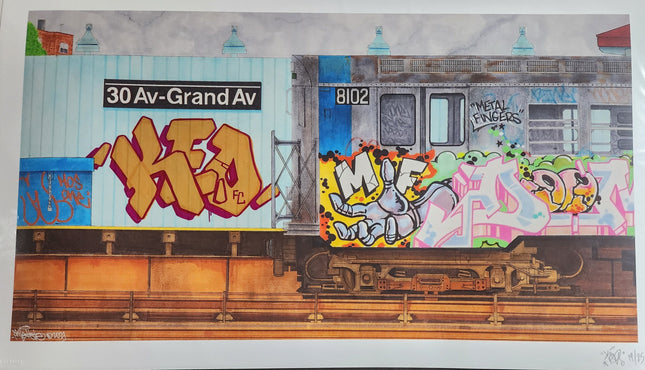
  • 30 Grand HPM Archival Print by Keo X-Men

    Keo X-Men 30 Grand HPM Archival Print by Keo X-Men

    30 Grand Limited Edition Hand-Embellished HPM Archival Pigment Prints on 290gsm Moab Entrada Rag Bright Paper by Keo X-Men Graffiti Street Artist Modern Pop Art. 2021 Signed & Numbered Limited Edition of 25 Artwork Size 24x14 30 Grand (MF DOOM Tribute) 24x14 inches Hand-embellished, signed, and numbered by KEO in a limited embellished edition of 25  Keo X-Men's "30 Grand": A Homage in Street Pop Art In the dynamic world of street pop and graffiti art, "30 Grand" by Keo X-Men is a poignant homage to the late MF DOOM. This 2021 limited edition of 25 hand-embellished archival pigment prints on 290gsm Moab Entrada Rag Bright paper captures the essence of the Graffiti Street Art movement. Each piece, measuring 24x14 inches, is enriched with the artist's touch, hand-embellished, signed, and numbered, making every print in the series an individual masterpiece. Keo X-Men, also known as SCOTCH 79, is a revered figure in the street art scene, his roots deeply entrenched in the New York City graffiti landscape. This piece, "30 Grand", is a vibrant testament to his craft, blending traditional graffiti art with the sensibilities of modern pop art. It features the iconic subway environment that has been a canvas for graffiti artists for generations, now reimagined as a stationary tribute to one of hip hop's most enigmatic figures. Artistic Expression and Technique The artwork reflects Keo X-Men's mastery of color and form, employing graffiti art's bold lines and vibrant hues. The hand-embellishment process introduces unique textures and layers to each print, ensuring that while the pieces remain part of a series, they each possess a distinct flair. Utilizing archival pigment ensures the longevity of the artwork, a tribute intended to endure as MF DOOM's legacy does. The choice of Moab Entrada Rag Bright paper is intentional, known for its ability to hold colors and details, providing a fine art quality to the traditionally rebellious street art. The medium is as much a part of the message as the imagery, a nod to the evolution of street art from ephemeral to archival, from city walls to collectors' halls. Keo X-Men and the Legacy of "30 Grand" Through "30 Grand", Keo X-Men not only celebrates the memory of MF DOOM but also captures the spirit of the graffiti movement. The subway scene, decorated with vibrant tags and icons, represents the underground culture from which both artists emerged. The artwork is a convergence of past and present, a reminder of the roots of hip-hop and graffiti and their continual evolution. Keo X-Men's contribution to street pop art is significant; he bridges the gap between the street's rawness and the gallery's sophistication. "30 Grand" is a piece that stands at the intersection of music, graffiti, and the collective memory of a culture. It's a piece that commands attention, demands contemplation, and celebrates the enduring influence of an artist who left an indelible mark on hip-hop and art alike. "30 Grand" serves not only as a piece of art but also as an artifact of cultural history, encapsulating the vibrancy and resilience of street culture. It is a piece that resonates with fans of MF DOOM, connoisseurs of graffiti art, and collectors of modern pop art, a fitting tribute by Keo X-Men, an artist whose work continues to push the boundaries and preserve the legacy of street art.

    $482.00

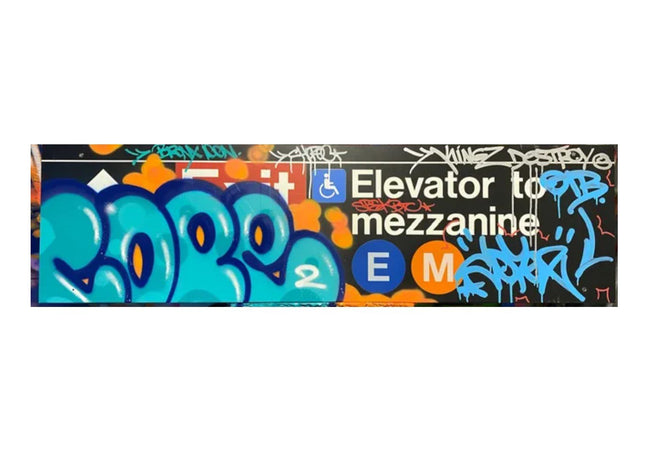
  • Sale -15% MTA Subway Sign Elevator to Mezzanine Original Street Sign Graffiti Painting by Cope2- Fernando Carlo

    Cope2- Fernando Carlo MTA Subway Sign Elevator to Mezzanine Original Street Sign Graffiti Painting by Cope2- Fernando Carlo

    MTA Subway Sign- Elevator to Mezzanine Art Mixed Media on MTA Signage Painting Artwork by street pop culture artist Cope2. Original authentic MTA subway sign this is an authentic 14x51inches metal subway sign spray-painted by cope2 . Born in 1968 as Fernando Carlo, Jr. in New York City. Cope 2’s paintings have been exhibited in solo and group exhibitions in galleries and museums throughout the United States and internationally. He is a self-taught artist who is a celebrated legend contributing over 30 years to the graffiti street-art culture. One of New York City’s most prolific graffiti artists, he began tagging his name in the South Bronx in 1978. He developed his style in the subways and streets of the Bronx creating graffiti productions throughout the 1980’s and 1990’s achieving international recognition for his distinctive style. Fernando Carlo a.k.a COPE2 is an American artist, active in the graffiti scene of New York. Cope2’s involvement in the street art scene of the 80s and 90s progressively made his reputation grow, making him one of the most well-known writers in the US. Controversial, yet iconic, the artist’s story and his involvement in graffiti since the last decades of the 20th century shed light on the history of graffiti itself and its evolution over the years.

    $2,607.00 $2,216.00

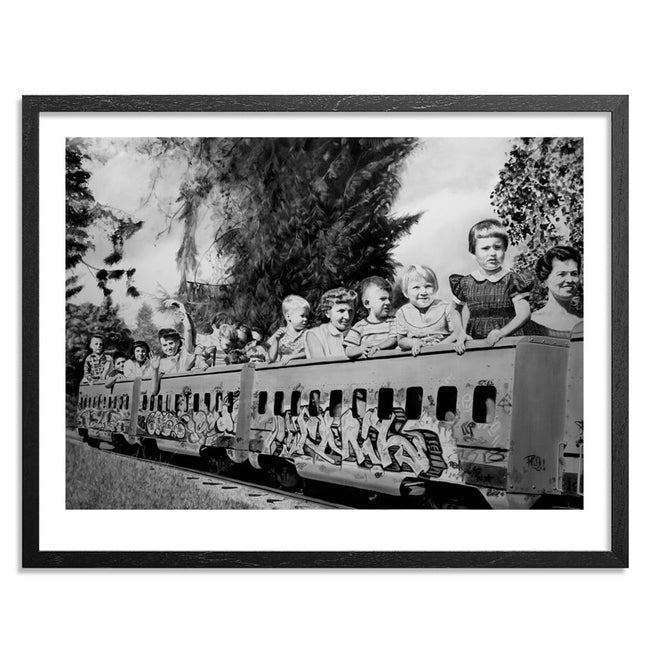
  • All Aboard Archival Print by David Lyle

    David Lyle All Aboard Archival Print by David Lyle

    All Aboard Limited Edition Archival Pigment Prints on 310gsm Fine Art Paper by David Lyle Graffiti Street Artist Modern Pop Art. "This painting is part of my current show titled 'Everyone's a critic." This series presents a caustic commentary on the art world and what mystifies the public about the art world – art that is not made by the artists themselves, money as an end game, art-speak, etc. The idea behind this piece is basically about the acceptance and commercialization of graffiti. Where in the past, graffiti was looked at as an illegal eyesore to the public and now it is adorned and used in the main stream media, sold as fine art and used for commercial purposes." - David Lyle

    $217.00

  • CN Rail Archival Print by Stephanie Buer

    Stephanie Buer CN Rail Archival Print by Stephanie Buer

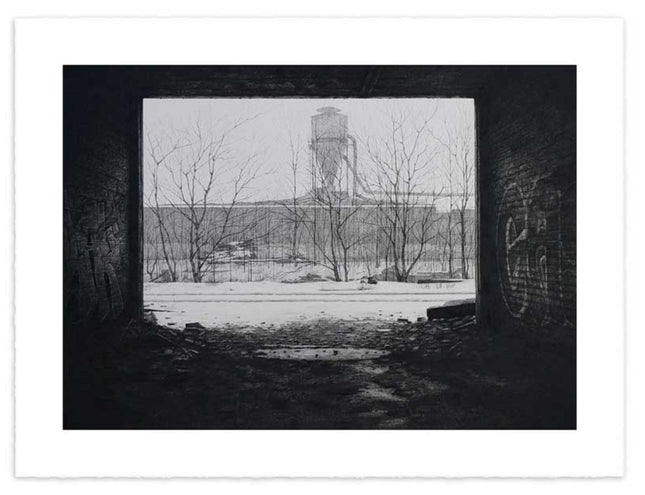
    CN Rail Archival Pigment Fine Art Limited Edition Print on 290gsm Moab Entrada Paper by Artist Stephanie Buer, Street Pop Art Graffiti Legend. Signed & Numbered Archival Pigment Print on Hand-Deckled 290gsm Moab Fine Art Paper Size: 18.5 x 14 Inches Release: March 13, 2020 "This piece is a drawing I made from images gathered while exploring the Packard Plant years ago. It was taken before the Packard Plant was purchased and renovated, back when I used to live in Detroit and wander the plant regularly. That place is very special to me and my early development as an artist." –Stephanie Buer

    $218.00

  • Sale -15% Subway Series 10 Photo Archival Print by Cope2- Fernando Carlo

    Cope2- Fernando Carlo Subway Series 10 Photo Archival Print by Cope2- Fernando Carlo

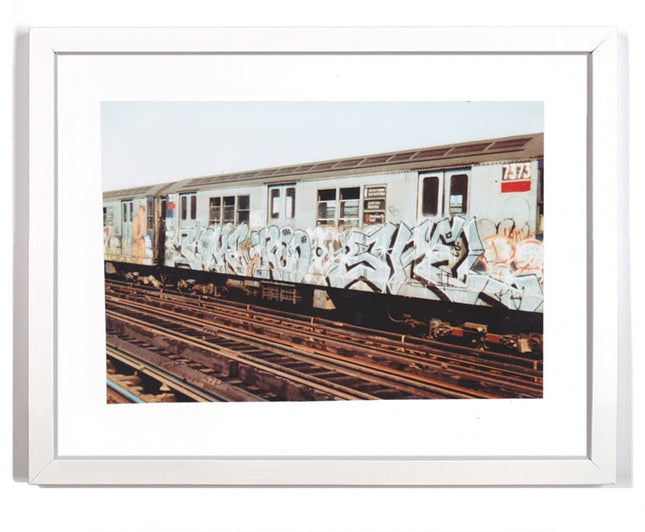
    Subway Series- 10 Photo Original OTP Archival Pigment Print on 310gsm Fine Art Paper by Cope2 Graffiti Street Artist Modern Pop Art. 2010 Signed Orignal 1 of 1 Unique Subway Graffiti Photo Framed “I’ve always wanted to do a show like this. Lately, I have transitioned mostly into mixed media paintings, but I’ve been doing hardcore graffiti, if you want to call it that, for thirty-plus years. It’s what made me Cope2. But me, I like to change it up and show all my different styles. So with this show, I’m able to show my evolution of style and how I’ve progressed. “Versatile” shows where I came from and what I’m doing now,” Cope2 said from his studio in New York. -Cope2 During the mid-1990s Cope2 started slowly transitioning from the streets to the art scene of the galleries. At that time, street art was not as popular as it is in our days and the general public’s idea of it was still inextricably connected to ghettos, drug dealing, etc. The artist has never hidden his troubling past and avoids idealizing it, as a way to enhance his career and artistic persona. On the contrary, he mentions the following: “Oh man, there’s nothing to be proud of in hustling, but I had my first child at the age of 16, my son. So I had to make money to support him and his mother.

    $1,311.00 $1,114.00

  • Blackbook- Two Hope 92 Giclee Print by DocTC5

    DocTC5 Blackbook- Two Hope 92 Giclee Print by DocTC5

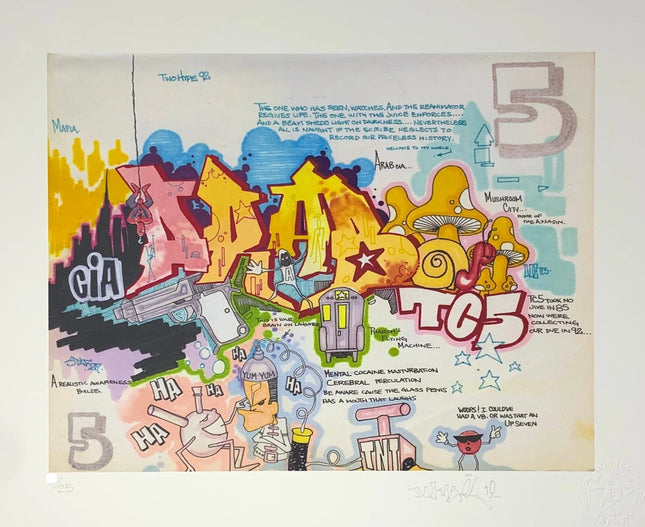
    Blackbook- Two Hope 92 Pop Street Artwork Limited Edition Giclee Print on Fine Art Paper by Urban Graffiti Modern Artist DocTC5. 2019 Signed & Numbered Limited Edition of 25 Artwork Size- 17x14. Small Crease To Extreme Lower Left Facing Edge. Blackbook - Two Hope 92 by DocTC5 The 2019 giclee print titled Blackbook - Two Hope 92 by DocTC5 captures a raw and cerebral snapshot of graffiti’s evolution into narrative street pop art. Measuring 17 by 14 inches, this signed and numbered limited edition of 25 is a visual archive laced with coded language, cryptic references, and hyper-stylized aerosol typography. The work is not just a visual display of style writing but a layered commentary stitched together by phrases, symbols, and cartoon-like figures that reinforce graffiti’s connection to street culture, urban consciousness, and media critique. DocTC5 and the Legacy of Subway Style DocTC5, a member of The Cool 5 crew, represents a lineage in New York graffiti that embraced the subway car as a moving canvas during the late twentieth century. Blackbook - Two Hope 92 extends this history through the controlled chaos of colored outlines, highlighted text, and layered caricatures that recall the blackbook practice of early graffiti writers. It is a studio work that maintains the visual and textual density of its roots, showcasing a hybrid vocabulary of visual poetry and street messaging. Each phrase functions as a cultural timestamp from within the underground scene—references like Mushroom City, CIA, and Train Vibes channel a coded worldview shaped by years of subway bombing and street experience. Multilayered Symbolism and Commentary This print collides vibrant yellows, oranges, and reds with muted cyan and pink washes, creating a shifting landscape of psychological and cultural cues. Scattered graffiti tags, mental satire like Be Aware Cause the Glass Penis Has a Mouth That Laughs, and imagery such as disembodied hands and surreal characters turn this piece into a collage of urban satire. These aren’t random annotations—they mimic the marginalia found in blackbooks where artists build entire ideologies through doodles, ideas, and quotes layered between wildstyle letters and burner sketches. Here, the artwork doubles as a social artifact, archiving thought processes that reflect a specific moment in street-level art activism and consciousness. Street Pop Art & Graffiti Artwork as Cultural Archive Two Hope 92 is more than a tribute to an era. It is a preserved graphic journal—a stylized memory map that maintains graffiti's foundation in artistic resistance and coded identity. Printed on fine art paper with archival giclee technique, the piece delivers museum-quality execution while preserving its blackbook aesthetic. The limited edition is individually signed and stamped, reinforcing its rarity. A small crease at the lower left edge marks the human quality of the object, grounding its artistic merit in the physical wear of cultural production. DocTC5’s piece offers a rare and intimate entry point into the thought and visual process of a street art movement that continues to shape contemporary visual culture.

    $226.00

Subway Train & Railroad Graffiti Street Pop Artwork

Subway and Train Graffiti: The Movement of Underground Art

Subway and train systems have long served as the backdrop for an art movement that is as transient as it is permanent. In the tumultuous urban landscapes of the 1960s and 1970s, particularly in New York City, the subway became the pulsating artery through which the lifeblood of graffiti art flowed. This movement was not merely about the artistry of lettering or the boldness of color; it was a social statement, a form of communication, and a voice for the voiceless. The trains became moving galleries, exhibiting the work of marginalized communities to a citywide audience. The early graffiti artists who began this movement were pioneers, not just in technique but in transforming public perception of what art could be. Their canvases were the sides of subway cars, the platforms, and the stations themselves. These artists took the concept of street pop art and graffiti artwork and propelled it into a global phenomenon, using the subway system as a catalyst for their expressions.

Evolution of Train Graffiti: From Subway Tags to Freight Murals

The graffiti on trains started as simple tags, a way for individuals to mark their presence in a city that often felt indifferent to their existence. But as time progressed, these tags evolved into intricate art pieces, with artists spending hours, sometimes days, creating elaborate murals on the sides of train cars. The graffiti movement of the trains tells a story of not just artistic evolution but of the socio-economic conditions that fostered the need for such expressions. The move from subway to freight train graffiti marked a significant shift in the landscape of street art. As the crackdown on subway graffiti became more aggressive, artists migrated to the expansive canvases provided by freight trains. These trains carried the messages and the art across the country, from the East Coast to the West, spreading the ethos of the street art movement far and wide.

Freight Trains: A New Frontier for Graffiti Art

Freight train graffiti became a culture within a culture, with some artists dedicating their entire work to these mobile canvases. The freight train movement encapsulated the spirit of rebellion and freedom central to street art. Each car offered a fresh start, a new journey, and an opportunity to connect with a different audience. This movement wasn't just about disseminating art; it was about sharing an experience and a message with a community much more significant than any city could hold. This form of street pop art and graffiti artwork has not only endured but has flourished. Today, train graffiti is recognized as an integral part of the history of street art. It is a testament to the creativity and resilience of artists who use their surroundings to reflect their realities, challenge societal norms, and engage with a broader public dialogue. The marks made by these artists are not just on the metal surfaces of trains but in the annals of art history, forever linked to the cultural narrative of the cities they adorn.

Cultural Impact of Train and Subway Art

The cultural impact of train and subway graffiti is immeasurable. It has influenced fashion, music, literature, and even the language of the streets. It has also played a role in the gentrification of urban areas, paradoxically both a symbol of urban decay and a marker of trendy urban living. The duality of train graffiti as both an act of vandalism and a work of art continues to spark debate, challenging our notions of public space and the ownership of art. In conclusion, the world of train and subway graffiti is a complex one, rich with history, controversy, and artistry. It is a world that has given rise to some of the most iconic works of street art and has served as a breeding ground for artists who have become legends. As the trains continue to roll, so does the ever-evolving story of street pop art and graffiti artwork.

Footer image

© 2025 Sprayed Paint Art Collection,

    • Amazon
    • American Express
    • Apple Pay
    • Bancontact
    • Diners Club
    • Discover
    • Google Pay
    • iDEAL
    • Mastercard
    • PayPal
    • Shop Pay
    • Visa

    Login

    Forgot your password?

    Don't have an account yet?
    Create account