Takashi Murakami TM/KK

1 artwork

  • Smiley Days with Ms Flower to You! Silkscreen Print by Takashi Murakami TM/KK

    Takashi Murakami TM/KK Smiley Days with Ms Flower to You! Silkscreen Print by Takashi Murakami TM/KK

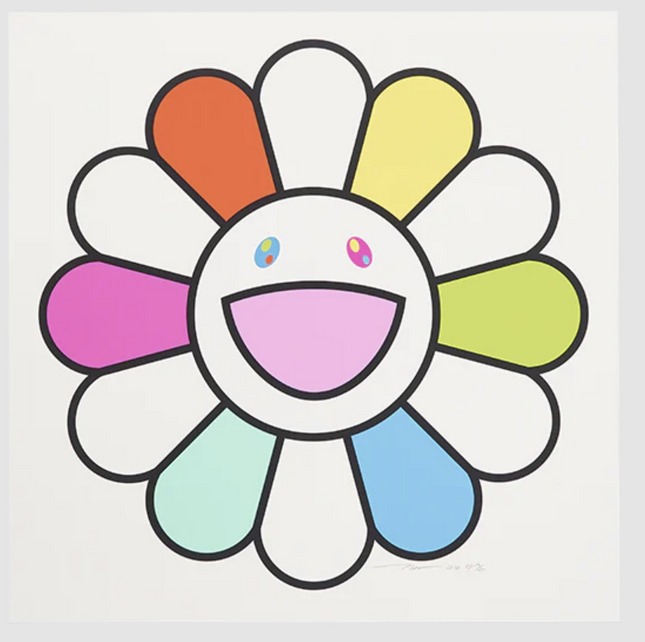
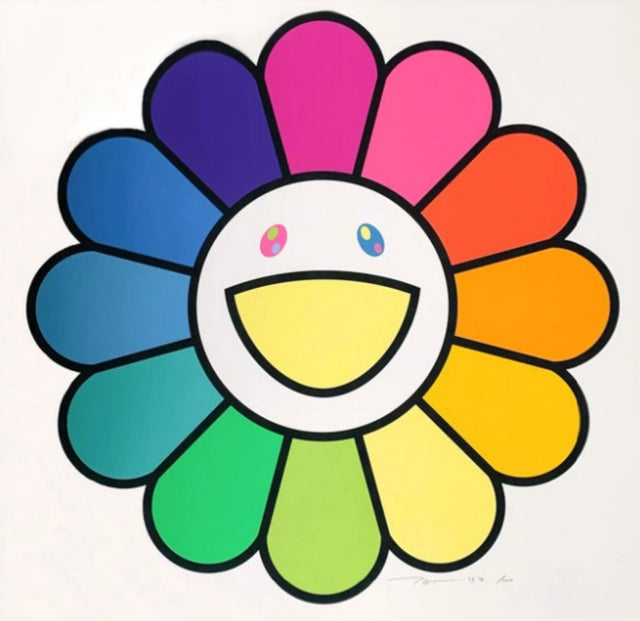
    Smiley Days with Ms. Flower to You! 8-Color Hand-Pulled Limited Edition Silkscreen Print on Fine Art Paper by Takashi Murakami TM/KK Rare Street Art Famous Pop Artwork Artist. 2020 Signed & Numbered Limited Edition of 100 Artwork Size 19.7x19.7 Rare Takashi Murakami TM/KK Ms. Mr. Rainbow Flower Silkscreen Print Artwork. Small handling bumps to the left/right lower corner, small bump to the upper right corner. Takashi Murakami's Smiley Days with Ms. Flower to You!: Flattened Joy in Pop Art Precision Takashi Murakami’s Smiley Days with Ms. Flower to You! encapsulates his signature blend of cheerful imagery, cultural layering, and ultra-clean graphic execution. Created in 2020 as an 8-color hand-pulled silkscreen print, this limited edition of 100 works stands at 19.7 x 19.7 inches and is signed and numbered by the artist. The artwork features the instantly recognizable flower motif with alternating petal colors and an exaggerated smile across the central face. What appears at first to be a playful, almost childlike symbol of joy is, in Murakami’s visual language, a deeply coded cultural artifact that questions the nature of happiness, identity, and image saturation in the contemporary world. The symmetrical structure and bold outlines suggest cartoon aesthetics, yet Murakami’s execution is far from spontaneous. Every curve, gradient, and color choice is calculated to reinforce a sense of artificial perfection. The smiling flower character, often mistaken for simplistic pop decoration, emerges from a broader lineage of Japanese visual culture—including Edo-period painting, kawaii consumer goods, and the hyper-saturated imagery of anime and manga. By distilling all of these elements into a single figure, Murakami has produced a contemporary symbol that functions across cultures and commercial systems. Superflat Theory and the Deconstruction of Depth Murakami’s Smiley Days with Ms. Flower to You! is a direct application of his Superflat philosophy, which merges traditional Japanese aesthetics with the shallow perspective of digital-age visual consumption. The flatness in this print is not merely stylistic but ideological. It represents a collapse of distinction between fine art and mass media, high culture and consumer object. The lack of depth in the flower’s face, along with the pristine uniformity of the petals, draws attention to how culture packages emotion and sells it as aesthetic surface. Rather than invite introspection through complexity, Murakami’s print bombards the viewer with immediate, digestible visual pleasure. But that sensory overload is deceptive. The flower’s manic grin—framed by perfectly arranged petals in pastel and neon hues—suggests an almost disturbing insistence on happiness. It becomes a symbol not of actual emotional expression but of imposed positivity. The eyes, colored with soft gradients and cartoon sparkle, recall the exaggerated features of anime mascots but also serve as hollow portals in an otherwise flattened identity. Street Pop Art & Graffiti Artwork Rendered with Surgical Cleanliness Though not rooted in traditional graffiti practice, Murakami’s work has been deeply influential in the evolution of Street Pop Art. He merges the visual appeal of mass-produced graphic design with the thematic subversions common in graffiti. The flower motif, while seemingly benign, has appeared on luxury fashion collaborations, vinyl toys, and fine art prints alike, highlighting how symbols circulate between subculture and commerce. Murakami’s deliberate use of commercial channels does not dilute his message—it amplifies it. The print’s pristine execution and wide appeal comment on the mechanisms of art as commodity, without needing to stage rebellion through messiness or illegality. The silkscreen process used in this edition aligns with Murakami’s obsession with perfection. Each color layer is meticulously printed, ensuring consistency and uniform saturation, mimicking the effect of digital art but with the tangible value of a handmade print. This duality—the tactile reality of traditional craft paired with the aesthetics of digital media—reinforces the thematic content of the flower itself: joy as production, identity as design, emotion as product. Murakami’s Smiley Days with Ms. Flower to You! ultimately operates as both a visual balm and a conceptual warning. In Street Pop Art & Graffiti Artwork, surface often holds as much power as meaning, and Murakami leverages that to brilliant, unsettling effect. The flower smiles because it must. Its joy is performative, its beauty standardized—and in that, it holds a mirror to the world that created it.

    $4,936.00

Takashi Murakami TM/KK> Pop Artist Graffiti Street Artworks

Takashi Murakami TM/KK Formative Years and Artistic Development

Takashi Murakami, born on February 1, 1962, in Tokyo, Japan, is a contemporary artist who has significantly impacted the world of pop art, street art, and graffiti artwork. His work spans fine arts and commercial media and is noted for its blurring of high and low arts. As a prominent figure in the Japanese artistic tradition and postwar Japanese culture, Murakami has forged a unique path in the global art scene. From an early age, Murakami was drawn to anime and manga, greatly influencing his artistic style. He initially aspired to work in animation and attended the Tokyo University of the Arts to develop his drafting skills. However, he eventually majored in Nihonga, a traditional style of Japanese painting. Despite earning his master's degree and a Ph.D. in Nihonga, Murakami became disillusioned with its insular world and shifted towards more contemporary styles and media. Murakami's time in New York City in 1994, under the Asian Cultural Council's fellowship, was pivotal in shaping his artistic practice. Exposed to Western contemporary artists like Anselm Kiefer and Jeff Koons, he began developing the core concepts of his practice, leading to regular exhibitions in prominent galleries across Europe and America​.

Superflat: A Pioneering Movement

Murakami's "Superflat" theory, introduced in 2000, posits a continuation of flat, 2-dimensional imagery from Japanese art history in manga and anime. This style is differentiated from the Western approach by emphasizing the surface and using flat planes of color. Superflat also serves as a commentary on postwar Japanese society. Murakami argues that social class and popular taste have 'flattened,' leading to a culture with little distinction between 'high' and 'low.' This concept led to his Neo-Pop art form, which obliterates the line between pop culture and high art, paralleling Andy Warhol's approach but with a distinctly Japanese twist.

Takashi Murakami TM/KK Cultural and Commercial Intersections

Murakami's Hiropon Factory, launched in 1996 and later incorporated as Kaikai Kiki Co., Ltd., illustrates his embrace of the atelier system standard in Japanese painting, printmaking, sculpture, and anime and manga enterprises. This approach enabled him to work on a larger scale and in diverse media. His collaborations with fashion brands like Louis Vuitton and musicians like Kanye West highlight his ability to merge art with commercial branding, thus challenging traditional boundaries between art forms. Murakami's work is deeply critical of Western intervention, particularly the U.S.'s impact on Japan's post-WWII culture. His creations are often seen as a subtle critique of Japan's obsession with cuteness and innocence juxtaposed with elements of violence and fetish, which he attributes to U.S. cultural influences​​​.

Takashi Murakami TM/KK Global Recognition and Influence

Murakami's early works, which reflect the complex relationship between Japan and the U.S. post-WWII, demonstrate a playful style with a cynical undertone. His journey to international acclaim began in the mid-1990s following his participation in New York's P.S.1 Contemporary Art Center's International Studio Program. This period marked a shift in his career, where he began to re-engage with his Japanese identity and integrate it more profoundly into his art. His signature character, Mr. DOB, emerged during this time, symbolizing the artist's critique and parody of contemporary culture. Murakami's collaborations extend across various industries, including fashion, music, and urban development. His projects with Vans, Virgil Abloh, Billie Eilish, J Balvin, and Supreme showcase his art's versatility and widespread appeal​​​​​​​​.

Takashi Murakami TM/KK Legacy and Artistic Significance

Takashi Murakami's career represents a unique blend of traditional Japanese aesthetics with modern pop culture, profoundly impacting contemporary art. While commercially successful, his work carries a depth of cultural critique and a bold confrontation of the interplay between art and commerce. Murakami's contributions have redefined the boundaries of art and provided a critical lens through which to view the effects of globalization and cultural exchange. Murakami's diverse body of work, his innovative approach to merging high and low art forms, and his critique of contemporary culture make him a significant figure in the world of Street Pop.
Footer image

© 2025 Sprayed Paint Art Collection,

    • Amazon
    • American Express
    • Apple Pay
    • Bancontact
    • Diners Club
    • Discover
    • Google Pay
    • iDEAL
    • Mastercard
    • PayPal
    • Shop Pay
    • Visa

    Login

    Forgot your password?

    Don't have an account yet?
    Create account