


TC5: The Crazy 5 and Their Dominance in Graffiti History
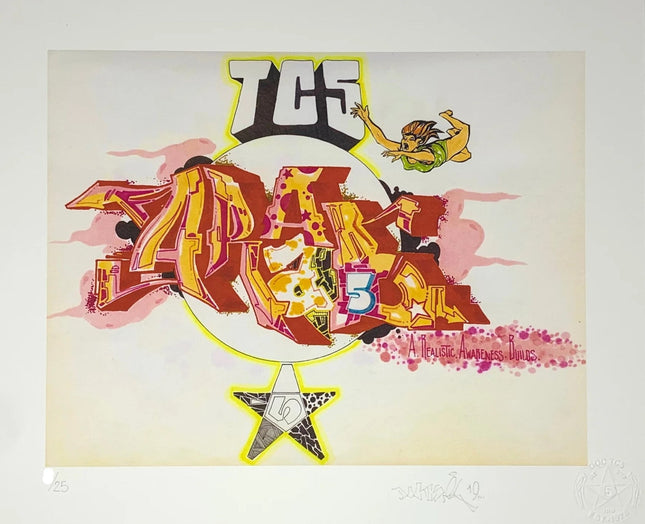
TC5, short for The Crazy 5, holds a legendary place in the development of graffiti during the early years of New York’s subway art explosion. Originating in the 1970s and gaining iconic status by the 1980s, TC5 was more than just a graffiti crew; it was a training ground for some of the most skilled, stylistically innovative, and widely respected artists to emerge from the early Street Pop Art & Graffiti Artwork movement. This crew helped set new standards in lettering, color coordination, and burner styles, with many of its members gaining global recognition for their contributions. Known for painting entire cars with complex pieces that ran across the city, TC5 became synonymous with artistic excellence, wildstyle mastery, and an evolving legacy of writers who expanded the visual vocabulary of graffiti.
Kaws and His Origins in TC5
Before the global rise of Kaws as a pop art and design icon, Brian Donnelly began his journey in the streets of Jersey City and New York as a graffiti artist affiliated with the legendary TC5 graffiti crew. In the early 1990s, Kaws developed his visual language and painting skills under the influence of some of the most respected and technically advanced writers in TC5. His early work featured stylized letterforms and tagging, typical of the Street Pop Art & Graffiti Artwork culture of that time, marking subway walls, phone booths, and advertisements. As part of TC5, he was surrounded by peers who valued precision, originality, and letter-based mastery, shaping his understanding of aesthetics, public art placement, and repetition—tools that would later be reconfigured into the foundation of his studio practice.
Prominent Artists Who Defined TC5
The crew featured some of the most influential names to ever hit the New York train system. One of the most celebrated is Blade, born Steven Ogburn, who is known for painting over five thousand trains during his graffiti career. Blade's imaginative, cartoon-inspired work and wildstyle lettering established him as a king among kings. Another major name is PJAY, who became a powerhouse of technical precision and detailed composition. Writers like DELK, DOC, and COMET added a level of strategy and complexity to the crew's reputation. COMET, in particular, was active throughout the early 1980s and became known for his bold letterforms and pioneering role alongside BLADE. DUSTER and KASE 2 also played essential roles, especially in shaping the style writing that would later influence artists across both coasts and overseas. KASE 2, born Jeff Brown, is often credited with developing the computer rock style, a fractured and angular variation of wildstyle, despite losing an arm as a teenager.
Stylistic Contributions and Visual Innovation
TC5’s members were early adopters of the full-car burner, a style of graffiti that covered the entire side of a subway train with vibrant color fills, outlines, 3D effects, and cartoon elements. Their approach to style was not only aesthetic but strategic, using public transit as a moving gallery. Letterform manipulation, exaggerated proportions, and color theory were all part of the TC5 approach. They were not just vandals tagging names, but street engineers and color theorists turning grey steel canvases into roaring visual explosions. These innovations helped shape what became understood as wildstyle graffiti, a complex visual language that inspired generations of artists working in Street Pop Art & Graffiti Artwork. Their styles influenced the transition of graffiti from illicit act to respected art form, a shift that would eventually lead to the recognition of writers in galleries and institutions.
Lasting Impact on Street Pop Art & Graffiti Artwork
The legacy of TC5 is not just measured in the thousands of painted trains or the geographical reach of their work. It lives in the techniques, principles, and community ethos that they built and passed on. Members of the crew went on to influence not only graffiti writers but also illustrators, designers, and pop artists. Their work laid a blueprint for cross-cultural movements and collaborations, with many TC5 members exhibiting in gallery spaces and publishing books that documented the golden era of subway graffiti. The dedication to precision, originality, and visual storytelling embedded in TC5’s legacy continues to inform the practices of artists working within the Street Pop Art & Graffiti Artwork landscape. TC5 is a historical pillar that proves graffiti is not just a reactionary form of expression but a cultivated art practice built on technique, mentorship, and bold vision.