Tribal Druid & Native

1 artwork

  • Sale -15% 010101010 Silkscreen Print by Revok

    Revok 010101010 Silkscreen Print by Revok

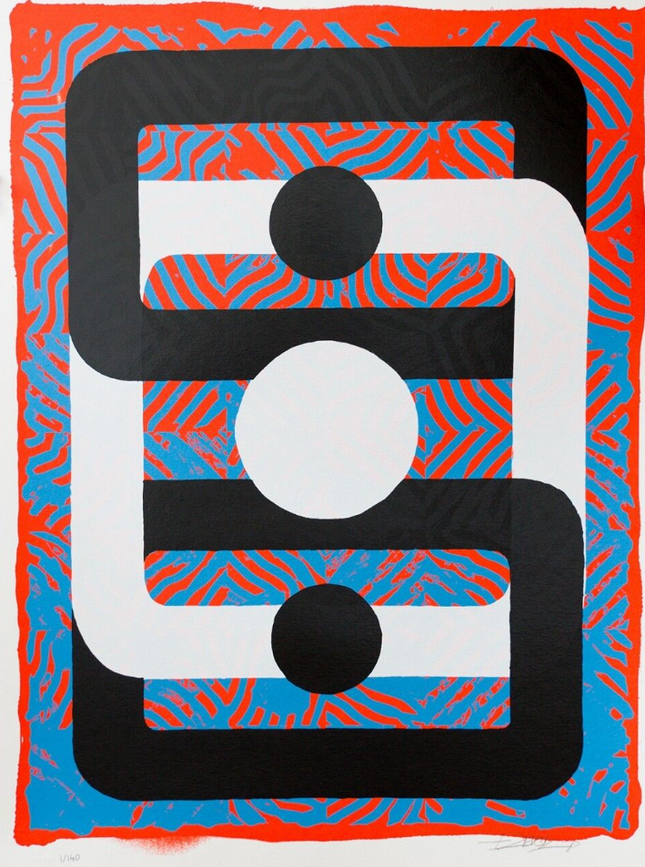
    010101010 Silkscreen Print by Revok Hand-Pulled 4-Color Screen Print on 250g Hahnemühle Aquarellkarton Burgund Paper Limited Edition Pop Street Art Artwork. 2015 Signed & Numbered Limited Edition of 140 Artwork Size 23.6x31.5 010101010 in Binary Means "U" Handmade item, includes minor imperfections to white area 010101010 – Silkscreen Print by Revok 010101010 is a striking silkscreen print by graffiti street artist Revok, an influential figure in the world of contemporary urban and abstract art. This artwork is a bold exploration of geometric forms, layering, and vibrant color interaction, featuring a composition of interlocking shapes set against a dynamic, textured background. The use of a limited color palette—black, white, red, and blue—enhances the contrast and depth of the piece, making it an impactful example of Street Pop Art and Graffiti Artwork. The print showcases Revok’s signature approach to structured abstraction, where rigid geometry meets expressive, hand-applied textures. The background pattern, reminiscent of graffiti tag textures or distorted digital interference, adds a sense of movement and energy, while the bold black and white shapes provide balance and stability. The interplay between these elements captures the tension between control and spontaneity, a recurring theme in Revok’s work. This silkscreen print stands as both a tribute to the artist’s graffiti roots and an evolution of his contemporary fine art practice. Revok and His Influence on Street Pop Art and Graffiti Artwork Revok, whose real name is Jason Williams, is an American street artist known for his pioneering contributions to modern graffiti and urban abstraction. Emerging from the Los Angeles graffiti scene in the 1990s, he became widely recognized for his large-scale murals, intricate layering techniques, and innovative use of found materials. His transition from graffiti bombing to fine art has been marked by an increasing emphasis on structure, repetition, and the exploration of industrial aesthetics. 010101010 is a prime example of Revok’s ability to translate the raw energy of graffiti into a refined, abstracted visual language. His work often reflects an interest in technology, coding, and urban environments, which is evident in the structured forms and digital-like repetition present in this print. By combining traditional street techniques with silkscreen precision, Revok continues to push the boundaries of what graffiti-influenced art can be, proving that it can exist both in the streets and in contemporary gallery spaces. The Role of Silkscreen Printing in Modern Urban Art Silkscreen printing has been a critical medium in the evolution of Street Pop Art and Graffiti Artwork, allowing artists to create highly detailed, multi-layered compositions while maintaining the unique textures and imperfections that make urban art so compelling. This method enables the replication of intricate linework, bold color blocking, and layered patterning, as seen in 010101010. The tactile quality of silkscreen prints adds depth and character, reinforcing the idea that each piece carries a sense of craftsmanship and artistic intent. Revok’s approach to silkscreen printing mirrors his work in graffiti, where repetition and layering create complexity within seemingly simple compositions. The precision of the process ensures that each print retains the integrity of his original design while allowing for slight variations that make every edition unique. The choice of abstract geometric forms within this print aligns with his ongoing exploration of balance, symmetry, and the relationship between digital aesthetics and handmade artistry. Collectibility and Cultural Impact of 010101010 010101010 represents a pivotal moment in Revok’s artistic evolution, reflecting his ability to merge graffiti traditions with contemporary abstraction. The limited nature of this print adds to its desirability among collectors, as Revok’s work continues to gain recognition in both urban art circles and fine art institutions. His influence on modern street art is undeniable, with his transition from graffiti writing to abstract compositions inspiring a new generation of artists who seek to blend traditional tagging with experimental design. This silkscreen print captures the essence of Revok’s artistic philosophy—structured chaos, precision within imperfection, and the constant push to redefine what urban art can achieve. Whether displayed in a private collection or a gallery setting, 010101010 stands as a testament to the evolution of graffiti from a subversive street practice to a respected and highly sought-after form of contemporary expression.

    $1,425.00 $1,211.00

Tribal Druid & Native Graffiti Street Pop Artwork
Tribal themes have been a source of inspiration for many artists throughout history, and this includes both graffiti art and pop art. Graffiti art has its roots in urban culture, while pop art emerged in the 1950s and 1960s as a response to the rise of mass consumerism and the popularization of advertising and media. In graffiti art, tribal themes are often used to convey a sense of cultural identity and heritage. Graffiti artists may draw on traditional tribal art styles and motifs to create their own unique works that speak to their individual experiences and perspectives. For example, a graffiti artist might incorporate patterns inspired by Maori or Native American designs into their work to express their own cultural heritage or pay homage to the traditions of others. Similarly, in pop art, tribal themes are often used to explore issues of identity and cultural exchange. Pop artists may draw on imagery from tribal cultures to create bold, colorful works that comment on the ways in which cultures intersect and influence one another. For example, pop artist Keith Haring often incorporated tribal motifs into his work to create a sense of universal human connection, while also exploring themes of power and oppression. Graffiti art has its roots in the hip-hop culture of the 1970s and 1980s, and it has since grown to become a global phenomenon. Graffiti artists often use tribal themes in their work as a way of expressing cultural identity and heritage. For example, a graffiti artist of Pacific Islander descent might incorporate traditional Polynesian designs into their work to pay homage to their cultural heritage. In addition, graffiti artists may also draw on tribal motifs to create a sense of community and belonging. Graffiti writers often form crews, or groups of like-minded individuals, and the use of tribal themes can serve as a way of visually representing this sense of shared identity and purpose. Pop art emerged in the 1950s and 1960s as a response to the rise of mass consumerism and the popularization of advertising and media. Pop artists often drew on imagery from popular culture to create bold, colorful works that commented on the changing nature of American society. Tribal themes were often used in pop art to explore issues of identity and cultural exchange. Pop artists such as Keith Haring and Jean-Michel Basquiat often incorporated tribal motifs into their work as a way of creating a sense of universal human connection. For example, Haring's "Radiant Baby" image incorporates elements of tribal art, but it is also a symbol of hope and innocence that transcends cultural boundaries. The use of tribal themes in graffiti art and pop art can serve as a means of exploring issues of identity, heritage, and cultural exchange. By drawing on traditional motifs and styles, artists can create works that speak to their own experiences while also bridging the gap between different cultures and communities.
Footer image

© 2025 Sprayed Paint Art Collection,

    • Amazon
    • American Express
    • Apple Pay
    • Bancontact
    • Diners Club
    • Discover
    • Google Pay
    • iDEAL
    • Mastercard
    • PayPal
    • Shop Pay
    • Visa

    Login

    Forgot your password?

    Don't have an account yet?
    Create account