Trippy as Visual Disruption in Street Pop Art & Graffiti Artwork
Trippy is a term often associated with altered states and psychedelic imagery, but in the context of Street Pop Art & Graffiti Artwork, it serves as a dynamic tool for disrupting visual logic and cultural expectations. Artists across generations have used trippy aesthetics to challenge linear thinking and confront passive viewership. These works often feature optical illusions, warped anatomy, vivid color clashes, and surrealist motifs that pull from both psychedelic subculture and mass media iconography. Within graffiti and pop traditions, the trippy sensibility transforms walls, canvases, and prints into portals that distort time, identity, and perception.
From Psychedelia to Urban Expression
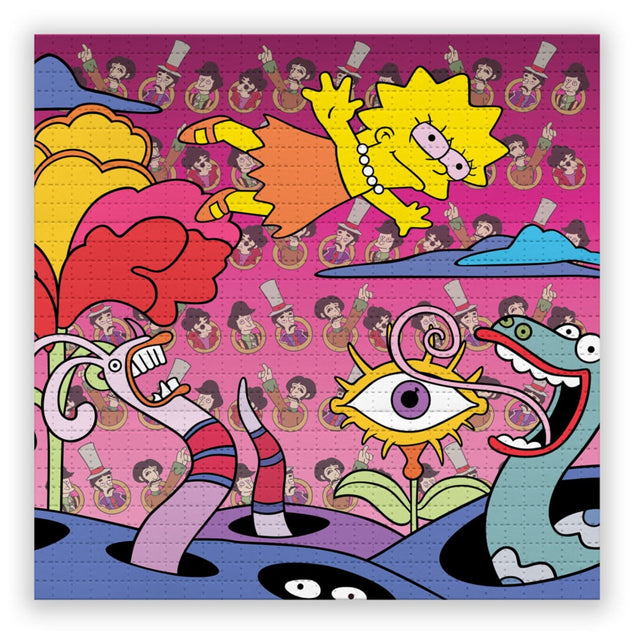
The origins of trippy imagery in art trace back to the countercultural revolution of the 1960s, where music posters, underground zines, and album covers became laboratories for visual experimentation. Those same hallucinogenic patterns and color explosions migrated to street walls in the 1980s and 1990s, merging with graffiti tags and hip-hop-driven iconography. Street Pop Art expanded the application, embedding comic book fonts, ad logos, and cartoon faces into warped universes. Artists like Kenny Scharf and Rammellzee bent the visual grid with compositions that felt electric and unstable, helping cement trippy as a cornerstone of rebellious visual language in the urban art scene.
Color Theory and Chaos in Contemporary Use
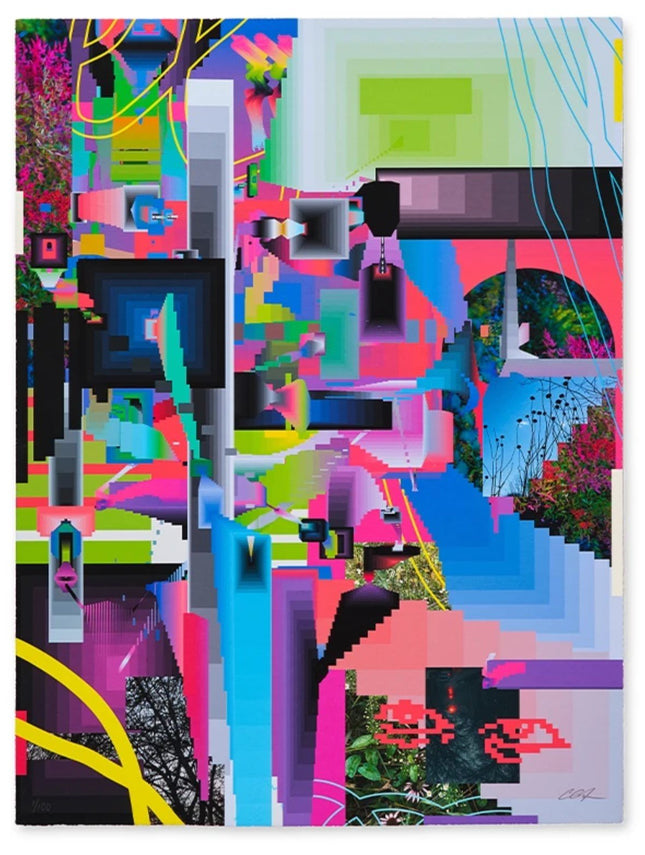
In contemporary graffiti and Street Pop Art, trippy does not always mean nostalgic. It often pushes forward with updated palettes that lean into digital glow, neon bleed, and glitch-inspired gradients. The result is a visual overload that mimics modern digital overstimulation while retaining the freedom and intensity of analog psychedelia. Trippy artworks collapse space and perspective, forcing viewers to navigate layered elements that twist traditional forms into something surreal and saturated. Through this method, trippy becomes more than a style—it is a visual commentary on fragmentation, repetition, and subconscious interpretation.
Trippy as a Cultural Frequency
Trippy is not simply an aesthetic decision. It is an assertion of freedom against rigid design standards and intellectual containment. In Street Pop Art & Graffiti Artwork, trippy energy creates space for joy, confusion, rebellion, and deep reflection. Whether rendered in fine art prints, hand-painted murals, or underground zines, the trippy impulse keeps the medium alive by refusing to sit still or be decoded easily. It is unpredictable, often humorous, sometimes menacing, but always immersive. As artists continue to explore what urban art can say and feel like, trippy remains one of its most powerful visual frequencies.