Trippy

2 artworks

  • Nothing More Than A State of Mind Archival Print by Alex Garant

    Alex Garant Nothing More Than A State of Mind Archival Print by Alex Garant

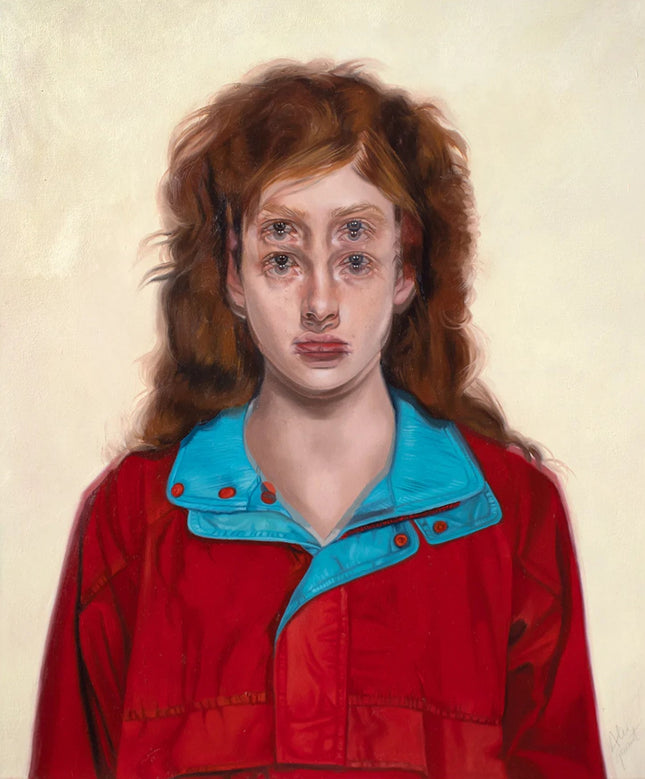
    Nothing More Than A State of Mind Archival Pigment Fine Art Limited Edition Print on Fine Art Paper by Pop Artist Alex Garant Modern Artwork. 2022 Signed & Numbered Limited Edition of 50 Artwork Size 20x24 Alex Garant – Nothing More Than A State of Mind in Street Pop Art & Graffiti Artwork Nothing More Than A State of Mind by Alex Garant is a 2022 archival pigment print that exemplifies the artist’s signature optical style. This 20x24 inch fine art edition, limited to just 50 signed and numbered prints, features a portrait of a young woman staring forward in a blank expression, yet layered with unsettling multiplicity. Her face is adorned with duplicated eyes and lips—perfectly rendered but visually fractured—forcing the viewer into a moment of cognitive dissonance. Garant’s portraiture operates like a visual glitch in the system, questioning perception and exploring the psychological distortions of modern life. While presented in a fine art format, this piece deeply aligns with the sensibilities and visual tactics of Street Pop Art & Graffiti Artwork. The subject’s red and cyan windbreaker pops with graphic intensity, set against a neutral background that brings the face—and its duplications—into sharp focus. The color blocking, the confident brushwork, and the emotional ambiguity speak to a visual language born in public murals and wheatpaste posters. By disrupting facial harmony, Garant disrupts the viewer’s comfort zone. This is not a portrait made to soothe or flatter. It is designed to challenge how we see others—and ourselves—in a world shaped by constant digital reflection and emotional overstimulation. Disrupted Identity Through Street-Level Surrealism Alex Garant’s signature double-vision technique is not merely stylistic—it carries conceptual weight. In this work, the layered facial features suggest states of mind fractured by repetition, social pressure, and information fatigue. The portrait feels like a living glitch, where a static identity cannot exist. This aesthetic tension is deeply resonant with graffiti culture, where visual interruption is both an act of defiance and a method of storytelling. Like a street tag scrawled over a polished billboard, the duplications in Garant’s painting refuse polished perfection, opting instead for multiplicity and distortion. This thematic approach mirrors the psychological undercurrent of street pop art. Artists within this movement frequently use surreal figuration and visual overload to comment on perception, consumerism, and mental fragmentation. Nothing More Than A State of Mind does this by presenting a human subject not as a fixed image but as a shifting mental projection, embodying emotional complexity and instability. Technique and Symbolism Aligned with Street Pop Culture While Garant paints using traditional methods, her portraits carry the graphic punch of street art. The bold primary colors, the focused symmetry, and the almost digital visual effect of duplication reflect the impact-first aesthetic of graffiti and paste-up culture. The piece reads like a visual echo, vibrating with emotional and symbolic frequency. It forces the eye to work, to reprocess, to re-evaluate—a demand familiar to viewers of street murals that often overwhelm, confront, or provoke with scale and content. The title Nothing More Than A State of Mind adds conceptual depth, suggesting that perception itself is unstable, fluid, and subject to distortion. In an era where curated digital personas and algorithmic filters shape how identity is consumed, Garant’s work acts as both mirror and warning. Her subject is not broken—she is multiplied, haunted, possibly trapped within a psychological or emotional loop. This message aligns with the core of graffiti art’s critical tradition: to reject surface appearance and instead reveal what lies beneath. Alex Garant's Place in Modern Pop Surrealism and Graffiti-Influenced Fine Art Alex Garant’s contributions to Street Pop Art & Graffiti Artwork extend beyond gallery walls. While her paintings are highly collectible and refined, their emotional rawness and visual subversion place them firmly within the movement's boundaries. Her work has gained attention from global art publications and exhibitions, standing out for its bold defiance of visual norms. Rather than celebrate static beauty, Garant fractures it—exposing the psychological truths hidden inside perception. Nothing More Than A State of Mind is not just a portrait—it is a visual philosophy, a layered reflection on identity and instability, executed with precision and pop-infused emotional grit. Its surreal technique and symbolic messaging connect deeply with the tools and tactics of street art, proving that visual rebellion is not limited to spray cans and alleyways—it lives wherever an artist dares to distort the expected and reflect the fractured human experience.

    $226.00

  • Sweet Dreams Giclee Print by Naoto Hattori

    Naoto Hattori Sweet Dreams Giclee Print by Naoto Hattori

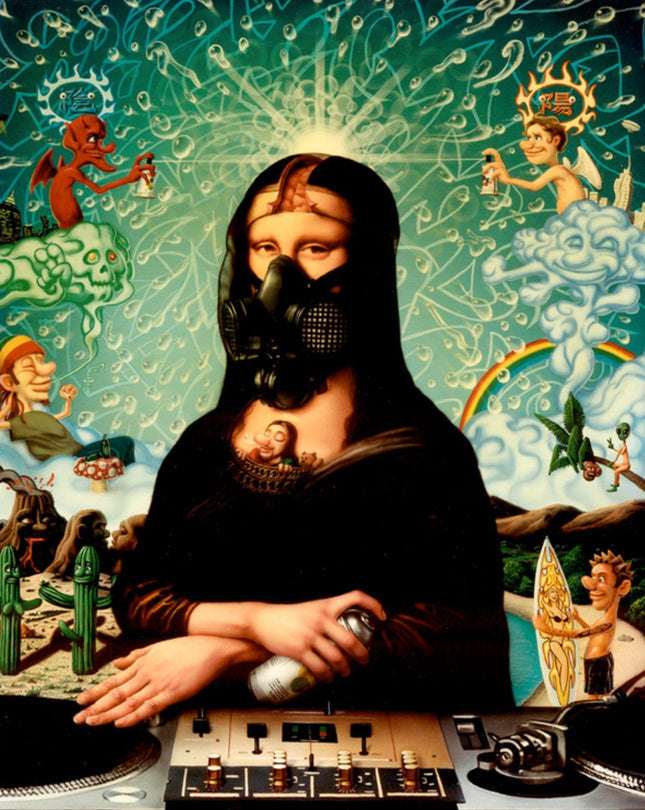
    Sweet Dreams Artwork Giclee Limited Edition Surreal Print on 100% Cotton Rag Fine Art Paper by Pop Culture Graffiti Artist Naoto Hattori. SWEET DREAMS 20 x 24 inches (50.8 x 61 cm) High Quality Giclee Print on 100% Cotton Rag Fine Art Paper Signed and Numbered Edition of 150

    $352.00

Trippy Graffiti Street Pop Art

Trippy as Visual Disruption in Street Pop Art & Graffiti Artwork

Trippy is a term often associated with altered states and psychedelic imagery, but in the context of Street Pop Art & Graffiti Artwork, it serves as a dynamic tool for disrupting visual logic and cultural expectations. Artists across generations have used trippy aesthetics to challenge linear thinking and confront passive viewership. These works often feature optical illusions, warped anatomy, vivid color clashes, and surrealist motifs that pull from both psychedelic subculture and mass media iconography. Within graffiti and pop traditions, the trippy sensibility transforms walls, canvases, and prints into portals that distort time, identity, and perception.

From Psychedelia to Urban Expression

The origins of trippy imagery in art trace back to the countercultural revolution of the 1960s, where music posters, underground zines, and album covers became laboratories for visual experimentation. Those same hallucinogenic patterns and color explosions migrated to street walls in the 1980s and 1990s, merging with graffiti tags and hip-hop-driven iconography. Street Pop Art expanded the application, embedding comic book fonts, ad logos, and cartoon faces into warped universes. Artists like Kenny Scharf and Rammellzee bent the visual grid with compositions that felt electric and unstable, helping cement trippy as a cornerstone of rebellious visual language in the urban art scene.

Color Theory and Chaos in Contemporary Use

In contemporary graffiti and Street Pop Art, trippy does not always mean nostalgic. It often pushes forward with updated palettes that lean into digital glow, neon bleed, and glitch-inspired gradients. The result is a visual overload that mimics modern digital overstimulation while retaining the freedom and intensity of analog psychedelia. Trippy artworks collapse space and perspective, forcing viewers to navigate layered elements that twist traditional forms into something surreal and saturated. Through this method, trippy becomes more than a style—it is a visual commentary on fragmentation, repetition, and subconscious interpretation.

Trippy as a Cultural Frequency

Trippy is not simply an aesthetic decision. It is an assertion of freedom against rigid design standards and intellectual containment. In Street Pop Art & Graffiti Artwork, trippy energy creates space for joy, confusion, rebellion, and deep reflection. Whether rendered in fine art prints, hand-painted murals, or underground zines, the trippy impulse keeps the medium alive by refusing to sit still or be decoded easily. It is unpredictable, often humorous, sometimes menacing, but always immersive. As artists continue to explore what urban art can say and feel like, trippy remains one of its most powerful visual frequencies.

Footer image

© 2025 Sprayed Paint Art Collection,

    • Amazon
    • American Express
    • Apple Pay
    • Bancontact
    • Diners Club
    • Discover
    • Google Pay
    • iDEAL
    • Mastercard
    • PayPal
    • Shop Pay
    • Visa

    Login

    Forgot your password?

    Don't have an account yet?
    Create account