Trippy

1 artwork

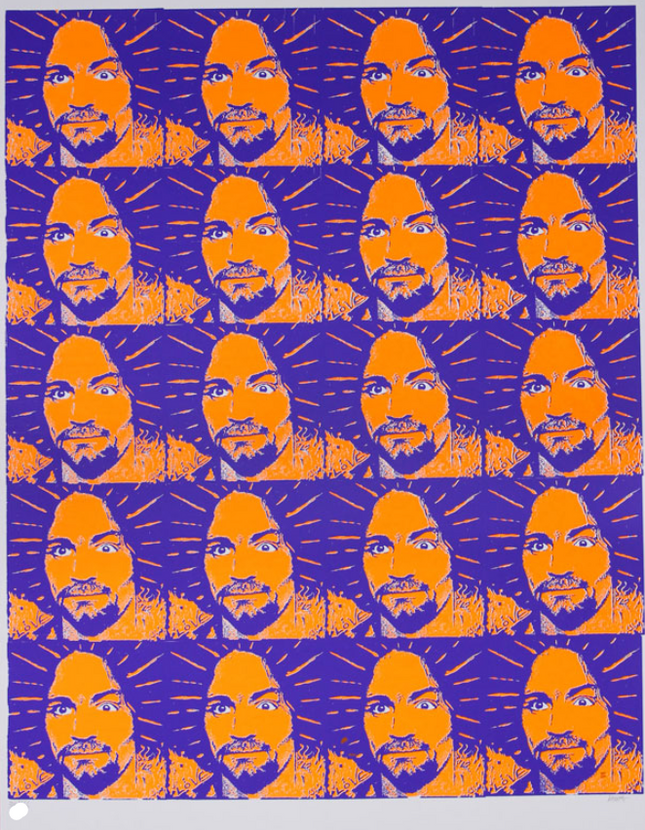
  • Charles Manson Everythings Charlie Silkscreen Print by Frank Kozik

    Frank Kozik Charles Manson Everythings Charlie Silkscreen Print by Frank Kozik

    Charles Manson Everything Charlie Silkscreen Print by Frank Kozik Hand-Pulled 2-Color on Fine Art Paper Limited Edition Pop Street Art Artwork. 1992 Signed & Numbered Limited Edition of 666 Artwork Size 22.5x29.5 Silkscreen Print Frank Kozik's "Charles Manson Everything Charlie" is a provocative silkscreen print that embodies the raw and often controversial energy of pop and street art. Released in 1992, this artwork reflects Kozik's edgy aesthetic, a bold confrontation of cultural icons and societal motifs that challenge the viewer. The print features a repeated portrait of Charles Manson, infamously known for leading the Manson Family and orchestrating a series of gruesome murders in the late 1960s. With a limited run of 666 pieces, a number playfully nodding to the subject's notoriety, each 22.5x29.5 inch print is signed and numbered by Kozik, asserting its authenticity and rarity. Crafted through a hand-pulled process, the 2-color print starkly contrasts the vibrant orange of Manson's face against a deep blue background, surrounded by what appears to be radiating lines or aura. This choice of color and repetition creates a visual echo chamber, amplifying the unsettling impact of Manson's gaze multiplied across the paper. The artwork encapsulates the spirit of the early '90s alternative scene and the burgeoning interest in street art as social commentary. Kozik's decision to immortalize Manson in this way taps into the vein of pop art tradition, reminiscent of Warhol's depictions of Marilyn Monroe. Yet, it subverts the norm by focusing on a figure associated with darkness and infamy rather than glamour or pop culture innocence. "Everything Charlie" is a stark example of how street art and pop art can converge in a single piece, bringing the outsider ethos and inflammatory messages to the fore. This is street art not confined to the alleys or hidden corners of the city but elevated to fine art, meant to hang on a wall, confront, and provoke. As with much of Kozik's work, the piece is not just a visual stimulus but a conversation starter, a powerful reminder of art's ability to encapsulate complex narratives within simple imagery. It's a window into the era it was produced, a snapshot of the zeitgeist, and a reflection on the culture's fascination with figures like Manson.

    $305.00

Trippy Graffiti Street Pop Art

Trippy as Visual Disruption in Street Pop Art & Graffiti Artwork

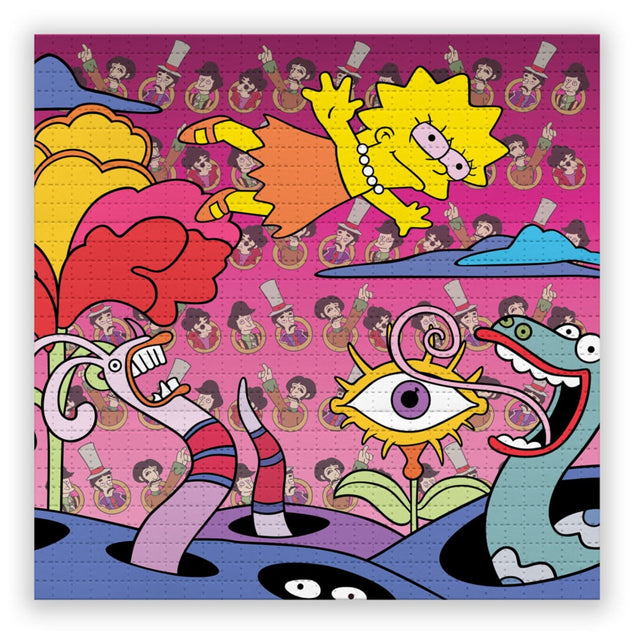
Trippy is a term often associated with altered states and psychedelic imagery, but in the context of Street Pop Art & Graffiti Artwork, it serves as a dynamic tool for disrupting visual logic and cultural expectations. Artists across generations have used trippy aesthetics to challenge linear thinking and confront passive viewership. These works often feature optical illusions, warped anatomy, vivid color clashes, and surrealist motifs that pull from both psychedelic subculture and mass media iconography. Within graffiti and pop traditions, the trippy sensibility transforms walls, canvases, and prints into portals that distort time, identity, and perception.

From Psychedelia to Urban Expression

The origins of trippy imagery in art trace back to the countercultural revolution of the 1960s, where music posters, underground zines, and album covers became laboratories for visual experimentation. Those same hallucinogenic patterns and color explosions migrated to street walls in the 1980s and 1990s, merging with graffiti tags and hip-hop-driven iconography. Street Pop Art expanded the application, embedding comic book fonts, ad logos, and cartoon faces into warped universes. Artists like Kenny Scharf and Rammellzee bent the visual grid with compositions that felt electric and unstable, helping cement trippy as a cornerstone of rebellious visual language in the urban art scene.

Color Theory and Chaos in Contemporary Use

In contemporary graffiti and Street Pop Art, trippy does not always mean nostalgic. It often pushes forward with updated palettes that lean into digital glow, neon bleed, and glitch-inspired gradients. The result is a visual overload that mimics modern digital overstimulation while retaining the freedom and intensity of analog psychedelia. Trippy artworks collapse space and perspective, forcing viewers to navigate layered elements that twist traditional forms into something surreal and saturated. Through this method, trippy becomes more than a style—it is a visual commentary on fragmentation, repetition, and subconscious interpretation.

Trippy as a Cultural Frequency

Trippy is not simply an aesthetic decision. It is an assertion of freedom against rigid design standards and intellectual containment. In Street Pop Art & Graffiti Artwork, trippy energy creates space for joy, confusion, rebellion, and deep reflection. Whether rendered in fine art prints, hand-painted murals, or underground zines, the trippy impulse keeps the medium alive by refusing to sit still or be decoded easily. It is unpredictable, often humorous, sometimes menacing, but always immersive. As artists continue to explore what urban art can say and feel like, trippy remains one of its most powerful visual frequencies.

Footer image

© 2025 Sprayed Paint Art Collection,

    • Amazon
    • American Express
    • Apple Pay
    • Bancontact
    • Diners Club
    • Discover
    • Google Pay
    • iDEAL
    • Mastercard
    • PayPal
    • Shop Pay
    • Visa

    Login

    Forgot your password?

    Don't have an account yet?
    Create account