TV Television

1 artwork

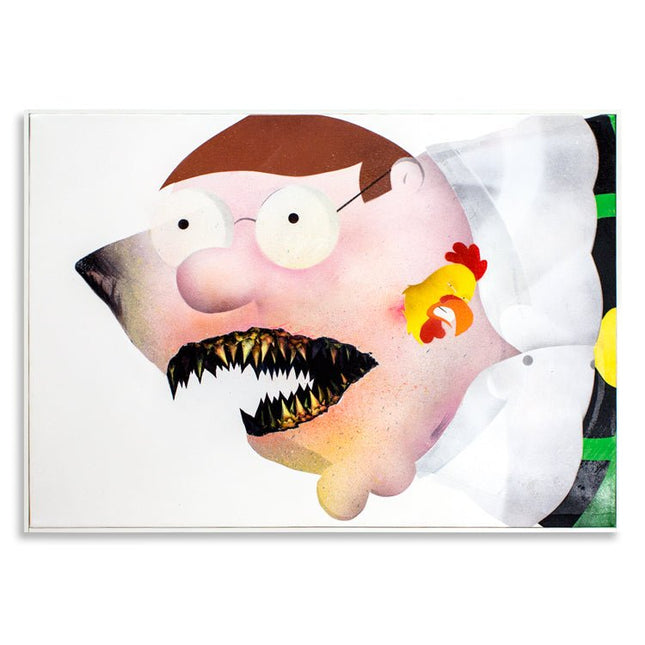
  • Ceci N'est Pas Une Peter Griffin Original Spray Paint Mixed Media Painting by Shark Toof

    Shark Toof Ceci N'est Pas Une Peter Griffin Original Spray Paint Mixed Media Painting by Shark Toof

    Ceci N'est Pas Une Peter Griffin Original Painting Acrylic & Aerosol on Canvas by Shark Toof Graffiti Street Artist Modern Pop Art. 2014 Signed Orignal Spray Paint Mixed Media Painting Artwork Size 27x19 "This new body of work is a blend of my graffiti roots, where I developed my unique voice. At the same time, there's also an aspect of this work that is " not taking yourself too seriously, vandalizing your icons," Shark Toof said while preparing in Detroit. "I like Detroit because it is very do-it-yourself, and I am a very do-it-yourself artist, so it is a great fit for me."-Shark Toof The Artistic Dialect of Shark Toof: Subverting Pop Culture Icons Shark Toof's "Ceci N'est Pas Une Peter Griffin" is a compelling piece that showcases the artist's deft blend of graffiti roots with the playful irreverence of modern pop art. Created in 2014, this original painting embodies Shark Toof's unique voice, a voice he has cultivated through his deep connections with the street art movement. This artwork, measuring 27x19 inches, is a striking example of his mixed media mastery, incorporating acrylic and aerosol on canvas. In this piece, Shark Toof engages with the familiar iconography of pop culture, specifically the well-known character Peter Griffin from the animated sitcom "Family Guy." However, in true street art fashion, Shark Toof takes this familiar image and subverts it, adding layers of meaning and challenging the viewer's perceptions. The title, a nod to René Magritte's famous work, plays with the idea of representation and reality, encouraging viewers to question what they see. The painting's mixed media approach is characteristic of street pop art, which combines various techniques and materials to create dynamic visuals. Shark Toof's use of bold colors and exaggerated features captures the essence of graffiti art's impact while paying homage to pop art's stylized aesthetics. His work does not shy away from humor or satire; instead, it embraces these elements to deliver a more profound commentary on the nature of celebrity, fandom, and the art world itself. In the context of street pop art and graffiti artwork, Shark Toof stands out as an artist who embodies the DIY spirit of the genre. His affinity for cities like Detroit, with their rich industrial pasts and vibrant street art scenes, speaks to his commitment to the grassroots nature of his craft. Shark Toof's work, including "Ceci N'est Pas Une Peter Griffin," is a visual feast and a testament to the transformative power of street art in the modern era. Through his art, Shark Toof continues to push the boundaries of street pop art, showcasing its potential to be both playful and piercingly insightful. His ability to navigate the intersection of street art and fine art while maintaining a sense of authenticity and approachability ensures that his work resonates with a broad spectrum of art enthusiasts and collectors alike.

    $2,479.00

TV Television Graffiti Street Pop Art

Television's Imprint on Street Pop Art & Graffiti

Since its inception, television has been a dominant cultural force, its screen a mirror reflecting, shaping, and sometimes distorting the society that tunes into its daily broadcasts. In the realm of street pop art and graffiti artwork, TV has carved its niche not merely as a medium for entertainment but as a rich source of inspiration and a canvas for commentary. Artists have co-opted the imagery and iconography of television, using it to critique our media-saturated environment. The TV set itself, with its classic box shape and antenna, has become a symbolic feature in many street artworks, symbolizing the pervasive influence of mass media on public consciousness.

Cultural Commentary Through Urban Mediums

The portrayal of television in street art often carries with it a duality; on the one hand, it represents the collective memories and shared experiences of generations raised in front of its glow. On the other hand, it is depicted as a tool of propaganda, a peddler of consumerism, and a shaper of reality that can lead to a passive, controlled society. Street artists utilize the television motif to discuss issues such as the loss of individuality, the manipulation of news, and the passivity of modern-day viewership. The medium of street art, known for its provocative and rebellious undertones, becomes an ironic choice for depicting television, as it traditionally serves as a counter-narrative to mainstream channels.

The Evolution of Television in Street Art

As television technology has evolved from the bulky cathode-ray tubes to the sleek flat screens of today, so has its representation in street pop art. The older television sets evoke nostalgia, a longing for simpler times. At the same time, modern screens can be seen as symbols of rapid technological changes and the continuous consumption of digital content. Graffiti artists and muralists alike have painted televisions with reverence and criticism, underscoring the device's role as a central fixture in daily life and as a mediator of the information flowing into the public sphere. The fusion of television themes with street art aesthetics also speaks to the power of visual communication. Just as television has been used to convey messages to a broad audience, street art captures the gaze of passersby, offering an unfiltered, often unsanctioned expression that might otherwise be censored on mainstream media. This makes the street wall a public television that broadcasts the community's diverse voices and talents. Street pop art and graffiti artwork that incorporate television challenge viewers to reconsider their relationship with the media they consume. By bringing the indoors out and plastering private consumption onto public walls, artists remind us of the communal roots of storytelling and the shared experiences that television can facilitate. Yet, they also ask us to be critical of the content that shapes our perceptions and to seek out our narratives in a world where reality and fiction are often intertwined on the small screen. Through this lens, television-themed street art connects to a common cultural thread and a disruption, encouraging individual thought and engagement in the urban landscape.
Footer image

© 2025 Sprayed Paint Art Collection,

    • Amazon
    • American Express
    • Apple Pay
    • Bancontact
    • Diners Club
    • Discover
    • Google Pay
    • iDEAL
    • Mastercard
    • PayPal
    • Shop Pay
    • Visa

    Login

    Forgot your password?

    Don't have an account yet?
    Create account