
United States, USA & America in Street Pop Art & Graffiti Artwork
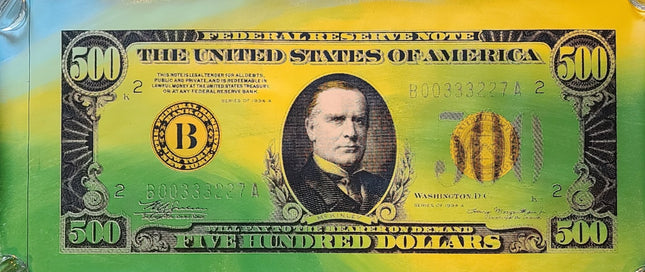
The United States—often referred to interchangeably as the USA or America—has been a foundational force in shaping the visual language, ethos, and cultural weight of Street Pop Art & Graffiti Artwork. From the subways of New York to the concrete expanses of Los Angeles, American cities have served as the birthplace, battleground, and gallery for some of the most influential visual movements of the last century. These terms—United States, USA, and America—carry complex meanings that artists across generations have embraced, questioned, and redefined through urban art. Whether used in patriotic celebration, critical commentary, or ironic juxtaposition, the image of America is constantly reframed through the spray can, stencil, wheatpaste, and print. Street Pop Art emerged from the streets of America during the post-war boom, most iconically in the 1960s with artists like Andy Warhol and Roy Lichtenstein, who elevated commercial and national symbols into high art. Their use of flags, dollar bills, celebrities, and consumer goods framed America as both an idea and a product. Meanwhile, graffiti art exploded in the 1970s and 1980s as a raw and unfiltered voice of the marginalized, especially in cities like New York. Artists like Jean-Michel Basquiat and Keith Haring harnessed the urgency of graffiti while integrating political and personal narratives about race, capitalism, and identity—all wrapped in American visual symbolism.
American Flags, Icons, and Symbols Reimagined
Few symbols have been manipulated as profoundly in Street Pop Art as the American flag. Artists from Shepard Fairey to Risk Rock to Futura have reworked its stars and stripes into statements about justice, protest, and unity. The flag becomes not just a national emblem but a canvas—a framework for storytelling and critique. Shepard Fairey’s RFK silkscreen print, for example, harnesses red, white, and blue to reframe historical memory into a call for present-day moral action. Similarly, Risk Rock’s Born on the 4th overlays the flag with lyrics and butterflies, confronting the viewer with the tension between national pride and personal struggle. Street artists also frequently appropriate figures like George Washington, Abraham Lincoln, and Lady Liberty—icons of America transformed into visual vehicles for commentary. Banksy, an outsider to the US, has even contributed to this visual discourse, parodying American military and political actions through stencil works around the world. In these reinterpretations, the terms USA and America move from static identity labels into layered concepts that reflect struggle, freedom, irony, and aspiration.
Graffiti as a Voice for the American Urban Experience
Graffiti in the United States began as a declaration of existence—namewriting on subway cars, rooftops, and walls. It was a rebellion against invisibility, particularly for young people in urban neighborhoods neglected by city planning and institutional power. What started as tagging grew into elaborate pieces, throw-ups, and eventually street-level murals that embodied both the spirit and contradictions of America. The use of bubble letters, wildstyle, and custom handstyles reflected American ingenuity and cultural fusion, with hip-hop culture becoming the sound and pulse of this visual revolution. As American cities evolved, so did the political urgency of graffiti. It became a form of protest—against police violence, systemic racism, economic inequality, and environmental collapse. Pieces painted during moments of national crisis, such as the civil rights movement, 9/11, or Black Lives Matter protests, serve as testament to how graffiti becomes America’s visual conscience, voiced not through media or policy, but directly through paint on public surfaces.
USA as a Living Canvas in Global Pop and Graffiti Culture
While the United States gave birth to many forms of street and pop art, it also became the template for global expansion. Artists from Brazil to Berlin have referenced American slang, branding, and aesthetics in their work, responding to the cultural exports of Hollywood, fast food, sneakers, and slogans. The very notion of America—as dream, empire, and contradiction—has become a universal theme. American street pop art doesn't just critique its nation; it reflects how the nation is seen by others and internalized around the world. The words United States, USA, and America remain central to the grammar of urban art. They signify a place of power and paradox, innovation and inequity, promise and protest. Through stencil, ink, collage, and aerosol, artists continue to redefine what these terms mean—turning them into layered, living expressions of identity, heritage, and resistance. Within the evolving language of Street Pop Art & Graffiti Artwork, America is not just a country. It is a canvas still being painted.