United States USA & America

2 artworks

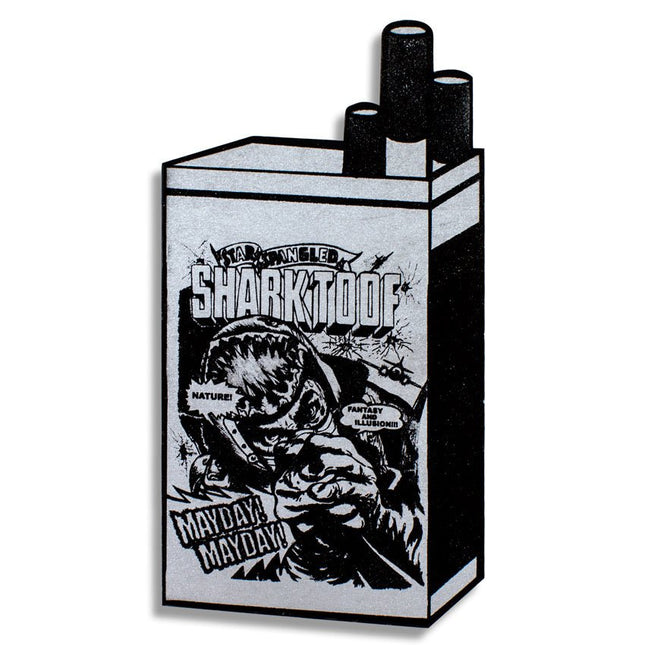
  • Star Spangled Shark Toof Silver HPM Wood Print by Shark Toof

    Shark Toof Star Spangled Shark Toof Silver HPM Wood Print by Shark Toof

    Star Spangled Shark Toof- Silver Original Hand-Painted Multiple on Laser Cut Wood Panel ready to hang by Shark Toof Graffiti Street Artist Modern Pop Art. 2016 Signed & Numbered HPM Embleshed Limited Edition of 7 Artwork on Wood Size 9.25x17 “This new body of work is a blend of my graffiti roots which is where I really developed my own unique voice. At the same time there’s also an aspect of this work that is just not taking yourself too seriously, kind of vandalizing your own icons,” Shark Toof said while preparing in Detroit. “I like Detroit because it is very do-it-yourself and I am a very do-it-yourself artist so it is a great fit for me.”

    $676.00

  • Platinum Plus Silkscreen Print by Denial- Daniel Bombardier

    Denial- Daniel Bombardier Platinum Plus Silkscreen Print by Denial- Daniel Bombardier

    Platinum Plus Limited Edition 9-Color Hand-Pulled Silkscreen Print on Fine Art Paper by Denial Graffiti Street Artist Modern Pop Art. 2020 Signed Limited Edition of 80 Artwork Size 24x18 Platinum Plus by Denial: Financial Icons and Identity Crisis in Street Pop Art & Graffiti Artwork Platinum Plus is a 2020 hand-pulled silkscreen print by Canadian graffiti and pop artist Denial, created in a signed limited edition of 80. Measuring 24 x 18 inches, this nine-color artwork is printed on fine art paper and boldly juxtaposes the visual identity of consumer banking with emotional expression and symbolic critique. Set against the form of a Bank of America Platinum Plus Visa card, the piece features a blonde woman draped in the American flag with her face seductively tilted and eyes closed. The credit card’s numbers and logos remain visible, as does the name Mary E. Jane, tying the visual commentary to themes of consumption, patriotism, and societal projection. The work stands as a charged example of Street Pop Art & Graffiti Artwork, where everyday corporate imagery is recontextualized to expose the surreal intersections between money, power, identity, and desire. Consumerism as Character Design Denial transforms the sterile design of a credit card into a visual battlefield of emotion, nationhood, and critique. The background is a direct replica of a platinum credit card, complete with issuer branding and typographic data, grounding the piece in the iconography of American capitalism. At the forefront, however, is a woman painted in a pop comic style, her face covered in the American flag. The use of the stars and stripes over her skin serves as a metaphor for national branding and the commodification of identity, where people themselves become surfaces for advertisement. Her lipstick is hot pink, her nails electric red, and her hair neon yellow—amplified hues that speak to artificial beauty standards and performative femininity. The figure’s sensual pose, coupled with the cold structure of financial documentation, embodies the paradoxes that run deep in Street Pop Art & Graffiti Artwork. Printmaking Technique and Fine Art Execution This silkscreen was produced using nine individual color separations, which allowed Denial to layer bold, solid inks with precision and clarity. The color saturation remains rich and flat, honoring the aesthetic of vintage commercial printing and comic-style graphics. The use of fine art paper adds weight and texture, positioning the work in a gallery context while retaining the visual urgency of street-level messaging. The edges of each color plane are sharp and deliberate, emphasizing the constructed nature of the piece both visually and conceptually. As part of Denial’s ongoing series of financial and identity-based critiques, Platinum Plus functions as a high-quality physical object and a powerful cultural intervention. Denial’s Sociopolitical Voice Through Branding Subversion Denial, whose real name is Daniel Bombardier, has become a defining voice in North American graffiti and contemporary pop critique. Emerging from the subversive world of sticker bombing and billboard hijacking, Denial now works across multiple mediums while maintaining his commitment to questioning authority, media, and economic control. In Platinum Plus, the artist pulls from a language of corporate aesthetics to question the myths of upward mobility, American exceptionalism, and financial aspiration. The work is both seductive and confrontational—encouraging viewers to examine the ways that financial institutions, advertising, and personal fantasy collide. Within the vocabulary of Street Pop Art & Graffiti Artwork, Platinum Plus is both a visual satire and an emotional outcry, mapping the price of belonging and the cost of visibility in a world built on credit and control.

    $450.00

United States USA & America Graffiti Street Pop Artworks

United States, USA & America in Street Pop Art & Graffiti Artwork

The United States—often referred to interchangeably as the USA or America—has been a foundational force in shaping the visual language, ethos, and cultural weight of Street Pop Art & Graffiti Artwork. From the subways of New York to the concrete expanses of Los Angeles, American cities have served as the birthplace, battleground, and gallery for some of the most influential visual movements of the last century. These terms—United States, USA, and America—carry complex meanings that artists across generations have embraced, questioned, and redefined through urban art. Whether used in patriotic celebration, critical commentary, or ironic juxtaposition, the image of America is constantly reframed through the spray can, stencil, wheatpaste, and print. Street Pop Art emerged from the streets of America during the post-war boom, most iconically in the 1960s with artists like Andy Warhol and Roy Lichtenstein, who elevated commercial and national symbols into high art. Their use of flags, dollar bills, celebrities, and consumer goods framed America as both an idea and a product. Meanwhile, graffiti art exploded in the 1970s and 1980s as a raw and unfiltered voice of the marginalized, especially in cities like New York. Artists like Jean-Michel Basquiat and Keith Haring harnessed the urgency of graffiti while integrating political and personal narratives about race, capitalism, and identity—all wrapped in American visual symbolism.

American Flags, Icons, and Symbols Reimagined

Few symbols have been manipulated as profoundly in Street Pop Art as the American flag. Artists from Shepard Fairey to Risk Rock to Futura have reworked its stars and stripes into statements about justice, protest, and unity. The flag becomes not just a national emblem but a canvas—a framework for storytelling and critique. Shepard Fairey’s RFK silkscreen print, for example, harnesses red, white, and blue to reframe historical memory into a call for present-day moral action. Similarly, Risk Rock’s Born on the 4th overlays the flag with lyrics and butterflies, confronting the viewer with the tension between national pride and personal struggle. Street artists also frequently appropriate figures like George Washington, Abraham Lincoln, and Lady Liberty—icons of America transformed into visual vehicles for commentary. Banksy, an outsider to the US, has even contributed to this visual discourse, parodying American military and political actions through stencil works around the world. In these reinterpretations, the terms USA and America move from static identity labels into layered concepts that reflect struggle, freedom, irony, and aspiration.

Graffiti as a Voice for the American Urban Experience

Graffiti in the United States began as a declaration of existence—namewriting on subway cars, rooftops, and walls. It was a rebellion against invisibility, particularly for young people in urban neighborhoods neglected by city planning and institutional power. What started as tagging grew into elaborate pieces, throw-ups, and eventually street-level murals that embodied both the spirit and contradictions of America. The use of bubble letters, wildstyle, and custom handstyles reflected American ingenuity and cultural fusion, with hip-hop culture becoming the sound and pulse of this visual revolution. As American cities evolved, so did the political urgency of graffiti. It became a form of protest—against police violence, systemic racism, economic inequality, and environmental collapse. Pieces painted during moments of national crisis, such as the civil rights movement, 9/11, or Black Lives Matter protests, serve as testament to how graffiti becomes America’s visual conscience, voiced not through media or policy, but directly through paint on public surfaces.

USA as a Living Canvas in Global Pop and Graffiti Culture

While the United States gave birth to many forms of street and pop art, it also became the template for global expansion. Artists from Brazil to Berlin have referenced American slang, branding, and aesthetics in their work, responding to the cultural exports of Hollywood, fast food, sneakers, and slogans. The very notion of America—as dream, empire, and contradiction—has become a universal theme. American street pop art doesn't just critique its nation; it reflects how the nation is seen by others and internalized around the world. The words United States, USA, and America remain central to the grammar of urban art. They signify a place of power and paradox, innovation and inequity, promise and protest. Through stencil, ink, collage, and aerosol, artists continue to redefine what these terms mean—turning them into layered, living expressions of identity, heritage, and resistance. Within the evolving language of Street Pop Art & Graffiti Artwork, America is not just a country. It is a canvas still being painted.

Footer image

© 2026 Sprayed Paint Art Collection,

    • Amazon
    • American Express
    • Apple Pay
    • Bancontact
    • Diners Club
    • Discover
    • Google Pay
    • iDEAL
    • Mastercard
    • PayPal
    • Shop Pay
    • Visa

    Login

    Forgot your password?

    Don't have an account yet?
    Create account