United States USA & America

4 artworks

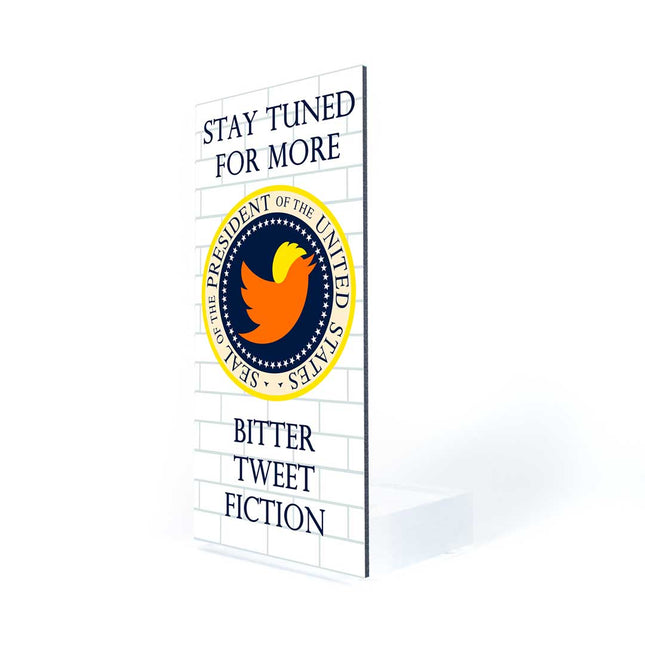
  • Bitter Tweet Fiction Welcome Wall Archival Print by Ron English

    Ron English- POPaganda Bitter Tweet Fiction Welcome Wall Archival Print by Ron English- POPaganda

    Bitter Tweet Fiction- Welcome Wall Archival Pigment Print on Metal with Etched Acrylic Base Sculpture Artwork by graffiti street artist modern pop legend artist Ron English- POPaganda. Ron English- POPaganda is widely considered a seminal figure in the advancement of street art away from traditional wild-style lettering into clever statement and masterful trompe l’oeil based art. He has created illegal murals and billboards that blend stunning visuals with biting political, consumerist and surrealist statements, hijacking public space worldwide for the sake of art since the 1980s.

    $371.00

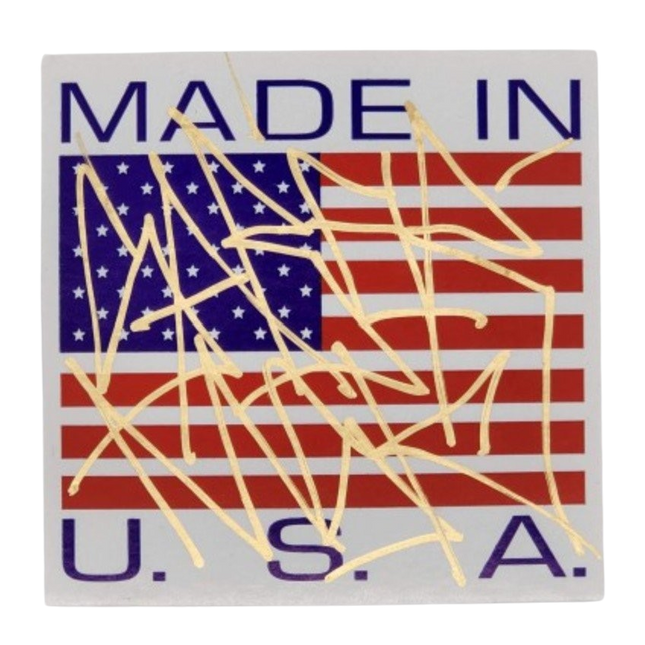
  • Made in USA Flag Slap-Up Label Sticker Original Tag Art by Saber Gold 1

    Saber Made in USA Flag Slap-Up Label Sticker Original Tag Art by Saber

    Made in USA Flag Slap-Up Label Sticker Original Tag Art by Saber Original Permanent Marker Art Drawing on Glossy US Flag Sticker by Graffiti Artist Modern Street Artwork. 2020 Signed US Flag Made in USA America Original Slap Up Graffiti Art Tag 4x4 Marker Tagged on Sticker. Unfurling the American Narrative Through Graffiti: The Made in USA Flag Sticker Art The potent symbol of the American flag has been a recurring motif in various forms of art, not least within the vibrant world of Street Pop Art and Graffiti Artwork. Within this context, the 'Made in USA' flag slap-up label sticker stands out as a canvas for expression, especially in the hands of graffiti artists. Layered with original tag art, these stickers serve as miniature yet powerful vehicles for cultural and political commentary, recontextualizing a national symbol within the urban landscape. Saber's Interpretation of the American Iconography Renowned graffiti artist Saber Ryan Weston Shook has significantly contributed to this expression. His original permanent marker art drawings on glossy US flag stickers are more than just aesthetic creations; they are a form of modern street artwork that captures the essence of American identity and the spirit of its people. His work, created in 2020 and signed, embodies a raw and compelling narrative, each tag measuring 4x4 inches – a small but striking testament to the artist's skill and vision. Saber's use of the American flag as a backdrop is particularly resonant, given the flag's strong associations with patriotism, freedom, and national identity. By superimposing his tags over this symbol, Saber disrupts the viewer's usual perception, challenging them to reconsider the meaning of 'Made in USA' in the context of street art. His bold and unapologetic strokes introduce a dialogue about ownership, creativity, and the very definition of what it means to be American-made. The Evolution of Tagging and Its Cultural Relevance Tagging has evolved from straightforward signatures to complex works of art that communicate the artist's identity and status within the graffiti community. It is a practice steeped in the history of street art, one that demands attention and commands space. Regarding the 'Made in USA' flag slap-up label stickers by Saber, the tags are not just marks of territory but statements of existence. The choice of gold and silver markers adds a layer of irony, contrasting precious metals' perceived value with graffiti art's often misunderstood value. The cultural relevance of such art is immense. It taps into ongoing conversations about national pride and consumerism, questioning the authenticity of the 'Made in USA' label in an era of globalization. Moreover, it embodies the ethos of Street Pop Art, a genre that borrows from popular culture to create art that is both accessible and deeply meaningful. In Saber's hands, the flag sticker transforms into a manifesto, a declaration that art made on the streets by the hands of the many is as quintessentially American as the flag itself. The 'Made in USA' flag slap-up label stickers adorned with Saber's tags represent a microcosm of the larger narrative that Street Pop Art and Graffiti Artwork continually narrate. Through such pieces, artists like Saber assert their place within the American saga, crafting a version of the flag that is as diverse, complex, and vibrant as the nation it represents. These stickers are not just tags; they are emblems of a culture that celebrates the freedom of expression and the indelible marks of individuality.

    $16.00

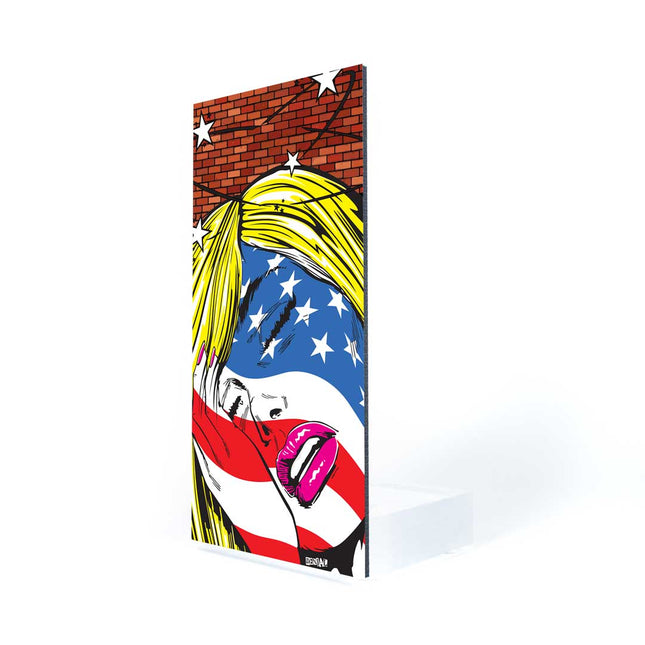
  • Ughhhmerica Sculpture Print by Denial- Daniel Bombardier

    Denial- Daniel Bombardier Ughhhmerica Sculpture Print by Denial- Daniel Bombardier

    Ughhhmerica- Welcome Wall Archival Pigment Print on Metal with Etched Acrylic Base Sculpture Artwork by graffiti street artist modern pop legend artist Denial. 2020 Signed & Numbered HPM Limited Edition of 100 Artwork Size 4x8 DENIAL is a Canadian artist whose work critiques consumerism and the human condition. Though based in Windsor Ontario, DENIAL spends much of the year traveling and exhibiting throughout Canada and the USA, having done solo shows in Los Angeles, Chicago, Detroit, New York, Toronto, and Vancouver. In the world of Denial, memory is important, because it is the basis of his work, as it nostalgically encourages the audience to engage with it. As a result, his art is as familiar, as it is disturbing because it reveals the most unsettling parts of society, the ones we are in a “denial” of. No matter its controversial history, graffiti is less and less viewed as a form of vandalism.

    $385.00

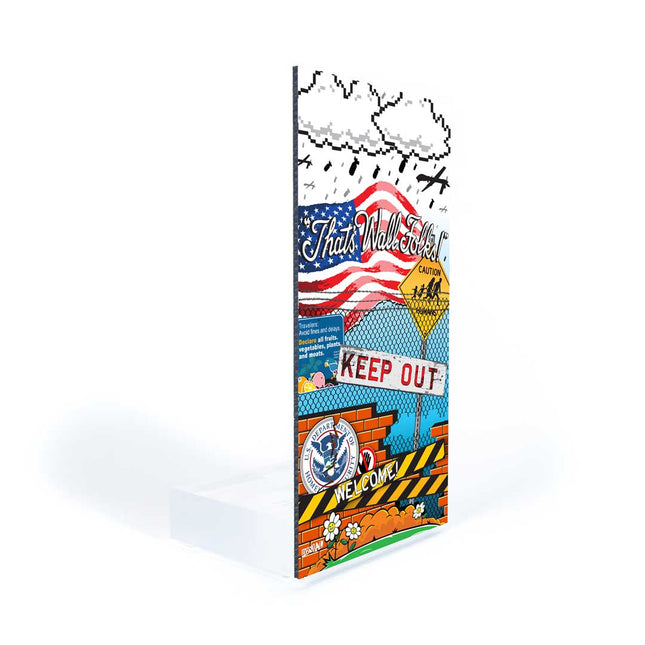
  • That's Wall Folks! Sculpture by Denial- Daniel Bombardier

    Denial- Daniel Bombardier That's Wall Folks! Sculpture by Denial- Daniel Bombardier

    That's Wall Folks!- Welcome Wall Archival Pigment Print on Metal with Etched Acrylic Base Sculpture Artwork by graffiti street artist modern pop legend artist Denial. 2020 Limited Edition of100 Artwork Size 4x8 DENIAL is a Canadian artist whose work critiques consumerism and the human condition. Though based in Windsor Ontario, DENIAL spends much of the year traveling and exhibiting throughout Canada and the USA, having done solo shows in Los Angeles, Chicago, Detroit, New York, Toronto, and Vancouver. Essentially, Denial is satirizing the reality, which both he and us are experiencing, through some of the Western culture’s most emblematic symbols. Denial is utilizing cultural products with the intention to make a statement against the system, which gave birth to them. As a result, he re-contextualizes them and transforms them from commercial products to his cultural legacy.

    $385.00

United States USA & America Graffiti Street Pop Artworks

United States, USA & America in Street Pop Art & Graffiti Artwork

The United States—often referred to interchangeably as the USA or America—has been a foundational force in shaping the visual language, ethos, and cultural weight of Street Pop Art & Graffiti Artwork. From the subways of New York to the concrete expanses of Los Angeles, American cities have served as the birthplace, battleground, and gallery for some of the most influential visual movements of the last century. These terms—United States, USA, and America—carry complex meanings that artists across generations have embraced, questioned, and redefined through urban art. Whether used in patriotic celebration, critical commentary, or ironic juxtaposition, the image of America is constantly reframed through the spray can, stencil, wheatpaste, and print. Street Pop Art emerged from the streets of America during the post-war boom, most iconically in the 1960s with artists like Andy Warhol and Roy Lichtenstein, who elevated commercial and national symbols into high art. Their use of flags, dollar bills, celebrities, and consumer goods framed America as both an idea and a product. Meanwhile, graffiti art exploded in the 1970s and 1980s as a raw and unfiltered voice of the marginalized, especially in cities like New York. Artists like Jean-Michel Basquiat and Keith Haring harnessed the urgency of graffiti while integrating political and personal narratives about race, capitalism, and identity—all wrapped in American visual symbolism.

American Flags, Icons, and Symbols Reimagined

Few symbols have been manipulated as profoundly in Street Pop Art as the American flag. Artists from Shepard Fairey to Risk Rock to Futura have reworked its stars and stripes into statements about justice, protest, and unity. The flag becomes not just a national emblem but a canvas—a framework for storytelling and critique. Shepard Fairey’s RFK silkscreen print, for example, harnesses red, white, and blue to reframe historical memory into a call for present-day moral action. Similarly, Risk Rock’s Born on the 4th overlays the flag with lyrics and butterflies, confronting the viewer with the tension between national pride and personal struggle. Street artists also frequently appropriate figures like George Washington, Abraham Lincoln, and Lady Liberty—icons of America transformed into visual vehicles for commentary. Banksy, an outsider to the US, has even contributed to this visual discourse, parodying American military and political actions through stencil works around the world. In these reinterpretations, the terms USA and America move from static identity labels into layered concepts that reflect struggle, freedom, irony, and aspiration.

Graffiti as a Voice for the American Urban Experience

Graffiti in the United States began as a declaration of existence—namewriting on subway cars, rooftops, and walls. It was a rebellion against invisibility, particularly for young people in urban neighborhoods neglected by city planning and institutional power. What started as tagging grew into elaborate pieces, throw-ups, and eventually street-level murals that embodied both the spirit and contradictions of America. The use of bubble letters, wildstyle, and custom handstyles reflected American ingenuity and cultural fusion, with hip-hop culture becoming the sound and pulse of this visual revolution. As American cities evolved, so did the political urgency of graffiti. It became a form of protest—against police violence, systemic racism, economic inequality, and environmental collapse. Pieces painted during moments of national crisis, such as the civil rights movement, 9/11, or Black Lives Matter protests, serve as testament to how graffiti becomes America’s visual conscience, voiced not through media or policy, but directly through paint on public surfaces.

USA as a Living Canvas in Global Pop and Graffiti Culture

While the United States gave birth to many forms of street and pop art, it also became the template for global expansion. Artists from Brazil to Berlin have referenced American slang, branding, and aesthetics in their work, responding to the cultural exports of Hollywood, fast food, sneakers, and slogans. The very notion of America—as dream, empire, and contradiction—has become a universal theme. American street pop art doesn't just critique its nation; it reflects how the nation is seen by others and internalized around the world. The words United States, USA, and America remain central to the grammar of urban art. They signify a place of power and paradox, innovation and inequity, promise and protest. Through stencil, ink, collage, and aerosol, artists continue to redefine what these terms mean—turning them into layered, living expressions of identity, heritage, and resistance. Within the evolving language of Street Pop Art & Graffiti Artwork, America is not just a country. It is a canvas still being painted.

Footer image

© 2025 Sprayed Paint Art Collection,

    • Amazon
    • American Express
    • Apple Pay
    • Bancontact
    • Diners Club
    • Discover
    • Google Pay
    • iDEAL
    • Mastercard
    • PayPal
    • Shop Pay
    • Visa

    Login

    Forgot your password?

    Don't have an account yet?
    Create account