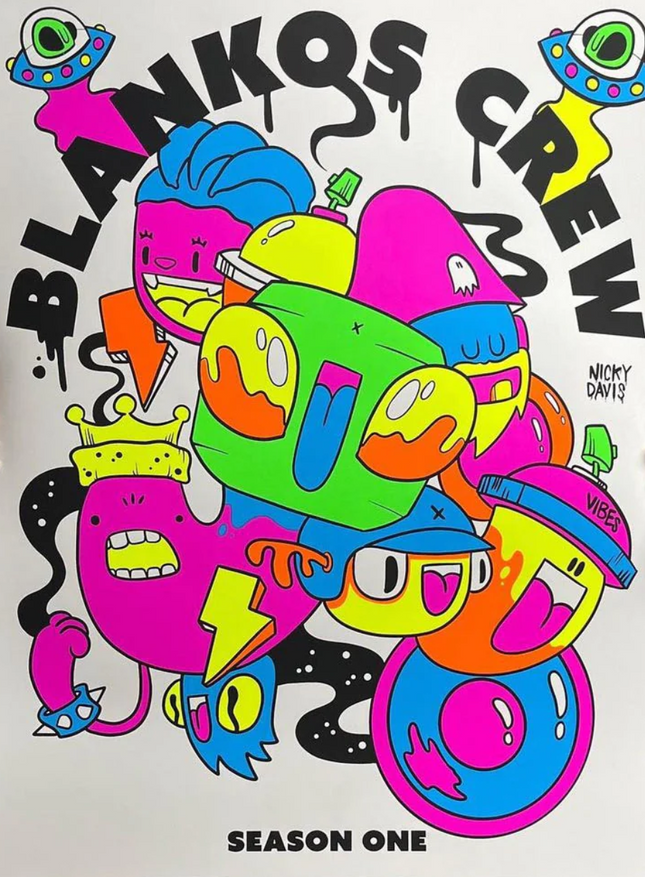
Blankos Crew Season One Silkscreen Print by Nicky Davis- Ghost Gang Hand-Pulled 6-Color Screen Print on Fine Art Paper Limited Edition Pop Street Art Artwork.
2020 Signed & Numbered Limited Edition of TBD Artwork Size 18x24
The Blankos Crew Season One Silkscreen Print by Nicky Davis is a limited edition art piece inspired by the popular online game, Blankos Block Party. The game features customizable characters called "Blankos" that inhabit a vibrant and creative world where players can participate in various activities such as racing, shooting, and obstacle courses. Nicky Davis is a talented artist known for his colorful and whimsical designs. In the Blankos Crew Season One Silkscreen Print, he brings to life the characters and themes from the game in a visually stunning composition. The artwork showcases various Blankos characters with distinct personalities and styles, giving fans of the game a collectible piece of art to cherish. This silkscreen print is produced using high-quality inks and paper, ensuring vibrant colors and long-lasting quality. The artwork is typically signed and numbered by the artist, making it a sought-after collector's item for Blankos Block Party enthusiasts and art collectors alike. The limited nature of the print run further adds to its value and exclusivity. If you're interested in obtaining this piece of art, keep an eye out for sales from galleries, online retailers, or through the artist's website. Be prepared to act quickly, as limited edition art can sell out fast, especially when it's connected to a popular IP like Blankos Block Party.
Level Up: The Artistic Merge of Video Games with Street Art
The vibrant world of video games often spills over the boundaries of digital screens into the tangible realm of street pop art and graffiti artwork. This merging of domains represents a cultural shift where the once niche gaming hobby has become a significant source of influence for contemporary artists around the globe. Video games, with their distinctive characters, colorful graphics, and rich narratives, offer a treasure trove of inspiration for street artists looking to infuse their work with a sense of nostalgia, playfulness, and social commentary. The evolution of video game graphics from simple pixelated forms to complex, lifelike representations mirrors the transformative journey of street art from basic tagging to elaborate murals. The imagery of iconic characters and scenes from beloved games finds a new canvas on city walls, as artists like Banksy and Shepard Fairey incorporate pop culture references, including video game elements, into their work. These visual dialogues with gaming create a connection with a broad audience, tapping into the shared experiences and memories of gamers and non-gamers alike.
Press Play: Video Games in the Gallery of the Streets
Street pop art thrives on the elements of surprise and accessibility. By bringing video game imagery into their work, artists create a gallery in the streets open to all. From the electric hues of Pac-Man ghosts to the iconic silhouette of Mario, video game characters become part of the urban landscape, inviting passersby to interact with the art personally. This form of artistic expression pays homage to the cultural impact of video games and challenges the traditional confines of art by embracing a medium often dismissed as mere entertainment. This trend extends beyond mere representation. Video game-themed graffiti artwork often carries a more profound message, addressing issues such as technology's role in society, the blurring lines between reality and virtual worlds, and even critiques of consumerism and capitalism – themes prevalent in the narratives of many video games. The artworks become a form of storytelling, much like the games they depict, offering layers of interpretation and meaning to those who encounter them.
Spawn Points: The Icons of Gaming Culture in Modern Art
Street art's embrace of video game culture reflects a broader acceptance of gaming as a significant aspect of modern life. Characters like Lara Croft, Link from the "Legend of Zelda," and even the nameless protagonists of "Among Us" have been immortalized in global murals. These pieces serve as spawn points, where the digital and physical worlds converge, allowing the interactive nature of gaming to influence the static world of street art. Artists who grew up with a controller in hand are now at the forefront of street pop art, bringing a pixelated perspective that infuses their work with the language of gaming. This has led to a new aesthetic in graffiti artwork, combining the sharp lines and bright colors of digital realms with the textural and often unpredictable surfaces of urban structures. The result is a dynamic interplay between two seemingly disparate worlds, connected by the shared language of visual art. Once confined to arcades and living rooms, video games now have a presence in the most public of spaces, telling their stories alongside traditional street art narratives. This cultural crossover has given rise to a unique form of artistic expression that resonates with a generation that has grown up with a joystick in their hands and an appreciation for the artistry behind their favorite games. As gaming continues to evolve, so will its influence on street pop art and graffiti artwork, ensuring that the legacy of these digital adventures will continue to be played out on the grand canvas of our urban landscapes.