

Villain
-

Dave Pollot The High Ground Giclee Print by Dave Pollot
The High Ground Giclee Print by Dave Pollot Artwork Limited Edition Print on Canvas Graffiti Pop Street Artist. 2025 Signed & Numbered Limited Edition of TBD Artwork Size 20x13 Star Wars May the 4th Special Edition Print on Rolled Canvas. The High Ground Giclee Print by Dave Pollot: Star Wars in the American Wilderness The High Ground is a 2025 giclee print by Dave Pollot, a limited edition artwork measuring 20x13 inches on rolled canvas. Signed and numbered by the artist, this special edition was released to mark Star Wars Day, combining sci-fi iconography with classic Americana. Dave Pollot, known for recontextualizing pop culture into traditional landscapes and thrift store finds, brings Darth Vader, stormtroopers, and mallards into a serene wilderness hunting scene, transforming fan art into a contemplative and visually satirical piece within Street Pop Art & Graffiti Artwork. Star Wars and American Nostalgia Collide This artwork channels the quiet stoicism of mid-century American wildlife paintings, a genre associated with stillness, solitude, and reverence for nature. However, Pollot introduces an unexpected yet humorous disruption—Darth Vader, dressed in full regalia, holds a camouflage duck call and lifts his hand as ducks scatter across a frosty marsh. In the backdrop, stormtroopers pose as hunters with rifles raised, as if unaware they are participants in a parody. The distant trees and subdued color palette create a tranquil environment that is cleverly unsettled by these fictional intrusions. The Death Star hovers faintly in the misted moon, replacing the sun like an all-seeing presence. The balance between humor and reverence is where Pollot excels, subtly critiquing the commercialization of mythology while celebrating it at the same time. The Satirical Language of Dave Pollot Dave Pollot is an American artist celebrated for taking discarded art and reimagining it through the lens of popular culture. His works often remix vintage aesthetics with modern characters from video games, films, and television, turning forgotten or ignored canvases into sharply observed commentaries. The High Ground follows this trajectory by preserving the painting’s original sentiment—peaceful wilderness and natural observation—but replacing the human subjects with galactic legends. This method turns the familiar into the surreal and invites viewers to reassess both the imagery and the context. It functions both as a homage and a gentle subversion, seamlessly embedding Star Wars lore into the pastoral. Modern Street Pop Art on Traditional Canvas The High Ground is not just a novelty print for science fiction fans; it is a deliberate exploration of cultural layering. In the context of Street Pop Art & Graffiti Artwork, it utilizes mashup aesthetics to reflect how pop culture infiltrates memory and collective nostalgia. By printing on canvas and mimicking classical wildlife art, Pollot bridges the distance between digital-age fandom and analog artistic traditions. Released as a limited edition for Star Wars May the 4th, the print resonates beyond franchise loyalty. It becomes a narrative about cultural saturation, about how icons like Darth Vader are not simply fictional—they inhabit our landscapes, our metaphors, and our humor. Dave Pollot’s The High Ground embodies this ethos with cleverness and craftsmanship, making it a notable piece within contemporary collectible fine art.
$350.00
-
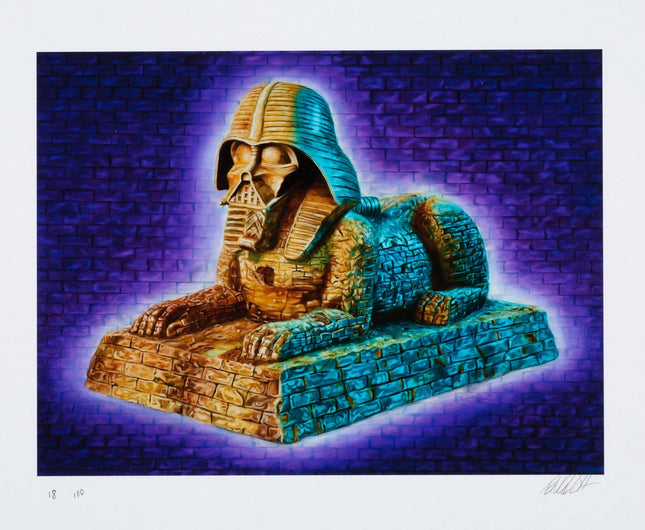
Ron English- POPaganda Vader Sphinx Archival Print by Ron English- POPaganda
Vader Sphinx Limited Edition Archival Pigment Fine Art Prints on Moab Entrada Fine Art Paper by Graffiti Street Art and Pop Culture Artist Ron English- POPaganda. 2021 Signed & Numbered Limited Edition of 100 Archival Pigment Print in Colors on Moab Entrada Fine Art Paper Artwork Size 16x13 The "Vader Sphinx" is an extraordinary piece from the collection of Ron English- POPaganda, a prominent figure in contemporary art, renowned for his unique amalgamation of pop culture references with street art aesthetics. In this particular limited edition series, English conjures up a captivating blend of ancient symbolism and modern mythology by juxtaposing the iconic visage of Darth Vader with the timeless form of the Egyptian Sphinx. Limited to a set of 100, each print has been signed and numbered by the artist himself, ensuring its value as a collectible item. The work is sized at 16x13 inches and is printed using archival pigment on Moab Entrada Fine Art Paper, a premium choice that enhances the depth and vibrancy of the artwork's colors. This print serves as a visual dialogue between past and present, invoking the power and mystery of both entities it represents. Vader, an emblem of the dark side in the "Star Wars" universe, is superimposed onto the body of a Sphinx, traditionally seen as a guardian of sacred spaces and knowledge. English's work invites contemplation on the fusion of these powerful symbols, suggesting parallels between the cultural significance of ancient deities and contemporary fictional characters. Through this lens, the print can be seen as a statement on how modern narratives have become a form of mythology and how characters such as Darth Vader have assumed a mythic status in popular culture. The use of bold and expressive colors in the print underscores the themes of power and enigma that are central to the piece. English's proficiency in drawing from graffiti and street art techniques is evident in the way the artwork commands attention and provokes thought. The "Vader Sphinx" is not merely a piece of pop art; it is an artifact of contemporary society's cultural landscape, encapsulating the fusion of historical reverence with modern-day iconography. By crafting such pieces, Ron English- POPaganda cements his role as a bridge between the subversive edge of street art and the polished sphere of fine art, creating works that are as thought-provoking as they are visually striking.
$360.00