

Villain
-
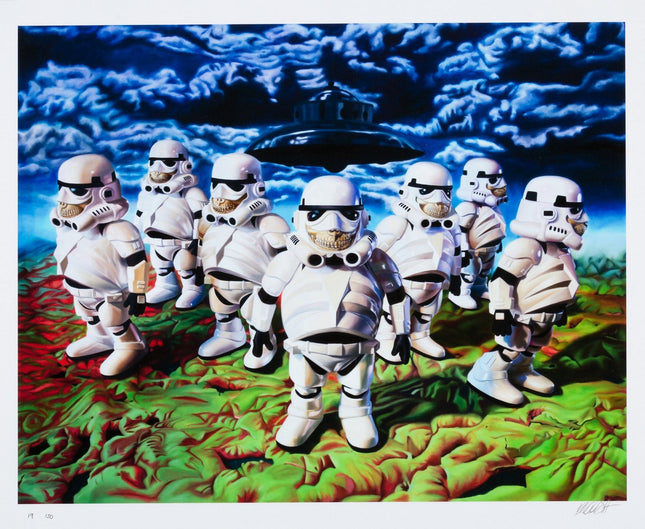
Ron English- POPaganda Grin Guard Archival Print by Ron English- POPaganda
Grin Guard Limited Edition Archival Pigment Fine Art Prints on Moab Entrada Fine Art Paper by Graffiti Street Art and Pop Culture Artist Ron English- POPaganda. 2021 Signed & Numbered Limited Edition of 150 Archival Pigment Print in Colors on Moab Entrada Fine Art Paper Artwork Size 24x20 "Grin Guard" stands out as a compelling exemplar of Ron English- POPaganda's artistic vision, where he seamlessly integrates elements of satire, pop culture, and street art. Known for his critical and humorous take on contemporary society, English's creation is a limited edition series comprising 150 signed and numbered prints, each rendered with archival pigment on Moab Entrada Fine Art Paper. This paper is renowned for its ability to present a broad spectrum of vibrant colors and preserve the fine details of the artwork, making it an ideal medium for English's detailed style. Sized at 24x20 inches, each piece in this series is a work of art and a collector's item. This print features a phalanx of stormtroopers from the iconic "Star Wars" franchise, each donning a different expression of Ron English- POPaganda's signature grin—a recurrent motif in his work that often symbolizes the subversive undercurrents of pop culture. Against a backdrop that evokes a surrealist landscape beneath an ominous UFO, the scene is familiar and jarringly otherworldly. This juxtaposition is emblematic of English's approach, which often places recognizable characters in unexpected contexts to critique and comment on media, consumerism, and the corporatization of American culture. Through "Grin Guard," English explores the concept of the 'trooper' not just as a faceless enforcer but as a being with an individual, if concealed, identity. The grinning skulls emblazoned on their helmets suggest a macabre sense of mortality and individuality within the conformity of their ranks. This piece is a powerful commentary on identity and anonymity, particularly within mass media and entertainment, where characters often become mere extensions of their fictional universes rather than being perceived as reflections of human nature. Ron English- POPaganda's work continues to challenge viewers, using the accessible mediums of street and pop art to provoke thought and discussion. "Grin Guard" is no exception, offering not only an aesthetic that resonates with fans of these genres but also conveying a more profound message about the complex interplay between individuality and cultural iconography. Through such works, English affirms his status as an innovative artist who can blur the lines between fine art and the rebellious spirit of street art.
$379.00
-

Dave Pollot Why You Fail Giclee Print by Dave Pollot
Why You Fail Giclee Print by Dave Pollot Artwork Limited Edition Print on Canvas Graffiti Pop Street Artist. 2025 Signed & Numbered Limited Edition of TBD Artwork Size 13.19x20 Star Wars May the 4th Special Edition Print on Rolled Canvas. Why You Fail Giclee Print by Dave Pollot: Star Wars Lore Painted into American Nostalgia Why You Fail by Dave Pollot is a 2025 signed and numbered limited edition giclee print on canvas, sized at 13.19x20 inches and released as part of the Star Wars May the 4th Special Edition series. This artwork places a quiet moment of Jedi training into a serene wooded landscape traditionally found in mid-century Americana paintings. The striking juxtaposition between the fantasy world of Star Wars and the tranquil realism of traditional decorative art firmly situates this piece within the canon of Street Pop Art & Graffiti Artwork. Pollot’s subtle narrative placement brings gravitas to a humorous composition, provoking thought about mentorship, failure, and legacy. Classic Landscape Framed Around Sci-Fi Reflection The scene features the Jedi Master Yoda standing at the base of a tall tree, gazing contemplatively toward the background, where a young Luke Skywalker trains by a misty lake. The viewer’s eye is drawn across the reflective surface of the water, past the verdant foliage and sun-dappled canopy, into a space that merges imagination with nostalgia. While the background recalls rustic Americana paintings that adorned thrift stores and family homes, the addition of Yoda and Luke recontextualizes it with narrative weight. The title Why You Fail alludes to one of Yoda’s most famous teachings, reinforcing the theme of personal growth and challenge in the face of adversity. Dave Pollot’s Technique and Message Dave Pollot is an American artist who began reworking discarded traditional prints by adding pop culture elements in a way that is both seamless and subversive. Each figure he integrates is meticulously matched in lighting, scale, and perspective, creating illusions so natural they feel like part of the original. In Why You Fail, his mastery of painterly technique allows Yoda to appear almost organically grown from the landscape itself. The surrounding calmness of the forest, contrasted with the intensity of Jedi discipline, adds a quiet wisdom to the composition. The naturalistic setting becomes a stage for introspection, cleverly masked in nostalgia and fandom. Street Pop Art & Graffiti Artwork Through Narrative Repurposing This artwork's place in the larger street pop and graffiti-influenced dialogue lies in its capacity to remix the familiar with subversive context. Pollot’s body of work exists not in gallery isolation but in cultural remixing. His approach aligns with modern visual storytelling where icons from film, music, and games are embedded into formats once considered traditional. Why You Fail invites viewers to consider not only how stories are told but where they are told. By placing Yoda in a scene originally devoid of galactic epic, the work encourages meditation on legacy, learning, and the quiet moments that define personal transformation. The print becomes both collectible and philosophical—redefining what it means to engage with pop culture through the lens of fine art.
$350.00
-
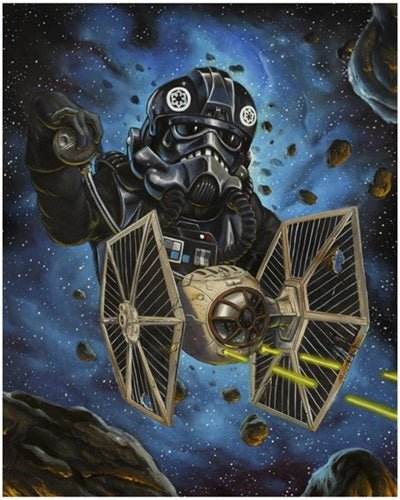
Jonathan Bergeron Chasing The Falcon Giclee Print by Jonathan Bergeron
Chasing The Falcon Artwork Giclee Limited Edition Print on Fine Art Paper by Pop Culture Graffiti Artist Jonathan Bergeron. Jonathan Bergeron (aka Johnny Crap) "Chasing the Falcon" limited to only 50 copies signed and numbered 16" x 20"
$134.00