
Villain
-
Lauren YS MothMan x Nai Palm Blotter Paper Archival Print by Lauren YS
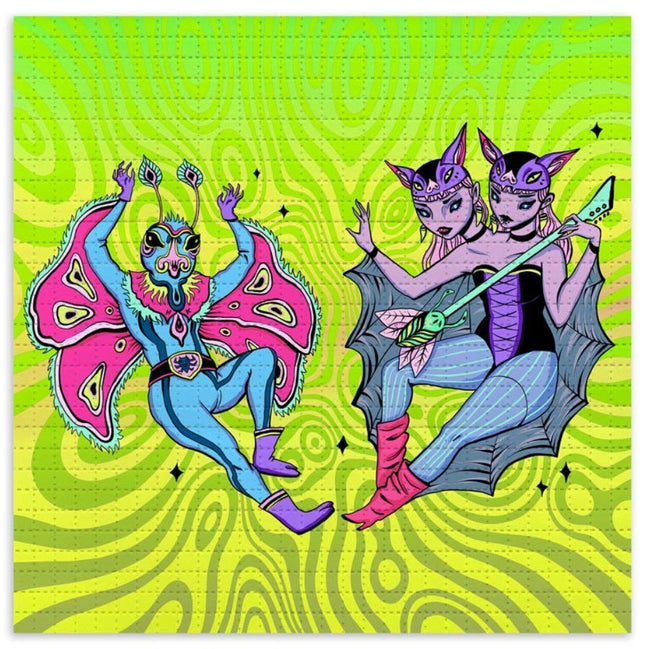
MothMan x Nai Palm Blotter Paper Limited Edition Archival Pigment Print Art on Perforated Blotter Paper by Lauren YS pop culture LSD artwork. 2021 Signed & Numbered with COA Archival Pigment Print on Perforated Blotter Paper Artwork Size: 7.5 x 7.5 Inches Release: April 19, 2021. Limited blotter editions are hand-perforated by Zane Kesey. MothMan x Nai Palm by Lauren YS: Surreal Storytelling in Street Pop Art & Graffiti Artwork MothMan x Nai Palm is a limited edition archival pigment print created by American artist Lauren YS and released on April 19, 2021. Measuring 7.5 x 7.5 inches, the artwork is printed on perforated blotter paper, signed, numbered, and accompanied by a certificate of authenticity. Each sheet was hand-perforated by Zane Kesey, further tying the piece to the rich heritage of blotter art as a medium of psychedelic visual culture. Known for her bold, hallucinatory imagery and narrative-driven surrealism, Lauren YS uses this format to celebrate personal identity, fantasy, and the spirit of creative rebellion through characters rooted in music and mythology. The composition of MothMan x Nai Palm features two costumed figures — one representing a vibrantly colored, anthropomorphic moth creature and the other a twin version of Nai Palm, the vocalist of the Australian band Hiatus Kaiyote. These figures float against a luminous lime green and yellow psychedelic background that mimics topographic patterns often associated with visual distortions during LSD experiences. With sharp linework and fluorescent hues, the characters burst from the surface, radiating a sense of joy, mystery, and cosmic playfulness. The moth figure, a recurring symbol in Lauren YS’s work, suggests transformation and curiosity, while the masked Nai Palm twins with their bat wings and electric guitar nod to theatricality, duality, and sound as power. Pop Culture Deconstruction through Fantastical Iconography Lauren YS has become a prominent figure in the movement where street aesthetics meet contemporary psychedelia. Her use of blotter paper as a print surface for MothMan x Nai Palm bridges her studio practice and her background in muralism, zine art, and lowbrow illustration. This piece merges musical tribute with psychedelic mythology, functioning both as a visual homage and a commentary on perception, identity, and the fluidity of creative personas. The vibrancy of the colors and exaggerated forms are not just stylistic choices but are also visual techniques designed to simulate the sensory overload and symbolic awareness common in psychedelic states. The use of perforated blotter paper is historically significant. In the 1960s and beyond, artists printed designs on blotter sheets to pair visual art with the LSD experience. By adopting this same format, Lauren YS places her work in conversation with the radical traditions of street activism and experimental consciousness. MothMan x Nai Palm becomes not just an artwork but a symbolic artifact of psychedelic pop culture, bringing a music-influenced visual narrative to a format long associated with spiritual and mental awakening. Female Agency and Hybrid Forms in Contemporary Psychedelic Art A key element of this piece is its exploration of gender, identity, and performative transformation. The twin figures of Nai Palm, adorned in matching bat costumes and wielding a glowing green guitar, assert themselves with style and confidence, echoing the flamboyant autonomy of performers and mythic shapeshifters. The presence of duality within a single personality — a frequent theme in Lauren YS’s work — becomes a reflection on inner multiplicity, creative personas, and the self’s ability to adapt. The moth character adds another layer of symbolism. Known for its nocturnal presence and delicate beauty, the moth is an ideal figure for representing unseen truth, sensuality, and exploration beyond surface appearances. The composition, while fantastical and playful, carries the weight of deeply personal and symbolic content. These characters embody the fusion of power and softness, echoing the sentiments of Street Pop Art & Graffiti Artwork, where empowerment, fantasy, and rebellion merge through color and line. The intensity of the background pattern and the intentional exaggeration of the figures bring the print into alignment with public street aesthetics, where immediacy and boldness are essential. Lauren YS and the New Generation of Blotter-Based Street Pop Art Lauren YS’s decision to collaborate with Zane Kesey for this limited blotter edition reinforces the print's connection to psychedelic cultural history. The visual storytelling in MothMan x Nai Palm goes beyond surface appeal to become a portal into a world where art functions as mythology. Her aesthetic is both whimsical and politically charged, combining feminine power, queerness, and speculative fantasy into a format long celebrated for its resistance to conformity. This piece represents the new wave of Street Pop Art & Graffiti Artwork that reclaims unconventional surfaces, celebrates experimental identity, and resists traditional boundaries between fine art, fan culture, and spiritual symbolism. MothMan x Nai Palm is not simply about music or fantasy. It is about how characters, color, and format can transform a small square of paper into a shared visual hallucination, echoing through art history and the streets alike.
$352.00