Weapon

4 artworks

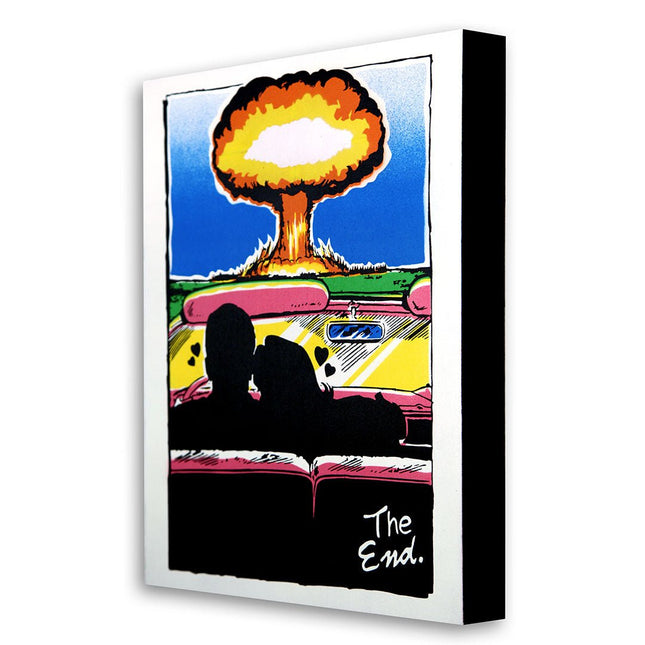
  • The End of the End- Mini HPM Stencil Print by Denial- Daniel Bombardier

    Denial- Daniel Bombardier The End of the End- Mini HPM Stencil Print by Denial- Daniel Bombardier

    The End of the End- Mini, Part of the True Facts Mini Multiple Series Original Hand-Painted Multiple (HPM) on Wood Cradled Panel ready to hang by Denial Graffiti Street Artist Modern Pop Art. 2020 Signed & Numbered HPM Limited Edition of 20 Artwork Size 24x36 "My work speaks of impending doom and a lot of crass sinister themes, but that should not mean I desire this to happen at all. I hope my work would suggest only the opposite: to show the ridiculousness of it all and how we may find better solutions for the future." -Denial The End of the End Mini by Denial: Love, Apocalypse, and Satire in Street Pop Art & Graffiti Artwork The End of the End Mini is a 2020 hand-painted multiple by Canadian artist Denial, known for his fusion of satire, iconography, and subversive wit. Created as part of the True Facts Mini Multiple Series, this piece measures 24 x 36 inches and is produced on a wood cradled panel, ready to hang. Each edition in the set is an original HPM—hand-painted multiple—offering unique brushwork and embellishment over a consistent base print. Limited to 20 signed and numbered pieces, the work presents a silhouetted couple locked in a romantic embrace within a car as they overlook a mushroom cloud detonating in the distance. The scene closes with a stylized handwritten caption that simply reads The End, suggesting finality with a mix of tragedy and humor. This darkly comic juxtaposition is a hallmark of Denial’s work, perfectly situated within the visual terrain of Street Pop Art & Graffiti Artwork. Nuclear Romance and Comedic Catastrophe The imagery in The End of the End Mini plays with retro cartoon styling and Cold War era fears, placing symbols of youthful romance—vintage cars, scenic overlooks, date-night silhouettes—alongside the icon of global annihilation: the mushroom cloud. The bomb blast, rendered in vivid oranges and yellows, contrasts with the blue sky and lush green horizon, creating an unnervingly cheerful palette for a scene of planetary extinction. The couple remains indifferent, lost in their affection, suggesting either complete detachment or ironic defiance. In Street Pop Art & Graffiti Artwork, such combinations expose the contradictions in cultural storytelling, where romance and violence are often sold in the same breath. Denial uses this absurd pairing not to promote nihilism, but to provoke reflection on how society trivializes catastrophe through media and myth. Material Detail and Collector Format Each panel is painted on cradled wood, offering dimensionality and presence beyond a flat print. The edges are blacked out to create a framed effect, giving the work an object-like quality suited for both contemporary art installations and personal collections. The base image is screen printed in sharp graphic tones, but each edition is uniquely treated with hand-applied paint, drips, smears, and marks that personalize the piece. This makes every version of The End of the End Mini a singular artwork despite its shared motif. The limited edition of 20 increases its desirability within both pop art and street art collector communities, where originality and scarcity fuel long-term interest. Denial’s Role in Contemporary Satirical Expression Denial, born Daniel Bombardier, is an artist from Windsor, Ontario whose work critiques consumer culture, social absurdity, and media manipulation through a visual language rooted in propaganda design and street aesthetics. With a background in graffiti and billboard alteration, Denial transforms familiar formats—comic strips, advertising, political signage—into layered visual riddles. The End of the End Mini belongs to this ongoing narrative, using humor and horror to illustrate human contradiction. The work doesn’t encourage hopelessness but rather highlights the ridiculous normalization of disaster in pop imagery. It’s a moment frozen in beautiful denial, where intimacy and destruction merge under a blue sky, daring viewers to laugh, gasp, and rethink what they celebrate and what they ignore. In the lexicon of Street Pop Art & Graffiti Artwork, it is a postcard from the absurd future disguised as now.

    $954.00

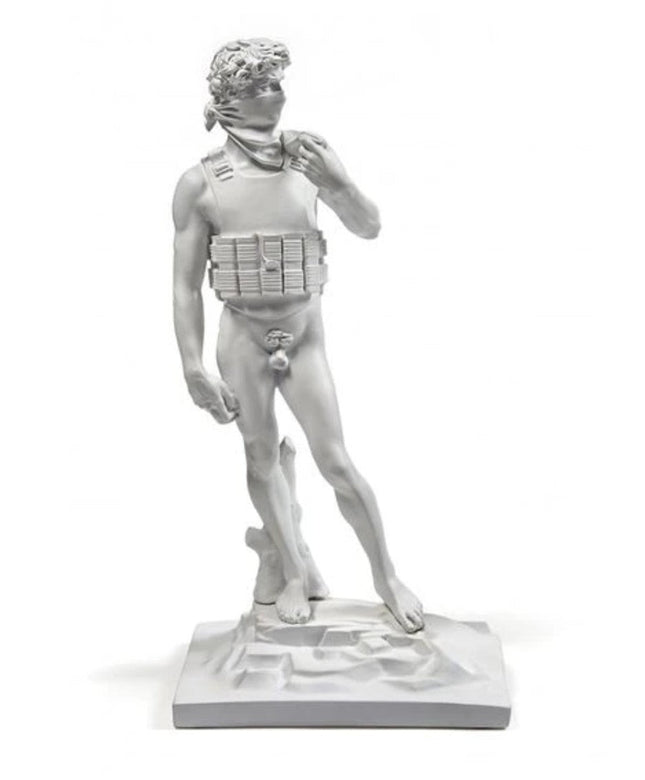
  • Sale -15% Suicide Man White Gesso Sculpture by Banksy x MediComToy

    Banksy Suicide Man White Gesso Sculpture by Banksy x MediComToy

    Suicide Man- White Gesso Limited Polystone Resin Sculpture Artwork by Graffiti Street Artists Banksy x MediCom. 2020 Limited Edition White Polystone Resin Sculpture New In Box

    $1,639.00 $1,393.00

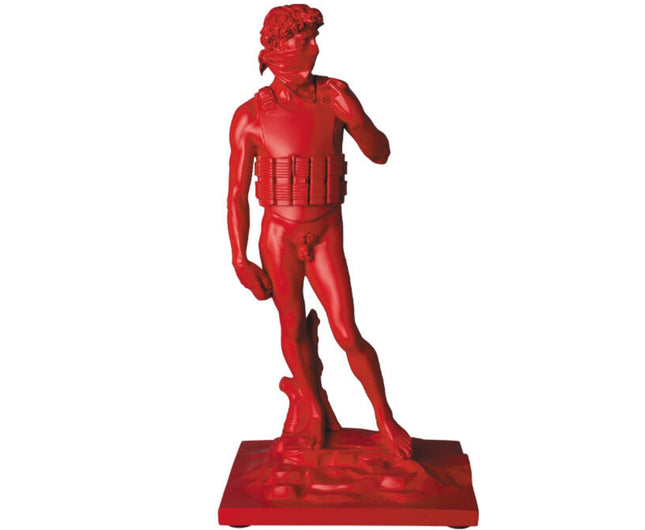
  • Sale -15% Suicide Man Red Sculpture by Banksy x MediComToy

    Banksy Suicide Man Red Sculpture by Banksy x MediComToy

    Suicide Man- Red Limited Polystone Resin Sculpture Artwork by Graffiti Street Artists Banksy x MediCom. 2020 Limited Edition Red Polystone Resin Sculpture Displayed With Box

    $1,639.00 $1,393.00

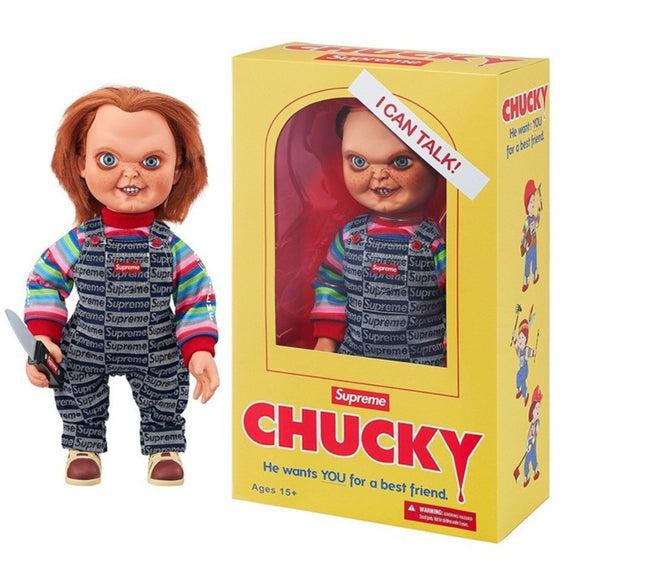
  • Chucky Doll Art Object Toy by Supreme

    Supreme Chucky Doll Art Object Toy by Supreme

    Supreme Chucky Doll Limited Edition Cloth Art Toy Collectible Artwork by street graffiti artist Supreme. The Supreme Chucky Doll, potentially the brand's spookiest accessory ever, dropped on December 17th, 2020, as a part of their FW20 Week 17 release. This Supreme doll marks the third cuddleable toy that the brand has released in the last few years. This Supreme Chucky Doll is as close to the real character as it gets and features the ability to talk as well as a plastic knife. With a branded pair of overalls and a t-shirt, your Supreme Chucky Doll can be just as fly as you are.

    $631.00

Weapon Graffiti Street Pop Art

Weaponry in the Crosshairs of Street Pop Art and Graffiti

The presence of weapons in street pop art and graffiti carries a hefty load of symbolism and controversy. The very image of a weapon – be it a gun, a knife, or any implement associated with violence – is fraught with socio-political connotations that street artists often leverage to provoke, comment, and sometimes shock their audience. These artists have taken the powerful imagery of weapons and infused it with layers of meaning, transforming them from mere objects of destruction into potent symbols of critique and reflection. Weapons have been a common motif in both graffiti art and pop art. In both graffiti art and pop art, using weapons can be a powerful way to convey a message and provoke a reaction from the viewer. However, it's important to note that the use of violent imagery can also be controversial and can raise questions about the role of art in society. Graffiti artists often use guns, knives, and grenades to convey a sense of danger or rebellion. For example, a spray-painted image of a weapon might be used to represent the power or aggression of a particular person or group. Some graffiti artists have also used weapons to convey a political message. For instance, a mural featuring an AK-47 rifle might be used to criticize the proliferation of guns in society or to express solidarity with a particular political cause. In some cases, graffiti artists have used weapons as a form of commentary on the violence and conflict in the world. For example, a mural featuring a grenade might be used to critique the destructive nature of war or to advocate for peace. Pop artists have also incorporated weapons into their artwork. For instance, Andy Warhol's "Gun" series features images of various firearms, including revolvers and pistols. Roy Lichtenstein's painting "Whaam!" depicts a fighter jet firing a missile, emphasizing the violence and chaos of war. Some pop artists have used weapons to satirize consumer culture or to comment on the commodification of violence. For example, Claes Oldenburg's "Giant BLT (Bacon, Lettuce, and Tomato Sandwich)" features a knife skewering a sandwich, highlighting the absurdity of weaponizing everyday objects.

The Symbolic Arsenal of Street Art

Street artists have long employed the iconography of weapons to convey messages about power, conflict, and resistance. In their hands, weapons become a visual shorthand for a range of issues – from war and peace to crime and justice. Sometimes, the gun is depicted with stark realism, forcing those who encounter the piece to confront the realities of violence head-on. Other times, the weapon is abstracted or juxtaposed with unpredictable elements to create a sense of irony or to challenge the viewer's preconceptions. The use of firearms in graffiti art can directly reflect the artist's environment, where violence may be a daily reality. In cities plagued by crime and unrest, the appearance of weapon imagery in street art can mirror the community's experiences, a raw expression of the turmoil that residents may face. Conversely, in more peaceful or politically stable contexts, weapons in street art can serve as a jarring reminder of global conflicts, a call to action, or a protest against militarism and warfare.

Artists and the Weapon Motif

Some street artists have become particularly associated with the weapon motif, using it as a central theme to explore and challenge societal norms. These artists wield the weapon imagery with intention, repurposing it to critique the issues of aggression and oppression that such objects typically symbolize. The weapon becomes a tool not for violence but for its opposite – a plea for peace, a commentary on the human cost of conflict, or an ironic take on the glamorization of violence in media and culture. The weapon motif in street pop art and graffiti also confronts the viewer with questions about the role of force in justice and the dichotomy between societal order and personal liberty. Through these works, artists can spark discussions on topics that are often uncomfortable but necessary, such as gun control, police brutality, and the arms race. The art acts as a catalyst for dialogue and, at times, as a means to inspire change. The depiction of weapons in street pop art and graffiti transcends the mere representation of violence. These images serve as a vehicle for artists to engage with their audience on complex issues, question, condemn, and inspire. The weapon, with its inherent power and danger, becomes a paradoxical symbol of hope and transformation in the hands of street artists. As long as there are discussions to be had about power, conflict, and violence, weapons will undoubtedly continue to be a compelling and provocative element in the vocabulary of street pop art and graffiti.
Footer image

© 2025 Sprayed Paint Art Collection,

    • Amazon
    • American Express
    • Apple Pay
    • Bancontact
    • Diners Club
    • Discover
    • Google Pay
    • iDEAL
    • Mastercard
    • PayPal
    • Shop Pay
    • Visa

    Login

    Forgot your password?

    Don't have an account yet?
    Create account