Weapon

4 artworks

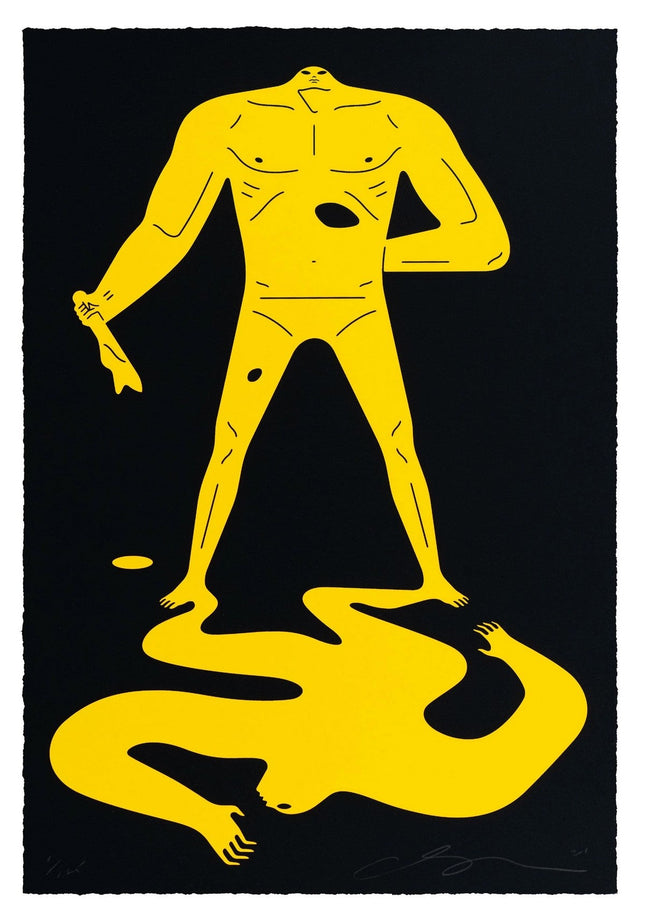
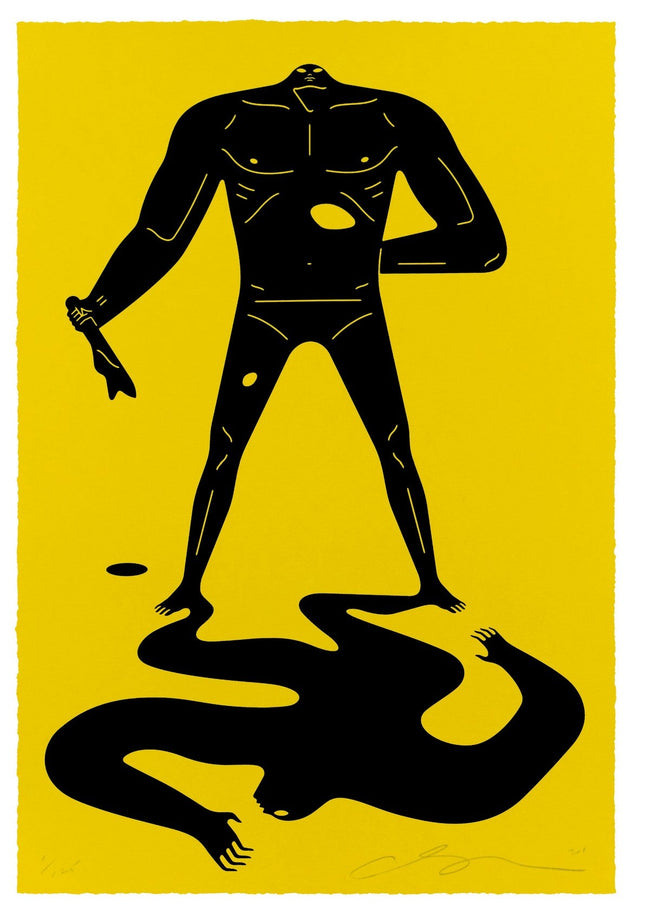
  • On the Shady Side of the Street- Black on Yellow Silkscreen Print by Cleon Peterson

    Cleon Peterson On the Shady Side of the Street- Black on Yellow Silkscreen Print by Cleon Peterson

    On the Shady Side of the Street- Black on Yellow 2-Color Hand-Pulled Limited Edition Silkscreen Print on 290gsm Coventry Rag Paper by Cleon Peterson Rare Street Art Famous Pop Artwork Artist. Limited edition of 125 Hand-pulled 14 x 20.5” black on Yellow screenprint on 290gsm Coventry Rag Paper with deckled edges. Signed and numbered. The art of Peterson has a strong anti-establishment character and anger, as a creative force, is present throughout most of his artworks. The subject of anger is the artist and with his work, he is turning against society’s deepest weariness and malaise. This LA-based artist is the mastermind behind a series of dystopic artworks paintings, prints, sculptures and murals, exhibited in the US, Europe, and Asia.

    $759.00

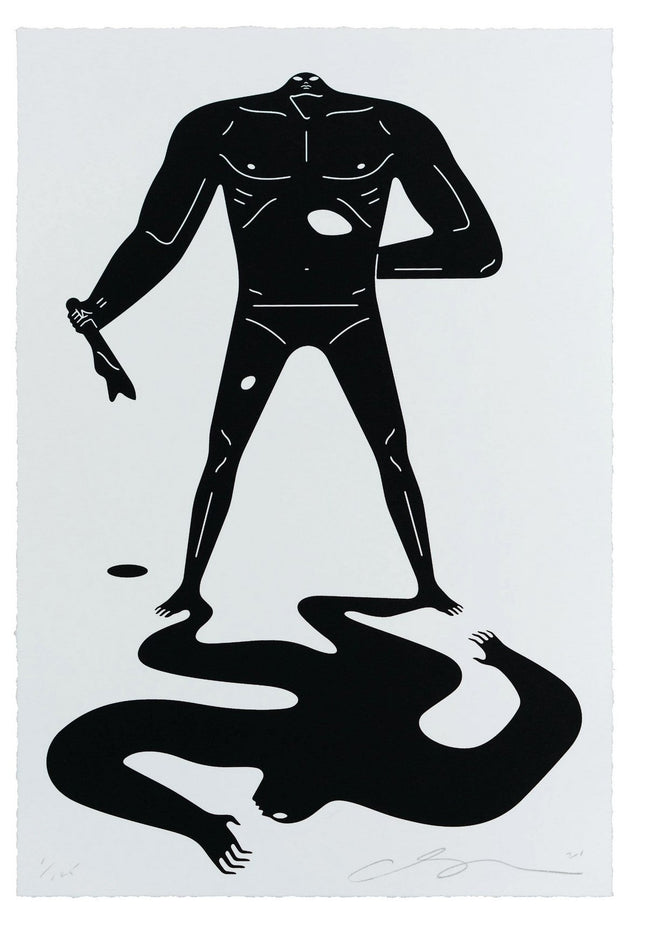
  • On the Shady Side of the Street- White Silkscreen Print by Cleon Peterson

    Cleon Peterson On the Shady Side of the Street- White Silkscreen Print by Cleon Peterson

    On the Shady Side of the Street- White 1-Color Hand-Pulled Limited Edition Silkscreen Print on 290gsm Coventry Rag Paper by Cleon Peterson Rare Street Art Famous Pop Artwork Artist. Limited edition of 125 Hand-pulled 14 x 20.5” black on White screenprint on 290gsm Coventry Rag Paper with deckled edges. Signed and numbered. The visuality of Cleon Peterson's work is based on a variety of influences, from ancient Greek pottery to comics, resulting in monochromacy and strong color symbolism. In more detail, the figures exist on multiple straight lines, something that, subsequently, creates the illusion that the artwork is divided in levels. The perspective and the impression of depth do moderately exist in the art of Peterson and, just like in Greek vases, the background space is usually left empty or slightly embellished.

    $759.00

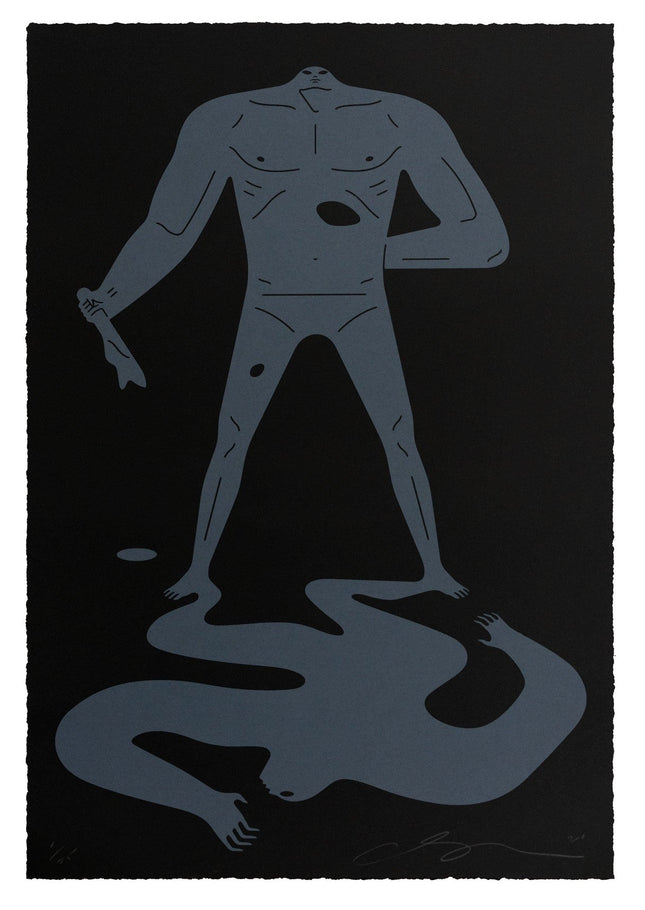
  • On the Shady Side of the Street- Black on Black Silkscreen Print by Cleon Peterson

    Cleon Peterson On the Shady Side of the Street- Black on Black Silkscreen Print by Cleon Peterson

    On the Shady Side of the Street- Black on Black 2-Color Hand-Pulled Limited Edition Silkscreen Print on 290gsm Coventry Rag Paper by Cleon Peterson Rare Street Art Famous Pop Artwork Artist. Limited edition of 75 Hand-pulled 14 x 20.5” black on black screenprint on 290gsm Coventry Rag Paper with deckled edges.Signed and numbered. Cleon Peterson’s world is full of merciless cruelty, chaotic debauchery, and a never-ending struggle to subvert power and oppression. His simple compositions entail complex connotations and an unsettling critique of society’s ever-growing disenfranchisement, isolation, and desperation. Looking at his work, one can easily understand that the artist is not advocating for violence, which he, instead weaponizes in the battle with apathy.

    $759.00

  • On the Sunny Side of the Street- Yellow Silkscreen Print by Cleon Peterson

    Cleon Peterson On the Sunny Side of the Street- Yellow Silkscreen Print by Cleon Peterson

    On the Sunny Side of the Street- Yellow On Red Hand-Pulled 2-Color Silkscreen Print on 290gsm Coventry Rag Paper Deckled Edges by Artist Cleon Peterson Limited Pop Art Artwork. 2021 Signed & Numbered Limited Edition of 125 Artwork Size 14x20.5 Limited edition of 125 Hand-pulled 14 x 20.5” Yellow on Black screenprint on 290gsm Coventry Rag Paper with deckled edges. Signed and numbered. Cleon Peterson (b. 1973) On the Sunny Side of the Street (Yellow), 2021 Screenprint on Coventry Rag paper 20-1/2 x 14 inches (52.1 x 35.6 cm) (sheet) Ed. 125 Signed, numbered, and dated in pencil along the lower edge. Published by the artist. The art of Peterson has a robust anti-establishment character, and anger, as a creative force, is present throughout most of his artworks. The subject of anger is the artist, and with his work, he is turning against society’s deepest weariness and malaise. This LA-based artist is the mastermind behind a series of dystopic artworks, paintings, prints, sculptures, and murals exhibited in the US, Europe, and Asia. "On the Sunny Side of the Street" is a yellow silkscreen print by Cleon Peterson, an American artist known for his provocative and often dark artwork. Peterson's work often explores themes of violence, power dynamics, and societal unrest, reflecting the complex and contradictory nature of human existence. This particular print, "On the Sunny Side of the Street," presents a different tone than much of Peterson's other work, given its title and yellow color. It could be an attempt to explore the brighter, more optimistic side of life, or perhaps it presents a contrasting view to the darker themes found in his other pieces. As an artist, Peterson is known for his ability to make striking visual statements that leave a lasting impact on viewers.

    $759.00

Weapon Graffiti Street Pop Art

Weaponry in the Crosshairs of Street Pop Art and Graffiti

The presence of weapons in street pop art and graffiti carries a hefty load of symbolism and controversy. The very image of a weapon – be it a gun, a knife, or any implement associated with violence – is fraught with socio-political connotations that street artists often leverage to provoke, comment, and sometimes shock their audience. These artists have taken the powerful imagery of weapons and infused it with layers of meaning, transforming them from mere objects of destruction into potent symbols of critique and reflection. Weapons have been a common motif in both graffiti art and pop art. In both graffiti art and pop art, using weapons can be a powerful way to convey a message and provoke a reaction from the viewer. However, it's important to note that the use of violent imagery can also be controversial and can raise questions about the role of art in society. Graffiti artists often use guns, knives, and grenades to convey a sense of danger or rebellion. For example, a spray-painted image of a weapon might be used to represent the power or aggression of a particular person or group. Some graffiti artists have also used weapons to convey a political message. For instance, a mural featuring an AK-47 rifle might be used to criticize the proliferation of guns in society or to express solidarity with a particular political cause. In some cases, graffiti artists have used weapons as a form of commentary on the violence and conflict in the world. For example, a mural featuring a grenade might be used to critique the destructive nature of war or to advocate for peace. Pop artists have also incorporated weapons into their artwork. For instance, Andy Warhol's "Gun" series features images of various firearms, including revolvers and pistols. Roy Lichtenstein's painting "Whaam!" depicts a fighter jet firing a missile, emphasizing the violence and chaos of war. Some pop artists have used weapons to satirize consumer culture or to comment on the commodification of violence. For example, Claes Oldenburg's "Giant BLT (Bacon, Lettuce, and Tomato Sandwich)" features a knife skewering a sandwich, highlighting the absurdity of weaponizing everyday objects.

The Symbolic Arsenal of Street Art

Street artists have long employed the iconography of weapons to convey messages about power, conflict, and resistance. In their hands, weapons become a visual shorthand for a range of issues – from war and peace to crime and justice. Sometimes, the gun is depicted with stark realism, forcing those who encounter the piece to confront the realities of violence head-on. Other times, the weapon is abstracted or juxtaposed with unpredictable elements to create a sense of irony or to challenge the viewer's preconceptions. The use of firearms in graffiti art can directly reflect the artist's environment, where violence may be a daily reality. In cities plagued by crime and unrest, the appearance of weapon imagery in street art can mirror the community's experiences, a raw expression of the turmoil that residents may face. Conversely, in more peaceful or politically stable contexts, weapons in street art can serve as a jarring reminder of global conflicts, a call to action, or a protest against militarism and warfare.

Artists and the Weapon Motif

Some street artists have become particularly associated with the weapon motif, using it as a central theme to explore and challenge societal norms. These artists wield the weapon imagery with intention, repurposing it to critique the issues of aggression and oppression that such objects typically symbolize. The weapon becomes a tool not for violence but for its opposite – a plea for peace, a commentary on the human cost of conflict, or an ironic take on the glamorization of violence in media and culture. The weapon motif in street pop art and graffiti also confronts the viewer with questions about the role of force in justice and the dichotomy between societal order and personal liberty. Through these works, artists can spark discussions on topics that are often uncomfortable but necessary, such as gun control, police brutality, and the arms race. The art acts as a catalyst for dialogue and, at times, as a means to inspire change. The depiction of weapons in street pop art and graffiti transcends the mere representation of violence. These images serve as a vehicle for artists to engage with their audience on complex issues, question, condemn, and inspire. The weapon, with its inherent power and danger, becomes a paradoxical symbol of hope and transformation in the hands of street artists. As long as there are discussions to be had about power, conflict, and violence, weapons will undoubtedly continue to be a compelling and provocative element in the vocabulary of street pop art and graffiti.
Footer image

© 2025 Sprayed Paint Art Collection,

    • Amazon
    • American Express
    • Apple Pay
    • Bancontact
    • Diners Club
    • Discover
    • Google Pay
    • iDEAL
    • Mastercard
    • PayPal
    • Shop Pay
    • Visa

    Login

    Forgot your password?

    Don't have an account yet?
    Create account