

Weapon
-

Dalek- James Marshall Helping Hands Archival Print by Dalek- James Marshall
Helping Hands Archival Print by Dalek- James Marshall Limited Edition on Fine Art Paper Pop Graffiti Street Artist Modern Artwork. 2023 Signed & Numbered Print Limited Edition of 33 Off the Press Show Series Artwork Size 18x24 Archival Pigment Fine Art. Space Monkey Heads, Weapons & Trippy Shapes. Exploring the Psychedelic Geometry: Dalek's "Helping Hands" Dalek, also known as James Marshall, has emerged as a seminal figure in the transformation of street pop art into a form that fuses graffiti's raw, dynamic energy with the meticulous precision of fine art. His 2023 creation, "Helping Hands," is a limited edition archival print encapsulating this hybrid aesthetic. Limited to 33 signed and numbered pieces, the series is part of the "Off the Press Show Series," each print measuring 18x24 inches and printed on fine art paper. This artwork is a vibrant symphony of Marshall's iconic Space Monkey characters, a series of weapons, and a collection of shapes that defy the conventional perception of space and form. In "Helping Hands," the striking color palette and the array of trippy, psychedelic shapes invite the viewer into a world that is both familiar and alien. The Space Monkey heads, a recurrent motif in Dalek's work, are depicted with a visual language that speaks to the heart of street pop art and graffiti artwork. Each head, armed with an arsenal of whimsical weapons and surrounded by abstract forms, conveys a sense of playful aggression, a hallmark of Marshall's style. The Space Monkey Phenomenon in Modern Art The Space Monkey is more than just a character; it has become an emblem of Dalek's artistic journey and a symbol within the larger context of pop graffiti and street art. Initially a vehicle for Marshall to explore his style and identity, the Space Monkeys have evolved into a complex commentary on society, individuality, and the nature of conflict. With "Helping Hands," these characters are not passive but are actively engaging with the environment around them, which is a chaotic yet structured universe of shapes and colors. This archival pigment fine art print is a vibrant example of how street art motifs can transition into collectible fine art. The limited edition nature of "Helping Hands" elevates the Space Monkeys from urban walls to the sanctified space of galleries and private collections while still maintaining the accessibility and populist spirit that is intrinsic to street art. James Marshall's Visionary Contribution to Art James Marshall's contributions to the art world are characterized by a fearless blending of genres and a willingness to experiment with form and color. In works like "Helping Hands," he has distilled the essence of graffiti artwork into a format that challenges and expands the boundaries of pop art. His use of archival pigment on fine art paper signifies respect for the durability of art, contrasting with the ephemeral nature of traditional street art, which is often at the mercy of the elements and city ordinances. The complexity of "Helping Hands" lies in its visual impact and the layers of meaning each component represents. The Space Monkeys, armed and yet seemingly at ease, juxtaposed with the mind-bending geometric backdrop, create a tension that is both thought-provoking and visually arresting. Marshall's work is a dialogue between the viewer and the canvas, a conversation that delves into themes of existence, resistance, and the interplay between harmony and discord. James Marshall, who hails from the United States, has left an indelible mark on the contemporary art scene through his art. "Helping Hands" is a testament to his skill as an artist and his vision as a creator who seamlessly melds the street with the studio. As a piece of modern artwork, it not only represents a moment in time but also serves as a bridge to the future of art where the lines between street pop art, graffiti artwork, and fine art continue to blur and converge.
$535.00
-
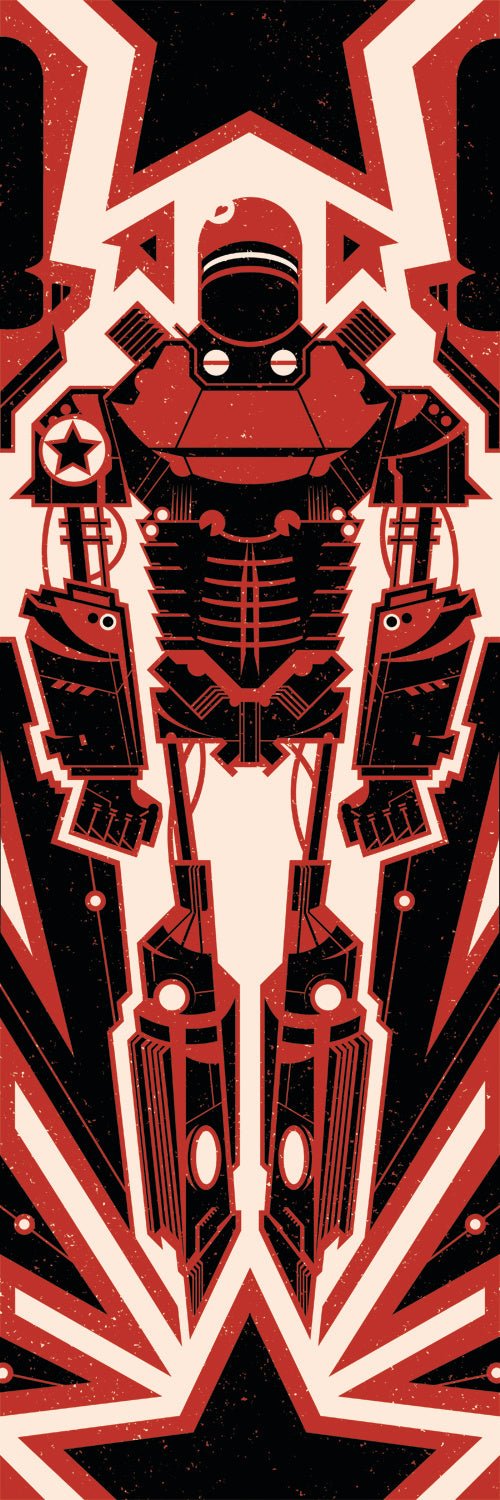
Ron Guyatt Liberty Prime Red Silkscreen Print by Ron Guyatt
Liberty Prime- Red Limited Edition 2-Color Hand-Pulled Silkscreen Print on Fine Art Paper by Ron Guyatt Graffiti Street Artist Modern Pop Art. Inspired by the cult classic video game Fallout 4 sci-fi robot. 2 color 9″ x 24″ screen-printed posters.
$134.00
-
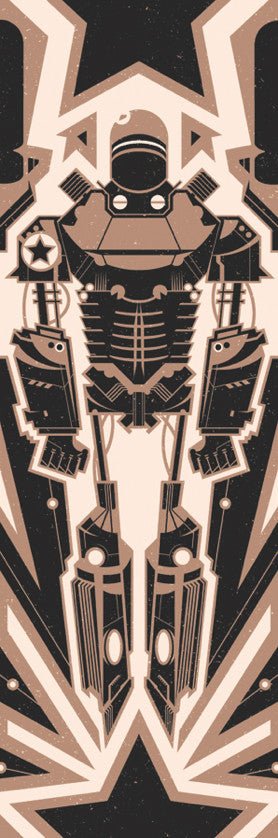
Ron Guyatt Liberty Prime Metallic Silkscreen Print by Ron Guyatt
Liberty Prime- Metallic Limited Edition 2-Color Hand-Pulled Silkscreen Print on Fine Art Paper by Ron Guyatt Graffiti Street Artist Modern Pop Art. Metallic Gold In. Inspired by the cult classic video game Fallout 4 sci-fi robot. 2 color 9″ x 24″ screen-printed posters.
$159.00
-
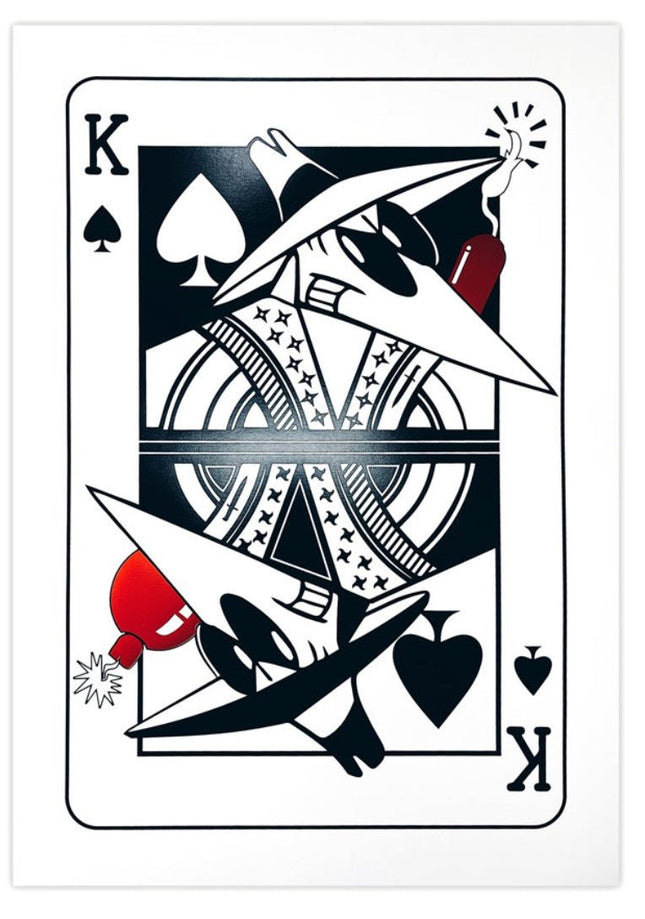
Alexander-John Who's The King? Standard Hot Foil Silkscreen Print by Alexander-John
Who's The King?- Standard 2-Color Hot Foil Print on 100# Neenah Classic Crest Smooth Solar White Paper by Alexander-John Rare Street Art Famous Pop Artwork Artist. 2-Color Hot Foil Print on 100# Neenah Classic Crest Smooth Solar White Size: 16.5 x 24 Inches Release: May 07, 2021 Run of: 100 "This piece is made to trigger the collector into a social experiment based on color and choice. This print can be hung either way, which represents the concept of equality. No matter what our differences are (represented by the weapons in this piece), we are all Kings." -Alexander-John
$291.00
-
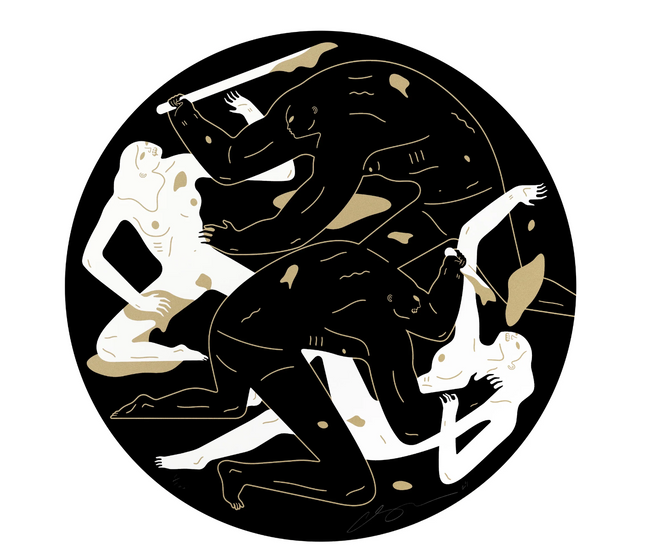
Cleon Peterson Revolution Is a Mother Who Eats Its Children Black Tondo Silkscreen Print by Cleon Peterson
Revolution Is a Mother Who Eats Its Children Black Tondo Silkscreen Print by Cleon Peterson on Hand Deckled Circle Cut 290gsm Coventry Rag Fine Art Paper Limited Edition Artwork. 2024 Signed & Numbered Cleon Peterson Limited Edition of 100 Artwork Size 24x24 Circle Cut Silkscreen Print. Cleon Peterson's Tondo: A Visceral Exploration of Revolution Cleon Peterson's "Revolution Is a Mother Who Eats Its Children Black Tondo" captures the essence of revolution — its transformative fury and cannibalistic backlash. This 2024 limited edition silkscreen print is a stark embodiment of the cyclic violence inherent in societal upheaval. With his signature high-contrast aesthetic, Peterson compels contemplation of the tumult that accompanies systemic change. Artistic Merits of Peterson's Black Tondo Limited to a series of 100, each piece is meticulously signed and numbered, accentuating the exclusivity of this thought-provoking artwork. The tondo — a circular artwork — measures 24x24 inches, a format that historically suggests wholeness and infinity but represents the never-ending loop of revolutionary fervor in Peterson's hands. The hand-deckled edges of the circle cut 290gsm Coventry Rag fine art paper enhance the tactile quality of the piece, adding to its visceral impact. The choice of the circle is deliberate, disrupting the traditional rectangular canvas to create a more immersive and contemplative experience. This shape allows the violence within to spill out in all directions, mirroring the all-consuming nature of the theme. Peterson's work does not simply hang on a wall; it confronts and envelops the viewer in its narrative. Cultural Commentary through Peterson's Silkscreen In "Revolution Is a Mother Who Eats Its Children Black Tondo," Peterson lays bare the paradoxes of revolt. His use of black — associated with the unknown and often with death — serves as a void into which the figures emerge and are consumed. The artwork is an allegory of the cyclical nature of history, where each act of uprising carries the seeds of its destruction within it. The stark black-and-white hues strip the scene of any romanticism, exposing the raw power struggle. It speaks to the heart of street pop art and graffiti artwork, which often deal in objective truths and lay claim to public spaces as forums for dialogue. Peterson's work takes this further, encapsulating the raw, uncensored voice of the street in a fine art context. The "Revolution Is a Mother Who Eats Its Children Black Tondo" is a poignant reminder of the perpetual dance between order and chaos. It is a piece that encapsulates the essence of Cleon Peterson's approach to street pop art, rendering visible the often uncomfortable realities that underpin human societies. Through his work, Peterson challenges the viewer, compelling a deeper engagement with the undercurrents of cultural and political change.
$1,564.00
-
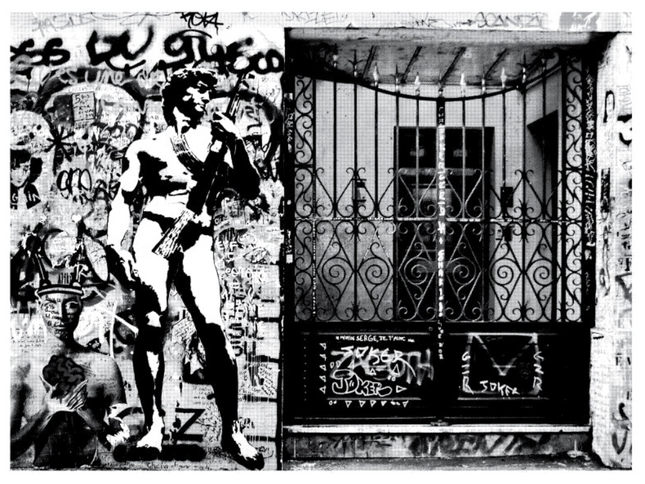
Shepard Fairey- OBEY David with Machine Gun Silkscreen Print by Shepard Fairey- OBEY x Blek le Rat
David with Machine Gun Silkscreen Print by Shepard Fairey- OBEY x Blek le Rat Hand-Pulled on Fine Art Paper Limited Edition Pop Street Art Artwork. 2008 Signed by Shepard Fairey & Blek le Rat, Numbered Limited Edition of 100 Artwork Size 18x24 Silkscreen Print Shepard Fairey x Blek le Rat David with Machine Gun Silkscreen Print 2008 The 2008 David with Machine Gun silkscreen print is a collaborative edition created by Shepard Fairey, known as OBEY, and French stencil art pioneer Blek le Rat. Hand-pulled on fine art paper and produced in a signed and numbered edition of 100, this 18 x 24 inch print merges the strengths of two iconic street artists across generations. Both signatures on each print elevate it to an important collector’s piece within Street Pop Art & Graffiti Artwork, highlighting not only a striking image but also the historical significance of the collaboration itself. Imagery and Commentary The print features a reinterpretation of Michelangelo’s classical sculpture David, here transformed into a provocative figure holding a machine gun. The juxtaposition of the Renaissance ideal of human beauty and form with the stark brutality of a modern weapon serves as a sharp critique of war, violence, and the distortion of cultural ideals. By placing David in a gritty, graffiti-covered urban environment, the work questions how art and society repurpose historic symbols to address contemporary anxieties. This powerful reimagining reflects both Blek le Rat’s tradition of stencil interventions in public spaces and Shepard Fairey’s skill at repurposing cultural icons into tools for social commentary. Collaborative Significance Blek le Rat, born Xavier Prou in France in 1951, is celebrated as one of the earliest and most influential stencil graffiti artists. Shepard Fairey, born in Charleston, South Carolina in 1970, became internationally known for his OBEY campaign and his later political works, including the Barack Obama Hope poster. Together, they bridge the early roots of European stencil art with the graphic and politically driven evolution of American street pop art. Their joint works, such as David with Machine Gun, serve as cultural dialogues between two eras, reinforcing the continuity of street art as a platform for protest and public discourse. Political Resonance and Collector Value David with Machine Gun functions as a visual protest, reworking an image of purity, youth, and beauty into a statement about the corruption of ideals through militarization and violence. The collaboration underscores both artists’ shared commitment to making politically engaged art accessible to broad audiences. With its limited edition of only 100, dual signatures, and thematic strength, the print has become a significant and sought-after work for collectors. It captures the way Street Pop Art & Graffiti Artwork can take familiar imagery and transform it into a searing critique of the modern world, cementing its role as both cultural artifact and fine art object.
$2,500.00
-
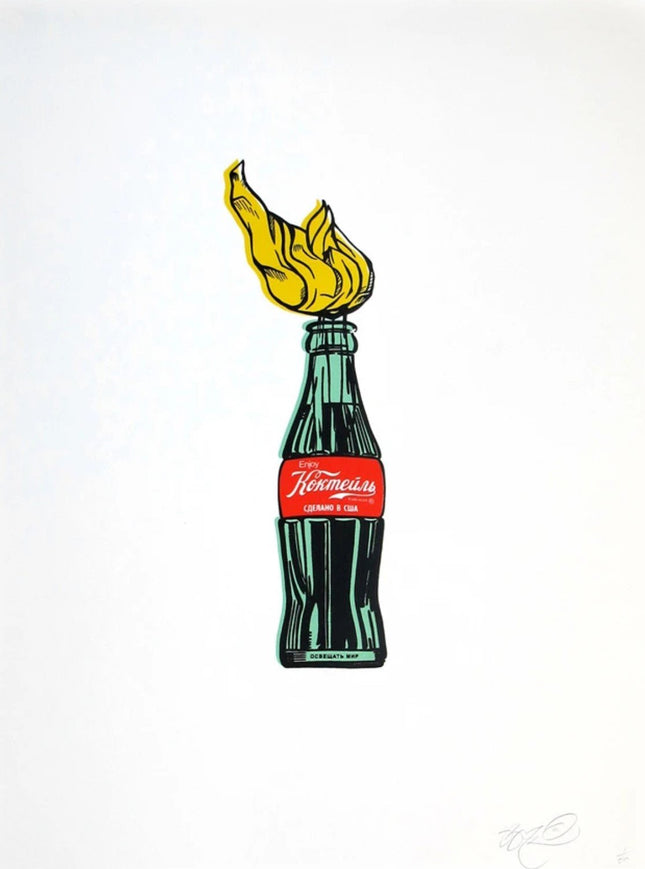
SSUR- Ruslan Karablin Molotov Silkscreen Print by SSUR- Ruslan Karablin
Molotov 4-Color Hand-Pulled Limited Edition Silkscreen Print on Fine Art Paper by SSUR- Ruslan Karablin Rare Street Art Famous Pop Artwork Artist. Silkscreened print limited to 50 pieces. Signed and numbered with embossed logo on the bottom corner.
$323.00
-
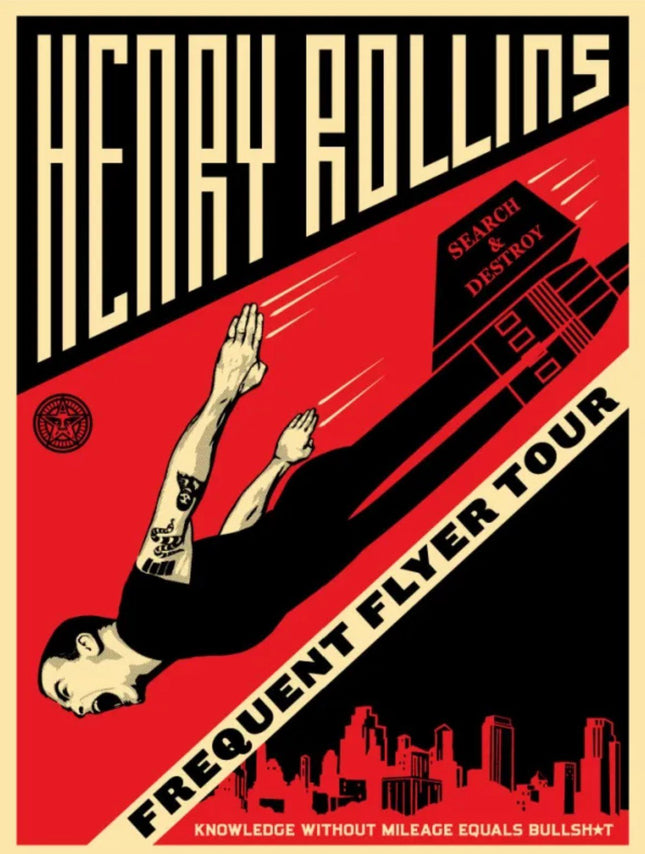
Shepard Fairey- OBEY Henry Rollins Frequent Flyer Tour Silkscreen Print by Shepard Fairey- OBEY
Henry Rollins Frequent Flyer Tour 2-Color Hand-Pulled Limited Edition Silkscreen Print on Fine Speckletone Art Paper by Shepard Fairey Rare Street Art OBEY Pop Artwork Artist. Signed & Numbered Screen Print 18 x 24 inches Edition of 225 February 19, 2010 Henry Rollins tour poster designed by Shepard Fairey. The Frequent Flyer tour starts 2/18/2010 in Arizona USA.
$917.00
-
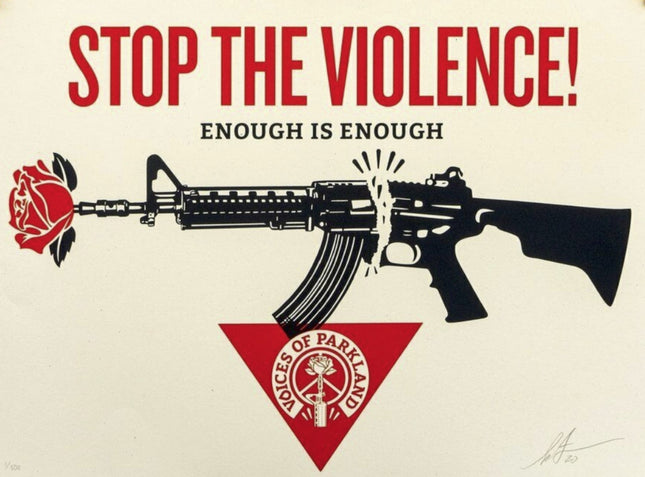
Shepard Fairey- OBEY Stop The Violence! Voices of Parkland Silkscreen Print by Shepard Fairey- OBEY
Stop The Violence! Voices of Parkland 2-Color Hand-Pulled Limited Edition Silkscreen Print on Cream Speckle Tone Paper by Shepard Fairey Rare Street Art OBEY Pop Artwork Artist. "Voices of Parkland" Screen Print on Cream Speckle Tone Paper by Shepard Fairey. It measures 18" x 24"
$384.00