
White
-
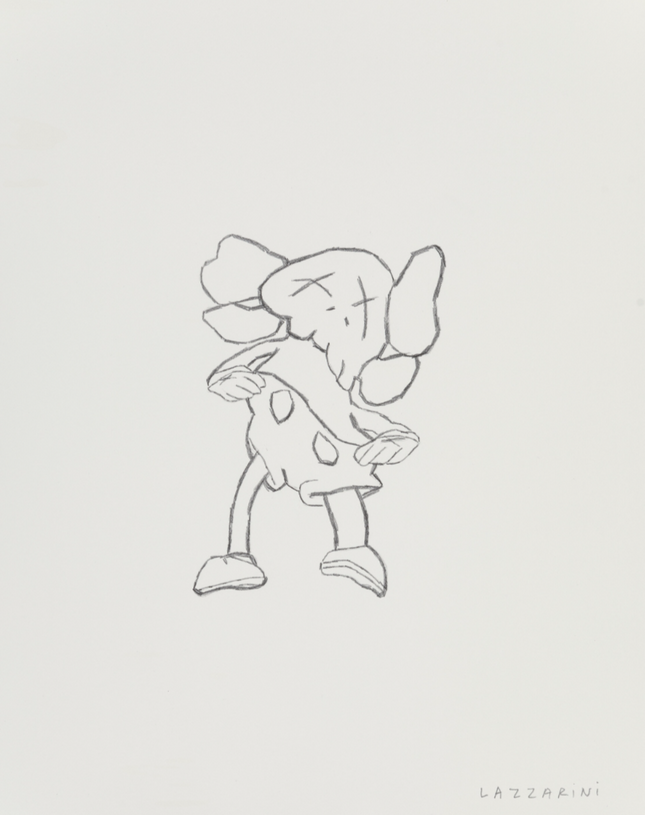
Robert Lazzarini Companion Model Drawing Original Graphite Drawing by Robert Lazzarini
Companion Model Drawing Original Graphite Drawing by Robert Lazzarini on Fine Art Paper Modern Street Pop Artwork. 2010 Signed Original Graphite Pencil Drawing Size 11.5x14.5. Robert Lazzarini (b. 1965) Companion Model Drawing, c. 2010 Graphite on paper 14-1/2 x 11-1/2 inches (36.8 x 29.2 cm) (sheet) Signed in pencil to lower right. Exploring Robert Lazzarini's Companion Model Drawing in the Context of Street Pop and Graffiti Art American contemporary artist Robert Lazzarini was born in 1965 and is renowned for his mind-bending sculptures that manipulate everyday items such as guns, chairs, and skulls. These pieces challenge our understanding of reality, incorporating a mix of computer-aided design and traditional sculpting methods. Lazzarini completed his studies at the School of Visual Arts in New York City, earning his BFA in 1990. His artwork has been showcased in numerous galleries and museums across the globe, with some of his most notable exhibitions being held at the Virginia Museum of Fine Arts, the Hirshhorn Museum, and the Whitney Museum of American Art. Lazzarini's sculptures are famous for their ability to distort and alter our spatial perception. His creations' unconventional shapes and dimensions make the viewer question the objects themselves and the reality they occupy. Lazzarini's artwork challenges us to reconsider our assumptions and preconceptions about the world around us by presenting familiar objects in unfamiliar ways. The art world is an ever-evolving landscape, and within its broad spectrum lies the fusion genre of Street Pop Art, a style that embodies the rebellious spirit of street art with the mass appeal of pop art. It's within this creative milieu that Robert Lazzarini's "Companion Model Drawing," a graphite-on-paper creation, finds its place. This artwork, dating back to circa 2010, represents a significant contribution to the genre, offering a unique blend of street art's grit and pop art's accessible imagery. Born in 1965, Lazzarini has been a prominent figure in the contemporary art scene, known for his distortion of familiar objects and icons, effectively challenging viewers' perceptions and expectations. The "Companion Model Drawing" is a testament to his distinctive approach, as it presents the viewer with a sketch that appears to be simple at first glance but reveals complex undercurrents upon closer inspection. The piece size, 14-1/2 x 11-1/2 inches, is intimate, inviting personal engagement, and the graphite medium gives it a raw, unfinished quality that resonates with the ethos of street art. Interpreting Lazzarini's Artistic Technique and Street Pop Art Aesthetic Lazzarini's work is often characterized by a meticulous technique that belies the chaotic impression it leaves. This is evident in the "Companion Model Drawing," where the lines are deliberate and precise, yet the overall effect is disorientation and altered reality. Though rendered in graphite, this drawing carries the visual weight and immediacy often associated with graffiti artwork. The boldness of the lines and the shading techniques contribute to a three-dimensional effect, making the drawing leap off the fine art paper. While not a traditional example of graffiti art, the artwork embodies the movement's spirit through its engagement with popular culture and subversive elements. The subject of the drawing, which can be described as a deconstructed character, resonates with the iconography typical in street and pop art. Lazzarini's signature in pencil at the bottom right corner adds a personal touch to the piece, anchoring it firmly within the artist's body of work. The Cultural Relevance of Lazzarini's Work in Modern Art Discourse Street Pop Art is not merely an aesthetic; it's a cultural phenomenon that speaks to societal narratives, often acting as a visual language for urban experiences. Lazzarini's "Companion Model Drawing" engages with this dialogue through its subject matter and execution. The choice of a companion model, a figure that could be interpreted as a guide or an alter ego, reflects the personal yet universal themes that street art explores. The artwork blurs the lines between high art and the more democratically accessible street art, embodying the inclusive nature of modern art movements. Moreover, Lazzarini's drawing bridges the immediacy of street art and the enduring nature of fine art. While graffiti is ephemeral, often painted over or washed away, the permanence of graphite on paper allows this piece to become a lasting record of artistic expression. It captures a moment in time within the street pop art movement, preserving it for future generations to appreciate and study. Conclusion: The Impact of Lazzarini's Companion Model Drawing In conclusion, Robert Lazzarini's "Companion Model Drawing" is a significant piece at the intersection of Street Pop Art and Graffiti Artwork. Its execution in graphite on fine art paper transcends the temporary nature of street art, allowing it to be appreciated as a long-lasting artifact. The piece showcases Lazzarini's technical prowess and embodies the essence of street pop art—a blend of subcultural depth and pop culture iconography. As a signed original graphite pencil drawing from 2010, it carries the hallmarks of Lazzarini's style: a thought-provoking distortion of reality that challenges and engages the viewer. This artwork remains a crucial reference point for those interested in the evolution of street-inspired art within contemporary art discourse.
$7,594.00