White
-
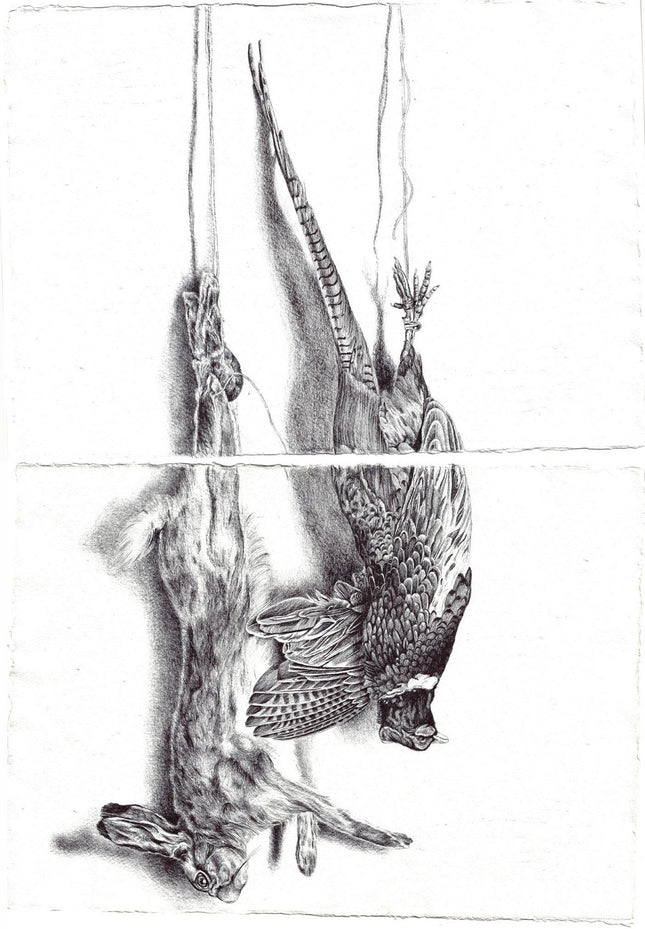
Mark Powell Heart and Soul Original Pen Drawing by Mark Powell
Heart and Soul Original Pen Ink Drawing Art on 320gsm Handmade South Indian Paper by Modern Pop Art Artist Mark Powell. Signed 2021 Ballpoint pen drawing on 320 gsm handmade South Indian paper Size: 62cm x 43cm Unframed Drawing is protected by an archival UV protective matt varnish spray 16.9x24.4 Mark Powell – Heart and Soul in Street Pop Art & Graffiti Artwork Heart and Soul by British artist Mark Powell is a striking original pen-and-ink drawing executed in 2021 on 320gsm handmade South Indian paper. Measuring 62 x 43 cm (16.9 x 24.4 inches), this piece features a meticulously rendered dead hare and pheasant, hung upside down by string in a composition that instantly evokes classical still life yet pulses with contemporary subtext. Drawn entirely with a ballpoint pen and sealed with archival UV-protective varnish, Powell’s rendering elevates this modest medium to a tool of expressive clarity. Though absent of color or overt graffiti marks, the work stands firmly within the lineage of Street Pop Art & Graffiti Artwork through its subversive detail, its interrogation of mortality, and its commitment to technical excellence layered with conceptual weight. Powell is known for using found paper, vintage documents, and aged materials in his broader practice, though in Heart and Soul, he opts for clean, handmade paper—still retaining the rawness of imperfection in texture. The subject matter draws upon the tradition of vanitas and memento mori, while also referencing the vernacular of field sport culture in a way that challenges sentimentality. This visual honesty—showing death with beauty but no spectacle—is a gesture that resonates deeply with the ethos of street and pop-inflected art. It’s a confrontation with finality, with heritage, and with consumption. The Ballpoint Pen as a Tool of Dissent and Precision What separates Powell from traditional fine draftsmen is his unorthodox use of the ballpoint pen—a tool associated more with classroom doodles or blue-collar notebooks than high art. In the context of Street Pop Art & Graffiti Artwork, this choice mirrors the use of spray cans or permanent markers: democratic, accessible, and unpretentious. Every feather, fur strand, and shadow in Heart and Soul is executed with surgical precision using this common tool, elevating it to something sacred. Like a tag scratched into a subway door or a throw-up on a crumbling brick wall, Powell’s marks assert permanence against fragility. The imagery is clean yet jarring—animals that once lived now suspended, motionless. The vertical tension of the ropes holding them reflects themes of control and helplessness, drawing a subtle parallel to how bodies—whether in life or in art—are often manipulated, positioned, and consumed. These symbolic references are aligned with urban artistic movements that seek to expose the hidden systems beneath culture, whether through abstraction, realism, or text-based intervention. Contemporary Still Life in the Street Pop Art Narrative Still life traditionally served as a showcase of abundance, fragility, and temporal beauty. In Powell’s hands, that tradition is disrupted, made raw. The careful rendering of animals is not a romantic homage—it is a meditation on stillness, loss, and what it means to hold onto something after it has passed. By choosing subject matter often glorified in upper-class sporting culture and presenting it without drama or glorification, Powell reclaims the narrative. This reclamation mirrors the objectives of many street artists who challenge dominant visual histories by injecting alternate perspectives. There is a quiet radicalism in Heart and Soul—a refusal to decorate or dilute. The honesty of the composition, the weight of the medium, and the choice of paper all work together to create an artwork that is as much about process and material as it is about meaning. This approach reflects Street Pop Art & Graffiti Artwork’s core value: that beauty, rebellion, and reflection can emerge from the simplest of materials, when handled with vision. Mark Powell’s Position in Modern Pop Draftsmanship Though not a graffiti artist in the traditional sense, Mark Powell’s aesthetic and thematic sensibilities place him in close proximity to the conceptual edge of street art. His commitment to drawing as an act of observation and confrontation, along with his use of humble materials and deadpan subject matter, places his work within the wider umbrella of street-conscious fine art. Heart and Soul does not shout, but it never looks away. It is an elegy rendered in ink—a ballpoint requiem that speaks with the same depth as murals, stencils, and protest posters inked on alley walls.
$854.00
-
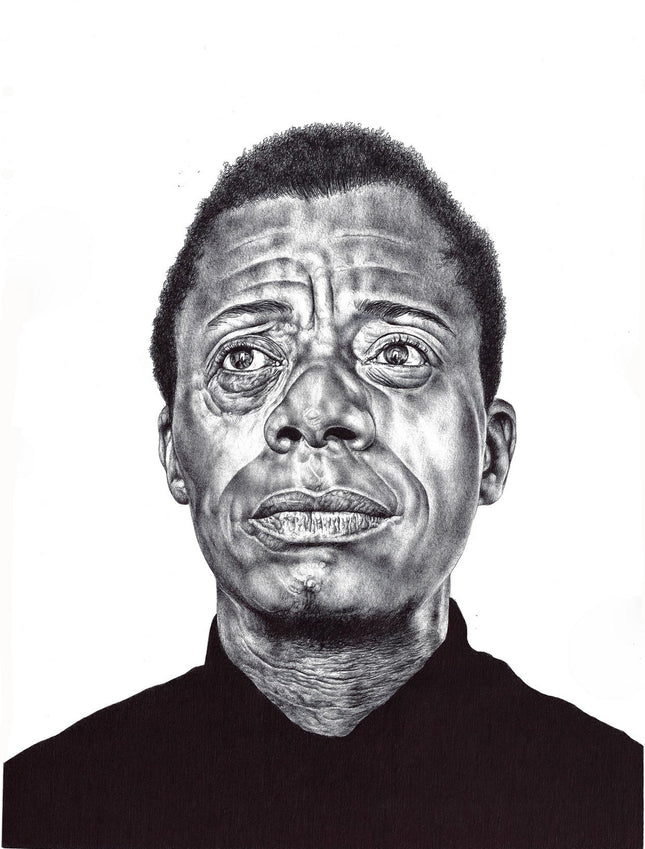
Mark Powell Saint Paul De Vence Original Pen Drawing by Mark Powell
Saint Paul De Vence Original Pen Ink Drawing Art on Archival UV Protected Matt Paper by Modern Pop Art Artist Mark Powell. 2021 Signed Original Ballpoint pen drawing Size: 43cm x 59cm Framed Drawing is protected by an archival UV protective matt varnish spray 16.9x23.2. Hyper Realistic & Photorealistic Image of a Man's Face The Penmanship of Mark Powell: Capturing Essence on Paper Mark Powell, a contemporary artist renowned for his unique approach to modern pop art, brings hyper-realism to the streets that often goes unseen in the typical vibrancy of street pop art and graffiti artwork. His piece "Saint Paul De Vence" is a prime example of his mastery with a simple ballpoint pen, creating depth, texture, and emotion on archival UV-protected matt paper. The artwork, signed and completed in 2021, measures 43cm x 59cm and showcases an intense, hyper-realistic image of a man's face, a testament to the human condition and the stories etched within. Street Realism: The Raw and Intimate in Mark Powell's Art Powell's "Saint Paul De Vence" represents more than just a technical achievement; it is a journey into the soul of its subject. The artwork, framed and safeguarded with an archival UV protective matt varnish spray, presents an individual whose life experiences are mapped out across the canvas of his face. Every line, wrinkle, and expression is rendered with meticulous detail, bringing the subject to life. This level of realism is often associated with high art, yet Powell's choice of materials – ballpoint pen and paper – roots his work in everyday life, making it accessible and relatable. The intimacy of the portrait invites viewers to contemplate the stories behind the eyes of the subject. It is this storytelling aspect that aligns Powell's work with the ethos of street art. The narratives of life, often unseen or overlooked, are brought to the forefront, compelling the audience to acknowledge the unspoken tales that unfold around them daily. Hyper-Realism in Street Pop Art While not commonly associated with street pop art and graffiti, hyper-realism finds a place in Powell's artistic lexicon. His technique challenges the notion that its bold lines and bright colors define street art. Instead, "Saint Paul De Vence" suggests that street art can be a space for subtlety and nuance. Powell's intricate shading and attention to detail pay homage to the very essence of street art: the ability to reflect reality and provoke thought. The emotion captured in the artwork transcends the medium, creating a connection with the viewer that is both immediate and profound. The subject's gaze penetrates beyond the surface, asking questions and evoking empathy. This level of emotional engagement is the hallmark of both street art and Powell's work, serving as a bridge between the viewer and the viewed. Mark Powell's "Saint Paul De Vence" is a remarkable piece within the street pop art and graffiti art world. It showcases the power of traditional techniques applied in new contexts and the ability of art to uncover the depths of human experience. As the painting hangs, protected, and preserved, it continues to speak volumes, reminding us that the stories of the streets are as varied as the people who walk them and that art is a language that can talk about life's intricacies in the stroke of a pen.
$854.00