
Acid & LSD

1 artwork

  • Vegas Bound Canvas Giclee Print by Leslie Ditto

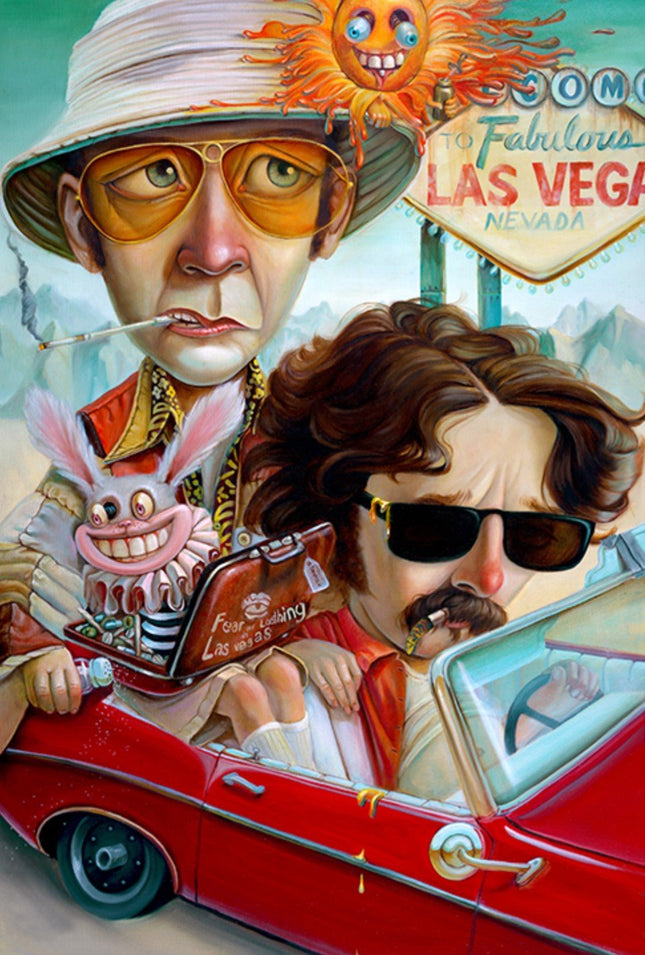
    Leslie Ditto Vegas Bound Canvas Giclee Print by Leslie Ditto

    Vegas Bound Canvas Artwork Giclee Limited Edition Print on Canvas by Pop Culture Graffiti Artist Leslie Ditto. 2014 Signed & Numbered Inspired By Fear & Loathing In Las Vegas 27"x18" Limited Edition Canvas Print By Leslie Ditto Edition Size Of 30. Ready to Hang on Stretched Canvas. Leslie Ditto's "Vegas Bound" Canvas Artwork: A Limited Edition Fusion of Street Pop Art and Cinema "Vegas Bound" is a canvas artwork by Leslie Ditto, an artist celebrated for her contributions to the street pop art genre. She is known for infusing her pieces with social commentary and vibrant visuals. This limited edition giclée print on canvas is an evocative homage to the cult classic film, "Fear and Loathing in Las Vegas." Signed and numbered by the artist, the 27"x18" print was released in 2014 with a limited edition size of 30, making it a rare collector's item. Leslie Ditto's work often draws from pop culture, and "Vegas Bound" is no exception. The artwork is meticulously prepared on stretched canvas, ready to hang, and serves as an eye-catching testament to Ditto's unique style. The visual narrative of "Vegas Bound" captures the essence of the hallucinatory experience depicted in "Fear and Loathing in Las Vegas." The central figures, reminiscent of the film's protagonists, are portrayed against a backdrop that is quintessentially Las Vegas, with its flashy and over-the-top energy. Ditto's use of saturated colors and exaggerated features echoes the surreal and chaotic journey into the heart of the American Dream, as experienced by the characters. The detailed rendering of the subjects, the classic convertible, and the iconic Las Vegas sign all work in harmony to transport the viewer into the vivid world of the artwork. Dissecting the Aesthetic Elements of "Vegas Bound" The aesthetic elements of "Vegas Bound" are deeply rooted in street pop art and graffiti artwork traditions. Ditto's technique showcases an intricate balance between realism and exaggeration, a hallmark of pop art's influence. The artwork features hallucinatory creatures and distorted perspectives that symbolize the psychedelic influence on street art, while the meticulous attention to detail reflects the precision of graffiti artwork. The figures in the piece, with their stylized expressions and bold contours that define them, testify to the rebellious spirit underlying street and pop art movements. Leslie Ditto's ability to capture the frenetic energy of the Las Vegas strip and the disjointed reality of the film's narrative is evident in the chaotic composition of the piece. Every element, from the smoke from a cigarette to the manic grin of the anthropomorphic creature in the backseat, contributes to an overwhelming sense of motion and emotion. This piece is not simply a static representation; it actively reimagines a cultural phenomenon, capturing the vibrancy and transience of street pop art. Significance and Impact of Leslie Ditto's "Vegas Bound" in Art and Culture "Vegas Bound" stands as a significant work in the oeuvre of Leslie Ditto and within the broader context of street pop art and graffiti artwork. The limited availability of this print has made it a sought-after piece for collectors and enthusiasts of street pop art. Ditto's interpretation of "Fear and Loathing in Las Vegas" through the lens of street art aesthetics offers a fresh perspective on the themes of excess, escapism, and the search for meaning in a postmodern world. It visually explores the boundaries between high and low art, between the world of fine art galleries and the unabashed expressions found on the streets. Through works like "Vegas Bound," Leslie Ditto contributes to the ongoing conversation about the legitimacy and potential of street pop art as a form of artistic expression. Her work challenges the traditional barriers of the art world, showcasing how the motifs and themes commonly found in graffiti and street art can find a place within the confines of a canvas. "Vegas Bound" is not merely a tribute to a film but a piece that stands on its own as a vibrant, thought-provoking example of how pop culture and art intersect to create something entirely new and deeply resonant. Leslie Ditto's "Vegas Bound" is a powerful piece of street pop art that captures the spirit of an era, the essence of a cinematic journey, and the enduring allure of Las Vegas. Its limited edition status only adds to its mystique, making it a valuable addition to the collections of those who appreciate the intricate dance between cinema, street culture, and visual art.

    $312.00

Acid & LSD Graffiti Street Pop Art

Acid and LSD in Street Pop Art & Graffiti Artwork

Acid and LSD have had a lasting influence on Street Pop Art & Graffiti Artwork, serving both as creative catalysts and visual subjects since the psychedelic era of the 1960s. The hallucinogenic effects of LSD shaped the aesthetics of counterculture art, establishing a visual vocabulary that persists today through surreal distortions, color overloads, and fluid forms. Artists working in spray paint, silkscreen, marker, and mixed media have long explored the altered perception, spiritual symbolism, and visual chaos associated with LSD. These substances, though illegal in many contexts, remain central to the conversation around consciousness, rebellion, and visual liberation. Within graffiti and pop street styles, acid continues to function not just as a drug reference, but as a visual metaphor for transformation and nonconformity.

Psychedelic Aesthetics and Urban Mutation

The influence of LSD can be seen in the warped geometries, melting characters, eyeball motifs, and neon spectrums that populate murals, prints, and wheatpastes in cities worldwide. Artists like Buff Monster, Kenny Scharf, and Alex Pardee have created work infused with psychedelic surrealism, featuring warped anatomy, floating eyes, and dripping textures that evoke the fluidity of LSD experiences. Even within sticker art or marker-filled blackbooks, acid references show up in spirals, radiant fractals, and rainbow glows that seem to pulse off the paper. The visual language of LSD taps into a realm of mental escapism, and graffiti writers often use it to represent states of elevation beyond the rules of the physical world. As such, walls tagged with blotter designs or smiling acid tabs are not just aesthetic experiments but expressions of altered states and anti-linear thinking.

Cultural References and Underground Iconography

Beyond stylistic influence, LSD is directly referenced in character design and symbolic use within Street Pop Art & Graffiti Artwork. Smiley faces, blotter paper grids, third eyes, and brain-melting characters are common across mural installations, zines, and gallery editions. These motifs harken back to rave flyers, punk aesthetics, and underground comics where LSD played a pivotal role in shaping youth identity and resistance. The influence of 1960s counterculture artists like Rick Griffin and Victor Moscoso is echoed in the way contemporary graffiti artists remix acid visuals with urban themes. Many modern street artists pay homage to the acid tab itself, using it as a character prop or even creating full art editions printed onto LSD-sized squares as collectible formats, though not for consumption.

Altered States as Visual Rebellion

The use of LSD within Street Pop Art & Graffiti Artwork continues to reflect a desire to disrupt conformity and explore new visual terrain. It represents both an inner journey and a public act of defiance, transforming surfaces into portals of imagination. While the drug’s legality remains controversial, its artistic influence is embedded in a tradition of challenging perception and exploring psychological freedom. Whether in acid-ridden landscapes or hallucinogenic character forms, the spirit of LSD remains deeply woven into the fabric of modern street pop art. The art not only references the drug, it channels its essence through saturated gradients, layered realities, and visual overstimulation meant to alter the viewer’s state of mind in the same way LSD alters the brain. This shared visual and conceptual foundation continues to make acid a key reference point in contemporary graffiti and pop street narratives.

Footer image

© 2025 Sprayed Paint Art Collection,

    • Amazon
    • American Express
    • Apple Pay
    • Bancontact
    • Diners Club
    • Discover
    • Google Pay
    • iDEAL
    • Mastercard
    • PayPal
    • Shop Pay
    • Visa

    Login

    Forgot your password?

    Don't have an account yet?
    Create account