



Bear
-

Luke Chueh Kuma Kush The Prisoner Cannabis Drug Bear Art Toy by Luke Chueh
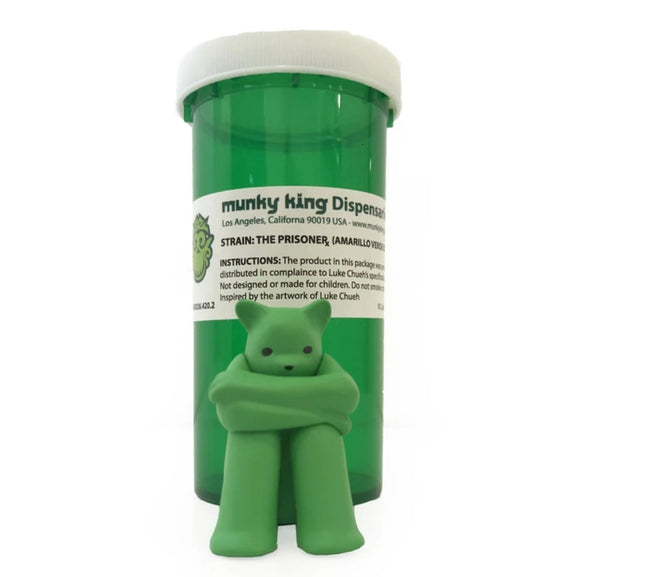
Kuma Kush The Prisoner Cannabis Drug Bear Art Toy by Luke Chueh Limited Edition Vinyl Collectible Artwork by Street Graffiti Artist. 2017 Limited Edition Artwork of 300 with Cotton, Bag, and Tube. Based on Luke Chueh's original painting, The Prisoner ponders captivity in its many forms—physical, mental, or pharmaceutical. Post-traumatic stress disorder is a mental health problem that can develop after experiencing or witnessing a life-threatening event like combat, natural disaster, car accident, or sexual assault. And the dependency on prescription medications such as Percocet has led to widespread addiction problems. Kuma Kush The Prisoner by Luke Chueh: Cannabis and Emotional Captivity in Street Pop Art & Graffiti Artwork Kuma Kush The Prisoner is a limited edition vinyl art toy created by Los Angeles-based artist Luke Chueh in 2017. Produced in a run of 300 pieces, each figure comes housed in a green translucent prescription-style container with a cotton bag and printed label that mimics cannabis dispensary packaging. This collectible is part of Chueh’s The Prisoner series, which adapts his original painting into three-dimensional vinyl form. The figure features a seated bear, legs folded, arms wrapped tightly around its knees, and head lowered in a pose of silent withdrawal. This turquoise green edition—nicknamed Kuma Kush—shifts the narrative focus toward cannabis as a coping mechanism, inviting reflection on the psychological implications of alternative medication and emotional dependency. Deeply rooted in the language and symbolism of Street Pop Art & Graffiti Artwork, this piece turns a seemingly cute figure into a deeply evocative emotional sculpture. Color, Form, and Packaging as Social Commentary The choice of a green plastic tube traditionally associated with cannabis storage turns the bear into a commentary on escapism, self-medication, and the search for relief from psychological pain. The strain title, Kuma Kush, plays off both pop culture and medical terminology, combining a playful exterior with a serious undertone. Chueh’s bear figure, rendered in a mint green hue, is static and introspective, trapped in both its physical posture and the symbolic enclosure of the container. The aesthetic is clean, minimal, and emotionally weighted. This visual restraint is a core part of the artwork’s impact—Chueh uses silence and stillness to speak volumes. The bear is not a mascot but a vessel, representing the emotional burden many carry in silence. By situating the toy inside medical-themed packaging, Chueh makes the container an extension of the piece, turning object presentation into a narrative device consistent with the provocative nature of Street Pop Art & Graffiti Artwork. Luke Chueh and the Art of Emotional Exposure Luke Chueh has become a leading voice in contemporary pop and street-influenced art through his exploration of mental health, addiction, and vulnerability. His iconic bear figures have become universal symbols of struggle, designed to elicit empathy without the need for words. In Kuma Kush The Prisoner, Chueh introduces cannabis culture into his ongoing narrative about emotional suppression and dependency. This is not a celebration or condemnation of cannabis but an observation on how individuals turn to substances—legal or otherwise—to cope with trauma, anxiety, and post-traumatic stress disorder. Chueh’s approach is neither cynical nor romanticized. It exists within the gray areas where emotion, coping, and survival intersect, which places his work at the forefront of Street Pop Art & Graffiti Artwork that engages social issues through emotionally resonant design. The Prisoner Series as Art Object and Cultural Reflection Kuma Kush The Prisoner functions as both a collectible and a statement, its limited release of 300 making it both rare and conceptually potent. The figure, while small in scale, delivers a message that expands far beyond its dimensions. It sits not just in display cases but in the minds of viewers, acting as a quiet companion to those navigating emotional heaviness. Through minimalist form and emotionally charged symbolism, Luke Chueh elevates the collectible vinyl toy to a piece of psychological sculpture. As part of the Street Pop Art & Graffiti Artwork movement, the Prisoner series—and this Kuma Kush edition in particular—demonstrates how visual art can confront difficult truths about medication, trauma, and human vulnerability without sacrificing aesthetic simplicity or emotional clarity.
$350.00
-
Luke Chueh Kuma OG Amarillo Verde The Prisoner Drug Bear Art Toy by Luke Chueh
Kuma OG The Prisoner Amarillo Verde Drug Bear Art Toy by Luke Chueh Limited Edition Vinyl Collectible Artwork by Street Graffiti Artist. 2017 Limited Edition Artwork of 438 with Cotton, Bag, and Tube. Based on Luke Chueh's original painting, The Prisoner ponders captivity in its many forms—physical, mental, or pharmaceutical. Post-traumatic stress disorder is a mental health problem that can develop after experiencing or witnessing a life-threatening event like combat, natural disaster, car accident, or sexual assault. And the dependency on prescription medications such as Percocet has led to widespread addiction problems. Kuma OG The Prisoner Amarillo Verde by Luke Chueh: Vinyl Expression of Emotional Confinement in Street Pop Art & Graffiti Artwork Kuma OG The Prisoner Amarillo Verde is a limited edition vinyl art toy created in 2017 by Luke Chueh, a Los Angeles-based artist known for blending dark emotional themes with clean, accessible design. This version of The Prisoner was produced in a run of 438 pieces and includes a cotton-lined pouch and a green prescription-style tube container, enhancing the toy’s commentary on medication, dependency, and the struggles of mental health. Inspired by Chueh’s original painting, The Prisoner represents a bear-like character locked in a pose of despair, hugging its knees with its head down. This green vinyl edition, subtitled Amarillo Verde, extends the series’ reflection on the psychological entrapment many face as a result of trauma and modern pharmaceutical culture, while contributing to the visual language of Street Pop Art & Graffiti Artwork. Pharmaceutical Symbolism and Emotional Language in a Vinyl Medium The Amarillo Verde colorway gives the piece a sterile, medicinal aesthetic, reinforced by its packaging in a translucent green prescription tube labeled with strain-like language. This not only ties the figure to the pharmaceutical world but also alludes to cannabis and alternative coping mechanisms. The bear's static, slumped position communicates resignation and detachment. Its form is simplified, yet every aspect—from its curved arms to its averted gaze—projects a vivid emotional landscape. The figure is not anthropomorphic in a traditional sense, but its expression is intensely human. By enclosing the figure in a mock prescription container, the artwork draws attention to how society addresses psychological pain: through containment and sedation, rather than resolution. Luke Chueh’s choice to use vinyl as the medium makes the figure both durable and intimate, offering a tactile presence that underscores its emotional weight. Luke Chueh and the Visual Narrative of Pain and Isolation Luke Chueh is a central figure in the art toy movement and Street Pop Art & Graffiti Artwork, using deceptively cute characters to explore profound emotional realities. Born in the United States, Chueh’s art frequently tackles depression, trauma, and the tension between inner life and external perception. The Prisoner series is a cornerstone of his commentary on mental health and pharmaceutical culture. This particular Amarillo Verde edition communicates a very specific kind of sadness—the kind masked by colorful pills and simplified diagnoses. It is deeply rooted in Chueh’s personal narrative and broader societal critique. The bear figure, repeated throughout his work, becomes an avatar for voiceless suffering, sitting quietly in its confinement, waiting for acknowledgment. This toy, though minimal in form, is maximal in meaning and speaks to the ability of street and pop artists to address contemporary crises through minimal, emotionally potent sculpture. The Prisoner as a Physical Object in the Vocabulary of Street Pop Art & Graffiti Artwork Kuma OG The Prisoner Amarillo Verde stands as a tactile commentary on mental health in an era of chemical coping. Each vinyl piece is packaged not only with care but with thematic intent—every element, from the labeling to the green plastic tube, reinforces the work’s conceptual core. It mirrors the experience of being prescribed and contained, offering a toy that acts as a physical artifact of emotional incarceration. It is not simply a figure to be displayed, but one to be felt and contemplated. Through his work, Luke Chueh continues to redefine how sculpture and collectible art can serve as powerful mediums for psychological expression. Within the evolving canon of Street Pop Art & Graffiti Artwork, this piece asserts that the most minimal forms often hold the deepest truths, inviting collectors and viewers to sit with the discomfort and recognize its weight.
$320.00
-

Luke Chueh Dextroamphetamine Black Beauty The Prisoner Bear Art Toy by Luke Chueh
Dextroamphetamine Black Beauty The Prisoner Bear Art Toy by Luke Chueh Limited Edition Vinyl Collectible Artwork by Street Graffiti Artist. 2017 Limited Edition Artwork of 500 with Cotton, Bag, and Tube. Based on Luke Chueh's original painting, The Prisoner ponders captivity in its many forms—physical, mental, or pharmaceutical. Post-traumatic stress disorder is a mental health problem that can develop after experiencing or witnessing a life-threatening event like combat, natural disaster, car accident, or sexual assault. And the dependency on prescription medications such as Percocet has led to widespread addiction problems. Dextroamphetamine Black Beauty The Prisoner by Luke Chueh: A Dark Reflection on Dependency in Street Pop Art & Graffiti Artwork Dextroamphetamine Black Beauty The Prisoner is a limited edition vinyl art toy created by artist Luke Chueh in 2017. Produced in an edition of 500 pieces, this figure is part of the ongoing Prisoner series, which adapts Chueh’s emotionally powerful painting into three-dimensional sculptural form. Each edition comes with a cotton-lined bag and is packaged inside a prescription-style orange tube bearing a fictional pharmaceutical label. This particular version, labeled Black Beauties, references a well-known street term for stimulant-based medications like dextroamphetamine, historically used to treat ADHD and narcolepsy but also widely misused for their euphoric and energizing effects. The toy depicts Chueh’s iconic bear seated with arms tightly wrapped around its legs, body language slumped in a posture of quiet despair. In this black vinyl colorway, the character becomes even more somber and haunting, amplifying the underlying themes of emotional captivity and synthetic reliance embedded in the work. Color as Psychological Weight and Symbolism The black coloration of this figure—paired with the term Black Beauties on the label—evokes a direct emotional response tied to darkness, isolation, and intensity. While earlier versions of The Prisoner might have used color to represent numbing or sedation, this edition intensifies the metaphor by embracing the visual codes of internalized distress. The figure, enclosed in its transparent orange pharmacy tube, appears as a trapped emotional state, unable to express or move. Its eyes are reduced to small, vacant white dots that stand out against the matte black body, making it feel more ghostlike and withdrawn. This visual contradiction—between the adorable form and its heavy emotional implication—is a hallmark of Luke Chueh’s contribution to Street Pop Art & Graffiti Artwork. The toy becomes a site of tension, where the aesthetics of collectible culture meet the emotional realities of mental health, addiction, and societal pressure. Luke Chueh’s Articulation of Pain Through Vinyl Minimalism Luke Chueh, based in Los Angeles, has established a distinct voice in both the street and pop art communities through his deeply personal yet accessible character work. His art reflects the quiet pain many experience privately, giving form to mental states that often lack vocabulary. The Prisoner series, particularly this Black Beauty edition, centers on the way trauma and post-traumatic stress disorder are treated with medical intervention, and how dependency on substances—whether stimulants, opioids, or otherwise—can become a secondary form of entrapment. Chueh’s vinyl bears are not just emotional stand-ins; they are visual testaments to human fragility, rendered in minimalist detail and powerful posture. His work repositions toy art within the Street Pop Art & Graffiti Artwork framework, showing that small, hand-sized sculptures can carry as much expressive power as large murals or installations. The Prisoner Series and the Language of Medication as Art Object Dextroamphetamine Black Beauty The Prisoner transforms pharmaceutical culture into a tactile art form that critiques while it documents. The packaging mimics real prescription containers, complete with faux instructions and contact information, reinforcing the idea that this object is not separate from society’s medical discourse—it is embedded within it. This presentation method adds depth and reinforces the artwork’s conceptual integrity. Limited to 500 pieces, each toy becomes a collectible commentary on the realities of modern chemical treatment, social expectations, and unspoken suffering. Within the wider movement of Street Pop Art & Graffiti Artwork, this piece solidifies Luke Chueh’s position as an artist who uses softness to explore severity, and who brings sculptural language to the emotional and pharmaceutical conditions of contemporary life. The bear sits still, but its silence is deafening.
$320.00
-

Luke Chueh Kuma OG Chase Flocked Amarillo Verde Prisoner Art Toy by Luke Chueh
Kuma OG Chase Flocked Amarillo Verde The Prisoner Drug Bear Kickstarter Art Toy by Luke Chueh Limited Edition Vinyl Collectible Artwork by Street Graffiti Artist. 2017 Limited Edition Artwork of 62 with Cotton, Bag, and Tube. Based on Luke Chueh's original painting, The Prisoner ponders captivity in its many forms—physical, mental, or pharmaceutical. Ultra Rare Kickstarter Exclusive Chase Flocked Edition. Kuma OG Chase Flocked Amarillo Verde The Prisoner by Luke Chueh: Ultra Rare Emotional Artifact in Street Pop Art & Graffiti Artwork Kuma OG Chase Flocked Amarillo Verde The Prisoner is an ultra rare vinyl art toy by Luke Chueh, released in 2017 as a Kickstarter exclusive. Limited to only 62 pieces, this special edition is a flocked version of the Amarillo Verde Kuma OG figure, making it one of the most sought-after variants in The Prisoner series. Packaged in a green translucent prescription-style container with printed labeling, cotton interior, and protective bag, the figure mimics both the aesthetic and implication of medical confinement. The Prisoner, originally based on Chueh’s emotionally resonant painting, contemplates psychological, physical, and pharmaceutical imprisonment. Rendered in a mossy textured green flocking, the bear’s soft tactile surface contrasts dramatically with its somber pose—arms wrapped tightly around its knees, seated and emotionally closed off. This contrast emphasizes the disconnect between exterior softness and internal suffering, a hallmark of Street Pop Art & Graffiti Artwork. Flocking as Texture for Trauma and Visual Irony What distinguishes this edition is the flocking—a velvety texture that adds an uncanny softness to an otherwise emotionally heavy piece. This tactile surface transforms the object into something that feels almost comforting to touch, even while it visually portrays pain, dependency, and confinement. The figure’s colorway, a vivid Amarillo Verde green, echoes the medical cannabis dispensary aesthetic, subtly referencing alternative forms of chemical escape. The labeled container marks the strain as Kuma OG, a fictionalized nod to both cannabis culture and the ongoing dialogue around self-medication. By placing the bear in a tube labeled as a product and strain, Chueh uses humor and stark visual metaphors to dissect how trauma and emotional pain are commodified. These layered meanings, delivered through minimalist sculptural forms and smart packaging, place this piece firmly within the canon of Street Pop Art & Graffiti Artwork. Luke Chueh’s Quiet Revolution in Designer Art Toys Luke Chueh, a Los Angeles-based artist known for his distinctive character design and emotional storytelling, has redefined the role of designer toys in contemporary art. His work draws heavily from personal experiences with mental health, cultural identity, and psychological conflict. The bear figure featured in The Prisoner series is a signature motif that Chueh uses to convey raw, unspoken emotion. Through posture and minimal expression, the bear becomes an avatar for the fragile states people often endure in silence. This flocked version adds an additional layer of irony and depth, turning a painful emotional narrative into a soft and seemingly huggable object. Chueh’s fusion of toy design, sculpture, and emotional realism continues to influence the Street Pop Art & Graffiti Artwork movement by proving that vulnerability can be conveyed through the smallest, most deceptively simple forms. Kickstarter Exclusivity and Cultural Significance As one of only 62 pieces produced, the Kuma OG Chase Flocked Amarillo Verde edition holds exceptional cultural and collector value. Its release through Kickstarter ties the work directly to the support of fans and collectors who align with the deeper message of The Prisoner series. The prescription-themed packaging serves as more than a protective shell—it is part of the narrative structure, symbolizing institutional control, pharmaceutical normalization, and the quiet despair of chemically managed pain. This edition does not just exist as a display item; it exists as a statement. It represents the intersection of mental health, medication culture, and consumer aesthetics in modern society. Within the framework of Street Pop Art & Graffiti Artwork, Luke Chueh’s limited editions become small-scale monuments to the emotional complexity of human experience—objects of art that carry as much weight in meaning as they do in cultural presence.
$500.00
-

Luke Chueh Oxycontin The Prisoner Drug Bear Art Toy by Luke Chueh
Oxycontin The Prisoner Drug Bear Art Toy by Luke Chueh Limited Edition Vinyl Collectible Artwork by Street Graffiti Artist. 2017 Limited Edition Artwork of 300 with Cotton, Bag, and Tube. Based on Luke Chueh's original painting, The Prisoner ponders captivity in its many forms—physical, mental, or pharmaceutical. Post-traumatic stress disorder is a mental health problem that can develop after experiencing or witnessing a life-threatening event like combat, natural disaster, car accident, or sexual assault. And the dependency on prescription medications such as Percocet has led to widespread addiction problems. Oxycontin The Prisoner Drug Bear by Luke Chueh: Sculpting the Weight of Dependency in Street Pop Art & Graffiti Artwork Oxycontin The Prisoner is a limited edition vinyl art toy released in 2017 by Los Angeles-based artist Luke Chueh. Produced in a run of 300 pieces, each figure comes enclosed in a pill bottle-style tube with custom label design, cotton padding, and a bag. This piece belongs to Chueh’s emotionally raw and conceptually provocative The Prisoner series, which explores the psychological and chemical captivity imposed by trauma and prescription drug dependency. The figure, seated with arms wrapped around bent knees and head tilted in surrender, is rendered in pale pink vinyl, an intentionally vulnerable hue evoking fragility and exposure. This edition bears the pharmaceutical branding of Oxycontin, one of the most widely debated painkillers associated with both relief and addiction. Within the visual canon of Street Pop Art & Graffiti Artwork, this piece functions as a sculptural protest against the medicalization of mental health and the commodification of comfort. Pharmaceutical Captivity Encapsulated in Minimalist Design The use of the pill bottle as both packaging and contextual anchor is integral to the conceptual weight of Oxycontin The Prisoner. Rather than being decorative, it serves as a metaphorical cell. The orange plastic container, a familiar object in American medicine cabinets, becomes a prison of muted pain. The bear figure inside is soft in tone but rigid in posture, exuding silent anguish and immobility. Its simplified features are part of Luke Chueh’s signature visual style—clean, anthropomorphic, and emotionally loaded. The minimalist approach allows viewers to project their own experiences and emotional responses onto the character, whether that be isolation, anxiety, numbness, or resignation. In the tradition of Street Pop Art & Graffiti Artwork, this piece reclaims consumer iconography and transforms it into a statement about personal and collective mental health struggles. Luke Chueh and the Voice of Emotional Vulnerability in Contemporary Art Luke Chueh, born and based in the United States, has established himself as a leading figure in vinyl art culture and emotional visual narrative. His work consistently uses characters—especially his iconic bear—as symbols of psychological realism masked in pop iconography. Oxycontin The Prisoner deepens this approach by explicitly referencing the epidemic of opioid addiction and the reliance on pharmacological solutions for mental health issues such as post-traumatic stress disorder, depression, and chronic anxiety. Chueh’s work does not seek to offer resolution; instead, it offers recognition. The bear is not posed in resistance or hope but in stillness, reflecting the physical and emotional sedation often experienced by those relying on medications like Oxycontin. His use of sculpture within the Street Pop Art & Graffiti Artwork world broadens the category’s potential to include introspective, honest, and therapeutically charged storytelling. A Collectible of Pain and Awareness in Street Pop Art & Graffiti Artwork Oxycontin The Prisoner is not just a toy or a figure for display—it is a contemporary artifact that documents an era of widespread psychological struggle and the societal response to it. By combining collectible vinyl with real-world pharmaceutical references, Luke Chueh exposes the fragility that often lies beneath manufactured relief. The packaging, labeled with details that mimic prescription information, reinforces the institutional control surrounding mental health treatment. With only 300 produced, this edition is highly sought after, not only for its rarity but for its role in confronting important themes through tangible, expressive art. As part of The Prisoner series, it anchors Luke Chueh’s position in the Street Pop Art & Graffiti Artwork movement as a storyteller of the internal human experience, voiced through form, posture, and silence.
$350.00
-
Luke Chueh Percocet The Prisoner Drug Bear Art Toy by Luke Chueh
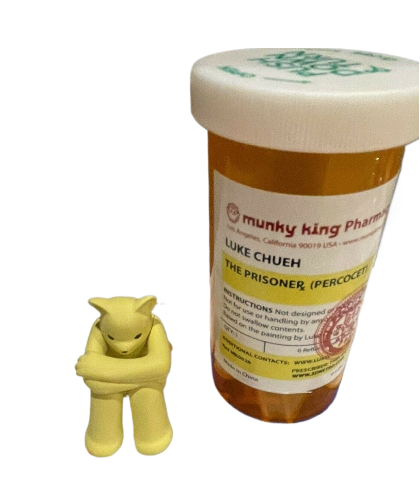
Percocet The Prisoner Drug Bear Art Toy by Luke Chueh Limited Edition Vinyl Collectible Artwork by Street Graffiti Artist. 2018 Limited Edition Artwork of 500 with Cotton, Bag, and Tube. Based on Luke Chueh's original painting, The Prisoner ponders captivity in its many forms—physical, mental, or pharmaceutical. Post-traumatic stress disorder is a mental health problem that can develop after experiencing or witnessing a life-threatening event like combat, natural disaster, car accident, or sexual assault. And the dependency on prescription medications such as Percocet has led to widespread addiction problems. The Poignant Message Behind 'The Prisoner - Percocet' Art Toy by Luke Chueh 'The Prisoner - Percocet' is a limited edition vinyl art toy that delivers a powerful commentary on the grips of addiction and the confines of mental health struggles. Created by the acclaimed street graffiti artist Luke Chueh, this 2018 artwork, limited to a series of 500, delves into the concept of captivity through physical bars and the often invisible chains of pharmaceutical dependence. This piece is based on Chueh's original painting, "The Prisoner," which portrays the sad reality that many individuals face post-traumatic stress disorder (PTSD) and prescription medication addiction, particularly to potent drugs like Percocet. Chueh's art toy is thought-provoking and captures the essence of street pop art and graffiti artwork. It reflects the raw, unfiltered nature of the street art scene while addressing complex societal issues. The figure is meticulously displayed with cotton, a bag, and a tube, encapsulating the presentation of prescription medication and subtly pointing to the clinical nature of drug distribution. The Artistic Approach to a Modern-Day Plight Luke Chueh's approach to art is often characterized by the use of stark, compelling images that evoke a sense of empathy and contemplation. With 'The Prisoner - Percocet,' Chueh confronts the viewer with the reality of pharmaceutical captivity—a condition where medication meant for healing becomes a source of prolonged suffering. The vinyl figure, with its downcast eyes and clasped hands, becomes a symbol of the countless individuals who find themselves battling the dual demons of PTSD and addiction. The art toy is more than a collectible; it is a visual discourse on the pervasive issue of substance abuse linked to prescription drugs. Chueh's work is a bridge between art and advocacy, offering insight into the psychological and emotional turmoil that accompanies dependency. This piece, in particular, embodies the critical narrative that street pop art and graffiti artwork often undertake, highlighting urgent, real-world problems through artistic expression. 'The Prisoner - Percocet' in the Context of Collectible Art Collectors of 'The Prisoner - Percocet' hold a piece of art that is poignant, evocative, and starkly relevant. Including a metal card of authenticity with each figure ensures the artwork's legitimacy and special status within the limited series. Luke Chueh's signature style—simple yet profound—is on full display, making the piece a sought-after artifact within contemporary street pop art. Owning this piece is to acknowledge and appreciate the depth and potential for street art to transcend traditional canvases and become a medium for social commentary. The collectible stands as a testament to the power of art to spark conversation and to the artist's role as a commentator on the human condition. It is an invitation to reflect on the complex relationship society has with medication and the often-hidden struggles that accompany its use. In the broader context of street pop art, 'The Prisoner - Percocet' art toy by Luke Chueh stands out for its ability to communicate a profound message succinctly and symbolically. It is a powerful intersection of artistry and advocacy, encapsulating the struggle that defines the lives of many individuals in a single, silent figurine. For the discerning collector, it is not just a vinyl figure but a conversation starter, an emblem of awareness, and a striking piece of graffiti that holds significant cultural and artistic weight.
$320.00
-
Luke Chueh Vicodin The Prisoner Drug Bear Art Toy by Luke Chueh
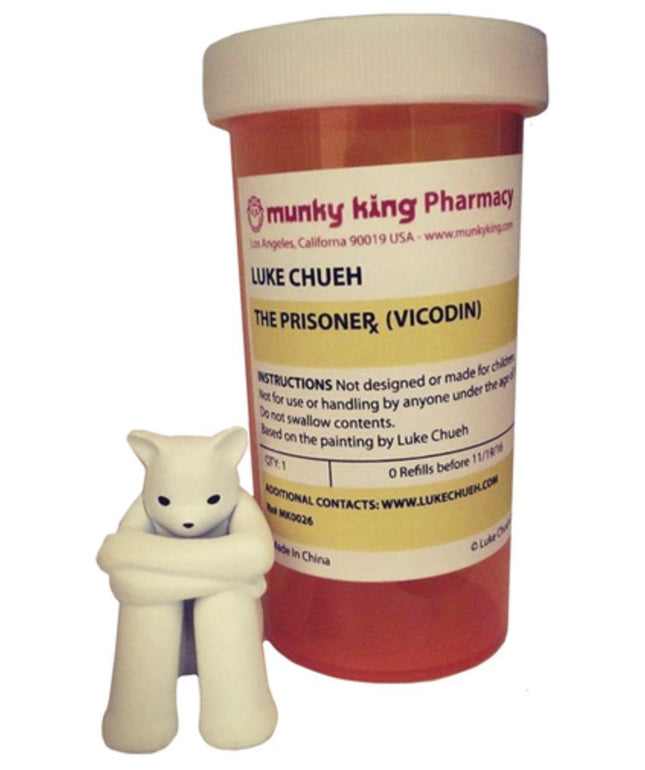
Vicodin The Prisoner Drug Bear Art Toy by Luke Chueh Limited Edition Vinyl Collectible Artwork by Street Graffiti Artist. 2016 Limited Edition Artwork of 500 with Cotton, Bag, and Tube. Based on Luke Chueh's original painting, The Prisoner ponders captivity in its many forms—physical, mental, or pharmaceutical. Post-traumatic stress disorder is a mental health problem that can develop after experiencing or witnessing a life-threatening event like combat, natural disaster, car accident, or sexual assault. And the dependency on prescription medications such as Percocet has led to widespread addiction problems. Vicodin The Prisoner Drug Bear by Luke Chueh: Vinyl Manifestation of Pharmaceutical Despair in Street Pop Art & Graffiti Artwork Vicodin The Prisoner is a 2016 limited edition vinyl art toy by Luke Chueh, issued in a run of 500 pieces and packaged with a cotton pouch, prescription-style tube, and custom labeling. This stark and introspective collectible was inspired by Chueh’s original painting The Prisoner, a body of work that dives into the concept of captivity in multiple forms: psychological, emotional, and pharmaceutical. The figure depicts a small white bear, arms tightly clasped around bent knees, body hunched in a defensive posture. Packaged inside a mock prescription pill bottle labeled as Vicodin, the bear becomes a physical metaphor for dependency and the numbing of trauma through chemical means. Positioned within the language of Street Pop Art & Graffiti Artwork, this figure embodies the raw realities often glossed over by polished consumer narratives. Pharmaceutical Packaging as a Vessel for Emotional Truth Luke Chueh’s decision to enclose the figure in a standard orange pharmacy bottle transforms the toy into a symbolic sculpture. This packaging is not merely aesthetic—it is part of the art itself. The orange plastic container is commonly associated with healing and regulated care, but here it acts as a prison, locking the character in emotional silence. Labeled under the name Vicodin, a widely prescribed yet highly addictive opioid, the piece forces viewers to consider the thin line between treatment and entrapment. The bear’s blank expression and slouched body language amplify the emotional burden behind dependency. Minimalistic in execution yet powerful in message, the figure’s placement within Street Pop Art & Graffiti Artwork challenges the notion that toys must be joyful or harmless. Instead, Chueh offers an object that speaks to trauma, medication, and the often invisible emotional pain that comes with both. Luke Chueh’s Visual Language of Suffering and Identity Luke Chueh, an American artist based in Los Angeles, has become known for using simple, iconic figures to address themes of mental illness, personal pain, and societal pressure. His characters often appear soft and subdued, but they carry an immense emotional weight. In Vicodin The Prisoner, the white color of the bear reflects both clinical sterility and emotional numbness. Chueh’s approach is grounded in honesty and vulnerability, distilling complex experiences into forms that resonate widely. His influence within Street Pop Art & Graffiti Artwork comes from this ability to speak directly through sculpture, illustration, and narrative-driven toy design. Chueh’s bear functions not just as a character but as a stand-in for anyone struggling with emotional paralysis, depression, or the grip of addiction. The Prisoner Series as Commentary and Collector Artifact This limited edition release of 500 includes not just the vinyl bear, but a presentation designed to immerse collectors in its commentary. The pill bottle packaging, custom-labeled for Vicodin, mirrors the controlled environments from which many seek escape, but also become trapped. The cotton bag adds an additional layer of clinical detachment, as if the piece were a regulated prescription item rather than an expressive artwork. As part of The Prisoner series, this version adds to the ongoing discussion around trauma and pharmacology within the framework of Street Pop Art & Graffiti Artwork. It transforms a collectible into a statement, where the cute and the uncomfortable coexist, creating a powerful tension that defines the work of Luke Chueh. The bear sits still, silent, and confined—but its presence speaks volumes about a culture that medicates pain without always understanding it.
$275.00