
BLADE: A Pioneer in Graffiti Art History
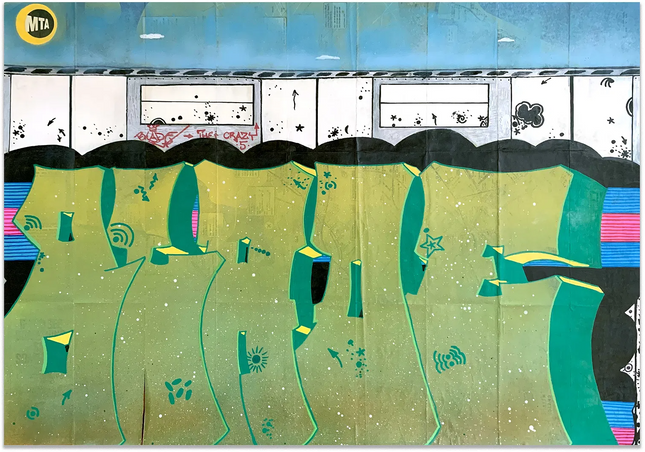
BLADE, born Steven Ogburn in New York City in 1957, is widely recognized as one of the foundational figures in the rise of graffiti as a respected and global artistic language. His influence began during the early 1970s, when he became known as the King of Graffiti after painting over five thousand trains across the New York City subway system. At a time when graffiti was both rebellious and underground, BLADE’s work stood out not only for its volume but for its artistic innovation and technical mastery. He helped shape the identity of graffiti during its earliest formative years, elevating it beyond simple name tagging and into a complex visual vocabulary rooted in character design, geometric abstraction, and bold lettering. His signature style combined elements of psychedelia, futurism, and visual storytelling with vivid, graphic precision, laying the foundation for what would later be categorized as Street Pop Art & Graffiti Artwork.
Expanding from Trains to Galleries
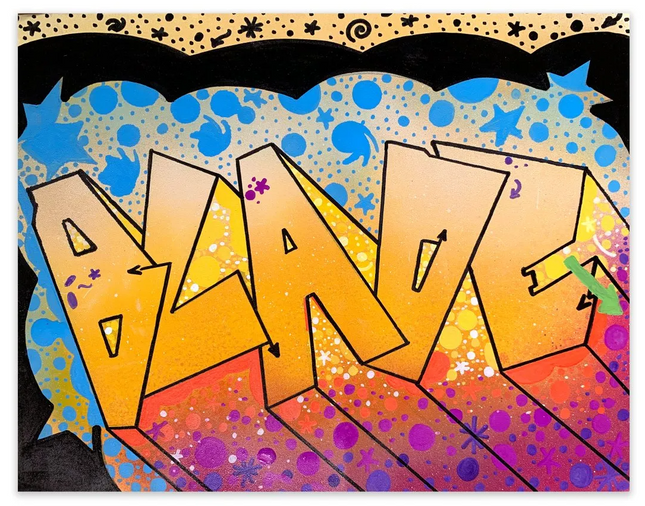
By the 1980s, BLADE transitioned from subway trains to fine art canvases without sacrificing the energy and attitude that defined his street presence. His gallery work preserved the raw dynamism of spray paint while incorporating more refined techniques and layered compositions. These pieces were not watered-down versions of his street efforts, but rather evolved extensions—deeply rooted in the visual chaos of urban New York but tempered with deliberate spatial control. BLADE’s canvases often reimagine the trains he once painted, filled with characters, explosions, movement, and saturated color fields. His evolution into gallery spaces marked a major milestone for graffiti artists seeking broader legitimacy and contributed to the mainstream recognition of graffiti as a viable fine art movement.
Legacy Through Style, Lettering, and Narrative
What distinguishes BLADE is his unmistakable dedication to style writing as a serious and expressive form. He was a pioneer in abstract lettering, often creating interlocking forms, characters, and objects that fused into one continuous visual rhythm. His letters were never static. They vibrated with personality and often broke physical rules, floating, twisting, and even exploding across surfaces. His work was narrative by nature, telling stories of fantasy, city life, and escapism, sometimes humorous, other times deeply reflective of the struggles and pace of life in the Bronx. Through this lens, BLADE became a key figure in establishing graffiti not just as a form of rebellion but as a voice of creative resistance and cultural identity.
BLADE’s Enduring Role in Street Pop Art & Graffiti Artwork
Today, BLADE remains one of the most celebrated and studied graffiti writers of all time. His influence is felt across generations of artists working in the urban arts scene. Whether through collaborations, international exhibitions, or print releases, his presence continues to command respect in both the graffiti underground and the global fine art community. His works embody the core of Street Pop Art & Graffiti Artwork—bold, unfiltered, iconic, and full of visual noise that speaks loudly about time, place, and human expression. From trains in the Bronx to canvases in Paris and Tokyo, BLADE’s legacy lives on as a testament to graffiti’s rightful place in contemporary art history.