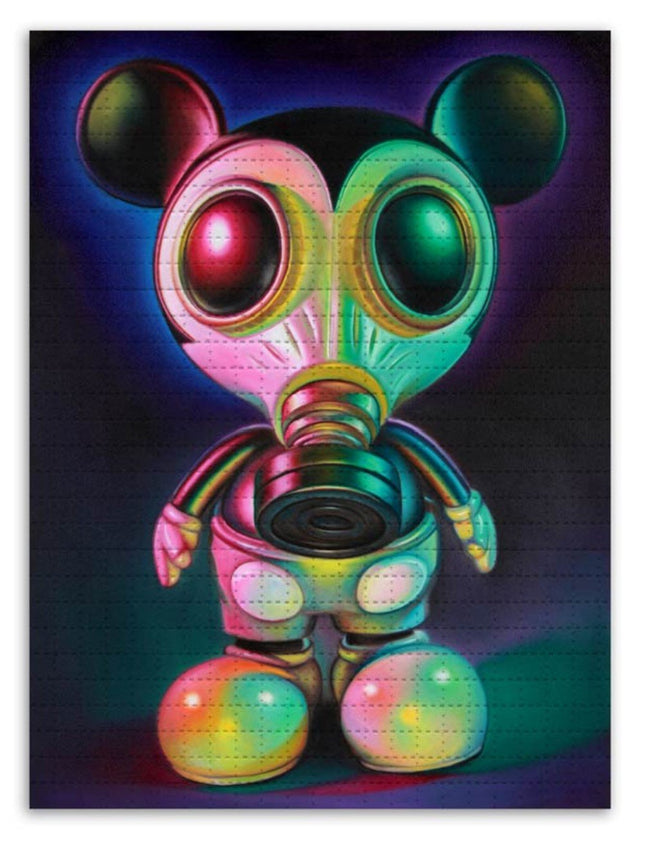
Gas Mask Mickey Blotter Paper Limited Edition Archival Pigment Print Art on Perforated Blotter Paper by Ron English- POPaganda pop culture LSD artwork.
Archival Pigment Print on Perforated Blotter Paper Size: 7.5 x 5.6 Inches Release: April 19, 2021. These limited blotter editions are hand-perforated by Zane Kesey. The alignment of the perforations over the artwork may vary slightly from the example shown.
The Magic on the Walls: Disney's Influence on Street Pop Art
The Walt Disney Company, with its iconic characters and fairy-tale narratives, has left an indelible mark on pop culture that has transcended cinema and television screens to burst onto city walls worldwide. Street pop art and graffiti artwork have often drawn from Disney's vast catalog of characters, reimagining them in various urban contexts to reflect contemporary issues, celebrate nostalgia, or even subvert the very ideals that Disney espouses. The omnipresence of Disney in street art is a testament to the company's pervasive influence on global culture.
Reimagining Disney: A Street Artist's Playground
In street art, Disney characters are reinterpreted through the lenses of myriad artists, each bringing their unique perspective to these beloved icons. With his universal recognizability, Mickey Mouse often appears in graffiti artwork, sometimes as a symbol of innocence and joy, other times as a critique of commercialism and corporate hegemony. The interpretations are as diverse as the artists themselves, ranging from faithful recreations to satirical twists that challenge viewers to see these childhood figures in a new light. Similarly, Disney princesses have been a popular subject, with street artists often using them to discuss themes of femininity, power, and identity. These familiar figures take on new roles in the narrative of street art, transforming from damsels in distress to empowered women, reflecting the changing attitudes towards gender roles in society.
Disney and the Dichotomy of Street Art
The juxtaposition of Disney's often idealized characters against the raw backdrop of the urban landscape creates a dichotomy central to the appeal of using Disney themes in street art. This contrast highlights the tension between the escapism offered by Disney's narratives and the reality of the streets where issues of poverty, inequality, and resistance are more palpable. The use of Disney characters in street pop art is also a dialogue about the commodification of culture and the pervasive nature of branding. Artists sometimes use these characters to comment on consumer culture and the impact of global corporations on individual expression and societal values. Artists disrupt every day by placing characters like Donald Duck or Goofy in unexpected, often incongruous situations, encouraging the public to engage with the art and its issues. Disney's influence on street pop art and graffiti artwork is significant, offering a familiar lexicon with which artists can engage the public in meaningful discourse. Whether through affectionate homage or sharp critique, the incorporation of Disney themes into street art reflects the company's entrenched position in the cultural zeitgeist. The artists who draw from Disney's portfolio contribute to a continuously evolving conversation, ensuring that Disney's magic remains not just within the confines of theme parks and screens but alive and vibrant on the walls of cities around the world.