


Doctor/Medical/Medicine
-
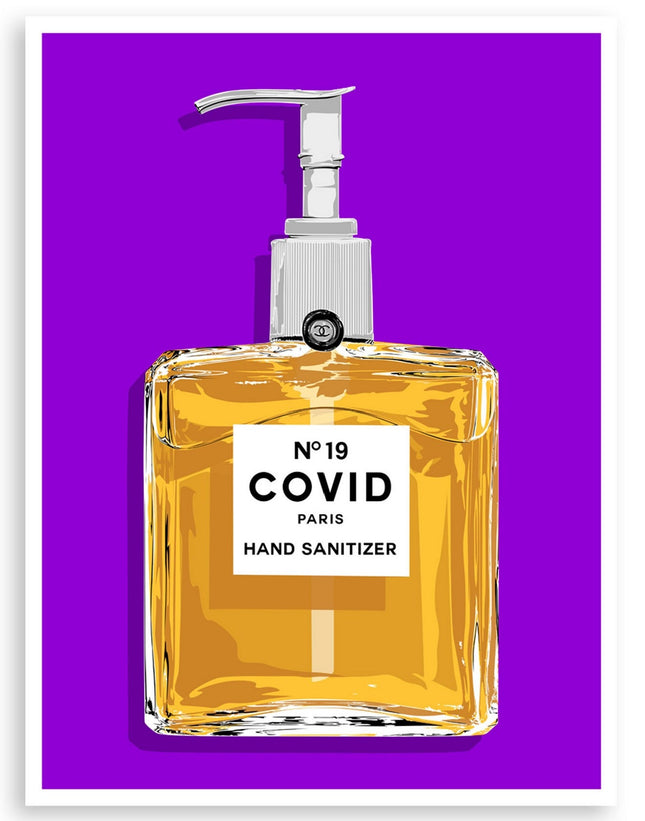
Denial- Daniel Bombardier Covid No 19 Mauve Archival Print by Denial- Daniel Bombardier
Covid No 19- Mauve Limited Edition Archival Pigment Print on 290gsm MOAB Fine Art Paper by Graffiti Pop Art and Street Artist Denial. 2021 Signed & Numbered Limited Edition of 19 Mauve Covid19 Chanel Hand Sanitizer Virus Variant. Numbered, Signed, Stamped on Reverse Archival Pigment Print on MOAB Fine Art Paper 290 GSM Size 18" x 24" Denial’s COVID No. 19: Luxury Branding in the Age of Global Crisis Denial’s COVID No. 19 is a striking archival pigment print released in 2021 as a limited edition of 19, each hand-signed, numbered, and stamped on 290gsm MOAB fine art paper. The work appropriates the form of a Chanel No. 5 perfume bottle, replacing its iconic label with a fictional product name: COVID No. 19 Hand Sanitizer. Rendered with hyper-clean digital precision, the image reconfigures the aesthetics of high fashion to comment on the absurdities of pandemic-era consumerism. The hand sanitizer bottle is presented with all the visual authority of a luxury good, transforming an object of necessity into a parody of status and desire. At the core of this piece is a brutal cultural observation: during a global health emergency, everyday tools of survival—like sanitizer and masks—were elevated to symbols of identity, fashion, and economic access. Denial’s rebranding of Chanel’s perfume into a virus-era commodity confronts this shift head-on. The artwork doesn’t merely lampoon luxury—it reveals how systems of marketing can absorb trauma, repackage it, and sell it back to the public. The Chanel-style labeling is clinical yet elegant, a nod to how visual minimalism often masks corporate manipulation. Commercial Aesthetics as Subversive Weaponry Denial’s artistic strategy centers on the theft and recontextualization of commercial language. With COVID No. 19, the use of vector-sharp line work, realistic light reflections, and exacting product design mimics advertising to the point of deception. This imitation is intentional. The viewer is meant to initially read the image as authentic—something from a fashion magazine or cosmetics campaign—before the irony of the label snaps into focus. The dissonance between form and content invites a critique of the capitalist tendency to aestheticize suffering. This visual methodology ties directly into the ethos of Street Pop Art & Graffiti Artwork. Denial’s roots in unauthorized public messaging and subcultural image disruption remain present, even as the work exists in a fine art format. The absence of spray drips or rough textures does not diminish the rebellion. Instead, it retools the graphic language of commercial persuasion to undermine itself from within. What looks like a product pitch is, in fact, a visual accusation. The pandemic is not the subject—it is the branding of the pandemic that comes under fire. Street Pop Art as Pandemic Documentation COVID No. 19 operates as both satire and historical record. It captures a cultural moment when survival tools became luxury statements, when scarcity was linked to exclusivity, and when branding extended even to medical supplies. Denial’s artwork speaks to the way modern crises are not only experienced but marketed—how the fear of illness was filtered through the same systems that sell beauty, fashion, and lifestyle. The sanitizer bottle becomes a symbol not of protection, but of consumption. By fusing the iconography of fashion with the reality of a global pandemic, Denial forces the viewer to reconsider the boundaries between design and ethics, branding and survival. The visual simplicity of COVID No. 19 hides a layered indictment of how quickly commercial aesthetics can strip events of meaning. In the tradition of Street Pop Art & Graffiti Artwork, this piece turns familiar symbols against themselves, exposing the fragility of culture’s glossy surfaces when confronted with real human urgency.
$313.00
-
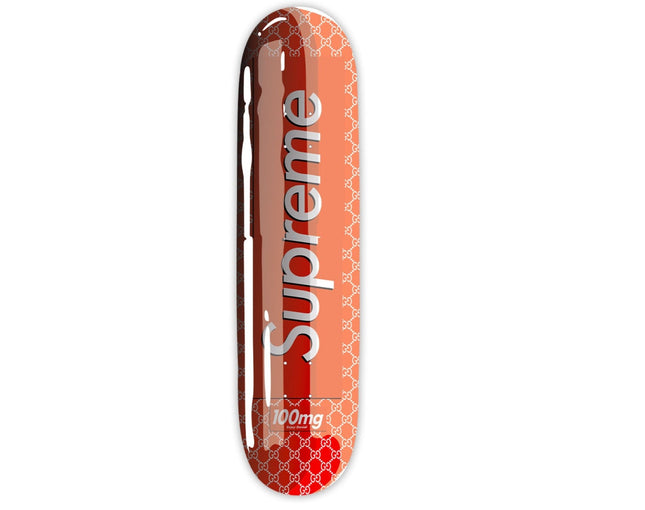
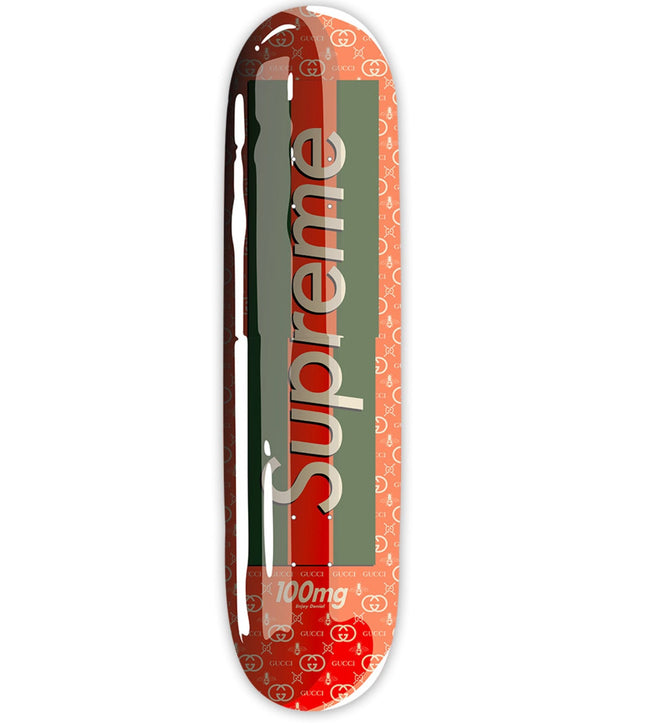
Denial- Daniel Bombardier Supreme Gucci Smashup Pill Red Skateboard Deck by Denial- Daniel Bombardier
Supreme Gucci Smashup Pill- Red Fine Art Limited Edition Archival Pigment Print Transfer on Cold Pressed Steep Natural Skateboard Deck by Street Artwork Graffiti Artist Denial- Daniel Bombardier. 2022 Numbered Limited Edition of 100 Skateboard Artwork Size 8.25x32 Archival Pigment Print Transfer on Cold Pressed Steep Natural Skate Deck Size: 8.25 x 31.875 Inches Release: June 28, 2022 From the Gucci logo, Louis Vuitton & Supreme to Channel perfumes and credit cards, he is utilizing such cultural products with the intention to make a statement against the system, which gave birth to them. As a result, he re-contextualizes them and transforms them from commercial products to his cultural legacy.
$466.00
-
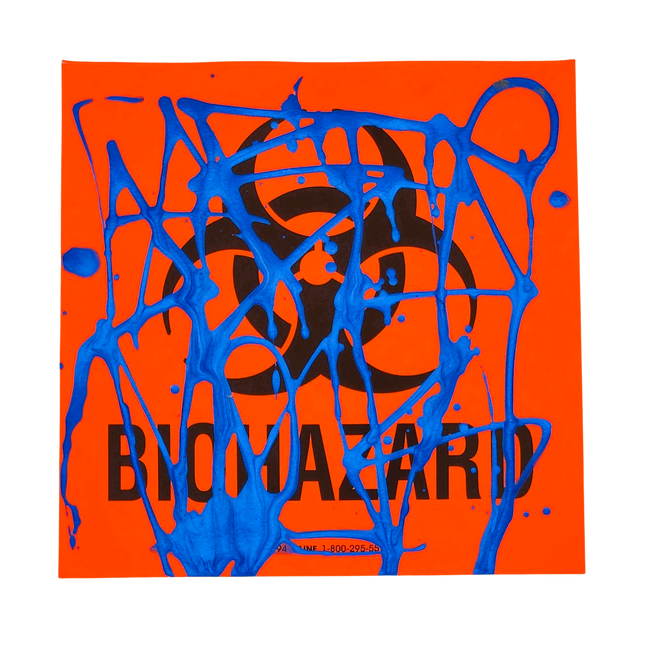
Saber Biohazard Slap-Up Label Sticker Original Tag Art by Saber
This Biohazard Neon Orange Slap-Up Label Sticker Original Tag Art by Saber Original Acrylic Paint Art Drawing on Biohazard Label Sticker by Graffiti Artist Modern Street Artwork. 2020 Signed Original Slap Up Graffiti Art Tag 6x6 Acrylic Paint Tagged on Medical Biohazard Label Sticker. Neon High Visibility Orange Biohazard Symbol Uline label #S-20794. Exploring the Fusion of Street Pop Art and Graffiti Artwork In the dynamic sphere of contemporary visual culture, street pop art and graffiti artwork stand out as potent forms of expression that encapsulate urban life's rhythm and raw sentiments. Among the luminaries of this genre is the renowned graffiti artist Saber, known for his striking contributions to the street art panorama. The piece under scrutiny is a vibrant example of his ingenuity—a 6x6 acrylic or marker piece tagged on a medical biohazard label sticker featuring a neon high visibility orange biohazard symbol from Uline label #S-20794. Distinctive Aesthetic of Saber's Tag Art Saber's original permanent marker art drawing on a mailing glossy arrow sticker presents a striking visual paradox. The neon orange of the biohazard symbol evokes a sense of caution, typically used to warn of dangerous substances. Contrasted with the blue drips of paint that appear haphazardly splashed across the surface, there is intentional defiance and palpable tension between structure and chaos. This work is a signed 2020 original slap-up graffiti art tag that showcases not just the artist's signature style but also his ability to transform ordinary objects into powerful statements. The choice of a biohazard label as a canvas is a commentary on the infectious nature of art and ideas. Saber effectively takes a symbol that denotes hazard and contamination and recontextualizes it within the aesthetic of street pop art. By doing so, he challenges the viewer to reconsider the connotations of biohazards, not just in the physical sense but in the metaphorical contagion of art in public spaces. Impact and Significance in Modern Street Art Saber is an American artist whose real name has been as influential in the graffiti community as the images he creates on walls and in galleries. His use of a mailing label as a medium is a nod to the guerrilla tactics of early street art culture, where quick, impactful statements were essential, and materials were often repurposed or found objects. This sticker art, often called a 'slap-up,' is a form of street art that is quickly applied, or 'slapped up,' onto a surface in a public space. It allows for transient yet assertive communication, echoing urban life's fast-paced and often impermanent nature. The neon orange and blue artwork transcends its simple components, becoming a canvas for a larger discourse on visibility, legality, and the permanence of art. As a form of street pop art, it retains the accessibility and mass appeal of pop culture while embedding itself in the more subversive and counter-cultural roots of graffiti. This duality is where its power lies; it is both a bold declaration and a subliminal whisper, a fixture on the streets that can be as quickly removed as it is noticed. In the context of graffiti artwork, Saber's biohazard label sticker becomes an artifact of the streets, a testament to the artist's ability to command attention and communicate through symbols and color. With its saturated hues and deliberate drips, the piece resonates with the energy of the streets and the people's voices. It is a piece that marks a physical space and stamps a moment in time, encapsulating the essence of street pop art in its ability to capture the pulse of contemporary urban life. The interplay of color, symbol, and medium in this piece illustrates the innovative potential of street pop art. Saber's work disrupts the monotony of urban environments, offering passersby a moment of aesthetic arrest amidst the concrete canvas of the city. In modern street artwork, such interventions are not just decorative but are vital narratives that articulate the identity and the undercurrents of a city's cultural dialogue. Through works like this, Saber and his contemporaries continue to influence the trajectory of street pop art, ensuring its evolution and relevance. They remind us that the streets remain a powerful platform for artistic expression, where the voices of the marginalized and the spirit of rebellion can find their visual lexicon. Saber's neon orange slap-up label sticker is not just a mark made with acrylic or marker; it is a statement, a challenge, and a vibrant echo of the energy that drives the city's heart.
$49.00
-

Camille Rose Garcia Swan Nurse Letterpress Print by Camille Rose Garcia
The Swan Nurse Letterpress Print by Camille Rose Garcia Limited Edition 1-Color on Deckled 290gsm Coventry Rag Fine Art Paper Graffiti Street Pop Artwork. 2020 Signed & Numbered Limited Edition of 100 Artwork Size 8x10 Letterpress Print Art Printmas 2020 of a Creapy Stylized Swan Bird Monster Dressed as a Nurse. The Swan Nurse Letterpress Print by Camille Rose Garcia The Swan Nurse letterpress print by Camille Rose Garcia is a hauntingly whimsical piece that combines surrealism with Street Pop Art’s bold and provocative aesthetic. Released in 2020 as part of the Art Printmas series, this 8x10 work of art is printed on deckled 290gsm Coventry Rag Fine Art Paper, emphasizing the artisanal quality of the print. The image features a stylized swan, grotesquely reimagined as a sinister nurse, complete with exaggerated features, gothic undertones, and a bow-tied costume. Signed and numbered in a limited edition of 100, this print exemplifies Garcia’s ability to craft deeply engaging narratives through her unique artistic vision. Camille Rose Garcia: A Visionary in Pop Surrealism Camille Rose Garcia is renowned for her ability to blend dark themes with playful imagery, creating pieces that invite both curiosity and introspection. Born in 1970 in Los Angeles, her work draws inspiration from vintage cartoons, dystopian literature, and surrealist art movements. Through her distinct style, Garcia often critiques consumerism, environmental degradation, and societal constructs, using fantastical characters and dreamlike settings to present her commentary. The Swan Nurse is a striking example of Garcia’s storytelling prowess. The swan, often associated with elegance and beauty, is here transformed into a macabre figure with sharp features, exaggerated proportions, and a menacing gaze. The nurse costume, complete with a hat bearing a medical cross, adds an eerie layer of ambiguity to the piece, leaving viewers to question its narrative. This juxtaposition of innocence and menace is a hallmark of Garcia’s work, emphasizing her ability to challenge traditional interpretations of beauty and morality. The Craftsmanship of Letterpress Printing The letterpress printing technique employed in The Swan Nurse adds a tactile richness and vintage charm to the artwork. By pressing ink into the deckled edges of the 290gsm Coventry Rag Fine Art Paper, this traditional method creates a textured, embossed finish that enhances the intricate details of the illustration. The single-color palette, rendered in deep black ink, amplifies the stark contrasts and dramatic linework, allowing the swan’s unsettling expression to dominate the composition. The choice of deckled paper adds an artisanal feel to the print, further connecting it to the handmade traditions of Street Pop Art. This emphasis on craftsmanship aligns with Garcia’s ethos of elevating her fantastical creations into timeless works of art that merge classic techniques with modern themes. The Swan Nurse as a Statement of Street Pop Art The Swan Nurse is a compelling representation of Street Pop Art, using a surreal and slightly grotesque character to convey themes of transformation, authority, and the uncanny. By reimagining the swan—a symbol of grace and purity—as a creepy nurse, Garcia subverts expectations, drawing viewers into a world where beauty and menace coexist. The work’s playful yet unsettling aesthetic is a hallmark of Street Pop Art’s ability to engage and provoke thought. This limited-edition print is not just a piece of art; it is a narrative-rich creation that invites the audience to explore its layers of meaning. Its 8x10 size and exclusive run of 100 make it an ideal collectible for enthusiasts of Camille Rose Garcia’s work and those who appreciate the intersection of fine art and urban commentary. The Swan Nurse exemplifies Garcia’s mastery in combining craftsmanship, narrative, and visual impact, solidifying its place as a standout piece in contemporary Street Pop Art.
$97.00
-
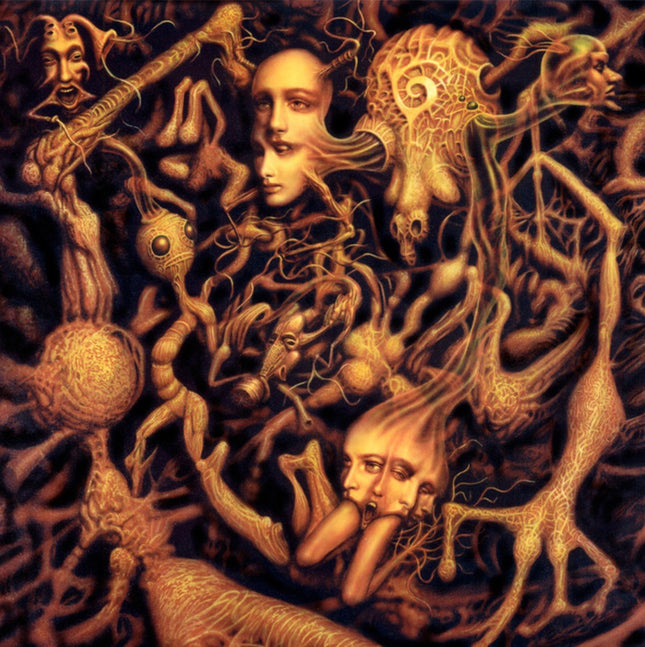
Naoto Hattori Virus Giclee Print by Naoto Hattori
Virus Artwork Giclee Limited Edition Surreal Print on 100% Cotton Rag Fine Art Paper by Pop Culture Graffiti Artist Naoto Hattori. VIRUS 20 x 20 inches (50.8 x 50.8 cm) High-Quality Giclee Print on 100% Cotton Rag Fine Art Paper Signed and Numbered Edition of 100
$352.00
-
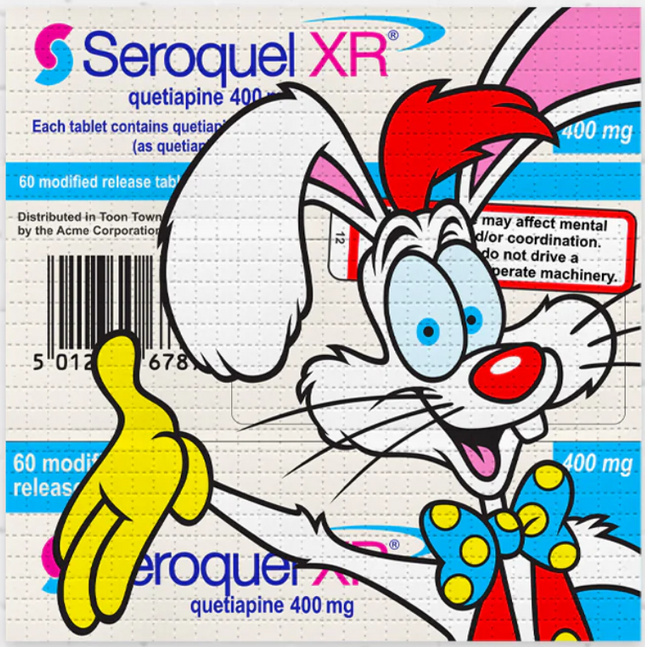
Ben Frost Who Fried Roger Rabbit? Seroquel Blotter Paper Archival Print by Ben Frost
Who Fried Roger Rabbit? Seroquel Blotter Paper Archival Print by Ben Frost Limited Edition Fine Art Archival Pigment Print Art on Perforated Blotter Paper. 2025 Signed & Numbered Limited Edition of TBD Archival Pigment Print on Perforated Blotter Paper Size: 7.5 x 7.5 Inches Release: April 19, 2025 Limited blotter editions are hand-perforated by Zane Kesey. Cartoon Madness Meets Pharmaceutical Culture Who Fried Roger Rabbit? Seroquel Blotter Paper Print by Ben Frost reimagines the iconic animated character Roger Rabbit within the framework of modern pharmaceutical branding. Released as part of Frost’s 2025 collection, this 7.5 x 7.5 inch limited edition archival pigment print on perforated blotter paper explores the collision of pop culture and medication packaging with satirical precision. Featuring the animated character smiling manically beside a Seroquel XR layout, the print is hand-perforated by Zane Kesey and produced in a signed and numbered edition. This work critiques how society normalizes mental health struggles through branding and questions how animation, nostalgia, and pharmaceuticals can coexist in a single visual message. Satirical Branding and Medicinal Irony Frost fuses Roger Rabbit’s over-the-top personality with Seroquel, a medication used to treat mood disorders, to amplify the surreal effects of overstimulation and sedation. By transforming the clinical appearance of a pharmaceutical box into a playful, chaotic canvas for a cartoon figure, Frost blurs the line between treatment and escapism. His use of quetiapine packaging language is precise, including dosage information and warnings, yet subverted by Roger Rabbit’s erratic demeanor. The underlying message reflects on how medication is commercialized in a culture that commodifies both mental illness and childhood nostalgia. Material Subversion in Blotter Format The blotter paper format is integral to the conceptual thrust of the piece. Traditionally associated with LSD distribution, blotter prints evoke a psychedelic lineage and hint at an altered perception of reality. By placing a cartoon character on a faux-medication backdrop, Frost disrupts the expectation of serious pharmaceutical design with absurdity. The perforation physically fragments the image, echoing the fragmentation of consciousness and emotion in both medicated and animated experiences. This format enables the artwork to comment simultaneously on drug culture, entertainment media, and mental health marketing. Ben Frost’s Visual Provocation Australian artist Ben Frost has made a name for himself by appropriating advertising, pharmaceutical logos, and mass-market cartoons into biting social commentary. His Street Pop Art & Graffiti Artwork unpacks consumer psychology through bold color, recognizable imagery, and pointed juxtapositions. Who Fried Roger Rabbit? is a standout example of this method—merging the aesthetics of childhood with the clinical detachment of adult medicalization. Frost confronts viewers with contradictions they may overlook in daily life, drawing humor and tension from the unsettling marriage of cartoon madness and prescribed stability. It’s not just visual stimulation—it’s a question wrapped in a package we’re told to trust.
$550.00 $495.00
-
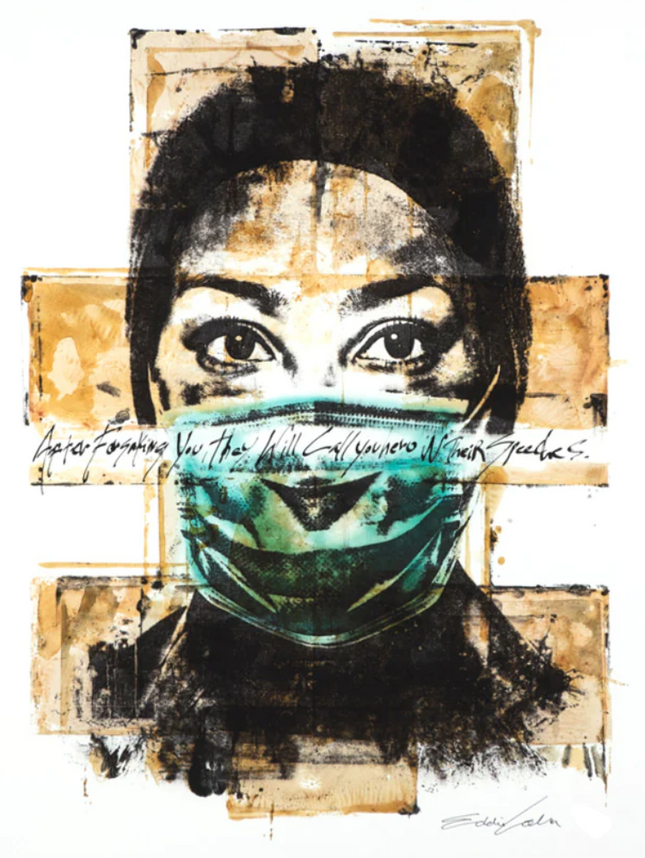
Eddie Colla Forsake PP Archival Print by Eddie Colla
Forsake PP Printer Proof Archival Print by Eddie Colla Limited Edition Print on 290gsm Fine Art Paper Pop Artist Modern Artwork. PP Printers Proof 2020 Signed & Marked PP Limited Edition Artwork Size 16x20.5 Archival Pigment Fine Art Insight into "Forsake" by Eddie Colla "Forsake" is a striking Printer's Proof (PP) archival print by Eddie Colla, a figure renowned in pop, street, and graffiti art. Created in 2020, this piece is part of a limited edition series, each signed and marked by Colla to signify its authenticity and exclusivity. The artwork is presented on 290gsm Fine Art Paper, a choice that ensures the print's longevity and high-quality appearance, a critical factor for collectors and enthusiasts of street pop art. Measuring 16x20.5 inches, the print is a substantial size that allows viewers to engage with the intricate details and profound messages. Eddie Colla's Convergence of Street Art and Fine Art Eddie Colla has an established reputation for merging the raw, expressive energy of street art with the refined techniques of fine art. "Forsake" is a testament to his ability to navigate these two worlds, creating works that are both accessible and profoundly thought-provoking. The print's archival pigment ensures that the rich textures and nuanced shades are preserved, capturing the ephemeral nature of street art in a form that can be appreciated over time. The imagery of a masked figure in "Forsake" speaks to the contemporary global experience, resonating with themes of identity, resistance, and the human condition. Symbolism and Narrative in Colla's Work In this piece, the subject's gaze is direct and unyielding, a powerful focal point amid smudged ink and abstract forms. The mask, a symbol now indelibly linked to the era of the COVID-19 pandemic, carries implications of silence, anonymity, and the struggle to communicate in a world where much of our expression is hidden. Colla's choice of text—"After forgetting you, they will call you now with their tricks"—introduces a narrative of rediscovery and the cyclical nature of societal memory and attention. The mixed media approach employed by Colla, blending photography with graphic elements, is a hallmark of his style. This method allows for a layering of meaning, just as layers of posters and graffiti accumulate on city walls, each telling a different story. "Forsake" invites the viewer to peel back these layers and explore the depth of Colla's narrative. This depth sets Eddie Colla's work apart, imbuing it with a sense of urgency and relevance, which is the power of street pop art. The artwork's message and medium reflect Colla's commitment to street pop art as social commentary. By bringing the transient art forms of the streets into the permanence of fine art prints, Colla bridges the divide between high art and public art. His work is a reminder that the messages conveyed through street art have a place in the ongoing cultural discourse, deserving of preservation and reflection. "Forsake" is a compelling piece within Eddie Colla's oeuvre, encapsulating his vision of street pop art and graffiti artwork as a form of visual impact and a means of communication and connection. It is a vibrant example of how street art can be elevated to a platform where it can be engaged on a level that transcends the boundaries of traditional art forms. Through works like "Forsake," Eddie Colla continues challenging perceptions, provoking dialogue, and fostering a deeper understanding of our collective experiences.
$761.00 $685.00
-
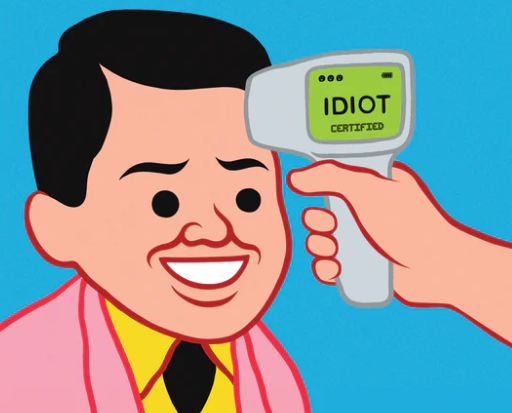
Joan Cornellà Idiot Giclee Print by Joan Cornellà
Idiot Giclee Print by Joan Cornellà Artwork Limited Edition Print on Archival Textured Fine Art Paper Graffiti Pop Street Artist. 2023 Signed & Numbered Limited Edition of 100 Artwork Size 25.59x21.25 Idiot Giclee Print by Joan Cornellà Idiot is a 2023 limited edition giclee print by renowned street pop artist Joan Cornellà. Signed and numbered, this piece is part of a collection of 100 prints, created on archival textured fine art paper. Measuring 25.59x21.25 inches, the artwork showcases Cornellà's distinctively humorous and absurd style, often characterized by simplistic cartoon figures and dark satirical themes. The image depicts a smiling man being scanned with a thermometer-like device reading "Idiot Certified," creating an immediate visual punch and exemplifying Cornellà’s signature approach to challenging societal norms. Joan Cornellà's Approach to Satire in Street Pop Art Joan Cornellà, a Spanish-born artist, is widely known for his minimalist, absurdist cartoons that take a critical look at modern society. His work frequently uses humor, often dark and uncomfortable, to shine a spotlight on the trivialities and absurdities of human behavior. Idiot is no exception, and in this print, Cornellà uses simple lines and bright colors to convey a biting critique on the ease with which society labels individuals, often without deeper understanding or nuance. Cornellà’s characters typically have smiling, vacant expressions, which only serves to heighten the absurdity of their situations. In Idiot, the juxtaposition of the smiling man with the thermometer reading “Idiot Certified” suggests a satirical commentary on the superficial judgments people face in a world driven by appearances and quick assessments. The "certification" of idiocy highlights the ridiculousness of relying on superficial indicators or societal validation to define self-worth or intelligence. This kind of critique is a hallmark of street pop art, where everyday symbols and elements are often recontextualized to critique social behavior and norms. The use of minimalistic, flat designs is a stylistic choice that enhances the immediacy of the message. Cornellà uses a bold color palette and simple lines to make the work visually striking, creating an art piece that immediately grabs attention while allowing viewers to quickly grasp its satirical meaning. The exaggerated, cartoon-like figures may appear simple at first glance, but they carry complex undertones about the human condition and the absurdity of modern societal structures. The Role of Dark Humor in Cornellà's Graffiti and Pop Art Cornellà’s work has been likened to graffiti and street pop art in that it distills complex social critiques into instantly recognizable images. His use of dark humor—a staple of his work—sets him apart within the pop art landscape. Idiot relies on a form of humor that is both biting and subtle, allowing viewers to laugh at the absurdity of the situation while recognizing the deeper societal issues being critiqued. The simplicity of the image belies the complexity of its social commentary, offering layers of interpretation. In street pop art, humor is often used as a tool to subvert traditional art norms or challenge authority. Cornellà's approach can be seen as a continuation of this tradition, where humor acts as a vehicle to critique social, political, and cultural systems. The absurdity in Idiot draws attention to how people often willingly conform to ridiculous standards without question. It reflects the increasingly superficial nature of society, where quick judgments based on surface-level interactions—much like a thermometer scan—can lead to reductive, often harmful, labels. The use of a medical device to certify idiocy also evokes a commentary on the over-reliance on technology or systems that dehumanize people. Cornellà’s work often critiques the technological and bureaucratic systems that strip individuals of their humanity, reducing them to a set of labels or metrics. This resonates with the broader themes in street pop art and graffiti, where artists often challenge the dehumanizing aspects of modern life, from politics to mass surveillance. Giclee Print as a Modern Medium for Street Pop Art The choice of giclee printing for Idiot aligns with the artist’s commitment to quality and the longevity of his artwork. Giclee printing is a process that uses high-resolution digital images and archival inks to create prints that are as close to the original as possible. This method ensures that the vibrant colors and sharp lines in Cornellà’s work are preserved over time. The use of archival textured fine art paper further enhances the print’s quality, providing a tactile, almost painterly feel to the image. Giclee printing is often used by modern street pop artists who want to maintain the integrity of their work while making it more accessible to collectors. In the case of Idiot, the giclee print allows Cornellà’s satirical cartoon to be appreciated in a physical format that retains all of the detail and color of the original digital design. By producing a limited edition of 100, Cornellà ensures that the artwork remains exclusive, while still making it available to a wider audience. In street pop art, the medium is often just as important as the message. By using high-quality printing techniques, Cornellà ensures that his satirical message—both humorous and critical—can stand the test of time, while also contributing to the ongoing conversation about what constitutes fine art in the context of street art and graffiti. The print is both a collectible item and a work of art with a strong social message. The Role of Social Commentary in Joan Cornellà's Artwork Cornellà’s artwork often revolves around themes of identity, societal expectations, and the absurdity of modern life. Idiot is a perfect example of how Cornellà uses simple imagery to dissect these complex ideas. The smiling man in the image, unperturbed by his "certified" idiocy, reflects the way individuals can become complicit in their own dehumanization by accepting societal labels. Cornellà’s work frequently critiques how people allow themselves to be categorized and diminished, all while maintaining a cheerful or passive demeanor. The absurdity of the situation is heightened by the fact that the character being labeled an "idiot" seems entirely unaware or unconcerned by the judgment being passed. This plays into Cornellà’s larger body of work, where individuals are often depicted as detached from the consequences of their actions or the systems that control them. In street pop art, this detachment is a common theme, reflecting how urban environments and societal structures can alienate individuals from themselves and each other. Idiot by Joan Cornellà is a masterful example of how street pop art and graffiti-inspired artwork can blend humor, absurdity, and critical social commentary. Through the use of minimalistic design, bright colors, and satirical humor, Cornellà challenges viewers to question how society defines intelligence, self-worth, and identity. The high-quality giclee print on archival fine art paper ensures that this artwork will remain a lasting and impactful piece within the world of contemporary art.
$4,513.00
-
Denial- Daniel Bombardier Supreme Gucci Smashup Pill Inverse Skateboard Deck by Denial- Daniel Bombardier
Supreme Gucci Smashup Pill- Inverse Fine Art Limited Edition Archival Pigment Print Transfer on Cold Pressed Steep Natural Skateboard Deck by Street Artwork Graffiti Artist Denial- Daniel Bombardier. 2022 Numbered Limited Edition of 50 Skateboard Artwork Size 8.25x32 Archival Pigment Print Transfer on Cold Pressed Steep Natural Skate Deck Size: 8.25 x 31.875 Inches Release: June 28, 2022 From the Gucci logo, Louis Vuitton & Supreme to Channel perfumes and credit cards, he is utilizing such cultural products with the intention to make a statement against the system, which gave birth to them. As a result, he re-contextualizes them and transforms them from commercial products to his cultural legacy.
$595.00 $536.00
-
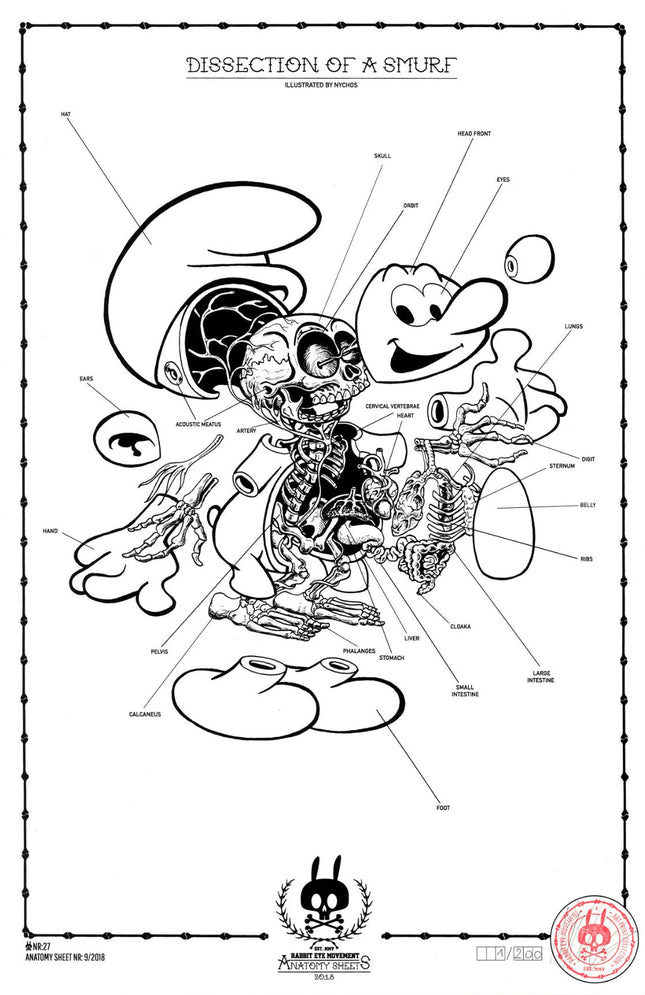
Nychos Dissection of Smurf Anatomy Sheet No 27 Silkscreen Print by Nychos
Dissection of Smurf- Anatomy Sheet No 27 Hand-Pulled 1-Color Limited Edition Silkscreen Print on 300gsm Munken Pure Paper by Medical Pop Artist Nychos. 2018 Signed & Numbered Limited Edition of 200 11x17 Illustrated by NYCHOS 1-color Screen Print on 300 g/m² Munken Pure Paper Size: 11 x 17 Inches / 27,94 x 43,18 cm Limited Edition of 200 Year: 2018 Imprint & stamp of authenticity Numbered and signed by the artist The REM Anatomy Sheets focus on the anatomy of pop culture cartoon characters. In this new collection of black and white limited edition screenprints, Nychos lets the viewer engage with details of the anatomy of toons.
$159.00
-

Luke Chueh Kush XL 6in The Prisoner Drug Bear Art Toy by Luke Chueh
Kush XL 6in The Prisoner Flocked Drug Bear Art Toy by Luke Chueh Kickstarter Limited Edition Vinyl Collectible Artwork by Street Graffiti Artist. 2018 Limited Edition Artwork of 93 with Cotton, Bag, and Tube. Based on Luke Chueh's original painting, The Prisoner ponders captivity in its many forms: physical, mental, or pharmaceutical. Ultra Rare Kickstarter Exclusive Extra Large XL 6 Inch Edition. Kush XL 6in The Prisoner Drug Bear by Luke Chueh: Sculpting Emotional Confinement in Street Pop Art & Graffiti Artwork Kush XL 6in The Prisoner Drug Bear by Luke Chueh is a 2018 Kickstarter exclusive collectible, limited to just 93 pieces worldwide. This rare extra-large vinyl edition transforms Chueh’s signature bear into a more physically imposing yet equally vulnerable presence. At six inches tall and flocked in vibrant green, the figure sits hunched and withdrawn, arms wrapped tightly around its knees, tucked into a gesture of protective silence. This version is packaged inside a deep green prescription-style plastic tube, labeled under the fictional strain Kuma OG. Accompanied by a cotton-lined pouch and official labeling, the toy carries the visual weight of both clinical control and emotional solitude. As a part of the wider Prisoner series, this XL edition expands Luke Chueh’s ongoing critique of psychological and pharmaceutical confinement through the visual language of Street Pop Art & Graffiti Artwork. Material and Scale as Tools of Conceptual Impact The use of scale in the Kush XL version heightens the emotional potency of the figure. Unlike the smaller editions, which evoke delicacy and intimacy, this larger size commands more physical space, forcing viewers to confront the quiet suffering it represents. The flocked green surface adds a layer of visual contradiction, inviting touch while symbolizing the lush appearance of calm that often hides distress. The presentation in a prescription tube references the aesthetics of cannabis dispensaries and pharmaceutical packaging, placing the bear in the middle of society’s ongoing conversation about medication, trauma management, and alternative therapy. The prescription-style label contextualizes the bear as both patient and product, surrounded by the implied control of dosage, labeling, and clinical oversight. Within Street Pop Art & Graffiti Artwork, this kind of object challenges assumptions about what healing looks like and critiques the systems that monetize emotional relief. Luke Chueh and the Emotional Vocabulary of Toy-Based Street Pop Art Luke Chueh is a California-based artist known for using deceptively simple characters to convey deeply nuanced emotional states. His bear, a now-iconic symbol within his work, is never neutral. Whether painted or sculpted, it is always in the middle of a silent, internal dialogue. The Prisoner figure exemplifies Chueh’s practice of using posture, minimalism, and context to explore themes like depression, anxiety, addiction, and isolation. The Kush XL edition does not stray from these themes; rather, it amplifies them through texture and size. Chueh’s work belongs firmly within the Street Pop Art & Graffiti Artwork canon, not only for its visual accessibility but also for its bold engagement with contemporary mental health struggles. The bear is at once relatable and haunting, caught between comfort and despair, between treatment and dependency. The Prisoner as a Sculptural Statement on Mental Health and Control Kush XL 6in The Prisoner is more than a collectible art toy—it is a sculptural representation of cultural truth. Limited to just 93 Kickstarter-exclusive editions, it holds significant value for collectors, not only due to its rarity but because of its raw, unfiltered emotional messaging. The packaging is not ornamental. It is part of the narrative, reinforcing the figure’s status as a symbol of medicated containment. The green colorway and dispensary-themed label introduce a layered commentary about the growing normalization of cannabis as both relief and crutch, expanding Chueh’s critique beyond pharmaceuticals alone. Within Street Pop Art & Graffiti Artwork, the figure functions like a street mural in miniature form—portable, powerful, and socially conscious. With this XL edition, Luke Chueh elevates designer toys into platforms for mental health discourse, using vinyl, flocking, and form to hold a mirror to both personal vulnerability and systemic response.
$788.00 $709.00
-
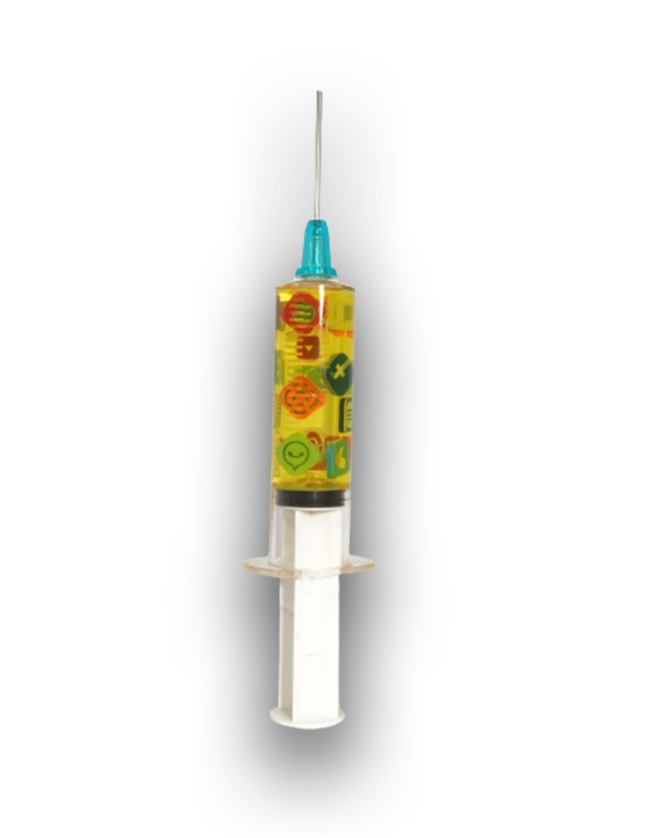
Miss Bugs Do No Harm 2 Syringe Social Media HPM Sculpture by Miss Bugs
Do No Harm 2 Syringe Social HPM Mixed Media Sculpture by Miss Bugs Limited Edition Pop Artwork Street Artist Fine Art. 2020 Signed & Dated to Packaging Label Mixed Media Plastic Resin Sculpture Limited Edition of 450 Unique Artwork Size 3x13.9. Each Unique and Hand Made. Like New With Original Packaging. 20-20 Covid Era Syringe Shot with Social Media Meme Icons. Miss Bugs is a street art duo based in London, known for their vibrant and thought-provoking pieces that blend pop art with darker, more subversive themes. Their work often includes a mix of stencil, silkscreen, and mixed media collage, utilizing found objects to create visually striking and multi-layered compositions. Miss Bugs is known for their challenging commentary on modern culture and the art world, with a particular emphasis on the commodification of art. They have been a significant influence in the contemporary street art scene, pushing boundaries and encouraging viewers to question their perceptions.
$754.00 $679.00