Drug

6 artworks

  • Social Distancing Archival Print by Ben Frost

    Ben Frost Social Distancing Archival Print by Ben Frost

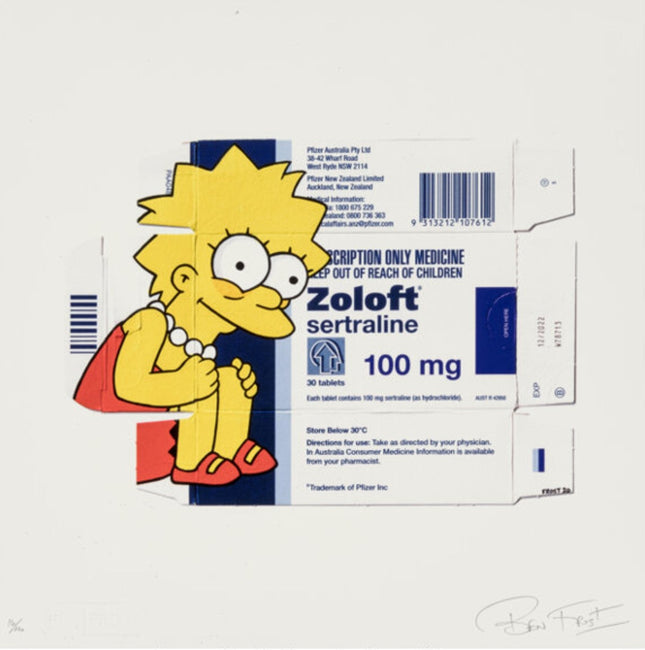
    Social Distancing Simpsons Archival Pigment Fine Art Limited Edition Print on 310gsm Bauhaus Cotton Rag Paper by Artist Ben Frost, Street Pop Art Graffiti. 2020 Signed & Numbered Limited Edition of 40 Artwork Size 12x12. Ben Frost (b. 1975) Social Distancing, 2020 Archival digital print on Bauhaus Cotton Rag Stock paper 12 x 12 inches (30.5 x 30.5 cm) (sheet) Ed. 40 is signed and numbered in pencil along the lower edge and published by the artist. Intersecting Pop Culture and Social Commentary Ben Frost's "Social Distancing Simpsons" archival pigment fine art print is a piercing examination of contemporary society through the lens of street pop art and graffiti. This limited edition print, numbered and signed, reflects Frost's unique and often controversial approach to his art, blending pop culture icons with subversive messaging. Created in 2020, "Social Distancing Simpsons" is a compelling artwork set against the backdrop of a global pandemic, a time when social distancing became a ubiquitous part of life. By incorporating a familiar character from "The Simpsons," Frost taps into the collective consciousness and comments on the impact of societal changes on popular culture. The choice of using archival digital print on Bauhaus Cotton Rag Stock paper, a high-quality material, ensures that the vibrancy of the piece and the precision of its details are preserved. The image of the Simpson's character juxtaposed with a pharmaceutical label indicates Frost's style, often involving the fusion of disparate elements to create a jarring yet thought-provoking visual statement. This 12 x 12 inches print is a perfect square that captures the essence of Frost's artistic statement: a critique of consumerism, mental health, and the pharmaceutical industry. Ben Frost's Signature Style Frost's work is characterized by his unflinching willingness to confront and challenge viewers with uncomfortable truths about modern life. In "Social Distancing Simpsons," the collision of the cartoon world with the stark reality of medication speaks to a generation that finds solace in nostalgia while grappling with present-day anxieties. With its limited edition of 40, the artwork becomes a collector's piece, a snapshot of an era defined by isolation and the search for connection. Reflection of Street Pop Art and Graffiti Frost's art is a reflection of street pop art and graffiti in its directness and its utilization of visual language that is immediate and accessible. Incorporating street art aesthetics into fine art prints blurs the lines between high art and more democratic expressions in urban environments. "Social Distancing Simpsons" is a testament to the power of this genre to communicate beyond words, offering a visual critique that is both universal and deeply personal. In summary, "Social Distancing Simpsons" by Ben Frost is more than just an artwork; it is a commentary on the times, a mirror held up to the complexities and contradictions of contemporary life. Through his expert blending of pop culture references with cutting social commentary, Frost solidifies his place as a significant voice in street pop art and graffiti artwork. This piece, in particular, stands as a poignant reminder of 2020, capturing the essence of a moment that has left an indelible mark on society.

    $684.00

  • Pop Sub Final #6 - Sprayed Paint Art Collection

    Matt Loomis Pop Sub Final #6 Silkscreen Print by Matt Loomis

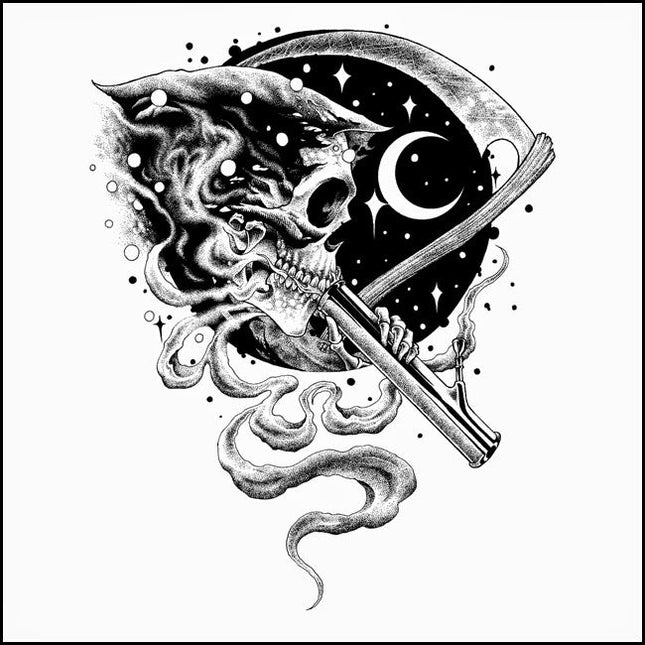
    Pop Sub Final #6 Limited Edition 1-Color Hand-Pulled Silkscreen Print on Fine Art Paper by Matt Loomis Graffiti Street Artist Modern Pop Art. 2014 Numbered Limited Edition of 100 Artwork Size 12x12 Pop Sub Final #6 by Matt Loomis: Mysticism and Mortality in Ink Pop Sub Final #6 by Matt Loomis is a hauntingly intricate 12x12 inch one-color silkscreen print released in 2014 as part of a limited edition of 100. Printed by hand on fine art paper, this piece delivers powerful visual storytelling through expertly rendered black ink. The print depicts a vaporous skull fused with cosmic elements, holding a blade that slices across a night sky filled with stars and a crescent moon. Its monochromatic palette enhances the contrast between detail and negative space, pushing the viewer’s attention toward the surreal entanglement of death, night, and cosmic symbolism. With technical precision and a bold conceptual core, the work occupies a distinct space within Street Pop Art & Graffiti Artwork, channeling both illustrative mastery and street culture ethos. Matt Loomis and the Depth of Symbolic Street Imagery Matt Loomis is an American illustrator known for fusing fantasy, folklore, and esoteric iconography with contemporary design. His work often explores transformation, mythic duality, and the poetic violence embedded in subconscious landscapes. Pop Sub Final #6 exemplifies this approach. The skeletal form is not simply a depiction of death but a spirit being, wreathed in smoke, conjuring visions of the void. The scythe cutting across the circular night sky references the passage of time, the reaping of existence, and perhaps, the cyclical nature of rebirth. While Loomis’s style borrows from tattoo culture and heavy metal aesthetics, it transcends decorative boundaries to engage philosophical narratives. Within the broader movement of Street Pop Art & Graffiti Artwork, Loomis positions himself not as a provocateur but a mystic, visualizing ancient fears and eternal questions through modern ink. Print Process and Visual Intent This silkscreen edition is a testament to the power of one-color printing when applied with vision and precision. Every detail in the swirling smoke, lunar background, and spectral anatomy is carved into stark relief by the unforgiving medium. The decision to limit the palette allows viewers to focus on line weight, negative space, and compositional flow, reinforcing the idea that minimal tools can yield maximum psychological impact. The fine art paper serves as a clean stage for the spectral inkwork, adding physical presence to an image that feels otherworldly. The print’s 12x12 format enhances its sense of containment—an entire cosmic ritual encased in a square foot of surface. Street Pop Art Meets Occult Futurism Pop Sub Final #6 stands as a refined yet raw example of how graffiti-adjacent artists like Matt Loomis reinterpret classic themes such as death, night, and mystery through the lens of modern subcultures. While not characterized by traditional tagging or bold color fields, the print aligns with Street Pop Art & Graffiti Artwork in its irreverent spiritualism and boundary-defying content. By embedding ritualistic imagery into street-informed formats, Loomis speaks to the part of urban life that searches for meaning in chaos. This edition acts as a visual incantation—summoning attention, provoking introspection, and whispering dark truths into the eye of anyone willing to look closer.

    $80.00

  • Ritalin Scar Archival Print by Ben Frost

    Ben Frost Ritalin Scar Archival Print by Ben Frost

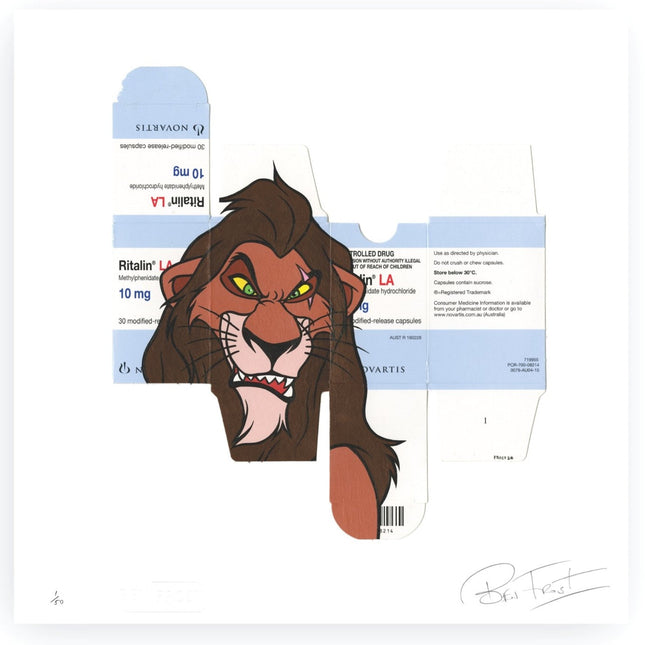
    Ritalin Scar Archival Pigment Fine Art Limited Edition Print on 310gsm Photo Cotton Rag Paper by Artist Ben Frost, Street Pop Art Graffiti Legend. 2022 Signed & Numbered Limited Edition of 50 Artwork Size 12x12 Signed 2022 Edition of 50 ‘Ritalin Scar’ Archival Digital Print on Bauhaus 310gsm Photo Rag 100% Cotton Paper Embossed, signed and editioned by the artist 30cm x 30cm (12 x 12 inches) unframed. Ritalin Scar by Ben Frost: A Sharp Fusion of Pop Culture and Pharmaceuticals in Street Pop Art & Graffiti Artwork Ritalin Scar by Ben Frost is a powerful statement within the Street Pop Art & Graffiti Artwork movement. Released in 2022, this piece is an archival pigment fine art print created on Bauhaus 310gsm photo rag 100 percent cotton paper, a material known for its superior quality and durability. Measuring 30cm by 30cm, or 12 by 12 inches unframed, the artwork is part of a signed and numbered limited edition of only 50 pieces. Each print is individually embossed, signed, and editioned by Ben Frost, reinforcing its status as a highly collectible work. By placing the menacing figure of Scar from Disney's The Lion King onto a flattened Ritalin LA pharmaceutical box, Frost engages viewers in a provocative dialogue about societal perceptions of control, medication, and villainy through the visual language of pop culture. The Artistic Process and Provocative Themes of Ritalin Scar Ben Frost, an Australian artist widely recognized for his disruptive and confronting style, uses familiar characters and consumer brands to deliver bold social commentary. In Ritalin Scar, the artist strategically selects Scar, a character known for his cunning and treachery, and juxtaposes him against the backdrop of a pharmaceutical package designed for behavioral regulation. This combination invites critical reflection on how society views and manages perceived deviance, particularly in children. The use of archival digital print technology ensures that the vivid colors and sharp lines remain striking and durable over time, preserving the immediate impact of the work. By repurposing real-world packaging as his canvas, Frost magnifies the uneasy relationship between commercialism and personal identity, a theme that resonates deeply within the Street Pop Art & Graffiti Artwork tradition. Ben Frost’s Influence on Contemporary Street Pop Art & Graffiti Artwork Ben Frost has built an international reputation for his provocative visual language that challenges societal norms and consumer culture. His body of work often combines elements of advertising, pharmaceuticals, and beloved cartoon imagery, making his style instantly recognizable. Through pieces like Ritalin Scar, Frost asserts Street Pop Art & Graffiti Artwork as a critical platform for addressing controversial issues. His manipulation of pop culture imagery disrupts the traditional narratives associated with these characters and products, transforming them into symbols of larger social commentary. Frost’s work captures the spirit of rebellion and critique that defines Street Pop Art & Graffiti Artwork, proving its capacity to provoke thought and spark conversation in an era of increasing media saturation. The Importance of Limited Edition Prints like Ritalin Scar Owning a limited edition print like Ritalin Scar offers collectors a tangible piece of contemporary cultural critique. The combination of Bauhaus 310gsm photo rag paper with archival digital printing ensures a museum-quality finish that honors the original vision of the artist. With only 50 copies released, each embossed, signed, and numbered by Ben Frost, the scarcity enhances the value and significance of the artwork. Street Pop Art & Graffiti Artwork thrives on exclusivity and authenticity, traits that are embedded into every aspect of this piece. Ritalin Scar not only showcases Frost’s distinctive style but also captures the enduring tension between pop culture, pharmaceutical influence, and personal autonomy, making it a standout work within contemporary pop and street art collections.

    $650.00

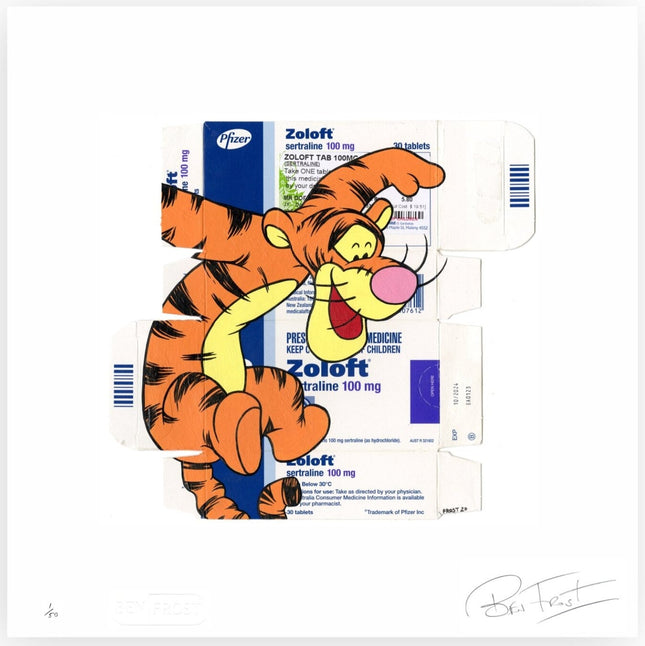
  • Tigger on Zoloft Archival Print by Ben Frost

    Ben Frost Tigger on Zoloft Archival Print by Ben Frost

    Tigger on Zoloft Limited Edition Archival Pigment Fine Art Prints on Bauhaus Cotton Fine Art Paper by Graffiti Street Art and Pop Culture Artist Ben Frost. ‘Tigger On Zoloft’ Archival Digital Print on Bauhaus 310gsm Photo Rag 100% Cotton Paper Embossed, signed and editioned by Ben Frost 30cm x 30cm (12 x 12 inches) Melbourne, Australia Edition of 50 The essence of Frost’s commentary is established on the basis of subverting the meaning and the messages, promoted by the mainstream media. In other words and, as he has stated in the past: “The less you fill your mind with the trappings of advertising and bad television, the more space you have in your brain for things of value”. At the same time, his take on modern pop culture is equally compelling. Mainstream media, advertisements, and politics can be identified as some of his main fields of interest, which he utilizes and mixes up in a controversial formation. The word controversial is not used incidentally. What Ben Frost’s art is doing is, essentially, the appropriation and weaponization of imagery against the same system that gave birth to it.

    $572.00

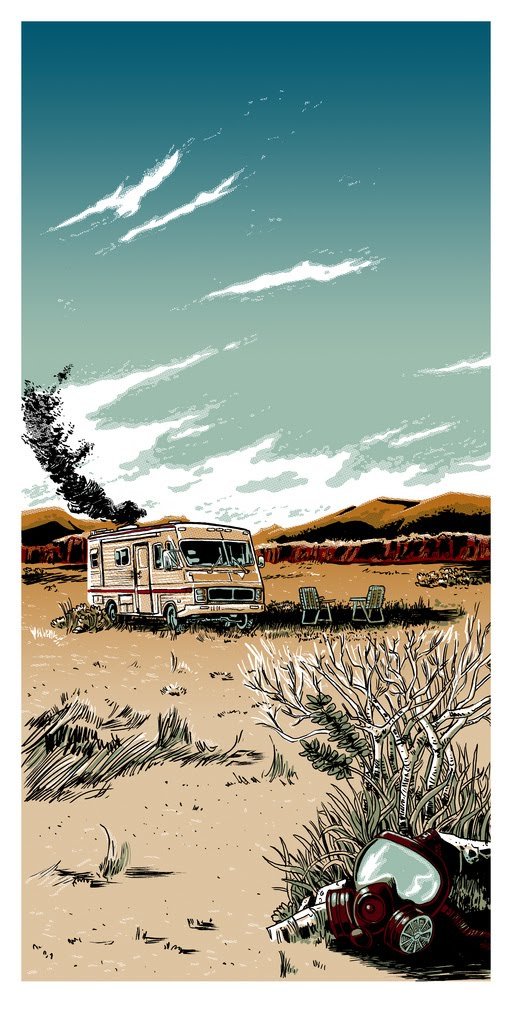
  • The Cook Silkscreen Print by Tim Doyle

    Tim Doyle The Cook Silkscreen Print by Tim Doyle

    The Cook Limited Edition 6-Color Hand-Pulled Silkscreen Print on Fine Art Paper by Tim Doyle Graffiti Street Artist Modern Pop Art. Based on the Breaking Bad TV show.

    $229.00

  • Caution Bump Metal Street Sign Giclee Print by OG Slick

    OG Slick Caution Bump Metal Street Sign Giclee Print by OG Slick

    Caution Bump Metal Street Sign Giclee Print by OG Slick Artwork Limited Edition Print Graffiti Pop Street Artist. 2025 Signed & Numbered Limited Edition Artwork Size 12x12 Metal Stylized Street Sign Mickey Hand with Cocaine Bump of Drugs. Ready to Hang. "The sign is a cautionary tale to stay clear and to beware of the pitfalls of drug abuse with a humorous twist. I have been clean and sober going on 22 years and take sobriety very seriously, but my art, not so much." -OG Slick Caution Bump by OG Slick: Street Sign Subversion in Street Pop Art & Graffiti Artwork Caution Bump is a 2025 signed and numbered limited edition artwork by OG Slick, executed on a stylized metal street sign and measuring 12x12 inches. The piece features a yellow caution sign with the word BUMP in bold black type, interrupted by a gloved cartoon hand appearing to scoop a bump of white powder from the surface. This hand, instantly recognizable from OG Slick’s recurring iconography, reinterprets familiar cartoon symbolism into sharp-edged satire. Slick merges public signage, pop culture references, and controversial content into a compact visual confrontation, producing a piece that functions both as a sculptural object and a warning, delivered with biting humor. Ready to hang and fabricated in metal, this edition exemplifies the dimensional push of Street Pop Art & Graffiti Artwork into tangible, everyday objects reshaped by urban commentary. Concept, Satire, and Cultural Double Meaning The humor in Caution Bump masks a serious undertone. The imagery plays on a literal and figurative reading of the word bump—referencing a road hazard while also suggesting the use of illicit drugs. The white powder and hand gesture reinforce the double entendre, creating a tension between slapstick visual language and stark realism. The cartoon glove is stylized yet suggestive, positioned mid-act in a way that speaks directly to the viewer. The entire work operates as a visual pun, repurposing a familiar street symbol into a cautionary tale about substance abuse, recklessness, and glamorized vice. OG Slick’s ability to inject layered meaning into a simple configuration is a hallmark of his work in Street Pop Art & Graffiti Artwork. He doesn’t lecture or sanitize. Instead, he uses visual familiarity to disarm and challenge. Material Format and Sculptural Adaptation What sets Caution Bump apart is its format. Rather than being confined to canvas or paper, the piece is printed on a real metal street sign, lending it authenticity and urban texture. The rust, scratches, and scuffs are part of the aesthetic—reminders of public space, decay, and civic visual language. By transforming a sign meant for regulation into an artwork designed for disruption, OG Slick blurs the boundary between functional object and cultural statement. The inclusion of his signature cartoon glove motif adds continuity to his visual universe while recontextualizing it into a different material narrative. The print is giclee-based but enhanced by its hard surface and physical depth, aligning it with both graffiti installation and gallery-ready sculpture. OG Slick’s Personal Message and Artistic Irreverence OG Slick, a Los Angeles-based pioneer in graffiti culture, brings personal experience into this piece. Having been sober for over two decades, Slick approaches drug imagery not to glorify but to critique and deflate. His perspective is rooted in lived experience, yet his art retains an irreverent, comedic tone. Caution Bump becomes a commentary on perception—the way serious topics are often cloaked in humor, and how familiar imagery can carry dangerous implications. In Street Pop Art & Graffiti Artwork, this balance of sincerity and sarcasm is essential. Slick leans into this contradiction, using parody and design to challenge the viewer to think twice about what’s being referenced. It’s a sign to laugh at—but also one to heed. A reminder, not just of physical bumps in the road, but of choices, danger, and the cultural tendency to disguise serious problems in pop gloss.

    $500.00

Drug Graffiti Street Pop Art

Drugs in Street Pop Art & Graffiti Artwork

The presence of drugs as a subject in Street Pop Art & Graffiti Artwork has long functioned as a powerful cultural mirror reflecting society’s fascination, fear, rebellion, and addiction. From the early days of underground zines and subway graffiti to the polished editions found in pop art galleries today, references to drugs appear both overtly and symbolically. Artists use imagery related to pills, joints, syringes, tabs, powder, and pills not simply to glorify or condemn, but to interrogate deeper themes of escapism, social decay, counterculture, and altered consciousness. The chaotic relationship between drugs and modern life is encoded in the iconography of urban visual art where it serves as both an artistic medium and subject matter. Whether painted on a train car or framed in a fine art print run, the visual language of drugs serves as a lens through which reality is distorted and reexamined.

Psychedelia and Synthetic Expression

The impact of substances like LSD, MDMA, and psilocybin can be seen in the vibrant, psychedelic aesthetics that are central to many Street Pop Art & Graffiti Artwork pieces. Fluid linework, hallucinatory characters, and overstimulated palettes reference the warped realities experienced during drug use. The graphic interpretations of these altered states serve to visually manifest the feelings of euphoria, detachment, or fragmentation that define many chemical journeys. Artists such as Buff Monster and Ron English have used stylized characters and acid-toned color schemes to invoke the sense of fantasy and disarray associated with drug-fueled perception. These visuals are not accidental—they are engineered to evoke chemical influence, a warped mirror of the mental environments that drugs can create. In this way, the work does not simply depict drugs but functions as a surrogate experience of their effects.

Critique and Commodification

Drugs are also used within the artform to critique the systems that both criminalize and commodify them. Imagery of prescription bottles with exaggerated branding, corporate logos repurposed into pill labels, and characters addicted to cartoonish substances reflect a critique of pharmaceutical and capitalist excess. The contrast between cartoon humor and darker subject matter is a recurring motif used to make statements about addiction, exploitation, and commodified highs. This type of Street Pop Art & Graffiti Artwork is especially potent because it subverts familiar branding, repackaging everyday drug culture with irony and visual punch. It blurs the lines between legal and illegal, medical and recreational, pointing to the hypocrisy and complexity surrounding drug policy and consumer habits.

Symbols of Identity and Survival

For some artists, drugs are not just a concept but a lived reality embedded in community experience. In marginalized neighborhoods, graffiti frequently becomes a way to document survival, coded through tags, slang, and visual metaphors. Whether referencing crack pipes, mushrooms, pills, or joints, the use of drug symbols is often deeply autobiographical. It represents coping, struggle, and defiance in the face of socio-economic barriers. The streets themselves often carry these stories long before galleries do. When those same symbols are transferred onto silkscreen prints, vinyl figures, or gallery canvases, they carry the weight of their origins. The transition from wall to white cube does not erase the intensity of the message; it amplifies it for new audiences while retaining its raw foundation. In this way, drugs as depicted in Street Pop Art & Graffiti Artwork become tools for storytelling, resistance, satire, and identity in a modern visual language rooted in lived truth.

Footer image

© 2025 Sprayed Paint Art Collection,

    • Amazon
    • American Express
    • Apple Pay
    • Bancontact
    • Diners Club
    • Discover
    • Google Pay
    • iDEAL
    • Mastercard
    • PayPal
    • Shop Pay
    • Visa

    Login

    Forgot your password?

    Don't have an account yet?
    Create account