Multi Tags Series 8609 Original Graffiti Painting by Seen UA One of a Kind Spray Paint & Acrylic Painting Artwork on Unstretched Canvas.
2023 Signed Original Multi Tags Series Acrylic & Spray Paint Painting Size 20x34
Multi Tags Series 8609: Original Graffiti Painting by Seen UA
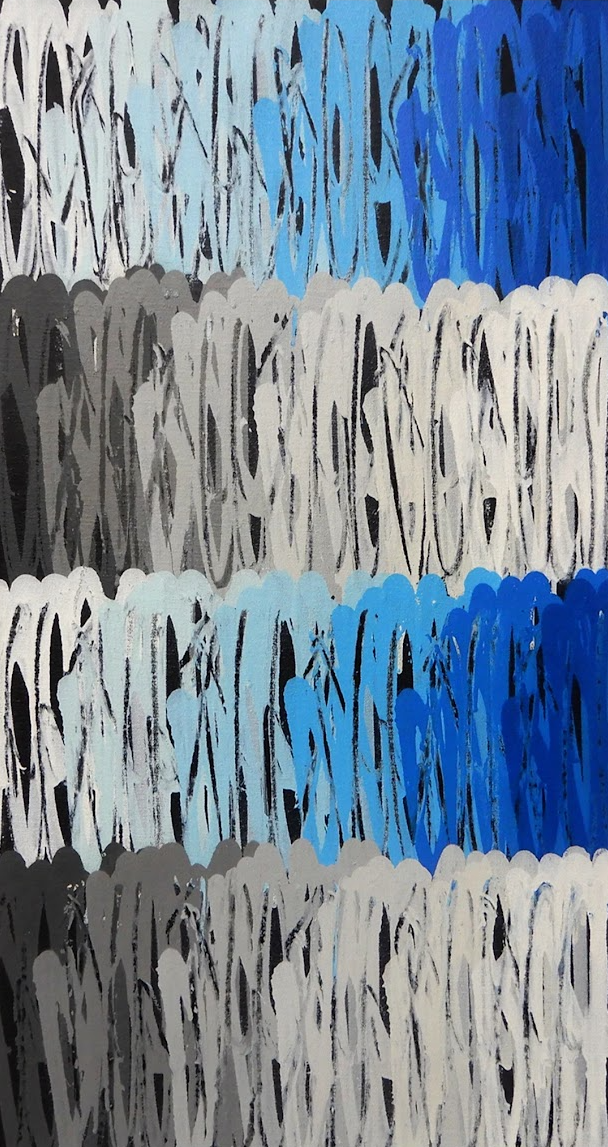
Multi Tags Series 8609 is a 2023 original painting by the graffiti artist Seen UA. Known as one of the pioneers of graffiti culture, Seen UA, born Richard Mirando, gained notoriety for his work on subway trains and urban landscapes during the early days of the graffiti movement in the 1970s. This piece is part of his ongoing Multi Tags Series, a collection that explores the expressive power of tagging in its raw, repetitive form. Measuring 20x34 inches, the artwork is crafted using acrylic paint and spray paint on unstretched canvas, emphasizing the street art origins of Seen’s work.
The Art of Tagging in Street Pop Art and Graffiti Culture
Tagging is one of the most fundamental elements of graffiti culture. A tag, typically a stylized signature or name, is the artist’s mark left on a surface, often as a form of identity or declaration of presence. In street pop art, tagging transcends its initial association with urban vandalism and becomes a form of visual expression and artistry. UA’s Multi Tags Series, 8609, captures this ethos, presenting a wall of repeated tags layered over one another rhythmically and chaotically. The repetition of tags in the series can be seen as both an assertion of identity and a commentary on the nature of urban life. The layering of tags, with overlapping colors and textures, mirrors the layering of voices, identities, and experiences in the urban environment. This dense field of repeated tags evokes the sensation of walking through a city covered in graffiti, where each tag competes for attention while simultaneously blending into the collective hum of the urban landscape. UA’s use of color in Multi Tags Series 8609 further enhances this effect. The painting is dominated by a palette of blues, grays, and whites, with each tag applied in quick, gestural strokes. The color variations suggest a gradient effect, where the tags seem to move in and out of focus, creating a sense of depth and movement. This visual layering invites the viewer to engage with the piece as a whole and on a more detailed, individual level, much like how street art is experienced in public spaces.
Graffiti as an Artistic Language
UA’s career has been defined by his ability to elevate graffiti from its underground roots into the wider art world. In the early days of graffiti, tags were often seen as acts of rebellion or defiance, expressions of a counterculture that rejected the norms of mainstream society. However, artists like Seen have demonstrated that tagging can also be a sophisticated form of visual language. Multi Tags Series 8609 exemplifies this idea, using tags as markers of identity and tools for creating intricate compositions. In this piece, Seen UA employs acrylic and spray paint, two mediums central to graffiti culture. Combining these materials allows for a range of textures and effects, from the smooth, controlled lines of the acrylic to the more spontaneous, unpredictable bursts of spray paint. The contrast between the two mediums reflects the tension between control and chaos often present in street art. The acrylic tags are precise and deliberate, while the spray paint adds an element of raw energy, evoking the feeling of graffiti created quickly in public spaces. The unstretched canvas in Multi Tags Series 8609 further connects the work to its graffiti roots. Unlike traditional gallery paintings, which are typically stretched and framed, the unstretched canvas recalls graffiti's impermanent, transient nature. Graffiti is often created on surfaces subject to weathering, removal, or destruction, and by choosing an unstretched canvas, Seen UA embraces this sense of impermanence. Much like the graffiti tags it depicts, the artwork feels as though it could be rolled up, moved, or even erased, underscoring the temporary and ever-changing nature of street art.
Seen UA: A Legacy of Graffiti and Street Pop Art
UA’s influence on the graffiti movement cannot be overstated. Often referred to as the “Godfather of Graffiti,” his work has been a cornerstone of the street art scene for decades. Starting as a young artist tagging subway cars in New York City, Seen UA helped shape the visual language of graffiti, bringing it from the streets into galleries and museums worldwide. His transition from illegal tagging on subway trains to producing fine art pieces like Multi Tags Series 8609 reflects the evolution of graffiti as an art form. Despite his success in the art world, Seen UA has always remained true to the ethos of graffiti culture. His Multi Tags Series continues to celebrate street art's raw energy and rebellious spirit, even as it is displayed in more formal settings. By repeating his tags repeatedly in this series, Seen UA reminds viewers of the persistence and resilience of graffiti culture. Tags are often removed, painted over, or buffed out by city authorities, but graffiti artists continue to create, leaving their marks wherever possible. In this sense, Multi Tags Series 8609 can be seen as a celebration of the enduring nature of graffiti and the artists who create it.
The Visual Power of Repetition
One of the most striking aspects of Multi Tags Series 8609 is its use of repetition as a visual device. Repetition is a powerful tool in street pop art, where the constant reiteration of symbols, images, and motifs helps to reinforce their meaning. In this piece, Seen UA’s repeated tags create a hypnotic pattern that draws the viewer’s eye across the canvas. Each tag is distinct and part of a larger whole, creating a sense of unity within the chaos. The repeated tags also evoke the act of tagging itself, which is often done in quick, repetitive motions. This physicality is reflected in the gestural quality of the tags, which appear to have been applied rapidly, with energy and urgency. The viewer can almost imagine the artist’s hand moving across the canvas, repeating the same mark repeatedly to leave a lasting impression. Multi Tags Series 8609 is a testament to Seen UA’s mastery of graffiti as a visual language and artistic expression. Using repetition, color, and texture, Seen UA creates a dynamic, engaging work that captures the essence of graffiti culture while pushing the boundaries of what street pop art can be.
Read
more
less