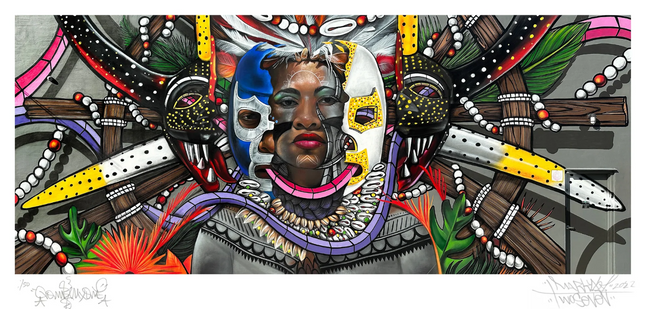
Luchando Por Mi Patria Archival Print by Don Rimx x Marka27 Limited Edition on 290gsm Moab Entrada Bright Rag Fine Art Paper Pop Graffiti Street Art Artist Modern Artwork.
2022 Signed & Numbered Print Limited Edition of 50 Artwork Size 12x24 Archival Pigment Fine Art
Over the years, Marka27 has gained a reputation for his ability to work across different mediums, his dedication to cultural representation, and his commitment to creating art that resonates with diverse audiences. His work continues to evolve, reflecting both his personal journey and the changing dynamics of the world around him. Don Rimx, whose real name is David Sepulveda, is a renowned street artist originally from Puerto Rico. Known for his intricate, large-scale murals, Don Rimx's work often showcases a blend of his Puerto Rican heritage and his deep interest in the human form.
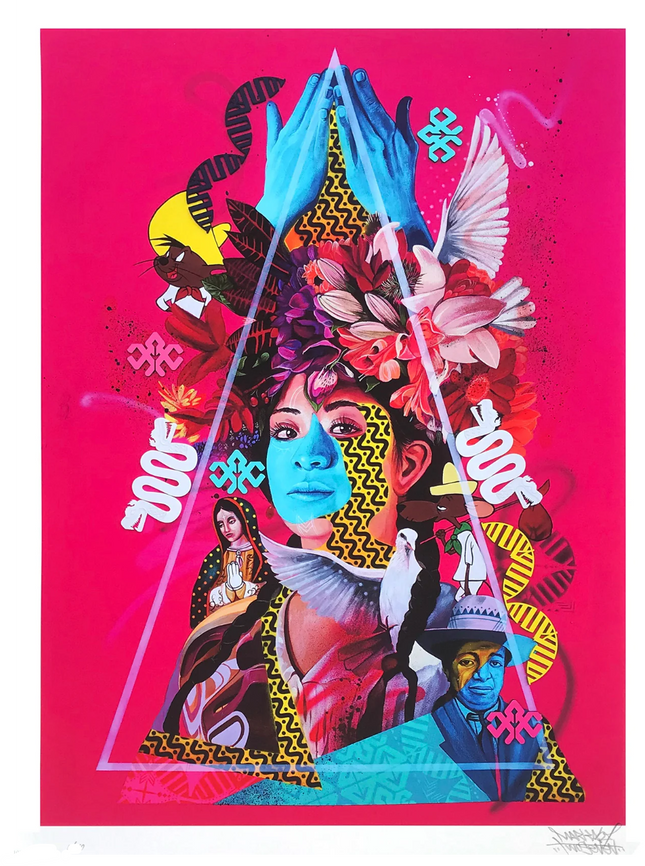
Latinx-AF Archival Print by Marka27 Limited Edition on 290gsm Moab Entrada Bright Rag Fine Art Paper Pop Graffiti Street Art Artist Modern Artwork.
2020 Signed & Numbered Print Limited Edition of 40 Artwork Size 18x24 Archival Pigment Fine Art by Marka27
Marka27, whose real name is Victor Quinonez, has been recognized for his "Neo Indigenous" style that blends cultural iconography, street art, and pop culture into a unique and vibrant aesthetic. His work is deeply influenced by his bicultural experiences, having grown up in both Mexico and the United States.
Latin America in Street Pop Art and Graffiti Artwork
Latin America has long been a fertile ground for Street Pop Art and graffiti artwork, with its vibrant cultural history and political dynamics shaping a unique visual language. The streets of cities like São Paulo, Mexico City, Bogotá, and Buenos Aires serve as sprawling canvases where artists express themes of identity, resistance, and community. These urban art forms, deeply tied to the social fabric of the region, reflect the voices of both individuals and collectives seeking to tell their stories and challenge societal norms.
The Political Roots of Street Art in Latin America
Street art and graffiti in Latin America have often emerged as powerful tools for political expression. During periods of dictatorship and repression, artists used public spaces to challenge authority and amplify voices silenced by censorship. Murals created by Diego Rivera in Mexico, though more formal than graffiti, laid the foundation for public art as a medium of political and cultural discourse. Rivera’s work inspired later generations of graffiti and Street Pop Art artists to use bold imagery and striking color palettes to address inequality, corruption, and social injustice.
In countries like Brazil, street art became intertwined with activism. São Paulo, in particular, is home to some of the most dynamic graffiti in the world, with artists such as Eduardo Kobra using large-scale murals to address historical and contemporary issues. The vibrant styles and themes of Latin American graffiti reflect a fusion of indigenous heritage, colonial history, and modern struggles, creating a deeply layered artistic expression.
Cultural Identity and Celebration Through Urban Art
Latin American Street Pop Art and graffiti artwork are not only rooted in resistance but also celebrate cultural identity and traditions. Artists often draw from indigenous patterns, folkloric imagery, and local mythology to create pieces that resonate deeply with their communities. The use of bright colors and intricate designs reflects the region's rich artistic traditions while making the artwork visually captivating.
In Colombia, for example, the streets of Bogotá are adorned with murals that celebrate the country's biodiversity, indigenous heritage, and cultural diversity. Artists such as DJ Lu and Stinkfish create works that merge global influences with distinctly Colombian aesthetics. Similarly, in Peru, street art often incorporates pre-Columbian motifs and Andean symbolism, connecting contemporary urban expression with ancient traditions.
The Global Influence of Latin American Street Art
Latin American Street Pop Art and graffiti artwork have gained global recognition for their innovation and depth. Artists from the region are increasingly featured in international exhibitions and collaborations, bringing the spirit of their streets to new audiences. The influence of Latin American street art can be seen in the way it has shaped global trends, particularly through its bold use of color, narrative-driven imagery, and commitment to addressing social issues.
Through their work, Latin American street artists continue to challenge boundaries and redefine what urban art can achieve. Whether through sprawling murals or intricate tags, these creators ensure that the voices and stories of their communities are not only seen but felt on a global stage. This enduring connection between local identity and universal appeal cements Latin America’s critical role in the evolution of Street Pop Art and graffiti artwork.