
Latin America
-
Lady Pink Lady Shiva Original Marker Drawing by Lady Pink
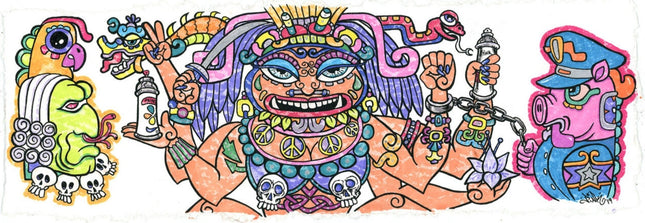
Lady Shiva Original One of a Kind Mixed Media Paint & Markers Drawing Artwork on Hand Deckled Handmade Art Paper by Popular Street Graffiti Artist Lady Pink. 2019 Signed & Dated Original Drawing Illustration Paint Markers, on Handmade Deckled Paper. 6 x 18 inches in size. Lady Pink’s Lady Shiva: Mythology Meets Resistance in Street Pop Art Lady Pink’s Lady Shiva, created in 2019 with mixed media and marker on hand-deckled handmade art paper, fuses Aztec-influenced mythology with graffiti symbolism and social resistance. Measuring 6 x 18 inches, this one-of-a-kind work exemplifies her ongoing commitment to female empowerment and cultural reclamation within the language of Street Pop Art & Graffiti Artwork. The central figure is a vibrant, deity-like woman with six arms, adorned with skulls, peace symbols, and bold facial markings. She holds spray cans and chains, a direct reference to the tools and struggles of the graffiti movement. The composition blends traditional iconography with cartoonish energy, channeling both Mesoamerican art and contemporary visual rebellion. The central goddess figure references the Hindu deity Shiva, a powerful symbol of destruction and transformation, but here she is reimagined through the lens of street culture. Her expression is fierce, defiant, and jubilant. Surrounding her are serpents, birds, and ornamental symbols drawn in a palette of saturated pinks, purples, and greens—an aesthetic choice that reflects Lady Pink’s history of challenging male-dominated narratives in graffiti by owning her space with unapologetic color and form. Visual Allegory of Power, Culture, and Resistance The narrative unfolds with sharp contrasts and rich symbolism. On one end, a grotesque pig-faced police officer stands handcuffed to the goddess, gripping a spray can as if confiscated or misunderstood. On the other, mythic figures—complete with skull necklaces and serpents—align themselves with the goddess’s cause. The character design is playful, but the message is pointed. Lady Pink uses humor and caricature to expose cycles of surveillance, cultural erasure, and systemic control. The shackles and clenched fists transform the piece into an allegory of empowerment—where art, identity, and heritage become instruments of resistance. This is not a passive depiction of rebellion—it is active, kinetic, and celebratory. The goddess wields graffiti like a weapon of reimagination. Her eyes are lined with thick lashes, crying stylized teardrops that recall both sorrow and power. Her smile, full of sharp teeth, confronts the viewer directly. This emotional hybridity—fierceness paired with joy—is central to Lady Pink’s style. She constructs a visual mythology where cultural memory and contemporary rebellion meet at the intersection of gender, history, and paint. Graffiti Iconography Reframed Through Feminist Vision Lady Pink, born Sandra Fabara in Ecuador and raised in New York, has been a pioneering voice in graffiti since the 1980s. Her work consistently merges street energy with personal and political storytelling, especially from a feminist perspective. Lady Shiva stands as a testament to her role in shaping graffiti into a space of inclusion and cultural critique. Rather than adhering to hyper-masculine conventions of tagging and bombing, she incorporates ancient motifs, character illustration, and symbolism to narrate deeper social commentary. In Lady Shiva, the combination of handmade paper, thick marker strokes, and mythological subject matter aligns with the tactile and ephemeral nature of graffiti. The unpolished edges, visible brush textures, and bright marker fills evoke the immediacy of street walls and sketchbooks. This physicality speaks to the roots of the medium—accessible, unfiltered, and deeply personal. The piece refuses polish in favor of presence, giving the goddess a raw, living quality. Through Lady Shiva, Lady Pink doesn’t just create a goddess—she creates a narrative weapon. The work becomes a mural-sized declaration in miniature form, bridging spiritual power, ancestral art, and the lived resistance of women artists claiming space in public view. It is a visual spell cast in spray paint and marker, summoning transformation in the language of Street Pop Art & Graffiti Artwork.
$1,750.00 $1,488.00