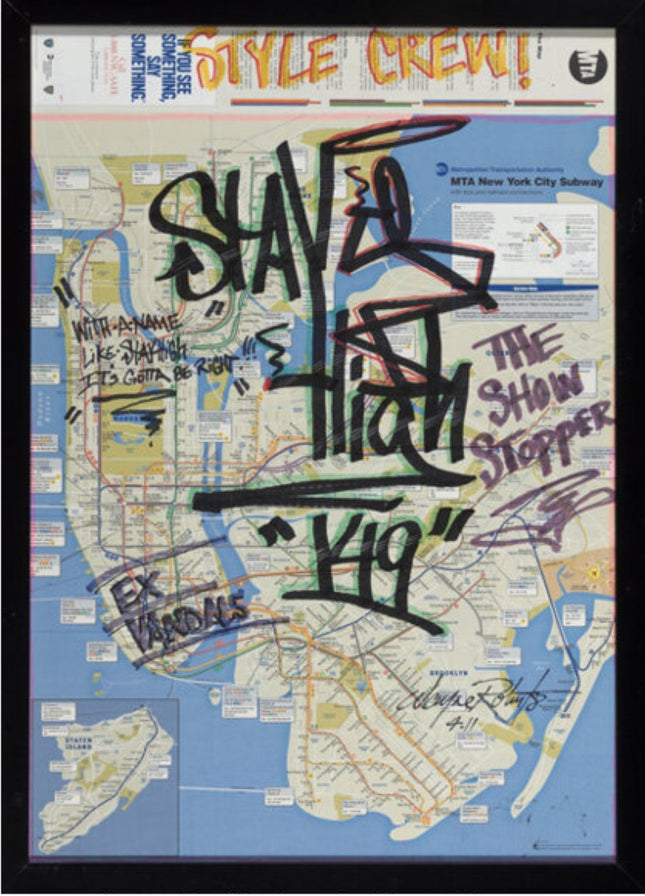
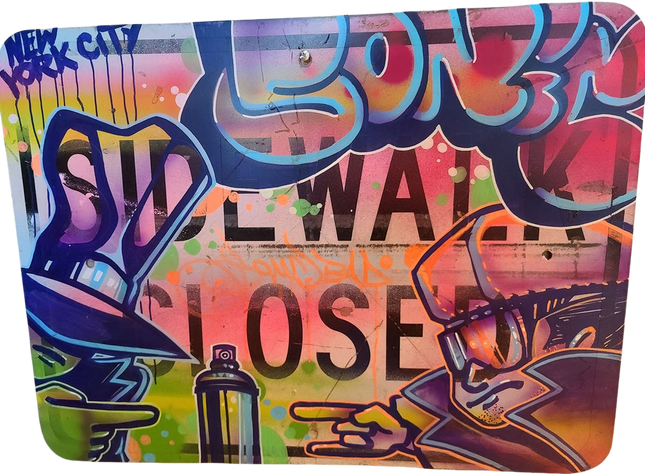
The Professor Original Acrylic Spray Paint on Reclaimed MTA NYC Subway Panned Changes Notice Framed Painting by Dr Revolt One of a Kind Artwork by Street Art Pop Artist.
2022 Signed Acrylic & Spray Paint Painting Original Artwork Size 10.5x16.25 Reclaimed MTA New York Subway Train Notic Graffiti Artork by Dr Revolt. Framed Dimensions 20.25 X 14.25 Inches.
The Professor by Dr Revolt – Spray-Painted Nostalgia on NYC Subway Ephemera in Street Pop Art & Graffiti Artwork
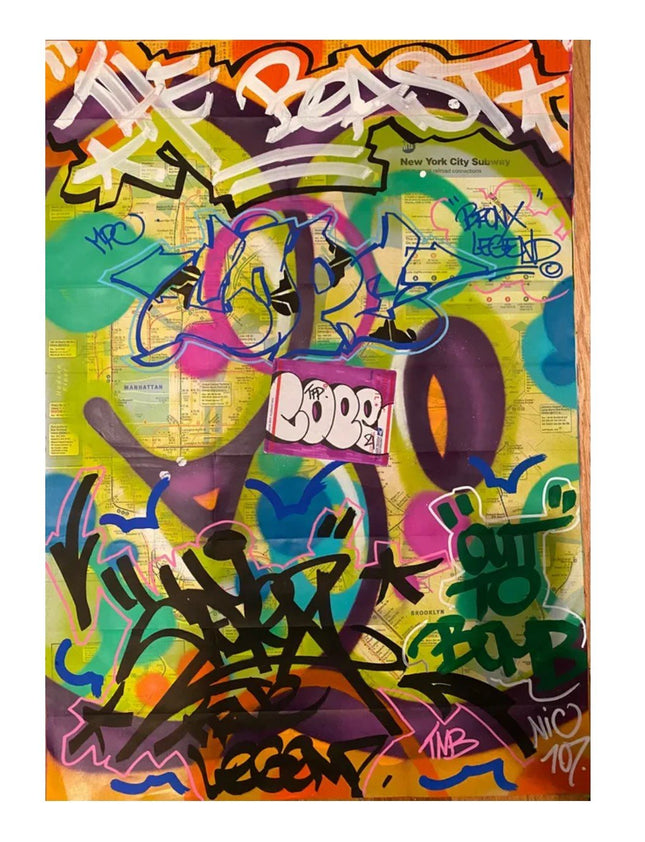
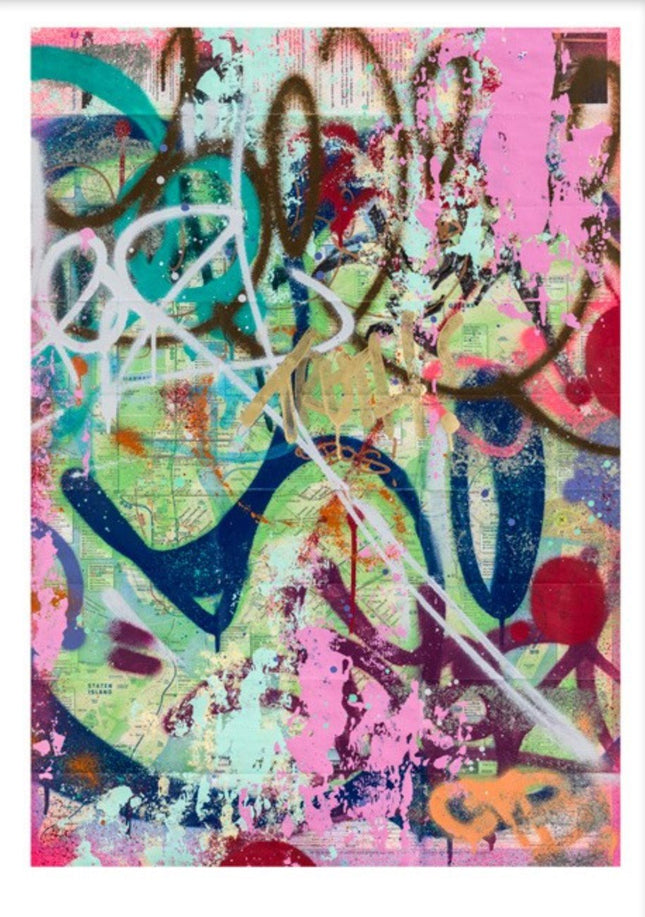
The Professor is a 2022 original artwork by graffiti legend Dr Revolt, created using acrylic and spray paint on a reclaimed MTA New York City subway service changes notice. Measuring 10.5 x 16.25 inches and presented in a frame with dimensions of 20.25 x 14.25 inches, this piece exemplifies Dr Revolt’s iconic blend of graffiti heritage, comic illustration, and satirical urban commentary. Set atop an authentic F-line transit alert, the work brings together handstyle tags, wildstyle bursts, and a central cartoon character in a dynamic collision of color and street storytelling. The result is a one-of-a-kind fusion of lived infrastructure and pop narrative, transforming a routine public document into a canvas for visual mischief, rebellion, and style-driven identity. In the context of Street Pop Art & Graffiti Artwork, The Professor becomes both artifact and artwork, bridging functional signage with rebellious customization.
Cartoon Authority and Urban Intelligence
At the heart of The Professor is a blue-toned cartoon character rendered in Dr Revolt’s signature style, featuring thick outlines, oversized glasses, a scholarly cap, and dual spray cans. The character’s pose suggests both control and chaos, symbolizing the duality of graffiti culture—part scientific precision, part spontaneous eruption. The figure doesn’t just tag the wall; he commands it, studies it, and transforms it. This character can be read as a stand-in for the artist himself, or for the archetype of the graffiti writer as both outlaw and urban philosopher. The background retains legible fragments of the MTA’s bilingual text, timestamps, and service disruptions—markings of the everyday public rhythm now layered with an expressive intervention. Within Street Pop Art & Graffiti Artwork, the use of cartoon iconography as urban persona ties street visuals to mass culture and lowbrow illustration traditions.
Handstyle, Wildstyle, and the Power of the Surface
Spray fades in teal, violet, and neon yellow radiate across the surface, punctuated by splatters and black bubble forms. The word bubble motif becomes both graffiti cloud and comic exclamation. The handstyle tag in the lower left corner bears Dr Revolt’s recognizable moniker, with additional markings from RTW—Rolling Thunder Writers—paying homage to one of the most influential graffiti crews of the 1970s and 80s. These tags are not mere signatures; they are declarations of presence, lineage, and contribution to a culture built on walls and transit systems. The subway service notice beneath adds not just texture but meaning. It marks time and place. The repurposed paper substrate becomes a relic of New York’s transit ecosystem, layered with revolt, energy, and neon nostalgia.
Dr Revolt and the Historic Legacy of Street-Based Disruption
The Professor captures what makes Dr Revolt a defining force in the evolution of graffiti into Street Pop Art & Graffiti Artwork. He moves easily between character design, wildstyle legacy, comic influences, and social critique—all while remaining anchored in the core principles of graffiti: mark-making, disruption, authorship, and repetition. By using a reclaimed MTA service notice as his canvas, he links the rhythms of the city to the rhythms of art, echoing how writers hijacked infrastructure in the golden era of subway graffiti. This piece is not simply playful—it is historical. It is a reminder that graffiti is not just color or attitude but commentary, action, and remembrance. In The Professor, Dr Revolt delivers a witty, stylish, and layered love letter to New York, graffiti, and the endless possibilities of reimagining the surface.
Read
more
less