Pharmaceutical

31 artworks

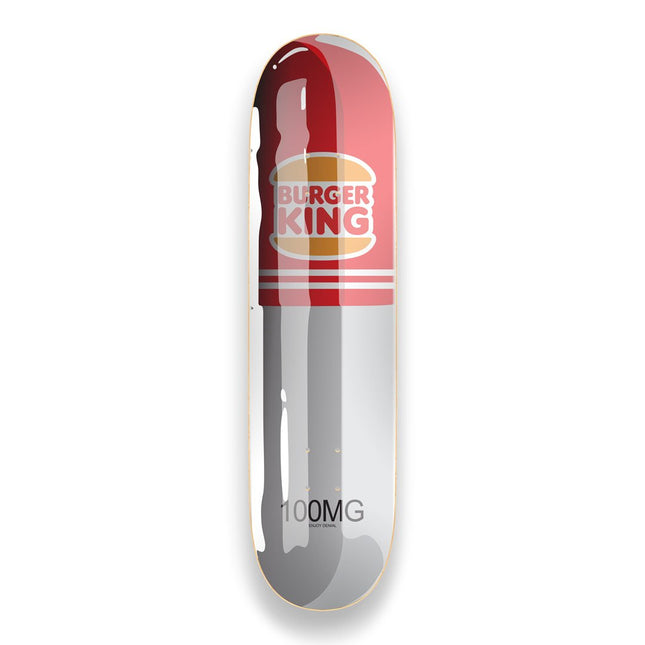
  • Burger King Archival Skateboard Deck by Denial- Daniel Bombardier

    Denial- Daniel Bombardier Burger King Archival Skateboard Deck by Denial- Daniel Bombardier

    Burger King Limited Edition Archival Pigment Print Transfer on Cold Pressed Steep Natural Skate Deck art by street pop culture artist Denial. In 2000 he adopted the moniker ‘DENIAL’ as a means of poking fun at advertising, politics, and media messages that contemporary society is often ‘in denial’ about. Since then he has maintained an ongoing global street-campaign of over 500, 000 stickers, placards, and murals, using the alpha-numeric characters ‘D3N!@L’. Denial has evolved as one the most prominent figures of contemporary pop artists, who nonetheless, continue to stay relevant and is interested in generating thought-provoking commentary. He has a long history of exploring the boundaries of appropriation, which he uses as a means of subverting the value of cultural products, imprinted in the collective memory of the Western civilization. His work, in other words, is inviting the viewer to re-imagine our dystopian society as a way of confronting it, with humor and irony as the biggest tools of the artist.

    $505.00

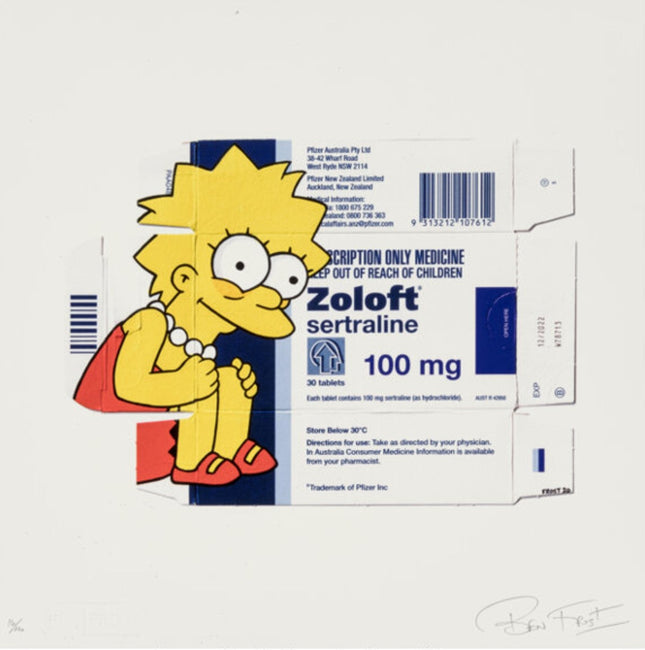
  • Social Distancing Archival Print by Ben Frost

    Ben Frost Social Distancing Archival Print by Ben Frost

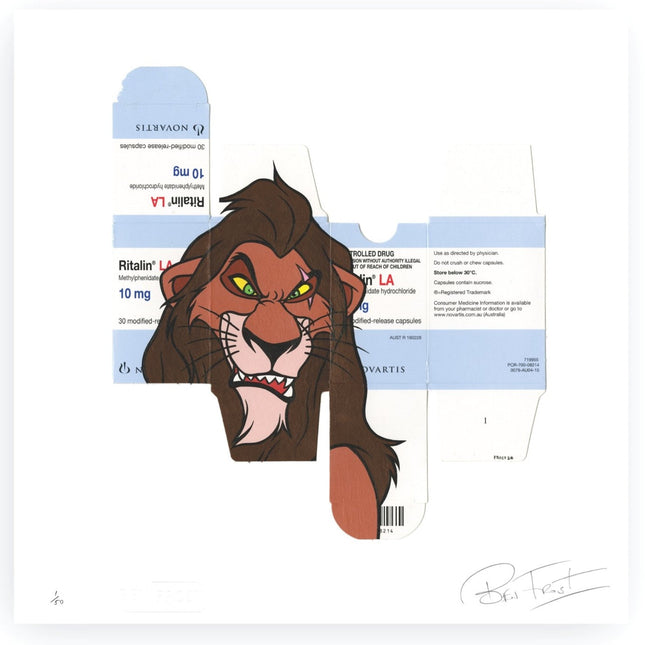
    Social Distancing Simpsons Archival Pigment Fine Art Limited Edition Print on 310gsm Bauhaus Cotton Rag Paper by Artist Ben Frost, Street Pop Art Graffiti. 2020 Signed & Numbered Limited Edition of 40 Artwork Size 12x12. Ben Frost (b. 1975) Social Distancing, 2020 Archival digital print on Bauhaus Cotton Rag Stock paper 12 x 12 inches (30.5 x 30.5 cm) (sheet) Ed. 40 is signed and numbered in pencil along the lower edge and published by the artist. Intersecting Pop Culture and Social Commentary Ben Frost's "Social Distancing Simpsons" archival pigment fine art print is a piercing examination of contemporary society through the lens of street pop art and graffiti. This limited edition print, numbered and signed, reflects Frost's unique and often controversial approach to his art, blending pop culture icons with subversive messaging. Created in 2020, "Social Distancing Simpsons" is a compelling artwork set against the backdrop of a global pandemic, a time when social distancing became a ubiquitous part of life. By incorporating a familiar character from "The Simpsons," Frost taps into the collective consciousness and comments on the impact of societal changes on popular culture. The choice of using archival digital print on Bauhaus Cotton Rag Stock paper, a high-quality material, ensures that the vibrancy of the piece and the precision of its details are preserved. The image of the Simpson's character juxtaposed with a pharmaceutical label indicates Frost's style, often involving the fusion of disparate elements to create a jarring yet thought-provoking visual statement. This 12 x 12 inches print is a perfect square that captures the essence of Frost's artistic statement: a critique of consumerism, mental health, and the pharmaceutical industry. Ben Frost's Signature Style Frost's work is characterized by his unflinching willingness to confront and challenge viewers with uncomfortable truths about modern life. In "Social Distancing Simpsons," the collision of the cartoon world with the stark reality of medication speaks to a generation that finds solace in nostalgia while grappling with present-day anxieties. With its limited edition of 40, the artwork becomes a collector's piece, a snapshot of an era defined by isolation and the search for connection. Reflection of Street Pop Art and Graffiti Frost's art is a reflection of street pop art and graffiti in its directness and its utilization of visual language that is immediate and accessible. Incorporating street art aesthetics into fine art prints blurs the lines between high art and more democratic expressions in urban environments. "Social Distancing Simpsons" is a testament to the power of this genre to communicate beyond words, offering a visual critique that is both universal and deeply personal. In summary, "Social Distancing Simpsons" by Ben Frost is more than just an artwork; it is a commentary on the times, a mirror held up to the complexities and contradictions of contemporary life. Through his expert blending of pop culture references with cutting social commentary, Frost solidifies his place as a significant voice in street pop art and graffiti artwork. This piece, in particular, stands as a poignant reminder of 2020, capturing the essence of a moment that has left an indelible mark on society.

    $684.00

  • Kuma Kush The Prisoner Cannabis Drug Bear Art Toy by Luke Chueh

    Luke Chueh Kuma Kush The Prisoner Cannabis Drug Bear Art Toy by Luke Chueh

    Kuma Kush The Prisoner Cannabis Drug Bear Art Toy by Luke Chueh Limited Edition Vinyl Collectible Artwork by Street Graffiti Artist. 2017 Limited Edition Artwork of 300 with Cotton, Bag, and Tube. Based on Luke Chueh's original painting, The Prisoner ponders captivity in its many forms—physical, mental, or pharmaceutical. Post-traumatic stress disorder is a mental health problem that can develop after experiencing or witnessing a life-threatening event like combat, natural disaster, car accident, or sexual assault. And the dependency on prescription medications such as Percocet has led to widespread addiction problems. Kuma Kush The Prisoner by Luke Chueh: Cannabis and Emotional Captivity in Street Pop Art & Graffiti Artwork Kuma Kush The Prisoner is a limited edition vinyl art toy created by Los Angeles-based artist Luke Chueh in 2017. Produced in a run of 300 pieces, each figure comes housed in a green translucent prescription-style container with a cotton bag and printed label that mimics cannabis dispensary packaging. This collectible is part of Chueh’s The Prisoner series, which adapts his original painting into three-dimensional vinyl form. The figure features a seated bear, legs folded, arms wrapped tightly around its knees, and head lowered in a pose of silent withdrawal. This turquoise green edition—nicknamed Kuma Kush—shifts the narrative focus toward cannabis as a coping mechanism, inviting reflection on the psychological implications of alternative medication and emotional dependency. Deeply rooted in the language and symbolism of Street Pop Art & Graffiti Artwork, this piece turns a seemingly cute figure into a deeply evocative emotional sculpture. Color, Form, and Packaging as Social Commentary The choice of a green plastic tube traditionally associated with cannabis storage turns the bear into a commentary on escapism, self-medication, and the search for relief from psychological pain. The strain title, Kuma Kush, plays off both pop culture and medical terminology, combining a playful exterior with a serious undertone. Chueh’s bear figure, rendered in a mint green hue, is static and introspective, trapped in both its physical posture and the symbolic enclosure of the container. The aesthetic is clean, minimal, and emotionally weighted. This visual restraint is a core part of the artwork’s impact—Chueh uses silence and stillness to speak volumes. The bear is not a mascot but a vessel, representing the emotional burden many carry in silence. By situating the toy inside medical-themed packaging, Chueh makes the container an extension of the piece, turning object presentation into a narrative device consistent with the provocative nature of Street Pop Art & Graffiti Artwork. Luke Chueh and the Art of Emotional Exposure Luke Chueh has become a leading voice in contemporary pop and street-influenced art through his exploration of mental health, addiction, and vulnerability. His iconic bear figures have become universal symbols of struggle, designed to elicit empathy without the need for words. In Kuma Kush The Prisoner, Chueh introduces cannabis culture into his ongoing narrative about emotional suppression and dependency. This is not a celebration or condemnation of cannabis but an observation on how individuals turn to substances—legal or otherwise—to cope with trauma, anxiety, and post-traumatic stress disorder. Chueh’s approach is neither cynical nor romanticized. It exists within the gray areas where emotion, coping, and survival intersect, which places his work at the forefront of Street Pop Art & Graffiti Artwork that engages social issues through emotionally resonant design. The Prisoner Series as Art Object and Cultural Reflection Kuma Kush The Prisoner functions as both a collectible and a statement, its limited release of 300 making it both rare and conceptually potent. The figure, while small in scale, delivers a message that expands far beyond its dimensions. It sits not just in display cases but in the minds of viewers, acting as a quiet companion to those navigating emotional heaviness. Through minimalist form and emotionally charged symbolism, Luke Chueh elevates the collectible vinyl toy to a piece of psychological sculpture. As part of the Street Pop Art & Graffiti Artwork movement, the Prisoner series—and this Kuma Kush edition in particular—demonstrates how visual art can confront difficult truths about medication, trauma, and human vulnerability without sacrificing aesthetic simplicity or emotional clarity.

    $350.00

  • Akira Pill Ceramic Plate Art Object by Supreme

    Supreme Akira Pill Ceramic Plate Art Object by Supreme

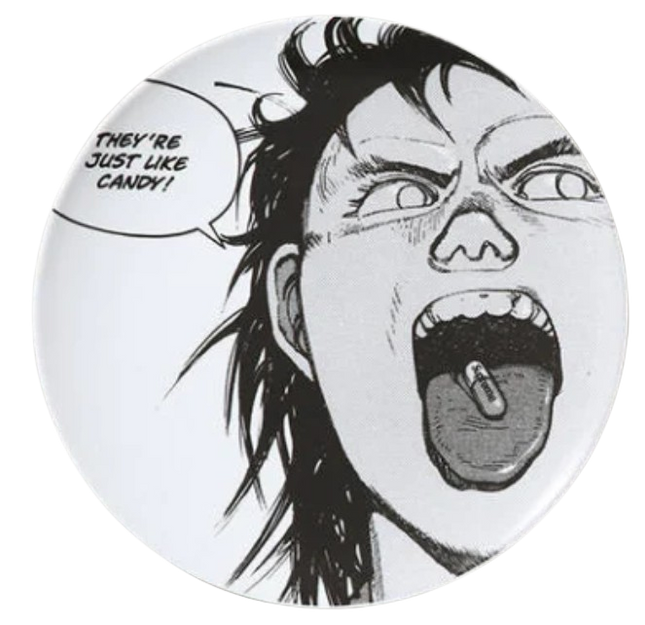
    Akira Pill Ceramic Plate Art Object by Supreme Limited Edition Collectors Dish Artwork. 2017 Stamped Limited Edition Supreme Ceramic Plate Artwork Size 10x10 Collectible Art Object. Unveiling the Supreme AKIRA Pill Ceramic Plate: A Convergence of Street Pop Art and Collectible Design The Supreme AKIRA Pill Ceramic Plate is a distinctive artifact within the collectible design and street pop art spheres. Launched as part of the Fall/Winter 2017 collection, this limited edition piece exemplifies the harmonious blend of utilitarian objects and art pieces. The collaboration between Supreme and the AKIRA manga series transcends mere commercial intent, evolving into a collector's item that celebrates the aesthetics of both street culture and Japanese graphic art. The Supreme AKIRA Pill Ceramic Plate, sized at 10x10 inches, is more than just a dish; it's a canvas that showcases the thrilling intersection of Supreme's bold sensibilities and AKIRA's striking manga artwork. Crafted from high-grade ceramic, the plate promises durability and an enduring visual appeal, making it suitable for functional and display purposes. The artwork, featuring a character mid-action as they consume a pill, is rendered in a stark black-and-white palette, bringing the dynamism and raw energy of the original manga panels to a static object. Accompanying the image is the phrase "THEY'RE JUST LIKE CANDY!" which adds a layer of narrative and intrigue to the piece. In this unique art object, the collaboration's spirit is palpable. The featured artwork captures the essence of the AKIRA series, while the incorporation of Supreme's logo recontextualizes the image within high-end street fashion. The choice to modify the Supreme logo and place it on the pill within the artwork speaks to the brand's knack for seamlessly integrating popular culture references within its products. This technique endears the piece not only to fans of the manga but also to followers of the Supreme brand, whose identity is cleverly woven into the narrative of the artwork. The underside of the plate is as much a part of the art as the top, displaying the classic Supreme Box logo in its original, vivid colors. This touch is a signature move by the brand, a nod to its roots in the skateboarding and streetwear scenes, and serves as a certificate of authenticity for collectors. The Supreme AKIRA Pill Ceramic Plate is Street Pop Art and Graffiti Artwork The Supreme AKIRA Pill Ceramic Plate is a testament to the evolving landscape of street pop art and graffiti artwork. It encapsulates what it means to be a piece of art in the modern age – functional yet provocative and steeped in the subculture. This plate isn't just merchandise; it's a slice of the street art narrative captured in glazed ceramic. The plate's design reflects the shared backgrounds of street art and graffiti – spontaneous, bold, and often provocative. Yet, it is refined through the lens of pop art, which takes the everyday object and elevates it to something extraordinary. The collaboration is symbolic of how street pop art often blurs the lines between commercial and high art, inviting discourse on the value and significance of art in everyday objects. As a piece of art, the Supreme AKIRA Pill Ceramic Plate carries the legacy of its manga inspiration into new territories. It's a physical representation of the cultural impact of the AKIRA series on the world of graphic novels and the broader canvas of pop culture. For Supreme, this plate adds to its repertoire of items that are at once contemporary and timeless, pieces that resonate with the cultural zeitgeist while retaining a sense of exclusivity and collectibility. In street pop art and graffiti artwork, objects like the Supreme AKIRA Pill Ceramic Plate challenge traditional notions of what art can be. They bring the vibrancy and edginess of street art into homes, merging with the functional aspects of everyday objects. This plate is not just a practical dish; it's a conversation starter, a piece of cultural commentary, and a collectible artwork all rolled into one, capturing street pop art's innovative and transformative spirit.

    $243.00

  • Dextroamphetamine Black Beauty The Prisoner Bear Art Toy by Luke Chueh

    Luke Chueh Dextroamphetamine Black Beauty The Prisoner Bear Art Toy by Luke Chueh

    Dextroamphetamine Black Beauty The Prisoner Bear Art Toy by Luke Chueh Limited Edition Vinyl Collectible Artwork by Street Graffiti Artist. 2017 Limited Edition Artwork of 500 with Cotton, Bag, and Tube. Based on Luke Chueh's original painting, The Prisoner ponders captivity in its many forms—physical, mental, or pharmaceutical. Post-traumatic stress disorder is a mental health problem that can develop after experiencing or witnessing a life-threatening event like combat, natural disaster, car accident, or sexual assault. And the dependency on prescription medications such as Percocet has led to widespread addiction problems. Dextroamphetamine Black Beauty The Prisoner by Luke Chueh: A Dark Reflection on Dependency in Street Pop Art & Graffiti Artwork Dextroamphetamine Black Beauty The Prisoner is a limited edition vinyl art toy created by artist Luke Chueh in 2017. Produced in an edition of 500 pieces, this figure is part of the ongoing Prisoner series, which adapts Chueh’s emotionally powerful painting into three-dimensional sculptural form. Each edition comes with a cotton-lined bag and is packaged inside a prescription-style orange tube bearing a fictional pharmaceutical label. This particular version, labeled Black Beauties, references a well-known street term for stimulant-based medications like dextroamphetamine, historically used to treat ADHD and narcolepsy but also widely misused for their euphoric and energizing effects. The toy depicts Chueh’s iconic bear seated with arms tightly wrapped around its legs, body language slumped in a posture of quiet despair. In this black vinyl colorway, the character becomes even more somber and haunting, amplifying the underlying themes of emotional captivity and synthetic reliance embedded in the work. Color as Psychological Weight and Symbolism The black coloration of this figure—paired with the term Black Beauties on the label—evokes a direct emotional response tied to darkness, isolation, and intensity. While earlier versions of The Prisoner might have used color to represent numbing or sedation, this edition intensifies the metaphor by embracing the visual codes of internalized distress. The figure, enclosed in its transparent orange pharmacy tube, appears as a trapped emotional state, unable to express or move. Its eyes are reduced to small, vacant white dots that stand out against the matte black body, making it feel more ghostlike and withdrawn. This visual contradiction—between the adorable form and its heavy emotional implication—is a hallmark of Luke Chueh’s contribution to Street Pop Art & Graffiti Artwork. The toy becomes a site of tension, where the aesthetics of collectible culture meet the emotional realities of mental health, addiction, and societal pressure. Luke Chueh’s Articulation of Pain Through Vinyl Minimalism Luke Chueh, based in Los Angeles, has established a distinct voice in both the street and pop art communities through his deeply personal yet accessible character work. His art reflects the quiet pain many experience privately, giving form to mental states that often lack vocabulary. The Prisoner series, particularly this Black Beauty edition, centers on the way trauma and post-traumatic stress disorder are treated with medical intervention, and how dependency on substances—whether stimulants, opioids, or otherwise—can become a secondary form of entrapment. Chueh’s vinyl bears are not just emotional stand-ins; they are visual testaments to human fragility, rendered in minimalist detail and powerful posture. His work repositions toy art within the Street Pop Art & Graffiti Artwork framework, showing that small, hand-sized sculptures can carry as much expressive power as large murals or installations. The Prisoner Series and the Language of Medication as Art Object Dextroamphetamine Black Beauty The Prisoner transforms pharmaceutical culture into a tactile art form that critiques while it documents. The packaging mimics real prescription containers, complete with faux instructions and contact information, reinforcing the idea that this object is not separate from society’s medical discourse—it is embedded within it. This presentation method adds depth and reinforces the artwork’s conceptual integrity. Limited to 500 pieces, each toy becomes a collectible commentary on the realities of modern chemical treatment, social expectations, and unspoken suffering. Within the wider movement of Street Pop Art & Graffiti Artwork, this piece solidifies Luke Chueh’s position as an artist who uses softness to explore severity, and who brings sculptural language to the emotional and pharmaceutical conditions of contemporary life. The bear sits still, but its silence is deafening.

    $320.00

  • Vicodin The Prisoner Drug Bear Art Toy by Luke Chueh

    Luke Chueh Vicodin The Prisoner Drug Bear Art Toy by Luke Chueh

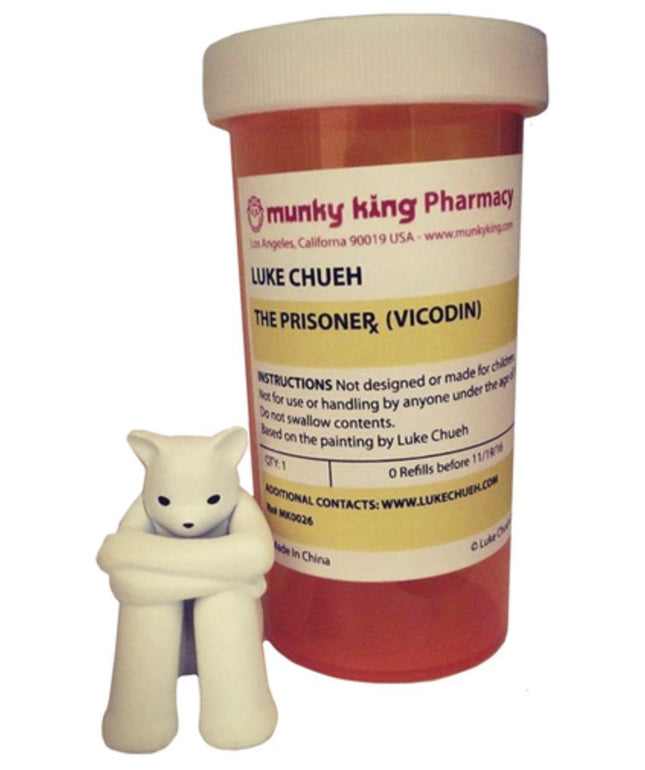
    Vicodin The Prisoner Drug Bear Art Toy by Luke Chueh Limited Edition Vinyl Collectible Artwork by Street Graffiti Artist. 2016 Limited Edition Artwork of 500 with Cotton, Bag, and Tube. Based on Luke Chueh's original painting, The Prisoner ponders captivity in its many forms—physical, mental, or pharmaceutical. Post-traumatic stress disorder is a mental health problem that can develop after experiencing or witnessing a life-threatening event like combat, natural disaster, car accident, or sexual assault. And the dependency on prescription medications such as Percocet has led to widespread addiction problems. Vicodin The Prisoner Drug Bear by Luke Chueh: Vinyl Manifestation of Pharmaceutical Despair in Street Pop Art & Graffiti Artwork Vicodin The Prisoner is a 2016 limited edition vinyl art toy by Luke Chueh, issued in a run of 500 pieces and packaged with a cotton pouch, prescription-style tube, and custom labeling. This stark and introspective collectible was inspired by Chueh’s original painting The Prisoner, a body of work that dives into the concept of captivity in multiple forms: psychological, emotional, and pharmaceutical. The figure depicts a small white bear, arms tightly clasped around bent knees, body hunched in a defensive posture. Packaged inside a mock prescription pill bottle labeled as Vicodin, the bear becomes a physical metaphor for dependency and the numbing of trauma through chemical means. Positioned within the language of Street Pop Art & Graffiti Artwork, this figure embodies the raw realities often glossed over by polished consumer narratives. Pharmaceutical Packaging as a Vessel for Emotional Truth Luke Chueh’s decision to enclose the figure in a standard orange pharmacy bottle transforms the toy into a symbolic sculpture. This packaging is not merely aesthetic—it is part of the art itself. The orange plastic container is commonly associated with healing and regulated care, but here it acts as a prison, locking the character in emotional silence. Labeled under the name Vicodin, a widely prescribed yet highly addictive opioid, the piece forces viewers to consider the thin line between treatment and entrapment. The bear’s blank expression and slouched body language amplify the emotional burden behind dependency. Minimalistic in execution yet powerful in message, the figure’s placement within Street Pop Art & Graffiti Artwork challenges the notion that toys must be joyful or harmless. Instead, Chueh offers an object that speaks to trauma, medication, and the often invisible emotional pain that comes with both. Luke Chueh’s Visual Language of Suffering and Identity Luke Chueh, an American artist based in Los Angeles, has become known for using simple, iconic figures to address themes of mental illness, personal pain, and societal pressure. His characters often appear soft and subdued, but they carry an immense emotional weight. In Vicodin The Prisoner, the white color of the bear reflects both clinical sterility and emotional numbness. Chueh’s approach is grounded in honesty and vulnerability, distilling complex experiences into forms that resonate widely. His influence within Street Pop Art & Graffiti Artwork comes from this ability to speak directly through sculpture, illustration, and narrative-driven toy design. Chueh’s bear functions not just as a character but as a stand-in for anyone struggling with emotional paralysis, depression, or the grip of addiction. The Prisoner Series as Commentary and Collector Artifact This limited edition release of 500 includes not just the vinyl bear, but a presentation designed to immerse collectors in its commentary. The pill bottle packaging, custom-labeled for Vicodin, mirrors the controlled environments from which many seek escape, but also become trapped. The cotton bag adds an additional layer of clinical detachment, as if the piece were a regulated prescription item rather than an expressive artwork. As part of The Prisoner series, this version adds to the ongoing discussion around trauma and pharmacology within the framework of Street Pop Art & Graffiti Artwork. It transforms a collectible into a statement, where the cute and the uncomfortable coexist, creating a powerful tension that defines the work of Luke Chueh. The bear sits still, silent, and confined—but its presence speaks volumes about a culture that medicates pain without always understanding it.

    $275.00

  • Coca-Cola Archival Skateboard Deck by Denial- Daniel Bombardier

    Denial- Daniel Bombardier Coca-Cola Archival Skateboard Deck by Denial- Daniel Bombardier

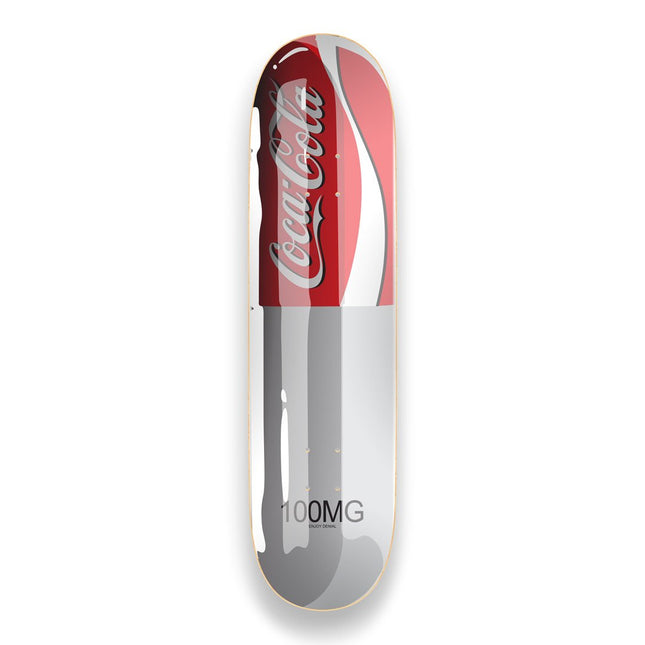
    Coca-Cola Limited Edition Archival Pigment Print Transfer on Cold Pressed Steep Natural Skate Deck art by street pop culture artist Denial. In 2000 he adopted the moniker ‘DENIAL’ as a means of poking fun at advertising, politics, and media messages that contemporary society is often ‘in denial’ about. Since then he has maintained an ongoing global street-campaign of over 500, 000 stickers, placards, and murals, using the alpha-numeric characters ‘D3N!@L’. In the world of Denial, memory is important, because it is the basis of his work, as it nostalgically encourages the audience to engage with it. As a result, his art is as familiar, as it is disturbing because it reveals the most unsettling parts of society, the ones we are in a “denial” of. No matter its controversial history, graffiti is less and less viewed as a form of vandalism.

    $505.00

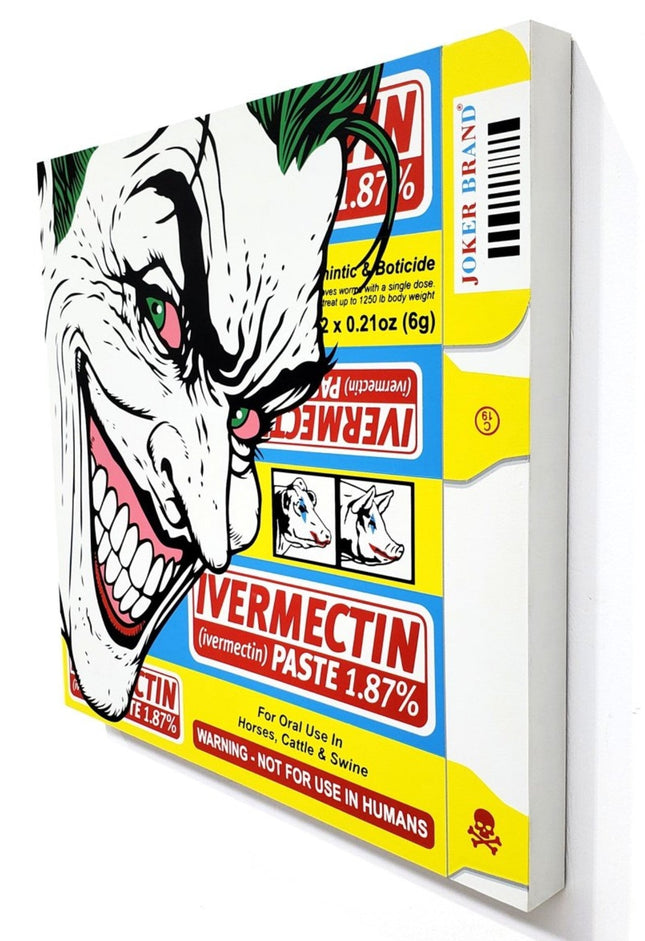
  • Joker Brand- Green Pink Original Spray Paint Acrylic Painting by Ben Frost

    Ben Frost Joker Brand- Green Pink Original Spray Paint Acrylic Painting by Ben Frost

    Joker Brand- Green Pink Original One of a Kind Mixed Media Acrylic & Spray Paint Painting Artwork on Cradled Wood by Popular Street Graffiti Artist Ben Frost. 2022 ‘Joker Brand’ - Acrylic and spray paint on board - Green/Pink variant 60cm x 60cm (23.5 x 23.5 inches) Signed, titled and dated on the reverse

    $5,463.00

  • Trip Benzos Blotter Paper Archival Print by Ben Frost

    Ben Frost Trip Benzos Blotter Paper Archival Print by Ben Frost

    Trip Benzos Blotter Paper Archival Print by Ben Frost Limited Edition Fine Art Archival Pigment Print Art on Perforated Blotter Paper. 2025 Signed & Numbered Limited Edition of TBD Archival Pigment Print on Perforated Blotter Paper Size: 7.5 x 7.5 Inches Release: April 19, 2025 Limited blotter editions are hand-perforated by Zane Kesey. Trip Benzos by Ben Frost: Video Game Iconography Meets Street Pop Art & Graffiti Artwork Trip Benzos, the 2025 limited edition blotter paper print by Australian artist Ben Frost, captures the jarring collision of nostalgic culture and contemporary pharmaceutical critique through the lens of Street Pop Art & Graffiti Artwork. Presented as a 7.5 x 7.5 inch archival pigment print on hand-perforated blotter paper by Zane Kesey, the piece is a psychedelic reimagination of a familiar video game character altered into an anxious, grinning avatar of consumer intoxication. The warped exuberance in the expression and the bold palette reflect Frost’s trademark interrogation of media, medicine, and mind states. Pharma Satire and Pop Subversion Frost is globally recognized for repurposing icons of commercial entertainment into biting social commentary. In Trip Benzos, he adapts a beloved gaming mascot and outfits him in his raccoon-suited glory, only this time wired on hyperreality. With swirling rainbow eyes and exaggerated limbs, the figure becomes a metaphor for the synthetic highs and cartoon-fueled escapism of modern life. The word BENZOS, boldly emblazoned above, anchors the viewer in the pharmacological theme. As with Frost’s broader body of work, this piece questions the ethics of consumer culture and the thin line between fun and sedation. Visual Culture on Blotter Paper The use of perforated blotter paper is integral to the piece’s conceptual gravity. This medium, traditionally associated with LSD distribution, is reclaimed here as a legitimate fine art format. Frost’s execution is precise, colorful, and layered with irony. The print’s hallucinogenic vibrancy and the flattened graphic styling make the imagery pulse with comic intensity. Clouds and green fields provide a friendly background that contrasts starkly with the print’s title, challenging viewers to reconcile innocence with artificial euphoria. The medium becomes more than a surface—it becomes a statement on altered perception, branding, and identity. Ben Frost and the Contemporary Urban Narrative Ben Frost, based in Sydney, has cultivated an international following through works that blend corporate iconography with pop satire and graffiti aesthetics. His work often plays in public space, galleries, and now on unique substrates like blotter paper, creating dialogues between street legality, fine art, and social critique. Trip Benzos stands as an extension of Frost’s focus on pharmaceutical dependency and the cartoonification of mental health. It is a snapshot of a culture high on itself, addicted to entertainment, and medicated into smiles. This limited edition speaks with the voice of the underground while using the tools of mass marketing, a formula that defines the power and provocation of Street Pop Art & Graffiti Artwork.

    $550.00

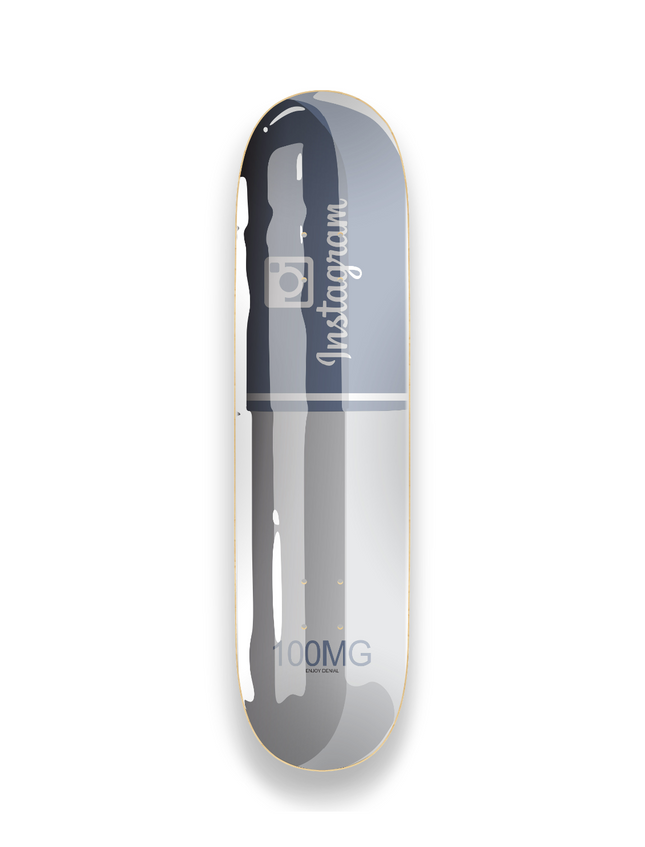
  • Instagram Pill Archival Skateboard Deck by Denial- Daniel Bombardier

    Denial- Daniel Bombardier Instagram Pill Archival Skateboard Deck by Denial- Daniel Bombardier

    Instagram Pill Limited Edition Archival Pigment Print Transfer on Cold Pressed Steep Natural Skate Deck art by street pop culture artist Denial. 2019 Limited Edition of 50 In 2000 he adopted the moniker ‘DENIAL’ as a means of poking fun at advertising, politics, and media messages that contemporary society is often ‘in denial’ about. Since then he has maintained an ongoing global street-campaign of over 500, 000 stickers, placards, and murals, using the alpha-numeric characters ‘D3N!@L’. Denial’s art is strongly political and social since the artist takes specific positions against issues, such as capitalism, consumer culture, and advertisements. More importantly, the artist is aware of his choices and motivations: “I like to think of myself as activist pop art. How I relate with cartoons and graphics is a lot easier than I do with photo-realistic stuff" Another aspect of Denial's work is humor. His work is satirical, which, by definition, means that it uses humor as a confronting mechanism.

    $505.00

  • Goof Ball Archival Print by Ben Frost

    Ben Frost Goof Ball Archival Print by Ben Frost

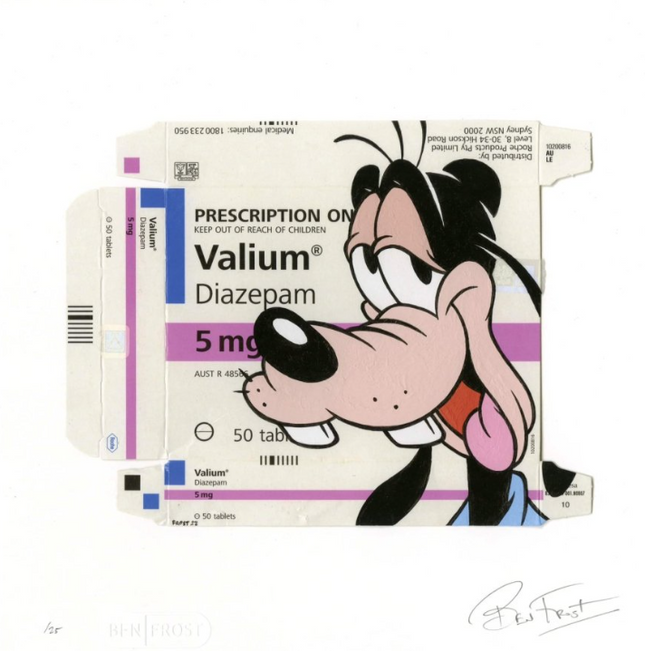
    Goof Ball Archival Print by Ben Frost Limited Edition on 310gsm Cotton Photographique Fine Art Paper Pop Graffiti Street Art Artist Modern Artwork. 2023 Signed & Numbered Print Limited Edition of 25 Artwork Size 11.7x11.7 Archival Pigment Fine Art by Ben Frost Ben Frost is an Australian artist whose oeuvre is a scintillating fusion of pop art, street art, and graffiti art. Renowned for his visually striking and thought-provoking pieces, Frost’s work often incorporates iconic imagery from mainstream media and consumer culture. His subversive art is characterized by the juxtaposition of these symbols with themes of excess, addiction, and the superficiality and wastefulness of consumer culture. Infused with a critical edge and often laced with dark humor, his paintings, prints, and installations defy conventional aesthetics and present a chaotic and relentless assault on the senses. Goof Ball Archival Print by Ben Frost is an exemplary representation of the mélange between pop art and street art that has been taking the art world by storm. Ben Frost, an Australian artist renowned for his juxtaposition of commercial imagery and his own iconic style, often draws inspiration from the relentless bombardment of visual stimuli that constitutes the modern world. He has a predilection for utilizing vibrant colors and satirical commentary, which can be seen in the Goof Ball Archival Print. This piece specifically combines the aesthetic sensibilities of pop art, a movement characterized by its fascination with popular culture and consumer goods, with the edgy, raw, and often subversive nature of street art. Frost's Goof Ball Archival Print is captivating in its visual immediacy and use of iconic characters and logos. The inclusion of popular cultural symbols makes it relatable, while its brazen critique of consumer culture, inherent in the juxtapositions, lends it a certain depth. With the audacious strokes reminiscent of graffiti art, the work strikes a balance between the refined and the rebellious. It is a high-quality archival print, which ensures the longevity and preservation of the vivid colors that are a hallmark of Frost’s work. As a seminal piece in the contemporary fusion between pop, street, and graffiti art, Goof Ball Archival Print is an invitation to not just glance, but to analyze and introspect on the commentary it makes about our culture. This artistic gem, thus, warrants appreciation from both art aficionados and casual observers alike.

    $621.00

  • Percocet The Prisoner Drug Bear Art Toy by Luke Chueh

    Luke Chueh Percocet The Prisoner Drug Bear Art Toy by Luke Chueh

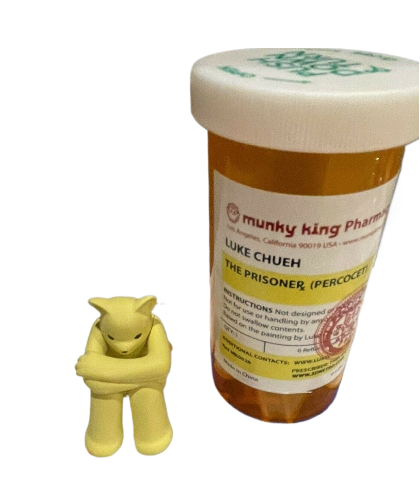
    Percocet The Prisoner Drug Bear Art Toy by Luke Chueh Limited Edition Vinyl Collectible Artwork by Street Graffiti Artist. 2018 Limited Edition Artwork of 500 with Cotton, Bag, and Tube. Based on Luke Chueh's original painting, The Prisoner ponders captivity in its many forms—physical, mental, or pharmaceutical. Post-traumatic stress disorder is a mental health problem that can develop after experiencing or witnessing a life-threatening event like combat, natural disaster, car accident, or sexual assault. And the dependency on prescription medications such as Percocet has led to widespread addiction problems. The Poignant Message Behind 'The Prisoner - Percocet' Art Toy by Luke Chueh 'The Prisoner - Percocet' is a limited edition vinyl art toy that delivers a powerful commentary on the grips of addiction and the confines of mental health struggles. Created by the acclaimed street graffiti artist Luke Chueh, this 2018 artwork, limited to a series of 500, delves into the concept of captivity through physical bars and the often invisible chains of pharmaceutical dependence. This piece is based on Chueh's original painting, "The Prisoner," which portrays the sad reality that many individuals face post-traumatic stress disorder (PTSD) and prescription medication addiction, particularly to potent drugs like Percocet. Chueh's art toy is thought-provoking and captures the essence of street pop art and graffiti artwork. It reflects the raw, unfiltered nature of the street art scene while addressing complex societal issues. The figure is meticulously displayed with cotton, a bag, and a tube, encapsulating the presentation of prescription medication and subtly pointing to the clinical nature of drug distribution. The Artistic Approach to a Modern-Day Plight Luke Chueh's approach to art is often characterized by the use of stark, compelling images that evoke a sense of empathy and contemplation. With 'The Prisoner - Percocet,' Chueh confronts the viewer with the reality of pharmaceutical captivity—a condition where medication meant for healing becomes a source of prolonged suffering. The vinyl figure, with its downcast eyes and clasped hands, becomes a symbol of the countless individuals who find themselves battling the dual demons of PTSD and addiction. The art toy is more than a collectible; it is a visual discourse on the pervasive issue of substance abuse linked to prescription drugs. Chueh's work is a bridge between art and advocacy, offering insight into the psychological and emotional turmoil that accompanies dependency. This piece, in particular, embodies the critical narrative that street pop art and graffiti artwork often undertake, highlighting urgent, real-world problems through artistic expression. 'The Prisoner - Percocet' in the Context of Collectible Art Collectors of 'The Prisoner - Percocet' hold a piece of art that is poignant, evocative, and starkly relevant. Including a metal card of authenticity with each figure ensures the artwork's legitimacy and special status within the limited series. Luke Chueh's signature style—simple yet profound—is on full display, making the piece a sought-after artifact within contemporary street pop art. Owning this piece is to acknowledge and appreciate the depth and potential for street art to transcend traditional canvases and become a medium for social commentary. The collectible stands as a testament to the power of art to spark conversation and to the artist's role as a commentator on the human condition. It is an invitation to reflect on the complex relationship society has with medication and the often-hidden struggles that accompany its use. In the broader context of street pop art, 'The Prisoner - Percocet' art toy by Luke Chueh stands out for its ability to communicate a profound message succinctly and symbolically. It is a powerful intersection of artistry and advocacy, encapsulating the struggle that defines the lives of many individuals in a single, silent figurine. For the discerning collector, it is not just a vinyl figure but a conversation starter, an emblem of awareness, and a striking piece of graffiti that holds significant cultural and artistic weight.

    $320.00

  • Panacea Silkscreen Print by MEUBON

    MEUBON Panacea Silkscreen Print by MEUBON

    Panacea Silkscreen Print by MEUBON Hand-Pulled on Superfine Eggshell White Fine Art Paper Limited Edition Screenprint Artwork. 2022 Signed & Numbered Limited Edition of 300 Artwork Size 20.25x15.75 Silkscreen Print. ยาตำราหลวง สถานที่จำหน่าย มาตำราหง เภสัชกรรม- Royal Medicine, Place of Sale, Ma Tamra Hong Pharmacy Panacea by MUEBON – Satirical Remedy in Street Pop Art & Graffiti Artwork Panacea is a 2022 limited edition silkscreen print by Thai artist MUEBON, hand-pulled on Superfine Eggshell White fine art paper and sized at 20.25 x 15.75 inches. Signed and numbered in an edition of 300, the print fuses traditional Thai aesthetics with a satirical street art vocabulary. The composition mimics the layout and tone of a vintage Thai pharmacy sign, including typographic references to royal medicine, location details, and regulatory insignia. Into this framework, MUEBON inserts his signature character—a mischievous black bird with a human-like stance—tending to rows of vibrant cannabis plants. The juxtaposition of state authority, medical legitimacy, and pop rebellion is executed with surgical visual clarity and conceptual sharpness. Every line, crack, and graphic element contributes to a broader message about legality, hypocrisy, and shifting cultural norms. Medicinal Symbolism and Sociopolitical Irony MUEBON’s use of the title Panacea speaks to the idea of a cure-all, a universal solution to societal ailments—yet the print suggests that what is marketed as remedy is often framed through layers of control and contradiction. The character, rendered in precise color and personality, waters marijuana plants with the casual indifference of someone who has normalized the taboo. The background replicates worn wall textures and weathered signage, suggesting an official public notice, now subverted. Thai script boldly states phrases such as ยาตำราหลวง and สถานที่จำหน่าย—Royal Medicine and Place of Sale—while the central figure undermines the bureaucratic tone with punk defiance. This visual collision is classic MUEBON: combining cartoonish humor with institutional critique in the style of Street Pop Art & Graffiti Artwork that functions as both documentation and protest. Silkscreen Technique and Aesthetic Precision The print is produced through traditional silkscreen methods, allowing each color to hold intense saturation and edge integrity. Printed on Superfine Eggshell White paper, the artwork’s subtle surface texture enhances the vintage signage effect, reinforcing the piece’s illusion of age and wear. The controlled layering of imagery—grime, text, plants, stamps, and character—demonstrates MUEBON’s precision in translating complex political narratives into vibrant, accessible artworks. While rich in local cultural codes, the piece is globally readable, making it a standout example within Street Pop Art & Graffiti Artwork of how regional voice can achieve international resonance through strong visual composition and thematic clarity. MUEBON and the Cultural Anatomy of Legitimacy Panacea is not merely a print—it is a conversation between law, commerce, and personal autonomy. MUEBON uses humor and pop-inflected satire to explore Thailand’s evolving relationship with medical cannabis, government oversight, and cultural taboos. His signature bird character becomes a stand-in for the everyday citizen, navigating a system that selectively legalizes what it once criminalized. The work functions as a visual metaphor for the ways power, propaganda, and public health intertwine. In the context of Street Pop Art & Graffiti Artwork, Panacea delivers a multilayered narrative disguised as public signage. It invites laughter, sparks dialogue, and challenges viewers to reconsider what authority looks like when it is repackaged in colorful ink and symbolic contradiction. MUEBON continues to assert himself as a master of visual irony and cultural dissection through the lens of urban resistance.

    $500.00

  • Who Fried Roger Rabbit? Seroquel Blotter Paper Archival Print by Ben Frost

    Ben Frost Who Fried Roger Rabbit? Seroquel Blotter Paper Archival Print by Ben Frost

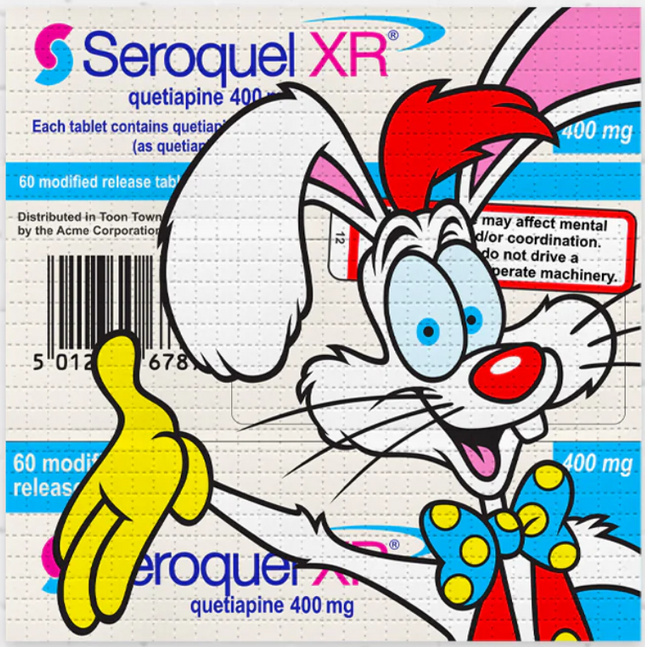
    Who Fried Roger Rabbit? Seroquel Blotter Paper Archival Print by Ben Frost Limited Edition Fine Art Archival Pigment Print Art on Perforated Blotter Paper. 2025 Signed & Numbered Limited Edition of TBD Archival Pigment Print on Perforated Blotter Paper Size: 7.5 x 7.5 Inches Release: April 19, 2025 Limited blotter editions are hand-perforated by Zane Kesey. Cartoon Madness Meets Pharmaceutical Culture Who Fried Roger Rabbit? Seroquel Blotter Paper Print by Ben Frost reimagines the iconic animated character Roger Rabbit within the framework of modern pharmaceutical branding. Released as part of Frost’s 2025 collection, this 7.5 x 7.5 inch limited edition archival pigment print on perforated blotter paper explores the collision of pop culture and medication packaging with satirical precision. Featuring the animated character smiling manically beside a Seroquel XR layout, the print is hand-perforated by Zane Kesey and produced in a signed and numbered edition. This work critiques how society normalizes mental health struggles through branding and questions how animation, nostalgia, and pharmaceuticals can coexist in a single visual message. Satirical Branding and Medicinal Irony Frost fuses Roger Rabbit’s over-the-top personality with Seroquel, a medication used to treat mood disorders, to amplify the surreal effects of overstimulation and sedation. By transforming the clinical appearance of a pharmaceutical box into a playful, chaotic canvas for a cartoon figure, Frost blurs the line between treatment and escapism. His use of quetiapine packaging language is precise, including dosage information and warnings, yet subverted by Roger Rabbit’s erratic demeanor. The underlying message reflects on how medication is commercialized in a culture that commodifies both mental illness and childhood nostalgia. Material Subversion in Blotter Format The blotter paper format is integral to the conceptual thrust of the piece. Traditionally associated with LSD distribution, blotter prints evoke a psychedelic lineage and hint at an altered perception of reality. By placing a cartoon character on a faux-medication backdrop, Frost disrupts the expectation of serious pharmaceutical design with absurdity. The perforation physically fragments the image, echoing the fragmentation of consciousness and emotion in both medicated and animated experiences. This format enables the artwork to comment simultaneously on drug culture, entertainment media, and mental health marketing. Ben Frost’s Visual Provocation Australian artist Ben Frost has made a name for himself by appropriating advertising, pharmaceutical logos, and mass-market cartoons into biting social commentary. His Street Pop Art & Graffiti Artwork unpacks consumer psychology through bold color, recognizable imagery, and pointed juxtapositions. Who Fried Roger Rabbit? is a standout example of this method—merging the aesthetics of childhood with the clinical detachment of adult medicalization. Frost confronts viewers with contradictions they may overlook in daily life, drawing humor and tension from the unsettling marriage of cartoon madness and prescribed stability. It’s not just visual stimulation—it’s a question wrapped in a package we’re told to trust.

    $550.00

  • Louis Vuitton Designer Drugs PP Skateboard Art Deck by Denial- Daniel Bombardier

    Denial- Daniel Bombardier Louis Vuitton Designer Drugs PP Skateboard Art Deck by Denial- Daniel Bombardier

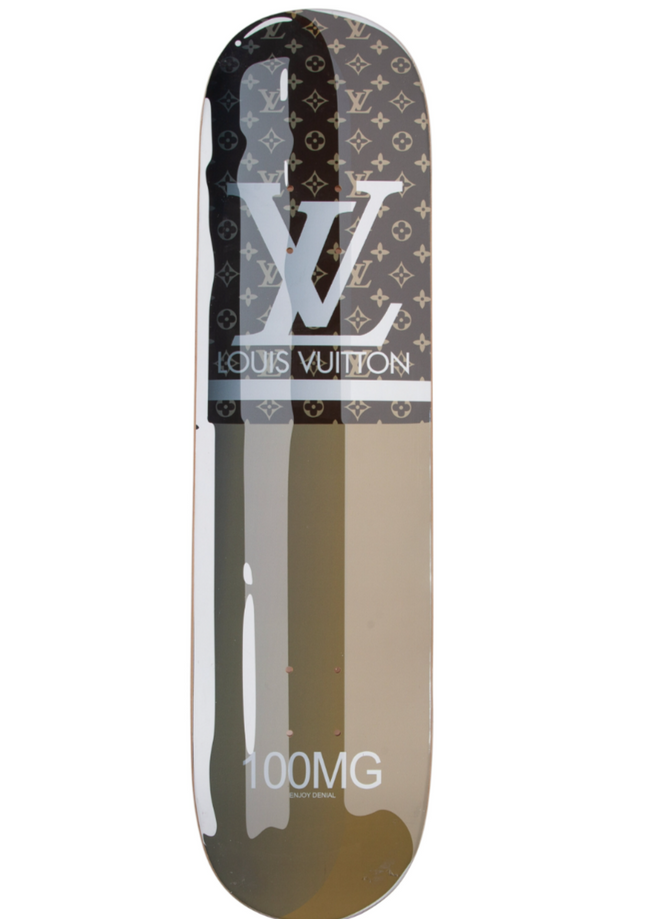
    Louis Vuitton Designer Drugs PP Printers Proof Skateboard Art Deck by Denial- Daniel Bombardier Limited Edition Archival Print on Wood Skateboard Deck by Street Artwork Graffiti Artist. PP Printers Proof 2018 Marked PP Limited Edition Signed COA Skateboard Artwork Size 8x31 Skateboard Art Deck With Famous Louis Vuitton Logo With Stylized Pill Elements. The Louis Vuitton Designer Drugs PP Printers Proof Skateboard Art Deck stands as an iconic piece that reflects the dynamic interplay between luxury branding and the audacious spirit of street art. This masterpiece, conceptualized and brought to life by Denial, the artistic pseudonym for Canadian visionary Daniel Bombardier, offers a deep dive into the contemporary societal landscape, making it a focal point of discussion in both the pop art and street art communities. This 2018 creation is distinguished not only by its artistic flair but also by its exclusivity, being a part of a limited edition set of just 50, bearing the 'PP Printers Proof' insignia. Such proofs are preliminary versions of a final artwork, hinting at the artist's journey to the final rendition and ensuring the highest quality of the final output. Each piece from this collection is accompanied by a Certificate of Authenticity, signed by Denial, cementing its authenticity and value. With dimensions of 8x31, this skateboard deck serves as more than just a canvas—it's an emblem of the raw and unapologetic energy of street culture. The artwork predominantly features the globally recognized Louis Vuitton logo, but Denial's interpretation adds a twist. The iconic logo is intertwined with stylized pill elements, providing a critique on society's infatuation with luxury and the lengths some might go to achieve a state of transient opulence. The pill, a symbol of transient relief, perhaps suggests the ephemeral nature of materialistic luxury. An intersection of fashion, art, and social commentary, the Louis Vuitton Designer Drugs Skateboard Art Deck by Denial is not just a visual spectacle. It beckons viewers to question, reflect, and engage in a dialogue about the modern world's values and obsessions.

    $1,095.00

  • Gotta Take 'Em All Blotter Paper Archival Print by Ben Frost

    Ben Frost Gotta Take 'Em All Blotter Paper Archival Print by Ben Frost

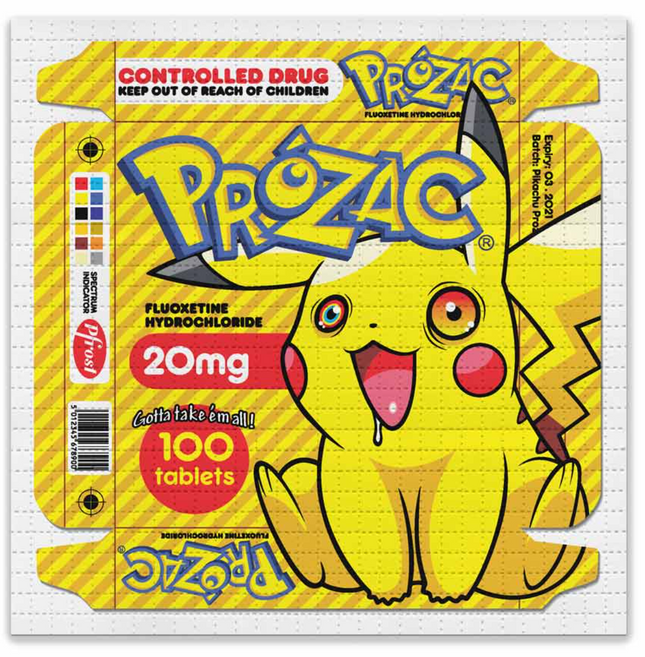
    Gotta Take 'Em All Blotter Paper Archival Print by Ben Frost Limited Edition Fine Art Archival Pigment Print Art on Perforated Blotter Paper. 2023 Signed & Numbered Limited Edition of 100 Archival Pigment Print on Perforated Blotter Paper Size: 7.5 x 7.5 Inches Release: April 19, 2023 Pikachu Pokemon Limited blotter editions are hand-perforated by Zane Kesey. The "Gotta Take 'Em All Blotter Paper Archival Print" by Ben Frost stands out as a distinct fusion of pop culture and fine art, encapsulated in a medium as unconventional as its visual messaging. Launched on April 19, 2023, this work is a limited edition, with only 100 signed and numbered prints available, offering a sense of exclusivity to collectors and fans of contemporary art. Measuring 7.5 x 7.5 inches, the artwork is meticulously crafted on perforated blotter paper, a nod to the artist's unique canvas choice and the potential historical context of the material's use. Ben Frost is known for his bold commentary on consumerism, blending iconic pop culture characters with themes that provoke thought on modern society's state and psyche. The image of Pikachu, the beloved Pokémon character, juxtaposed with the branding of Prozac, a well-known antidepressant, creates a striking statement on the pharmaceutical industry's role in contemporary life. It's a thought-provoking mix that confronts the viewer with the juxtaposition of innocence and the complex realities of mental health treatment. Adding to the authenticity and intricacy of the piece, each blotter is hand-perforated by Zane Kesey, suggesting meticulous attention to detail and craftsmanship. This element of human touch interplays with the mass-produced imagery of pop culture, creating a personalized and tangible connection to the art. As a topic in pop art, street art, or graffiti art, Frost's work maintains a sharp relevance. It taps into the zeitgeist of today's visual culture, stirring a dialogue that is as much about the imagery it appropriates as it is about the medium it inhabits. This piece, much like the rest of Frost's work, offers an arresting visual experience that both celebrates and critiques the pervasive nature of consumerist imagery in our daily lives. For art collectors and enthusiasts, "Gotta Take 'Em All" is not just a piece of art; it's a conversation piece that embodies the crossroads of contemporary culture, mental health, and artistic expression.

    $491.00

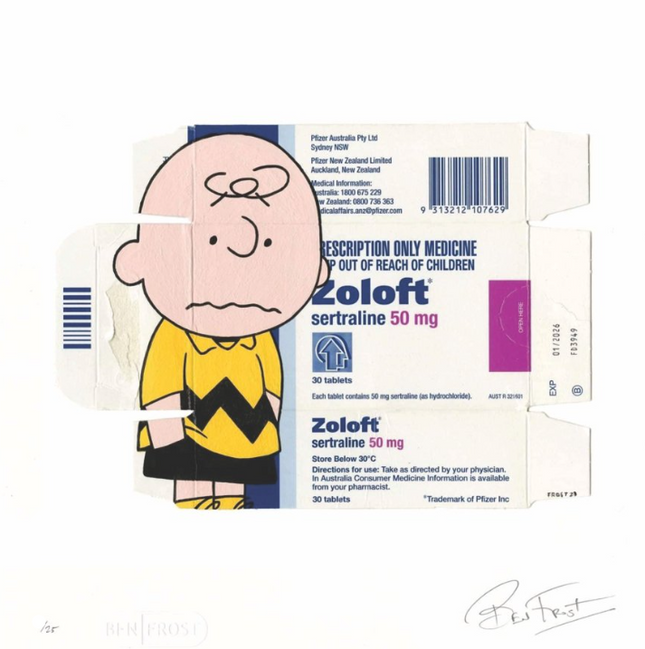
  • Feeling Down Charlie Brown Archival Print by Ben Frost

    Ben Frost Feeling Down Charlie Brown Archival Print by Ben Frost

    Feeling Down Charlie Brown Archival Print by Ben Frost Limited Edition on 310gsm Cotton Photographique Fine Art Paper Pop Graffiti Street Art Artist Modern Artwork. 2023 Signed & Numbered Print Limited Edition of 25 Artwork Size 11.7x11.7 Archival Pigment Fine Art by Ben Frost Drawing from a rich pop art tradition, artist Ben Frost pays homage to artists like Roy Lichtenstein and Andy Warhol by employing mass-produced images from advertising and media. However, what sets him apart is the gritty and raw energy in his work, often inspired by the rebellious and ephemeral nature of street art and graffiti. With a palette that’s as vibrant as it is challenging, his art creates a dialogue between the polished facade of consumer products and the grim realities they often mask. Through his jarring compositions, Frost raises questions about the nature of modern society, the pervasiveness of advertising, and the commodification of culture and identity. His bold, confrontational style makes him an important figure in the contemporary art world, and his works are revered by collectors and art enthusiasts worldwide.

    $621.00

  • Miss Piggy On Ozempic Blotter Paper Archival Print by Ben Frost

    Ben Frost Miss Piggy On Ozempic Blotter Paper Archival Print by Ben Frost

    Miss Piggy On Ozempic Blotter Paper Archival Print by Ben Frost Limited Edition Fine Art Archival Pigment Print Art on Perforated Blotter Paper. 2025 Signed & Numbered Limited Edition of TBD Archival Pigment Print on Perforated Blotter Paper Size: 7.5 x 7.5 Inches Release: April 19, 2025 Limited blotter editions are hand-perforated by Zane Kesey. Miss Piggy On Ozempic by Ben Frost: Glamour, Medication, and Street Pop Satire Miss Piggy On Ozempic Blotter Paper Archival Print by Ben Frost, released in 2025, marks another unflinching entry in the artist’s exploration of pharmaceutical aesthetics and iconic pop culture. Printed as a limited edition archival pigment work on perforated blotter paper, this 7.5 x 7.5 inch artwork puts Miss Piggy—arguably the most flamboyant and body-conscious character of the Muppets—at the center of a satirical fusion between celebrity vanity and the contemporary obsession with weight-loss medication. Miss Piggy is rendered in her classic pink glamor with her signature lashes, pearls, and sass, juxtaposed against the stark commercial design of Ozempic packaging. With references to semaglutide, prescription labels, and the inflated price of American healthcare, the work pokes at society’s increasing reliance on aesthetic pharmaceuticals. Street Pop Art & Graffiti Artwork Meets Medical Consumerism Ben Frost, known for his bold and controversial use of commercial packaging as visual canvas, turns pharmaceutical branding into a narrative device. With Miss Piggy as the character choice, the message becomes sharply ironic. The collision of children’s entertainment with adult insecurities about beauty, size, and control echoes throughout the composition. This piece is not just parody but visual critique, challenging the public’s relationship with health marketed as vanity and the commodification of self-worth. The format of the blotter paper, perforated and collectible, reinforces the idea of medication as a consumable culture artifact—something to be taken, divided, shared, or used for identity shaping. The Role of Feminine Icons in Street Pop Narratives Miss Piggy’s exaggerated femininity and status as a cultural diva are cleverly subverted in this composition. Her character becomes a visual metaphor for the endless pursuit of image perfection. Ben Frost’s work often questions who sets those standards and who profits from them. Here, the packaging of a once-niche diabetes medication now popularly associated with cosmetic weight loss becomes the modern-day pedestal on which icons are propped and critiqued. This collision of corporate design and animated star power builds tension between innocence and commodification, using Street Pop Art & Graffiti Artwork methods to satirize how quickly culture recycles its idols and issues. Blotter Medium and Psychedelic Provocation Produced in collaboration with Zane Kesey, who hand-perforated the blotter editions, the piece subtly nods to counterculture and the history of mind-altering media. While Ozempic is marketed as a drug for bodily transformation, the print format itself references altered states of awareness. The use of a pop icon like Miss Piggy elevates the print to a statement not just about beauty standards, but about consumption itself—whether it's drugs, fame, or cartoon nostalgia. Miss Piggy On Ozempic is a sharp-edged satire of cultural priorities in an era of performative wellness and image engineering. It is loud, subversive, and unmistakably Frost.

    $550.00

  • Trip A Stitch In Time EpiPen Blotter Paper Archival Print by Ben Frost

    Ben Frost Trip A Stitch In Time EpiPen Blotter Paper Archival Print by Ben Frost

    Trip A Stitch In Time EpiPen Blotter Paper Archival Print by Ben Frost Limited Edition Fine Art Archival Pigment Print Art on Perforated Blotter Paper. 2025 Signed & Numbered Limited Edition of TBD Archival Pigment Print on Perforated Blotter Paper Size: 7.5 x 7.5 Inches Release: April 19, 2025 Limited blotter editions are hand-perforated by Zane Kesey. Ben Frost's Stitch and the Prescription Rebellion Trip A Stitch In Time EpiPen Blotter Paper Archival Print by Ben Frost, released in 2025 as a limited edition pigment print on perforated blotter paper, continues the Australian street artist's sharp critique of consumerism, pharmaceutical branding, and the hijacking of pop culture. In this particular work, the animated alien Stitch is depicted in a manic outburst overlaid on EpiPen pharmaceutical packaging. Known for his unapologetic visual collisions, Ben Frost uses the raw visual energy of graffiti tactics and comic aesthetics to deliver a satirical jab at the marketing of medical dependency, while simultaneously twisting beloved childhood characters into symbols of overstimulated chaos. Street Pop Art Meets Pharmaceutical Anxiety What sets this work apart in the category of Street Pop Art & Graffiti Artwork is its brutal honesty in aesthetic and message. The combination of a hyperactive Stitch and the sterile typography of prescription medicine constructs an immediate visual dissonance. Stitch's feral teeth, wide eyes, and clawed hand scream in emotional excess, a stark contradiction to the controlled and impersonal design of the EpiPen label behind him. The juxtaposition acts as a metaphor for cultural burnout, the medicating of identity, and the commodification of both childhood and health. Frost’s use of blotter paper, a medium historically associated with LSD, heightens the psychedelic tone and lends another layer of commentary about societal escapism through pills, pleasure, or nostalgia. Perforation as Medium and Message The print is produced on a 7.5 x 7.5 inch perforated blotter sheet, hand-perforated by Zane Kesey, son of Ken Kesey, the cultural icon known for pioneering the psychedelic movement. This detail ties the artwork to a broader historical conversation around consciousness, art, and rebellion. In this format, the artwork becomes something to be metaphorically consumed, suggesting the idea of breaking apart sanitized narratives into fragmented truths. The perforations also echo street art’s ephemerality, its nature of being divided, destroyed, or shared. The medium is the message as much as the image, with Frost exploiting every inch of material for critical storytelling. The Power of Satirical Mutation in Urban Culture Ben Frost’s visual style often depends on mutation, appropriation, and critique, and Trip A Stitch In Time stands out for its frenzied commentary on overstimulation, identity distortion, and pharmaceutical dependence. Within the context of Street Pop Art & Graffiti Artwork, this piece is more than a parody of medical culture—it is an indictment of the manufactured balance society attempts to impose through pills, branding, and repackaged characters. Stitch, in this chaotic reinterpretation, becomes a monster of modern consumption, captured at the moment he breaks through the constraints of prescription labels and cartoon nostalgia to claw at something far more human—truth through madness.

    $550.00

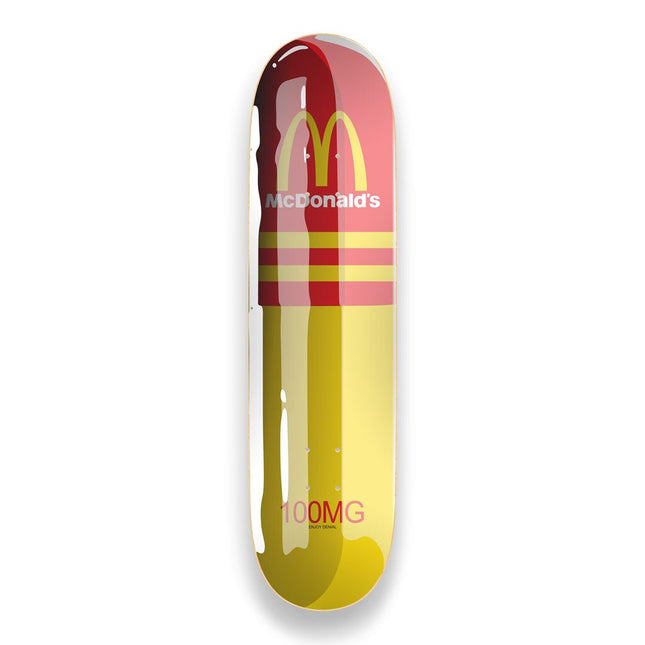
  • McDonald Archival Skateboard Deck by Denial- Daniel Bombardier

    Denial- Daniel Bombardier McDonald Archival Skateboard Deck by Denial- Daniel Bombardier

    McDonald Limited Edition Archival Pigment Print Transfer on Cold Pressed Steep Natural Skate Deck art by street pop culture artist Denial. 2019 Limited Edition of 50 In 2000 he adopted the moniker ‘DENIAL’ as a means of poking fun at advertising, politics, and media messages that contemporary society is often ‘in denial’ about. Since then he has maintained an ongoing global street-campaign of over 500, 000 stickers, placards, and murals, using the alpha-numeric characters ‘D3N!@L’. Denial is a Canadian artist who experiments with aerosol and stencil art, while his main fields of interest are consumerism, politics and the human condition in today’s society. Since the culture of graffiti was gaining more and more popularity in the US and Europe, the taggers had to be increasingly original in order to stand out. The signatures became bigger, more stylized and more colorful.

    $505.00

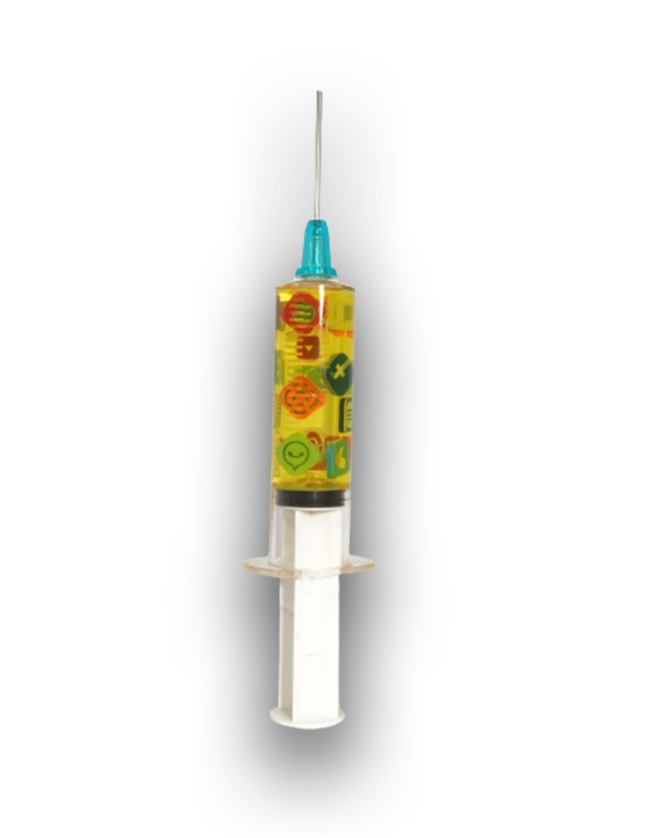
  • Do No Harm 2 Syringe Social Media HPM Sculpture by Miss Bugs

    Miss Bugs Do No Harm 2 Syringe Social Media HPM Sculpture by Miss Bugs

    Do No Harm 2 Syringe Social HPM Mixed Media Sculpture by Miss Bugs Limited Edition Pop Artwork Street Artist Fine Art. 2020 Signed & Dated to Packaging Label Mixed Media Plastic Resin Sculpture Limited Edition of 450 Unique Artwork Size 3x13.9. Each Unique and Hand Made. Like New With Original Packaging. 20-20 Covid Era Syringe Shot with Social Media Meme Icons. Miss Bugs is a street art duo based in London, known for their vibrant and thought-provoking pieces that blend pop art with darker, more subversive themes. Their work often includes a mix of stencil, silkscreen, and mixed media collage, utilizing found objects to create visually striking and multi-layered compositions. Miss Bugs is known for their challenging commentary on modern culture and the art world, with a particular emphasis on the commodification of art. They have been a significant influence in the contemporary street art scene, pushing boundaries and encouraging viewers to question their perceptions.

    $754.00

  • Oxycontin The Prisoner Drug Bear Art Toy by Luke Chueh

    Luke Chueh Oxycontin The Prisoner Drug Bear Art Toy by Luke Chueh

    Oxycontin The Prisoner Drug Bear Art Toy by Luke Chueh Limited Edition Vinyl Collectible Artwork by Street Graffiti Artist. 2017 Limited Edition Artwork of 300 with Cotton, Bag, and Tube. Based on Luke Chueh's original painting, The Prisoner ponders captivity in its many forms—physical, mental, or pharmaceutical. Post-traumatic stress disorder is a mental health problem that can develop after experiencing or witnessing a life-threatening event like combat, natural disaster, car accident, or sexual assault. And the dependency on prescription medications such as Percocet has led to widespread addiction problems. Oxycontin The Prisoner Drug Bear by Luke Chueh: Sculpting the Weight of Dependency in Street Pop Art & Graffiti Artwork Oxycontin The Prisoner is a limited edition vinyl art toy released in 2017 by Los Angeles-based artist Luke Chueh. Produced in a run of 300 pieces, each figure comes enclosed in a pill bottle-style tube with custom label design, cotton padding, and a bag. This piece belongs to Chueh’s emotionally raw and conceptually provocative The Prisoner series, which explores the psychological and chemical captivity imposed by trauma and prescription drug dependency. The figure, seated with arms wrapped around bent knees and head tilted in surrender, is rendered in pale pink vinyl, an intentionally vulnerable hue evoking fragility and exposure. This edition bears the pharmaceutical branding of Oxycontin, one of the most widely debated painkillers associated with both relief and addiction. Within the visual canon of Street Pop Art & Graffiti Artwork, this piece functions as a sculptural protest against the medicalization of mental health and the commodification of comfort. Pharmaceutical Captivity Encapsulated in Minimalist Design The use of the pill bottle as both packaging and contextual anchor is integral to the conceptual weight of Oxycontin The Prisoner. Rather than being decorative, it serves as a metaphorical cell. The orange plastic container, a familiar object in American medicine cabinets, becomes a prison of muted pain. The bear figure inside is soft in tone but rigid in posture, exuding silent anguish and immobility. Its simplified features are part of Luke Chueh’s signature visual style—clean, anthropomorphic, and emotionally loaded. The minimalist approach allows viewers to project their own experiences and emotional responses onto the character, whether that be isolation, anxiety, numbness, or resignation. In the tradition of Street Pop Art & Graffiti Artwork, this piece reclaims consumer iconography and transforms it into a statement about personal and collective mental health struggles. Luke Chueh and the Voice of Emotional Vulnerability in Contemporary Art Luke Chueh, born and based in the United States, has established himself as a leading figure in vinyl art culture and emotional visual narrative. His work consistently uses characters—especially his iconic bear—as symbols of psychological realism masked in pop iconography. Oxycontin The Prisoner deepens this approach by explicitly referencing the epidemic of opioid addiction and the reliance on pharmacological solutions for mental health issues such as post-traumatic stress disorder, depression, and chronic anxiety. Chueh’s work does not seek to offer resolution; instead, it offers recognition. The bear is not posed in resistance or hope but in stillness, reflecting the physical and emotional sedation often experienced by those relying on medications like Oxycontin. His use of sculpture within the Street Pop Art & Graffiti Artwork world broadens the category’s potential to include introspective, honest, and therapeutically charged storytelling. A Collectible of Pain and Awareness in Street Pop Art & Graffiti Artwork Oxycontin The Prisoner is not just a toy or a figure for display—it is a contemporary artifact that documents an era of widespread psychological struggle and the societal response to it. By combining collectible vinyl with real-world pharmaceutical references, Luke Chueh exposes the fragility that often lies beneath manufactured relief. The packaging, labeled with details that mimic prescription information, reinforces the institutional control surrounding mental health treatment. With only 300 produced, this edition is highly sought after, not only for its rarity but for its role in confronting important themes through tangible, expressive art. As part of The Prisoner series, it anchors Luke Chueh’s position in the Street Pop Art & Graffiti Artwork movement as a storyteller of the internal human experience, voiced through form, posture, and silence.

    $350.00

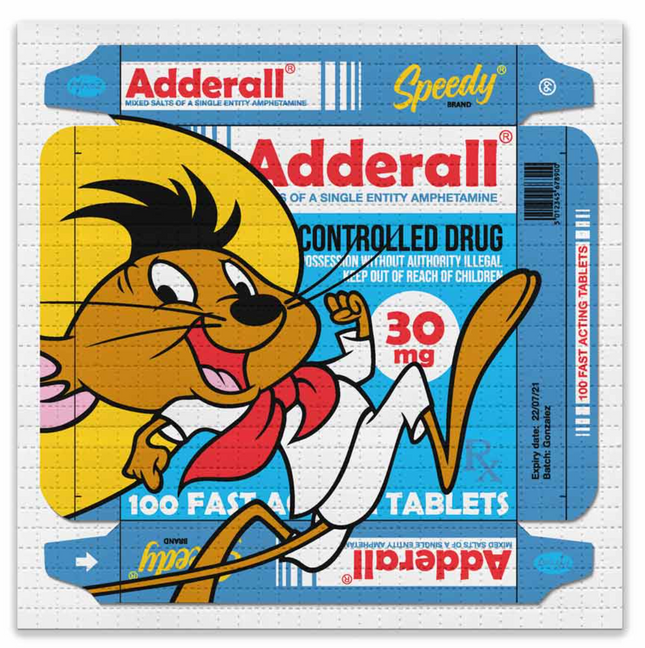
  • Speedy On Adderall Blotter Paper Archival Print by Ben Frost

    Ben Frost Speedy On Adderall Blotter Paper Archival Print by Ben Frost

    Speedy On Adderall Blotter Paper Archival Print by Ben Frost Limited Edition Fine Art Archival Pigment Print Art on Perforated Blotter Paper. 2023 Signed & Numbered Limited Edition of 100 Archival Pigment Print on Perforated Blotter Paper Size: 7.5 x 7.5 Inches Release: April 19, 2023 Speedy Gonzales Looney Tunes Limited blotter editions are hand-perforated by Zane Kesey. The "Speedy On Adderall Blotter Paper Archival Print" is another provocative piece by contemporary artist Ben Frost, known for his critical and vibrant works that often incorporate elements of pop culture and consumerism. Released alongside its counterpart on April 19, 2023, this limited edition piece similarly presents a stark commentary on the intersection of medication, in this case, Adderall, and cartoon characters, with Speedy Gonzales of Looney Tunes fame taking the spotlight. Limited to a mere 100 signed and numbered editions, this artwork is printed on 7.5 x 7.5 inches perforated blotter paper, a material choice that is emblematic of Frost's distinctive approach to art creation. The medium is particularly notable for its historical association with the distribution of substances, thereby intensifying the print's dialogue about pharmaceutical consumption and its prevalence in society. Speedy Gonzales, the "fastest mouse in all Mexico," is a fitting character for this work, bringing into focus the drug's intended effects on attention and speed of cognitive processes. By placing this animated icon on a background that mimics a prescription for Adderall, a medication used to treat ADHD and narcolepsy, Frost not only showcases his hallmark juxtaposition of innocence with more adult themes but also casts a light on the sometimes frivolous use of prescription stimulants in today's fast-paced lifestyle. Each print is hand-perforated by Zane Kesey, adding a layer of authenticity and craft that contrasts with the otherwise mass-produced nature of the subjects depicted. In the realms of pop, street, and graffiti art, Frost's work is both a critique and a celebration of the culture it represents. This piece, much like other works by the artist, invites viewers to question the narratives fed to us by the media and pharmaceutical companies and encourages a dialogue on the cultural implications of these narratives. "Speedy On Adderall" is more than just a piece of fine art; it is a cultural statement, encapsulating concerns about mental health, the ethics of drug use, and the pervasive nature of animated characters in shaping our understanding of the world. Collectors and enthusiasts who acquire this print not only get a unique piece of art but also engage with the broader conversations that are central to Frost's artistic agenda.

    $491.00

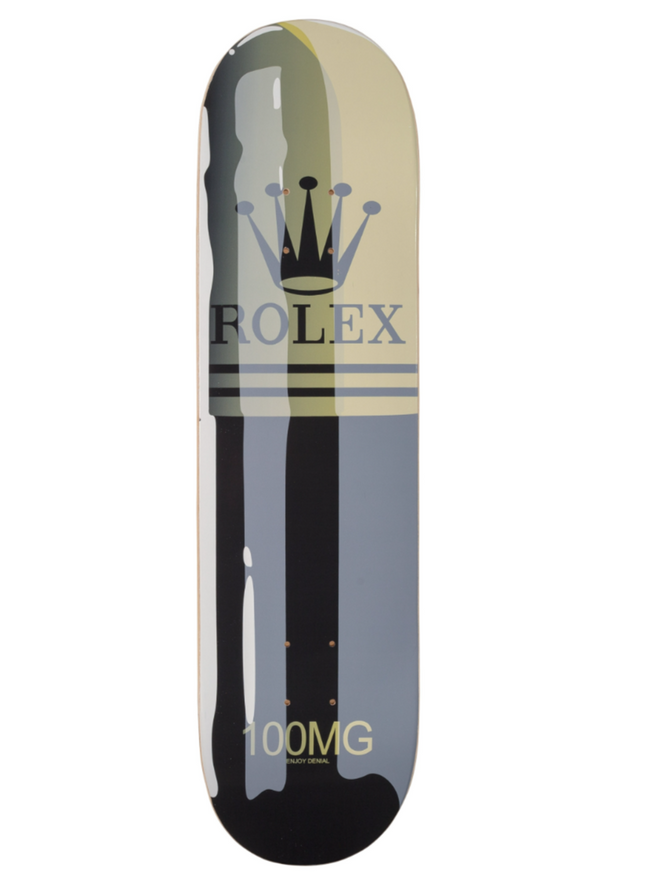
  • Rolex Designer Drugs PP Skateboard Art Deck by Denial- Daniel Bombardier

    Denial- Daniel Bombardier Rolex Designer Drugs PP Skateboard Art Deck by Denial- Daniel Bombardier

    Rolex Designer Drugs PP Printers Proof Skateboard Art Deck by Denial- Daniel Bombardier Limited Edition Archival Print on Wood Skateboard Deck by Street Artwork Graffiti Artist. PP Printers Proof 2018 Marked PP Limited Edition Signed COA Skateboard Artwork Size 8x31 Skateboard Art Deck Featuring The Rolex Logo in Pill Form. Rolex Designer Drugs PP Printers Proof Skateboard Art Deck stands as a testament to the fusion of street culture, contemporary art, and iconic branding. Crafted meticulously by Denial, the pseudonym of Canadian artist Daniel Bombardier, this piece marries the subversive tone of street and graffiti art with high-end branding – a juxtaposition that has been a recurring theme in the world of pop art. Denial's ability to weave these seemingly disparate elements showcases his keen eye for culture, irony, and the potency of symbols in today's consumer-driven society. The 2018 piece, bearing the 'PP Printers Proof' mark, signifies its exclusivity as a limited edition. These proofs are preliminary versions of a printed piece, offering an insight into the artist's process and ensuring that the final prints meet the desired standards. Furthermore, it comes with a Certificate of Authenticity (COA) and is signed, offering collectors a tangible connection to Denial himself. Measuring 8x31, the skateboard deck is not just a canvas but a symbol of street culture. The deck, though an unusual choice for many traditional artists, is perfectly in sync with Denial's roots in street and graffiti art. At its center, the piece features the Rolex logo, but not as we know it. Reimagined as a pill, it comments on society's obsession with luxury and the lengths to which people might go to attain or showcase affluence. The use of the pill form, synonymous with quick fixes and temporary highs, poses questions about the fleeting nature of luxury and the societal pressures of branding. A brilliant embodiment of pop culture, luxury branding, and street art, the Rolex Designer Drugs Skateboard Art Deck by Denial is more than just a visual treat. It's a critique, a conversation, and a testament to the evolving nature of art in the 21st century.

    $1,095.00

  • Snitches Get Stitches Methadone Original Acrylic Painting by Ben Frost

    Ben Frost Snitches Get Stitches Methadone Original Acrylic Painting by Ben Frost

    Snitches Get Stitches Methadone Original Acrylic Painting by Ben Frost One of a Kind Artwork on Upcycled Pharmaceutical Methadone Drug Packaging by Street Art Pop Artist. 2025 Signed Acrylic Painting Original Artwork Size 6.9x8.6 on Reclaimed/Upcycled Methadone Drug Packaging. Stylized Stitch from Lilo & Stitch. Snitches Get Stitches: The Subversive Original by Ben Frost Ben Frost, a contemporary Australian artist known for his razor-sharp juxtapositions, continues to challenge cultural norms with his 2025 one-of-a-kind original titled Snitches Get Stitches. This acrylic painting is a direct application of Frost's signature aesthetic, merging pop iconography with pharmaceutical detritus. The artwork features a stylized, hyper-expressive rendition of Stitch from Disney’s Lilo & Stitch, hand-painted over upcycled methadone packaging measuring 6.9 x 8.6 inches. By using reclaimed drug containers as his canvas, Frost transforms discarded clinical waste into confrontational, high-contrast Street Pop Art & Graffiti Artwork. Pop Surrealism Meets Pharmaceutical Critique The artwork takes the viewer into an uncanny space where innocence and institutionalized control collide. Stitch, depicted in a manic, tongue-out pose, becomes the perfect stand-in for chaos within a tightly regulated system. Methadone packaging, typically linked to addiction treatment and regulatory control, becomes a new battleground for Frost’s visual rebellion. The sharp lines of commercial branding and dosage information clash against the whimsical, cartoonish character, forming a potent juxtaposition that critiques both consumer addiction and commodified escapism. The use of pharmaceutical packaging is not arbitrary. Frost consistently sources his materials from real-world clinical products, embedding layers of commentary on the commodification of health, the packaging of dependency, and the visual language of trust. By painting directly on the box that once held medication for opioid dependency, Frost questions how both pharmaceuticals and media serve as palliatives for society’s deeper ailments. Ben Frost’s Weaponization of Nostalgia Frost is known for dissecting the nostalgia economy—his work tears apart the sentimentality we assign to childhood icons by throwing them into harsh, adult contexts. In this piece, Stitch becomes an emblem of rebellion, recast not as a cuddly alien companion but as a mischievous agent of disruption amid medical sterility. The title Snitches Get Stitches adds further bite to the message. It's a coded nod to subcultural ethics, resistance to authority, and retaliation against betrayal, wrapped in the visual candy of a beloved animated figure. This weaponized nostalgia is central to Frost’s practice. He blends vintage comics, anime, and cartoon branding with medical advertising and capitalist excess to create a saturated feedback loop of mass culture. His works are instantly digestible but deliberately laced with critical aftertaste. Snitches Get Stitches fits perfectly into this lineage, continuing the artist’s commitment to peeling back layers of comfort to expose a system dependent on sedative imagery and chemical coping. Upcycled Packaging as Contemporary Canvas Reclamation is integral to the ethics and visual appeal of this artwork. Upcycled pharmaceutical packaging serves not only as material but also as message. The literal recycling of objects used in the treatment of addiction becomes symbolic of the broader process of cultural reconditioning. In Street Pop Art & Graffiti Artwork, the surface is never neutral. Frost’s choice of methadone box repositions trash as testimony and forces viewers to reconsider where art belongs and what it is allowed to critique. With Snitches Get Stitches, Ben Frost continues his radical fusion of medical-industrial commentary and pop surrealist distortion, offering a disruptive, collectible artifact that sits at the intersection of vandalized commercial design and fine art provocation. The work’s scale, material honesty, and iconic visual language make it not only a standout within Frost’s 2025 output but also a snapshot of a culture caught between sugar-coated rebellion and controlled dependency.

    $3,500.00

  • Tigger on Zoloft Archival Print by Ben Frost

    Ben Frost Tigger on Zoloft Archival Print by Ben Frost

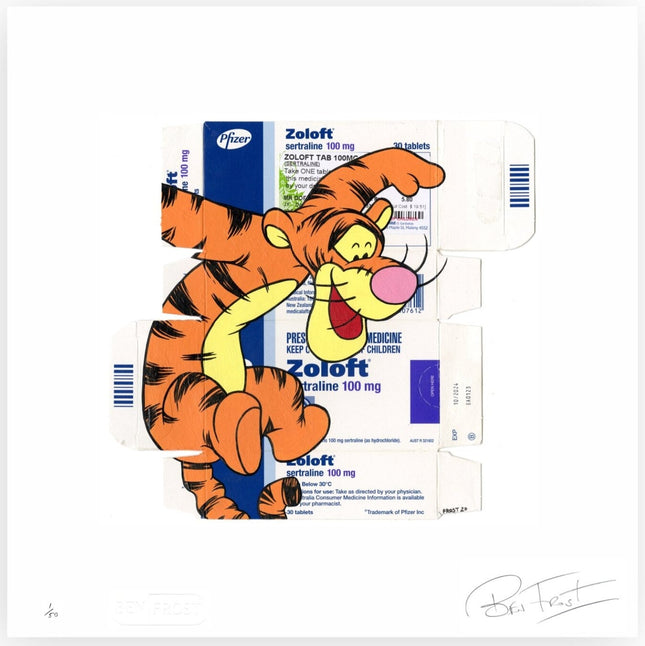
    Tigger on Zoloft Limited Edition Archival Pigment Fine Art Prints on Bauhaus Cotton Fine Art Paper by Graffiti Street Art and Pop Culture Artist Ben Frost. ‘Tigger On Zoloft’ Archival Digital Print on Bauhaus 310gsm Photo Rag 100% Cotton Paper Embossed, signed and editioned by Ben Frost 30cm x 30cm (12 x 12 inches) Melbourne, Australia Edition of 50 The essence of Frost’s commentary is established on the basis of subverting the meaning and the messages, promoted by the mainstream media. In other words and, as he has stated in the past: “The less you fill your mind with the trappings of advertising and bad television, the more space you have in your brain for things of value”. At the same time, his take on modern pop culture is equally compelling. Mainstream media, advertisements, and politics can be identified as some of his main fields of interest, which he utilizes and mixes up in a controversial formation. The word controversial is not used incidentally. What Ben Frost’s art is doing is, essentially, the appropriation and weaponization of imagery against the same system that gave birth to it.

    $572.00

  • Akira Syringe Ceramic Plate Tray Art Object by Supreme

    Supreme Akira Syringe Ceramic Plate Tray Art Object by Supreme

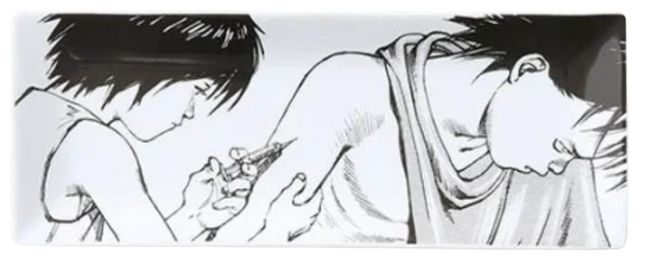
    Akira Syringe Ceramic Plate Tray Art Object by Supreme Limited Edition Collectors Dish Artwork. 2017 Stamped Limited Edition Supreme Ceramic Tray Plate Artwork Size 11.25x4.25 Collectible Art Object. Supreme AKIRA Syringe Ceramic Tray: A Cult Classic Revived in Porcelain The Supreme AKIRA Syringe Ceramic Tray stands as a cultural artifact that weaves together the rawness of street pop art with the meticulous detail of manga illustrations. Released as a highly anticipated part of the Fall/Winter 2017 collection, this limited-edition tray encapsulates the edgy essence of the Supreme brand while paying homage to the trailblazing Japanese manga AKIRA. Crafted with precision, the white ceramic tray is a testament to the enduring influence of the manga series and the ingenious adaptability of Supreme's streetwear aesthetic. The tray, measuring 11.25 inches by 4.25 inches, is a canvas that brings the stark black-and-white world of AKIRA's neo-Tokyo into the tangible realm. It features an intense scene directly lifted from the pages of the manga, depicting the characters Kaneda and Tetsuo in a moment fraught with tension, where Tetsuo is administered an injection. This scene is a pivotal point in the AKIRA series and a snapshot of the intricate and action-packed storytelling that has captivated fans for decades. Ceramic Artistry Meets Iconic Graphic Storytelling The synergy of Supreme's branding and AKIRA's graphic artwork on the Supreme AKIRA Syringe Ceramic Tray is a striking example of how street pop art can merge with other media to create something new yet familiar. Supreme's subtle insertion of its name onto the syringe in the artwork exhibits a clever interplay between brand identity and narrative imagery. This detail, while minor, is a deliberate nod to the collaborative nature of the piece and signifies a merging of worlds that both Supreme and AKIRA fans can appreciate. Beneath the tray lies the iconic Supreme box logo, a signature that asserts the item's authenticity and ties it back to the lineage of Supreme's previous collectible items. This emblem, juxtaposed with the manga artwork, bridges the cultural zeitgeist of modern streetwear with the classic artistry of Japanese manga. The logo's presence is a pledge of quality and a symbol that resonates with collectors who understand the worth of limited-edition street pop art. Impact and Collectibility of the Supreme AKIRA Syringe Tray The Supreme AKIRA Syringe Ceramic Tray is more than a mere decorative piece; it's a slice of pop culture history molded from ceramic. The decision to immortalize this particular manga scene in the form of a high-quality tray demonstrates a nuanced understanding of the collector's mindset—it is not merely the object of value but the convergence of art, narrative, and brand that makes it a treasure. As a collectible, the tray commands attention, serving as a focal point that ignites conversations about street pop art, its intersections with other forms of media, and the very nature of contemporary collectibles. In street pop art and graffiti artwork, objects like the Supreme AKIRA Syringe Ceramic Tray underscore the potential of everyday items to serve as canvases for storytelling and artistry. The striking depiction of Kaneda and Tetsuo is a visual narrative frozen in porcelain, lending the tray a dynamism often associated with street art's immediacy and graffiti's transgressive vibrancy. Yet, the ceramic medium's permanence and the AKIRA storyline's timeless allure elevate this tray beyond the brief, cementing its status as a coveted piece of art. A Fusion of Art Forms for the Contemporary Collector Collectors and fans of manga and streetwear find an object that encapsulates the essence of both worlds in the Supreme AKIRA Syringe Ceramic Tray. The harmonious fusion of Supreme's street-savvy branding with AKIRA's arresting visuals positions this tray as an emblematic piece within the collector's milieu. As a functional item, it stands ready to serve; as an artwork, it demands to be contemplated. The Supreme AKIRA Syringe Ceramic Tray is a testament to the power of collaboration between brands and artists and a mirror reflecting the state of street pop art and graffiti artwork today—an ever-evolving, always surprising, and unapologetically bold field.

    $243.00

  • Four Tablets Daily Archival Print by Ben Frost

    Ben Frost Four Tablets Daily Archival Print by Ben Frost

    Four Tablets Daily Archival Print by Ben Frost Limited Edition on 310gsm Canson Cotton Rag Photographique Fine Art Paper Pop Graffiti Street Artist Modern Artwork. 2024 Signed & Numbered Print Limited Edition of 15 Artwork Size 11.7x11.7 Archival Pigment Fine Art Woman on a Pharmaceutical Package For Ritalin 10. Pharmaceutical Packaging as a Canvas in Street Pop Art & Graffiti Artwork Four Tablets Daily by Australian artist Ben Frost stands as a vivid and biting example of contemporary Street Pop Art & Graffiti Artwork. Executed as an archival pigment print on 310gsm Canson Cotton Rag Photographique paper, this 2024 limited edition artwork boldly merges the aesthetics of commercial pharmaceuticals with classic pop imagery. Frost’s distinctive style blends sleek, advertising-inspired visuals with themes of consumption, identity, and the numbing effects of modern medicine. Here, the artist uses an actual pharmaceutical box for Ritalin 10 as the foundation, transforming it into an ironic and haunting portrait of modern dependency and beauty ideals. The Fusion of Consumer Culture and Artistic Commentary Ben Frost, known for appropriating packaging, logos, and cultural symbols, uses this work to confront society’s relationship with prescription drugs and mass media. The print features the stylized face of a woman, her blue eyes and red lips reminiscent of mid-century comic book heroines, wrapped across the geometric restrictions of pharmaceutical packaging. The juxtaposition between her sensual, constructed gaze and the clinical language of Ritalin prescription labeling evokes tension between artificial pleasure and medical control. With the original packaging’s text left mostly intact, Frost allows the artwork to retain its original context—making the viewer uncomfortably aware that this isn’t just art, it’s also an artifact of real-world usage. Limited Edition Fine Art Meets Graffiti Pop Satire Printed in a highly exclusive edition of only 15 pieces, each one is signed and numbered by the artist. The dimensions of 11.7 x 11.7 inches make it a compact yet powerful artwork that distills Frost’s visual commentary into a sharp, satirical square. By using archival pigment methods on museum-grade cotton paper, the piece elevates the ephemeral nature of consumerism and street-level commentary into lasting fine art. The print exists at the intersection of collectible contemporary art and critical protest, channeling energy from both the gallery and the street. Ben Frost’s Distinct Role in Modern Pop and Graffiti Art Ben Frost is a Sydney-based street pop artist who has gained global recognition for his relentless critique of pop culture, pharmaceuticals, and consumer branding. His works have been exhibited in cities including London, New York, and Tokyo, and have become synonymous with post-pop critique. In Four Tablets Daily, Frost solidifies his place in contemporary graffiti pop art by weaponizing familiar formats and reshaping them into biting societal reflections. This piece, like much of his work, blurs the line between gallery presentation and street-level confrontation, forcing viewers to question their habits, their dependencies, and the carefully packaged visuals they consume daily.

    $550.00

  • War 100 Tablets AP HPM Stencil on Board by Ben Frost

    Ben Frost War 100 Tablets AP HPM Stencil on Board by Ben Frost

    War 100 Tablets AP HPM Stencil on Board by Ben Frost Hand-Painted Multiple Panel Graffiti Street Artist Modern Pop Art. AP Artist Proof 2023 Signed & Marked AP HPM Spray Paint & Acrylic Print Artwork Size 11x14 (Total Run of 10 + 2AP) Ben Frost's Artistic Commentary The "War 100 Tablets AP HPM Stencil on Board" by Ben Frost is a provocative piece that epitomizes modern pop art's daring and often subversive nature. Created as a hand-painted multiple (HPM) and a part of a limited edition series, this work reflects the artist's critical eye on societal issues, employing a combination of stencil artistry, spray paint, and acrylic techniques to render his vision on an 11x14 inch board. Frost's piece is bold in its aesthetic and message, immediately capturing attention with the stark contrast of the black and white imagery juxtaposed with the striking red accents. The presence of the word "WAR" in capital letters alongside the words "CONTROLLED DRUG" and "KEEP OUT OF REACH OF CHILDREN" suggests a powerful commentary on the nature of conflict and the pharmaceutical industry's role in society. As an Artist Proof (AP) in 2023, it is marked distinct from the total run of 10 with an additional 2 APs, signifying its rarity and the artist's direct involvement in its creation. Techniques and Style Frost is renowned for his street pop art and graffiti artwork, which often utilizes the visual language of advertising and consumerism to explore deeper themes. The "War 100 Tablets" is a clear example of this, as it mimics the look of a medication box, suggesting that war is being 'sold' to the public much like any over-the-counter drug. The stencil technique used by Frost is a hallmark of street art, allowing for sharp, precise lines often associated with mass-produced items, further emphasizing the piece's commentary on commercialism. The artist's use of spray paint and acrylic lends the work a textured, layered look characteristic of graffiti art. This blend of materials and techniques is a deliberate choice by Frost to blur the lines between high art and street art, creating a piece that is accessible yet complex, with a finish that invites closer inspection. Cultural Impact and Collectibility Frost's "War 100 Tablets" is a visually striking piece and a collectible item within the art community. The limited number of panels produced, coupled with the hand-painted aspect, ensures that each piece within the series is unique. The AP designation indicates that the artist kept this piece as proof, marking it as an essential part of the edition's history. Collectors and enthusiasts of street pop art and graffiti artwork are often drawn to such pieces for their cultural relevance, investment potential, and as a means of supporting the arts. Frost's wWithical edge and contemporary style appeal to Frost's work to those looking to own art that speaks to the zeitgeist of the current era. Legacy and Influence Ben Frost's work, including "War 100 Tablets," contributes to the ongoing dialogue about the intersection of art, commerce, and social issues. By bringing the techniques and styles of street art into a fine art context, he challenges preconceived notions about the value and message of graffiti and street pop art. The artist's signature on the piece is a testament to its authenticity and his reputation in the art world, ensuring that it will remain a significant work for years to come. The "War 100 Tablets AP HPM Stencil on Board" by Ben Frost is a poignant critique of modern society, utilizing the visual strategies of street pop art and graffiti artwork to engage with contemporary issues. Its creation as a hand-painted multiple adds to its exclusivity and allure, marking it as a significant piece within the modern pop art movement and a valuable collector's item. Frost's astute blend of accessible art forms with nuanced social commentary ensures his work remains relevant and thought-provoking, inviting viewers to question and contemplate the world around them.

    $1,898.00

  • Ritalin Scar Archival Print by Ben Frost

    Ben Frost Ritalin Scar Archival Print by Ben Frost

    Ritalin Scar Archival Pigment Fine Art Limited Edition Print on 310gsm Photo Cotton Rag Paper by Artist Ben Frost, Street Pop Art Graffiti Legend. 2022 Signed & Numbered Limited Edition of 50 Artwork Size 12x12 Signed 2022 Edition of 50 ‘Ritalin Scar’ Archival Digital Print on Bauhaus 310gsm Photo Rag 100% Cotton Paper Embossed, signed and editioned by the artist 30cm x 30cm (12 x 12 inches) unframed. Ritalin Scar by Ben Frost: A Sharp Fusion of Pop Culture and Pharmaceuticals in Street Pop Art & Graffiti Artwork Ritalin Scar by Ben Frost is a powerful statement within the Street Pop Art & Graffiti Artwork movement. Released in 2022, this piece is an archival pigment fine art print created on Bauhaus 310gsm photo rag 100 percent cotton paper, a material known for its superior quality and durability. Measuring 30cm by 30cm, or 12 by 12 inches unframed, the artwork is part of a signed and numbered limited edition of only 50 pieces. Each print is individually embossed, signed, and editioned by Ben Frost, reinforcing its status as a highly collectible work. By placing the menacing figure of Scar from Disney's The Lion King onto a flattened Ritalin LA pharmaceutical box, Frost engages viewers in a provocative dialogue about societal perceptions of control, medication, and villainy through the visual language of pop culture. The Artistic Process and Provocative Themes of Ritalin Scar Ben Frost, an Australian artist widely recognized for his disruptive and confronting style, uses familiar characters and consumer brands to deliver bold social commentary. In Ritalin Scar, the artist strategically selects Scar, a character known for his cunning and treachery, and juxtaposes him against the backdrop of a pharmaceutical package designed for behavioral regulation. This combination invites critical reflection on how society views and manages perceived deviance, particularly in children. The use of archival digital print technology ensures that the vivid colors and sharp lines remain striking and durable over time, preserving the immediate impact of the work. By repurposing real-world packaging as his canvas, Frost magnifies the uneasy relationship between commercialism and personal identity, a theme that resonates deeply within the Street Pop Art & Graffiti Artwork tradition. Ben Frost’s Influence on Contemporary Street Pop Art & Graffiti Artwork Ben Frost has built an international reputation for his provocative visual language that challenges societal norms and consumer culture. His body of work often combines elements of advertising, pharmaceuticals, and beloved cartoon imagery, making his style instantly recognizable. Through pieces like Ritalin Scar, Frost asserts Street Pop Art & Graffiti Artwork as a critical platform for addressing controversial issues. His manipulation of pop culture imagery disrupts the traditional narratives associated with these characters and products, transforming them into symbols of larger social commentary. Frost’s work captures the spirit of rebellion and critique that defines Street Pop Art & Graffiti Artwork, proving its capacity to provoke thought and spark conversation in an era of increasing media saturation. The Importance of Limited Edition Prints like Ritalin Scar Owning a limited edition print like Ritalin Scar offers collectors a tangible piece of contemporary cultural critique. The combination of Bauhaus 310gsm photo rag paper with archival digital printing ensures a museum-quality finish that honors the original vision of the artist. With only 50 copies released, each embossed, signed, and numbered by Ben Frost, the scarcity enhances the value and significance of the artwork. Street Pop Art & Graffiti Artwork thrives on exclusivity and authenticity, traits that are embedded into every aspect of this piece. Ritalin Scar not only showcases Frost’s distinctive style but also captures the enduring tension between pop culture, pharmaceutical influence, and personal autonomy, making it a standout work within contemporary pop and street art collections.

    $650.00

  • Cialis Le Pew Blotter Paper Archival Print by Ben Frost

    Ben Frost Cialis Le Pew Blotter Paper Archival Print by Ben Frost

    Cialis Le Pew Blotter Paper Archival Print by Ben Frost Limited Edition Fine Art Archival Pigment Print Art on Perforated Blotter Paper. 2025 Signed & Numbered Limited Edition of TBD Archival Pigment Print on Perforated Blotter Paper Size: 7.5 x 7.5 Inches Release: April 19, 2025 Limited blotter editions are hand-perforated by Zane Kesey. Pharmaceutical Aesthetics and Cartoon Satire Cialis Le Pew by Ben Frost brings together cartoon absurdity and adult pharmaceutical branding in a limited edition archival blotter paper print released in 2025. Known for his provocative Street Pop Art & Graffiti Artwork, Frost takes viewers on a subversive ride by merging the suggestive character of Pepé Le Pew with the visual identity of Cialis, a well-known medication for erectile dysfunction. Printed on 7.5 x 7.5 inch perforated blotter paper and hand-perforated by Zane Kesey, this piece sits at the intersection of consumer critique and visual comedy. With bold linework and an unmistakable pharmaceutical color scheme, Frost uses satire to expose the contradictions of health, desire, and fantasy in commercial culture. Reinterpreting Brand Messaging Through Street Pop Ben Frost’s work frequently co-opts the visual language of consumer goods, particularly those related to pharmaceuticals and fast food. In this print, the formal structure of a Cialis package is preserved: dosage information, branding, and corporate insignia are all present. But the addition of Pepé Le Pew lounging provocatively transforms the message entirely. The piece is not about medical treatment—it becomes a conversation on romantic projection, toxic masculinity, and mass-market seduction. Frost intentionally plays with taboos by inserting a controversial cartoon figure into the branding of a real-world medication, using humor as a mechanism for cultural interrogation. Blotter Format as Conceptual Canvas The decision to present this print on perforated blotter paper deepens the commentary. Traditionally associated with psychedelic culture, blotter art has been a platform for anti-establishment graphics since the 1960s. In this format, Frost’s image carries connotations of altered states, drug dependency, and societal disillusionment. The material becomes a message in itself, encouraging viewers to consider how they consume information, media, and identity. The perforations serve not just as a nod to underground drug culture but as a device that dismantles the sterile clinical distance of pharmaceutical packaging. Ben Frost and the Language of Visual Irony Ben Frost, an Australian contemporary artist, has made a career out of weaponizing logos, mascots, and visual trademarks. Through satirical juxtaposition, he addresses addiction, overconsumption, and the contradictions of modern branding. With Cialis Le Pew, he continues this trajectory by turning a prescription drug box into a visual metaphor for desire and farce. The artwork challenges the passive viewer, inviting questions about how intimacy and commodification intersect. It is both a punchline and a statement—a collision of cartoon innocence and adult marketing that leaves a lasting visual impact.

    $550.00

Pharmaceutical Graffiti Street Pop Art

Pharmaceuticals as Subject Matter in Street Pop Art & Graffiti Artwork

Pharmaceutical imagery has become a powerful and persistent theme in Street Pop Art & Graffiti Artwork, serving as both aesthetic symbol and cultural critique. Artists working within this genre frequently use pills, prescription bottles, blister packs, and pharmaceutical branding to explore themes of dependency, consumerism, mental health, and systemic control. These visuals tap into a shared cultural language, where medication is not only a means of healing but also a symbol of confinement, numbing, and commodification. The use of pharmaceutical elements in art allows creators to confront uncomfortable truths about how society copes with emotional pain and how pharmaceutical industries profit from that struggle. Artists like Ben Frost and Luke Chueh have become synonymous with this visual dialogue, creating works that simultaneously allure with clean design and unsettle with their underlying meaning.

The Symbolic Weight of Prescription Iconography

The recurring presence of pills and medicine bottles in Street Pop Art & Graffiti Artwork underscores the tension between relief and repression. These symbols act as entry points for conversations around mental health, trauma, and addiction. Prescription drugs like Xanax, Vicodin, Oxycontin, and Adderall are not just names in this context—they are cultural references, shorthand for complex emotional and societal issues. In a world where mental health is increasingly addressed through chemical intervention, these items become metaphors for invisible pain and institutional dependency. Street and pop artists distort, replicate, and reframe these symbols to expose how deeply they are embedded in everyday life. The colorful aesthetics of pills contrast with the often dark realities of what they represent, creating a visual dissonance that fuels the emotional power of these works.

Emotional and Social Commentary Through Pop Visual Language

The incorporation of pharmaceutical themes in this type of artwork often reflects a broader commentary on capitalism and self-medication. By reinterpreting over-the-counter packaging or prescription labels, artists question the commercialization of healing and the cultural normalization of medicating psychological discomfort. The bright and accessible visual language of pop art allows these critiques to reach wide audiences, while the rebellious energy of graffiti maintains the urgency and rawness of the message. Figures like Luke Chueh use minimal, emotionally potent characters to portray internal suffering, while others like Ben Frost overlay cartoon imagery with drug branding to examine the psychological friction between comfort and control. This duality is what defines Street Pop Art & Graffiti Artwork—it makes complex topics visually engaging while maintaining their conceptual gravity.

Pharmaceutical Aesthetics as a Mirror of Contemporary Life

As pharmaceutical culture becomes increasingly visible and politicized, artists continue to use it as a tool for reflection. Street Pop Art & Graffiti Artwork turns medication into a visual mirror, reflecting back the ways in which society prescribes not just drugs but identities, behaviors, and acceptable emotional responses. The aesthetic of clean pill bottles and clinical labels is subverted and recontextualized into a critique of conformity, silence, and emotional control. These artworks do not celebrate pharmaceuticals, nor do they purely condemn them. Instead, they frame them within the chaos of modern life—where pills are both lifelines and shackles. Through this lens, pharmaceutical symbols evolve from functional design into vessels of cultural meaning, loaded with commentary about pain, power, and the fragile boundaries between healing and harm.

Footer image

© 2025 Sprayed Paint Art Collection,

    • Amazon
    • American Express
    • Apple Pay
    • Bancontact
    • Diners Club
    • Discover
    • Google Pay
    • iDEAL
    • Mastercard
    • PayPal
    • Shop Pay
    • Visa

    Login

    Forgot your password?

    Don't have an account yet?
    Create account