
Sesame Street – Cultural Icons Reimagined in Street Pop Art & Graffiti Artwork
Sesame Street has long been a cornerstone of global childhood entertainment and education, but beyond its original purpose, its characters have taken on new lives in the world of Street Pop Art & Graffiti Artwork. Created in the United States in 1969 by Joan Ganz Cooney and Lloyd Morrisett, and developed with Muppets by Jim Henson, the series introduced a cast of expressive, memorable figures including Big Bird, Oscar the Grouch, Cookie Monster, Elmo, Grover, Bert, and Ernie. These characters were designed to be accessible and emotionally resonant, but over decades of saturation in media and merchandising, they have transcended their educational origins to become powerful symbols in art, parody, and cultural commentary. Street artists and pop surrealists across the world have repurposed them as tools for critique, nostalgia, satire, and personal expression.
Characters as Archetypes and Visual Language
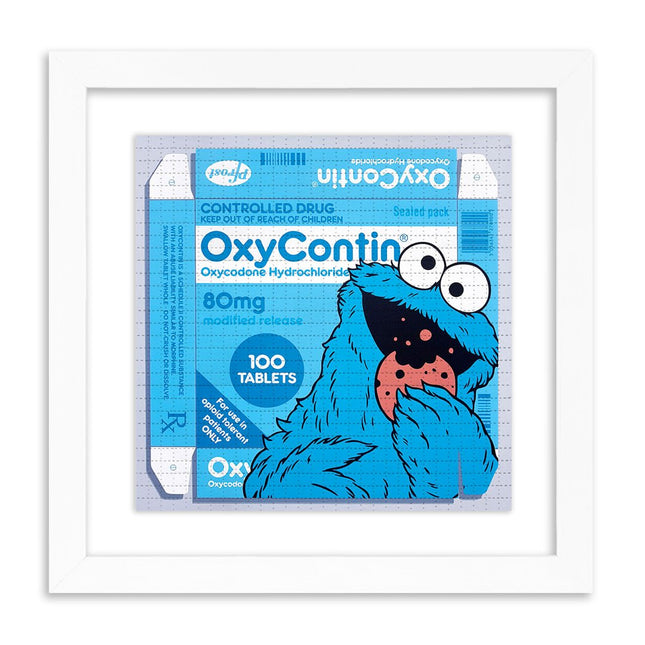
In Street Pop Art & Graffiti Artwork, Sesame Street characters are often detached from their wholesome television roots and inserted into adult scenarios or surreal landscapes. Cookie Monster becomes a symbol of overconsumption or addiction. Oscar the Grouch is used to express cynicism or defiance. Big Bird may be cast as a looming, almost absurd figure of innocence in contrast to dystopian backdrops. Artists like Ron English, Brett Crawford, and numerous anonymous graffiti writers have utilized these figures as instantly recognizable visual shorthand for deeper emotional or societal themes. Their color schemes, silhouettes, and expressions are already embedded in popular consciousness, allowing artists to remix them with very little context and still strike a chord. This repurposing transforms characters from entertainment mascots into cultural mirrors, enabling layers of subversion and humor.
Media Saturation, Memory, and the Remix Culture of Urban Art
The significance of Sesame Street imagery in street art lies not only in its popularity but in how it represents childhood mythologies that follow viewers into adulthood. These figures are never forgotten, and Street Pop Art & Graffiti Artwork seizes on that familiarity. When rendered with spray paint on brick walls, pasted onto newspaper collage backgrounds, or digitally manipulated into giclee prints, the characters gain a new gravity. They carry with them the weight of memory, but they also act as commentary on how media shapes identity from an early age. The saturation of Sesame Street into commercial goods, lunchboxes, backpacks, and advertising makes it ripe for artists who seek to explore the collision between innocence and marketing. By reframing these icons, artists point to the contradictions of nostalgia and the complicated roles these characters now play in modern identity.
Street-Level Subversion Through Wholesome Imagery
The use of Sesame Street in graffiti and pop surrealist art disrupts the expected narrative of public space. A mural featuring Elmo in a gas mask, or Bert and Ernie depicted as punk rebels, offers more than shock value—it forces viewers to reconcile their past associations with current realities. These interpretations often reflect anxieties around innocence lost, mass media manipulation, or the over-branding of childhood. In this context, the characters become both familiar and estranged, existing at the edge of memory and critique. Artists repurpose the joy and clarity of the original designs to inject chaos, irony, or sincerity. Within Street Pop Art & Graffiti Artwork, this strategy is not about destroying the icon but evolving it, using it as a language that speaks across generations and platforms. Sesame Street’s visual universe becomes an ever-relevant playground for artistic experimentation and emotional resonance.