
Street Art
-
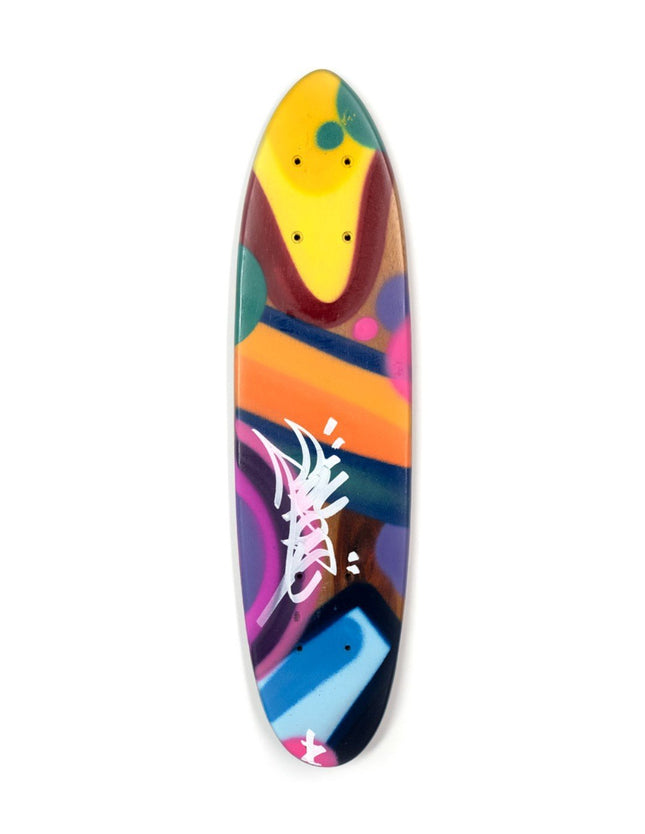
Cope2- Fernando Carlo East 153rd St Deck Original Spray Paint Skateboard Deck Art by Cope2- Fernando Carlo
East 153rd St Deck Fine Art Original One of a Kind Spray Paint Painting on Natural Skateboard Deck by Street Artwork Graffiti Artist Cope2. Paint on Natural Skate Deck Size: 5.875 x 23 Inches Release: October 05, 2021 Run of: 1 During the mid-1990s Cope2 started slowly transitioning from the streets to the art scene of the galleries. At that time, street art was not as popular as it is in our days and the general public’s idea of it was still inextricably connected to ghettos, drug dealing, etc. The artist has never hidden his troubling past and avoids idealizing it, as a way to enhance his career and artistic persona. On the contrary, he mentions the following: “Oh man, there’s nothing to be proud of in hustling, but I had my first child at the age of 16, my son. So I had to make money to support him and his mother.
$820.00
-
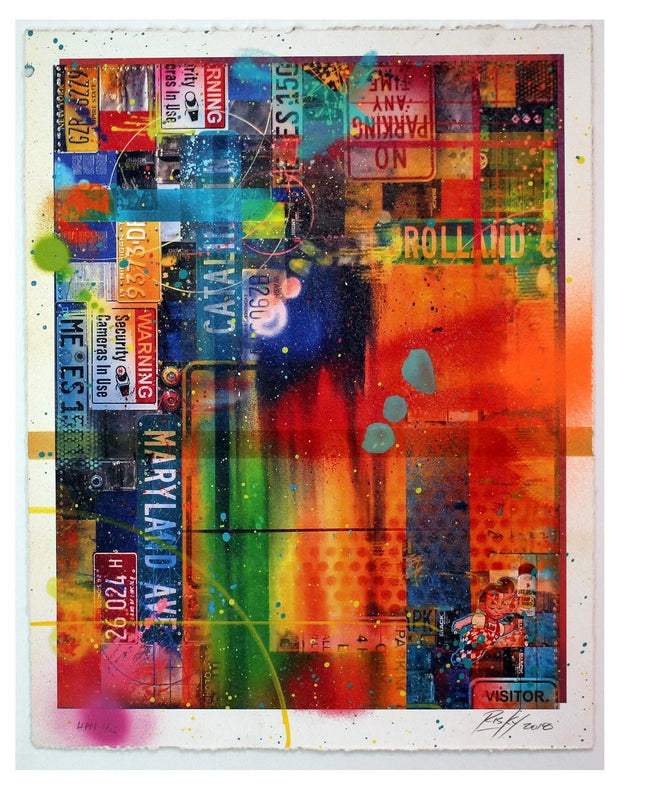
Risk Rock Road Signs Big Boy HPM Serigraph Print by Risk Rock
Road Signs- Big Boy Limited Edition Hand-Embellished Serigraph on Heavy paper by Risk Graffiti Street Artist Modern Pop Art. Hand-Embellished Serigraph on Heavy paper- 18x23 Inches- Date Made: 2018- Incorporates Risk's now-famous "license plate, road sign, and Bob's Big Boy" background. Each print is "hand-embellished" by the artist.
$533.00
-
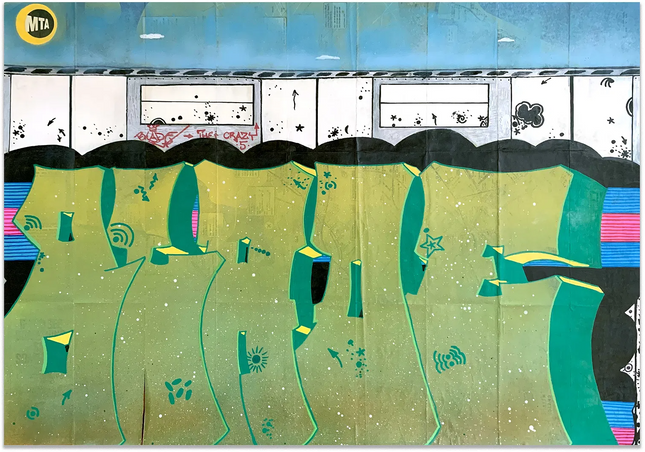
BLADE- Steven Ogburn Walking Tall Original Acrylic Spray Painting by BLADE- Steven Ogburn
Walking Tall Original Acrylic Spray Paint Marker Painting by BLADE- Steven Ogburn One of a Kind Artwork on MTA NYC Subway Map by Street Art Pop Artist. 2011 Signed Acrylic, Spray Paint & Paint Marker Painting Original Artwork Size 32x23 on Reclaimed NYC Transit Subway Map. Walking Tall on the Tracks of History Created in 2011 by New York graffiti legend BLADE, born Steven Ogburn, Walking Tall is a standout one-of-a-kind painting that encapsulates the grit and pride of subway graffiti culture. Executed on a reclaimed MTA NYC Subway Map, this 32 by 23 inch mixed media piece is a raw fusion of acrylic, spray paint, and paint marker that brings to life the aesthetics of the early 1970s graffiti boom while echoing the artist’s unmistakable handstyle. It is both a throwback to BLADE's reign over the NYC subway system and a reflection of his continued presence as a living force in the evolution of Street Pop Art & Graffiti Artwork. The use of an actual subway map as a canvas is symbolic and literal—a surface that once served as his open-air gallery is transformed into collectible fine art. Subway Trains Reimagined on Paper BLADE’s Walking Tall centers on a stylized train car with an abstract letter fill, where traditional graffiti writing techniques meet geometric expression and iconography. The upper portion of the map features the minimal render of a silver subway car, as if peeking above a black cloud—a direct nod to the iconic whole-car takeovers of the past. The bottom third explodes with stylized green and yellow letters on a textured spray-painted background, complete with stars, lines, and symbols that have become identifiers of BLADE’s visual language. Each panel section bursts with controlled chaos, symbolizing both the movement of trains and the relentless momentum of the graffiti movement itself. This format reinforces the context in which the artist made his name—among the motion, dirt, and noise of a working urban infrastructure. The Personal Markings of a King Walking Tall is more than a graffiti piece—it is a statement of longevity and authorship. Above the stylized train, BLADE tags himself and his original crew, The Crazy 5, anchoring this work in the foundational lore of New York graffiti history. The inclusion of his classic elements such as arrows, shapes, and three-dimensional tricks is not just decorative but deeply personal. These components serve as narrative cues to an era when tagging trains was as much a cultural revolution as it was an artistic one. BLADE’s decision to layer his work atop an official MTA map adds yet another level of engagement—fusing outlaw history with institutional cartography. Street Pop Art & Graffiti Artwork with Institutional Impact As with much of BLADE’s gallery work, Walking Tall maintains the ethos of the street while recontextualizing graffiti into the domain of contemporary fine art. The result is a hybrid visual experience: high art with a raw edge, refined technique with street spontaneity. This piece belongs to a broader trajectory in which subway-born artists have made the leap from anonymous fame to documented, signed, and archived works. It reflects a career rooted in authentic urban storytelling, now preserved in permanent collections and museums around the world. Walking Tall is not nostalgia—it is survival, expression, and style, captured on a map that once guided the very trains he transformed into rolling canvases.
$3,500.00