

Street Art
-
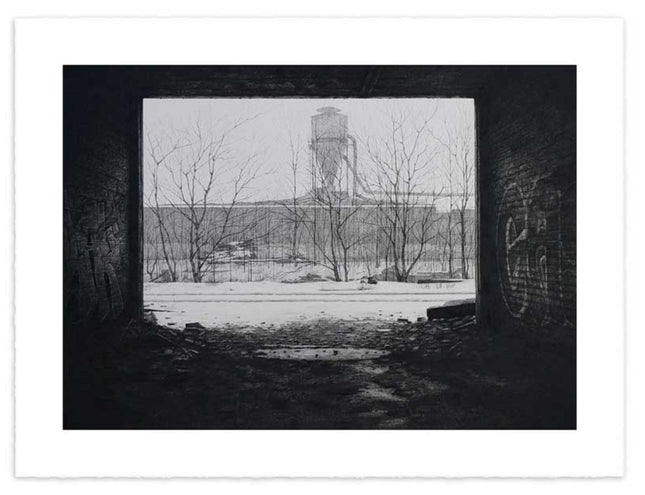
Stephanie Buer CN Rail Archival Print by Stephanie Buer
CN Rail Archival Pigment Fine Art Limited Edition Print on 290gsm Moab Entrada Paper by Artist Stephanie Buer, Street Pop Art Graffiti Legend. Signed & Numbered Archival Pigment Print on Hand-Deckled 290gsm Moab Fine Art Paper Size: 18.5 x 14 Inches Release: March 13, 2020 "This piece is a drawing I made from images gathered while exploring the Packard Plant years ago. It was taken before the Packard Plant was purchased and renovated, back when I used to live in Detroit and wander the plant regularly. That place is very special to me and my early development as an artist." –Stephanie Buer
$218.00
-

Snik Escape Original Mixed Media Painting by Snik
Escape Original Mixed Media Painting by Snik One of a Kind Artwork Framed on Panel by Street Art Pop Artist. 2018 Signed Mixed Media Painting Original Artwork Size 15.5x9.5 Framed 18.5x11.5 Escape by Snik – Frozen Descent and Poetic Stillness in Street Pop Art & Graffiti Artwork Escape is a 2018 original mixed media painting by the UK-based artist duo Snik, measuring 15.5 x 9.5 inches and presented in a custom frame at 18.5 x 11.5 inches. Executed with meticulous stencil layering and spray technique on panel, this one-of-a-kind work captures a suspended female figure mid-fall or mid-flight, her body arched in a moment of release, struggle, or transcendence. The blackened background becomes a void, while the figure, rendered in stark tones and delicate surface detail, floats like a ghost tethered to the edge of control. Known for their hand-cut stencil mastery and emotionally charged portraiture, Snik creates a composition in Escape that embodies tension, grace, and haunting visual poetry. In the space of Street Pop Art & Graffiti Artwork, the piece speaks to physical fragility and spiritual rupture using only the language of form and light. Layered Craftsmanship and Dimensional Emotion Snik’s signature process is grounded in precision: each layer of stencil is hand-cut and individually sprayed, allowing for a depth of detail and realism that transforms the spray medium into something near sculptural. In Escape, the folds of the subject’s dress, the flowing strands of her hair, and the delicate articulation of her limbs are all built through this exacting method. Her body is both grounded and weightless—tied in places, partially obscured, with limbs caught between movement and stillness. The tension created by the ropes suggests confinement, yet her airborne posture evokes release. This duality is central to Snik’s visual language: moments of beauty held within systems of restraint. In Street Pop Art & Graffiti Artwork, this emotional precision redefines what is possible with spray-based portraiture, pushing beyond the visual into the psychological. Blackened Void and Emotional Isolation The dark void that surrounds the figure in Escape is not merely background—it is conceptual space. It isolates the subject from any specific setting or context, forcing the viewer to focus only on form and feeling. This stark negative space amplifies the floating quality of the figure, making her appear suspended in thought or dream, rather than trapped by gravity. Subtle surface textures, fine spray line edges, and highlights along the limbs and fabric folds reveal a practiced control of light and atmosphere. The blackness becomes a mirror to the unknown—symbolic of trauma, transcendence, or the silent aftershock of an escape long attempted. This use of minimalism within Street Pop Art & Graffiti Artwork shows how absence can become as emotionally potent as visual excess. Snik and the Anatomy of Release Escape distills everything Snik is known for: masterful technique, female-centered storytelling, and a persistent exploration of emotional stillness through physical motion. The work is theatrical but never overdone, symbolic but rooted in real feeling. It reflects themes of vulnerability, personal confinement, and the bittersweet sensation of letting go. With Escape, Snik reaffirms their ability to create work that is both compositionally exact and emotionally unflinching. The piece invites viewers to interpret their own version of what is being fled from or toward, using only the pose, the silhouette, and the void. As a singular expression within Street Pop Art & Graffiti Artwork, Escape proves that beauty, when rendered with patience and purpose, can speak softly and still leave a lasting mark.
$1,750.00