
Street Art
-
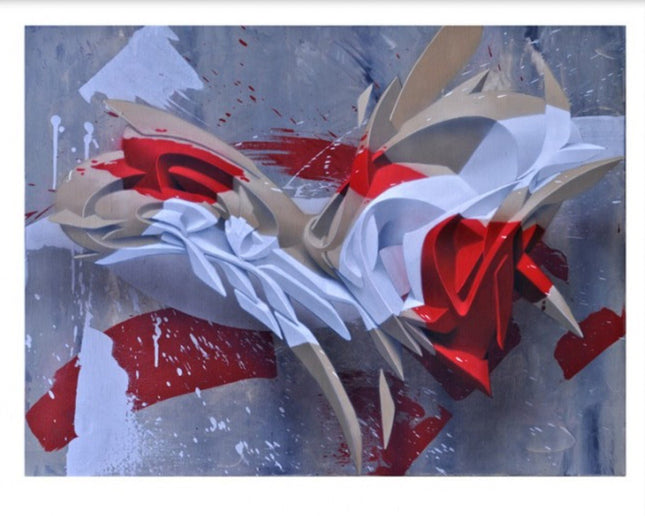
Peeta Tell Your Bumps Archival Print by Peeta
Tell Your Bumps Limited Edition Archival Pigment Print on 310gsm Fine Art Paper by Peeta Graffiti Street Artist Modern Pop Art. "This piece is part of a 2011 production. Most of the works I have painted during the last part of that year follow the same trend: the painting of fictional brush strokes over the 3d piece on canvas. The practice inspired me to create new volumetric and dynamic effects.Each time I paint a new canvas, I aim to discover the most optimal way to use colors, light and shade to reach a three-dimensional result. Layering splashes of color over the letters brings into keen focus their three-dimensionality, transforming them into real objects that not only cast shadows but also receive or obscure the subsequent blottings and swipes of paint." - Peeta
$330.00
-
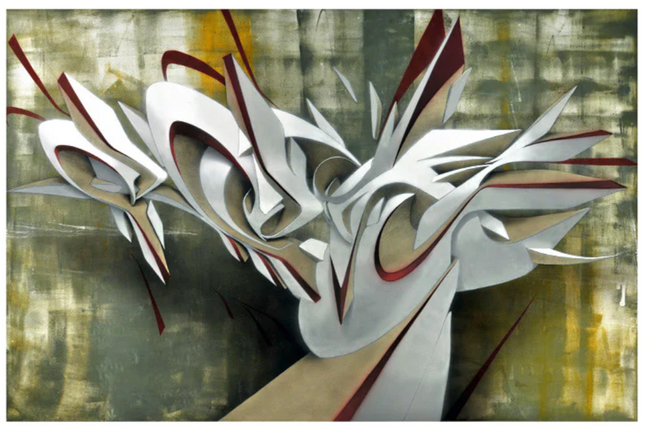
Peeta Speaking Quantum PP Archival Print by Peeta
Speaking Quantum PP Printer Proof Archival Print by Peeta Limited Edition Print on 290gsm Moab Entrada Fine Art Paper Pop Artist Modern Artwork. PP Printers Proof 2012 Signed & Marked PP Limited Edition Artwork Size 26x16 Archival Pigment Fine Art The Artistic Fusion in "Speaking Quantum" by Peeta "Speaking Quantum" is a compelling example of how the abstract concepts of quantum physics can be rendered through the vivid language of street pop art and graffiti artwork. This Printer's Proof (PP) archival print by the artist Peeta showcases an exquisite interplay between form, color, and the illusion of dimensionality, resonating deeply with the ethos of modern artwork. As a limited edition print on 290gsm Moab Entrada fine art paper, it is not just a piece of art but a slice of contemporary pop culture that has been frozen in time. Created in 2012, Peeta signed and marked this artwork as a Printer's Proof, signifying its status as a rare and often more valued edition than the numbered series. The PP mark indicates that the piece was part of a small batch used to verify quality before the main run, often held back by the artist or publisher for their archives or special distributions. The size of the artwork, 26x16 inches, is substantial enough to impact the viewer, drawing them into the piece's complex layers and sweeping curves. Peeta's work is renowned for its three-dimensional effects, creating a sense of depth and movement that challenges the viewer's perception. "Speaking Quantum" is remarkably evocative, with its forms twisting and folding into each other, creating an almost tactile experience. The use of archival pigment ensures that the nuances of color and the precision of the lines are preserved, protecting the vibrancy of the artwork for years to come. Peeta's Vision in the Context of Street Pop and Graffiti Art In the context of street pop art and graffiti artwork, "Speaking Quantum" stands out for its innovative approach to the graffiti art form. Peeta, a graffiti artist with a unique style that often incorporates sculptural art elements, has translated street art's dynamic energy onto fine art paper. This piece, with its abstract representation and intricate design, reflects a mature iteration of graffiti art that moves beyond lettering and into the realm of high art. The piece does not just represent the artist's vision but embodies the fluid nature of street pop art—constantly evolving, pushing boundaries, and exploring new territories. Peeta's choice to capture the essence of quantum physics—often associated with the subatomic and the uncertain—through graffiti art is a testament to the versatility and depth of the street art form. The artwork serves as a dialogue between the known and the unknown, the seen and the unseen, much like quantum physics. "Speaking Quantum" invites viewers to interpret the converging and diverging elements to find meaning in the abstract forms. The fluidity and movement in the piece suggest a moment of transformation, a visual representation of energy in flux. It's a modern artifact that enriches the visual landscape and sparks curiosity and introspection, inviting a deeper engagement with the world of quantum mechanics and the art it inspires. In preserving "Speaking Quantum" as a limited edition print, Peeta allows art enthusiasts and collectors to engage with street pop art in a new dimension. It's an invitation to explore the intersections of art, science, and philosophy through the lens of graffiti artwork, marking a distinctive point in the journey of street art from the alleys and subways into the galleries and private collections. The existence of this piece as a PP print elevates its status, ensuring that it remains an exclusive and sought-after piece within the realms of pop and graffiti art culture.
$563.00