
Virus
-
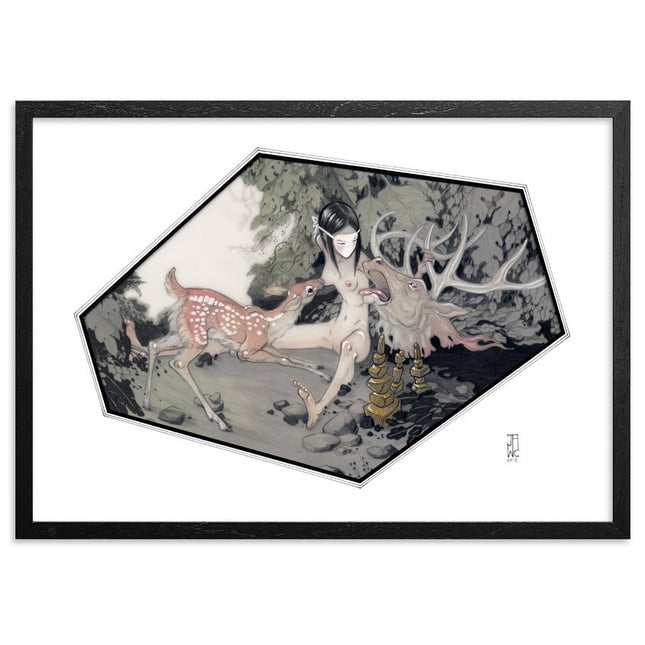
J.A.W. Cooper Sanctuary Archival Print by J.A.W. Cooper
Sanctuary Limited Edition Archival Pigment Prints on 310gsm Museum Natural Fine Art Paper by J.A.W. Cooper Graffiti Street Artist Modern Pop Art. "Sanctuary was created in 2013 as part of my solo show "Laid Bare" which explored vulnerability as both a source of strength and discomfort. The setting for the piece is of personal significance, a verdant cave at the top of a waterfall in Big Sur. This cave is full of stacked rocks left by previous visitors though in all of my visits I never encountered anyone inside, and so it has the air of a place of significance for many people traveling along parallel lines but not intersecting. The purpose of a "sanctuary" is to provide asylum in a time of stress or danger and this cave gave me peace at a time when I was letting go of one facet of my life and fostering the growth of a new one; the severed stag head and the fawn." - J.A.W. Cooper
$217.00
-
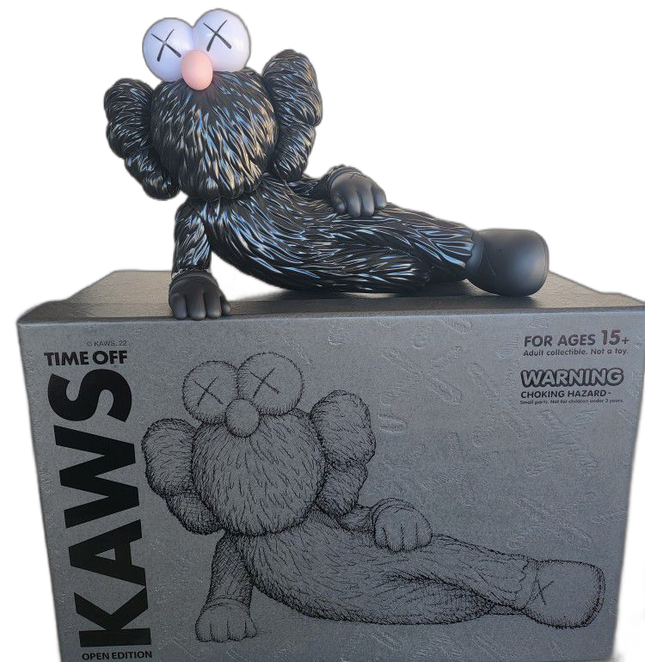
Kaws- Brian Donnelly Time Off Black Fine Art Toy by Kaws- Brian Donnelly
Time Off Black Limited Edition Vinyl Art Toy Sculpture Collectible Artwork by Legendary Modern Artist Kaws. 2023 BFF Out of Print Edition Size 11.02x7.09 Displayed With Box Printed Foot "Time Off Black Fine Art Toy" refers to a designer toy created by Brian Donnelly, an artist known professionally as KAWS. KAWS is an American artist and designer known for his work in various fields, including painting, sculpture, and design. His work is characterized by a unique blend of street art, pop culture, and commercial design, often featuring his signature "Companion" character, which has a cartoonish, skull-like head with crossbones for eyes. KAWS' designer toys, often called "art toys" or "urban vinyl," have become highly sought-after collectibles in the art and toy market. The "Time Off Black Fine Art Toy" is one of KAWS' out-of-print open edition releases featuring his iconic Companion character, with a distinctive Black color scheme. These art toys are out of print and can be pretty valuable.
$1,012.00
-
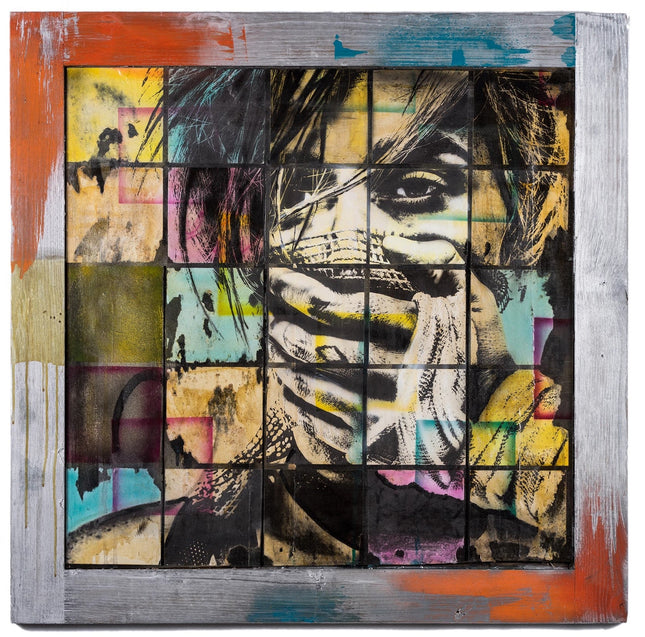
Eddie Colla 1987 Original Spray Paint Reclaimed Painting by Eddie Colla
1987 Original One of a Kind Mixed Media Spray Paint & Reclaimed Items Painting Artwork on Reused Wood by Popular Street Graffiti Artist Eddie Colla. 2019 Signed Original Mixed Media Spray Paint Acrylic Painting With Reclaimed Elements Artwork Size 34x34 "1987" 34 x 34 inches (86 x 86cm) Mixed media on wood 2019 Signed and titled on the back
$3,096.00
-
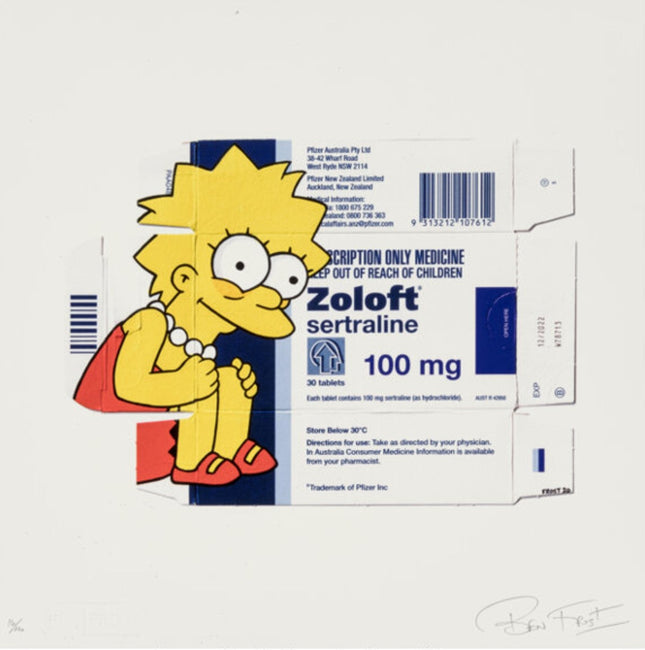
Ben Frost Social Distancing Archival Print by Ben Frost
Social Distancing Simpsons Archival Pigment Fine Art Limited Edition Print on 310gsm Bauhaus Cotton Rag Paper by Artist Ben Frost, Street Pop Art Graffiti. 2020 Signed & Numbered Limited Edition of 40 Artwork Size 12x12. Ben Frost (b. 1975) Social Distancing, 2020 Archival digital print on Bauhaus Cotton Rag Stock paper 12 x 12 inches (30.5 x 30.5 cm) (sheet) Ed. 40 is signed and numbered in pencil along the lower edge and published by the artist. Intersecting Pop Culture and Social Commentary Ben Frost's "Social Distancing Simpsons" archival pigment fine art print is a piercing examination of contemporary society through the lens of street pop art and graffiti. This limited edition print, numbered and signed, reflects Frost's unique and often controversial approach to his art, blending pop culture icons with subversive messaging. Created in 2020, "Social Distancing Simpsons" is a compelling artwork set against the backdrop of a global pandemic, a time when social distancing became a ubiquitous part of life. By incorporating a familiar character from "The Simpsons," Frost taps into the collective consciousness and comments on the impact of societal changes on popular culture. The choice of using archival digital print on Bauhaus Cotton Rag Stock paper, a high-quality material, ensures that the vibrancy of the piece and the precision of its details are preserved. The image of the Simpson's character juxtaposed with a pharmaceutical label indicates Frost's style, often involving the fusion of disparate elements to create a jarring yet thought-provoking visual statement. This 12 x 12 inches print is a perfect square that captures the essence of Frost's artistic statement: a critique of consumerism, mental health, and the pharmaceutical industry. Ben Frost's Signature Style Frost's work is characterized by his unflinching willingness to confront and challenge viewers with uncomfortable truths about modern life. In "Social Distancing Simpsons," the collision of the cartoon world with the stark reality of medication speaks to a generation that finds solace in nostalgia while grappling with present-day anxieties. With its limited edition of 40, the artwork becomes a collector's piece, a snapshot of an era defined by isolation and the search for connection. Reflection of Street Pop Art and Graffiti Frost's art is a reflection of street pop art and graffiti in its directness and its utilization of visual language that is immediate and accessible. Incorporating street art aesthetics into fine art prints blurs the lines between high art and more democratic expressions in urban environments. "Social Distancing Simpsons" is a testament to the power of this genre to communicate beyond words, offering a visual critique that is both universal and deeply personal. In summary, "Social Distancing Simpsons" by Ben Frost is more than just an artwork; it is a commentary on the times, a mirror held up to the complexities and contradictions of contemporary life. Through his expert blending of pop culture references with cutting social commentary, Frost solidifies his place as a significant voice in street pop art and graffiti artwork. This piece, in particular, stands as a poignant reminder of 2020, capturing the essence of a moment that has left an indelible mark on society.
$684.00 $616.00
-
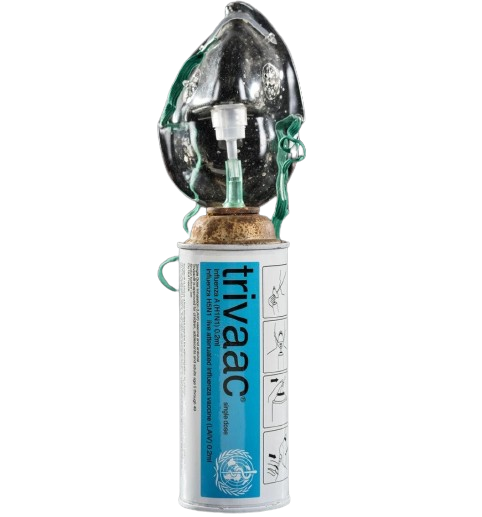
Eddie Colla Trivaac Inhalation Vaccine HPM Spray Paint Can Sculpture by by Eddie Colla
Trivaac Inhalation Vaccine HPM Hand Made Limited Edition Mixed Media, Reclaimed Items, Spray Can Sculpture Artwork by graffiti street artist modern pop artist Eddie Colla. 2020 Signed & Numbered HPM Made & Printed Limited Edition of 30 Spray Paint Can Sculpture Artwork. These Are Art Pieces, They Are Not Medical Devices. "I originally made these fake inhalation vaccines as props for two installations I did with D Young V, Epilogue, and Memento Mori. The installations revolved around apocalyptic possibilities. These recycled Spray paint cans were meant to be discarded inhalation vaccines that the World Health Organization had distributed during a global pandemic. The labels contain information about application dosage and active ingredients. I did a lot of research regarding previous pandemics, such as H1N1 (bird flu). The idea was to create an artifact as real as possible to resemble a failed attempt to contain a global pandemic." Eddie Colla Artistic Representation of Global Pandemics Eddie Colla's "Trivaac Inhalation Vaccine" mixed media artworks reflect a hauntingly prescient take on global health crises through the lens of Street Pop Art and graffiti Artwork. This limited edition series, consisting of only 30 signed and numbered pieces, incorporates reclaimed items and spray paint cans to form sculptures that stand as poignant artifacts of apocalyptic possibilities. Created as part of two installations with fellow artist D Young V, "Epilogue" and "Memento Mori," Colla's sculptures were designed to represent discarded inhalation vaccines distributed by the World Health Organization during a fictional global pandemic. These installations explored themes of human vulnerability, societal collapse, and the interventions that come into play during such catastrophic events. The sculptures themselves, crafted to mimic the appearance and informational detail of real medical devices, resonate with the realism and urgency of a world grappling with the threat of pandemics. Colla's meticulous research into previous health crises, such as H1N1, informed the creation of this spray can sculpture. The labels on each canister are detailed with application dosage and active ingredients, contributing to the authentic feel of the pieces. This attention to detail not only enhances the visual impact of the sculptures but also embeds a narrative that ties them to the real-world context of public health emergencies. Cultural Commentary through Mixed Media The "Trivaac Inhalation Vaccine" sculptures starkly comment on the intersection of art, science, and societal response to global health challenges. By using reclaimed spray paint cans, Colla repurposes the mundane and aligns his work with the ethos of recycling and sustainability. These themes are increasingly relevant in contemporary discourse. These sculptures transform the spray can, a ubiquitous tool in street art, into a vessel of deeper meaning, reflecting on the throwaway culture and the implications of medical waste. This body of work also questions the efficacy and accessibility of healthcare interventions, highlighting the disparity between the intended purpose of medical devices and their actual implementation in crisis scenarios. Colla's sculptures suggest a history of use and urgency when these objects were vital to survival. The limited edition nature of these pieces emphasizes their uniqueness as artworks while alluding to the scarcity of resources that can occur in times of crisis. Street Pop Art & Graffiti Artwork's Evocative Power Eddie Colla's contribution to Street Pop Art and graffiti Artwork is characterized by his ability to evoke robust responses through objects that bridge art and reality. His sculptures are not passive objects; they are conversation starters that prompt viewers to think critically about the state of the world and our responses to impending dangers. In the tradition of street art, these works are accessible yet complex, visually striking yet laden with meaning. The "Trivaac Inhalation Vaccine" series underscores the evocative power of street pop art and graffiti to comment on and engage with current events. Through this series, Colla extends the narrative capabilities of street art beyond the walls and into the three-dimensional realm, offering a tangible connection to the issues that permeate our collective consciousness. In essence, Eddie Colla's "Trivaac Inhalation Vaccine" sculptures embody the innovative and reflective qualities of Street Pop Art and graffiti Artwork. By blending art with societal critique elements, Colla captures the imagination and ignites discourse, cementing his role as an artist who observes and participates in the broader conversations of our time. His work is a reminder of art's impact on interpreting, understanding, and questioning the world around us.
$298.00
-
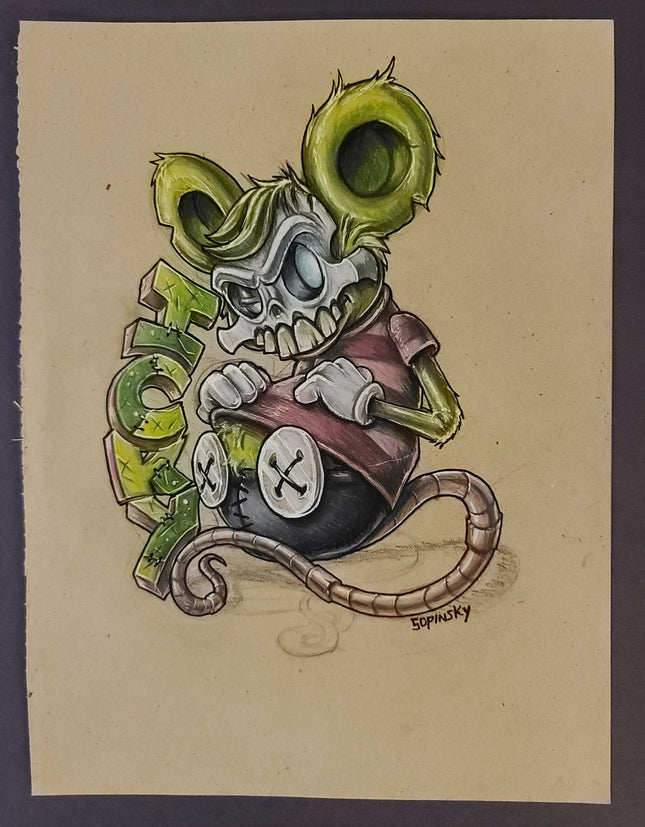
Brandon Sopinsky Icky Mouse Original Colored Pencil Drawing by Brandon Sopinsky
Icky Mouse Original One of a Kind Colored Pencil Painting Artwork on Reclaimed Paper by Popular Street Graffiti Artist Brandon Sopinsky. 2013 Icky Mouse Original Colored Pencil Drawing by Brandon Sopinsky
$352.00
-
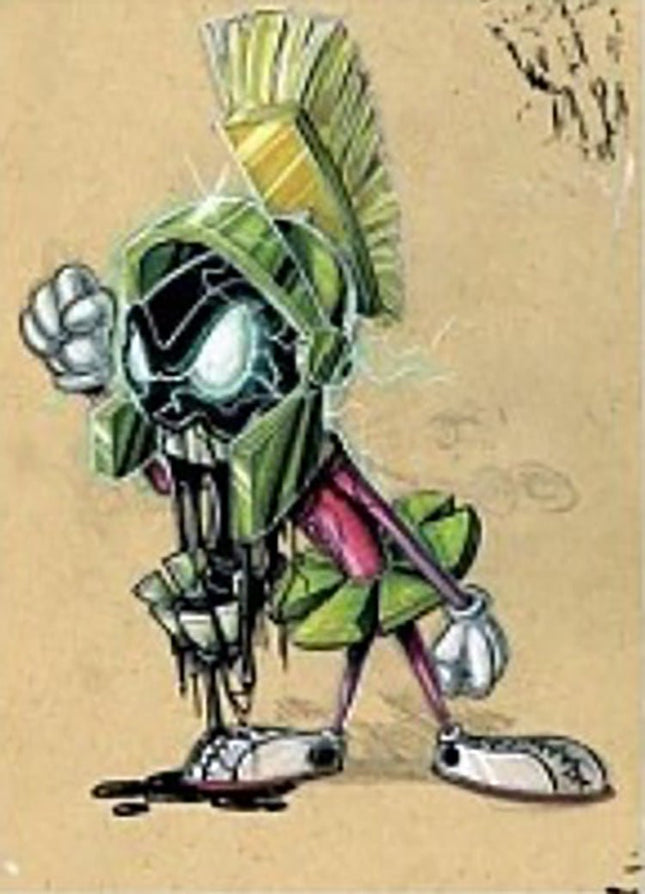
Brandon Sopinsky Marvin is Sick Giclee Print by Brandon Sopinsky
Marvin is Sick Artwork Giclee Limited Edition Print on Fine Art Paper by Pop Culture Graffiti Artist Brandon Sopinsky.
$134.00
-
Denial- Daniel Bombardier Covid No 19 Rouge Archival Print by Denial- Daniel Bombardier
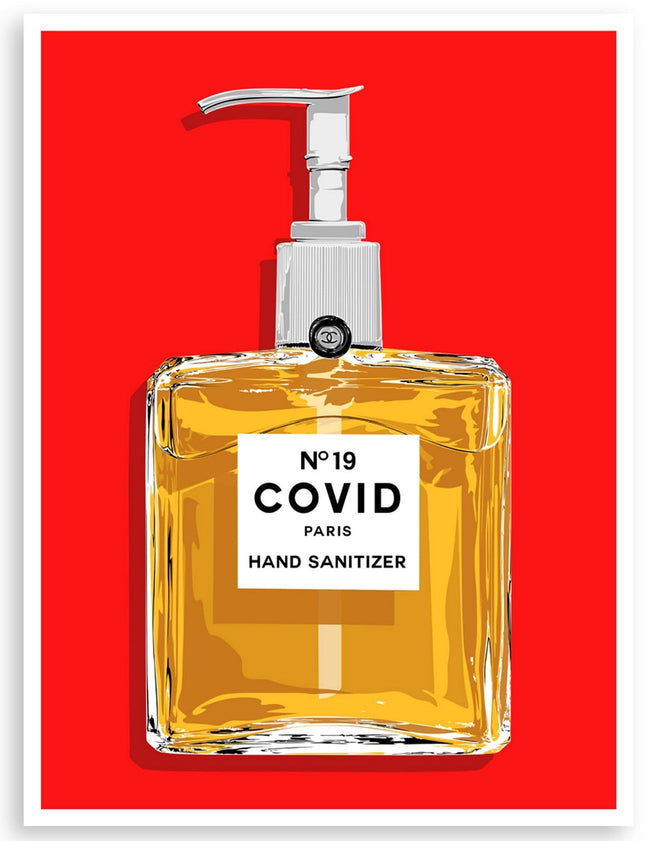
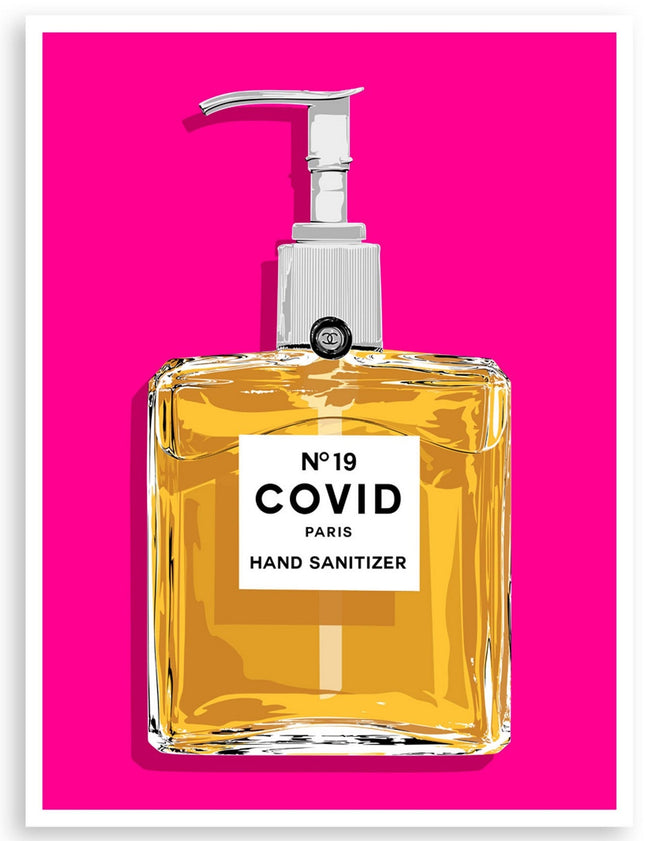
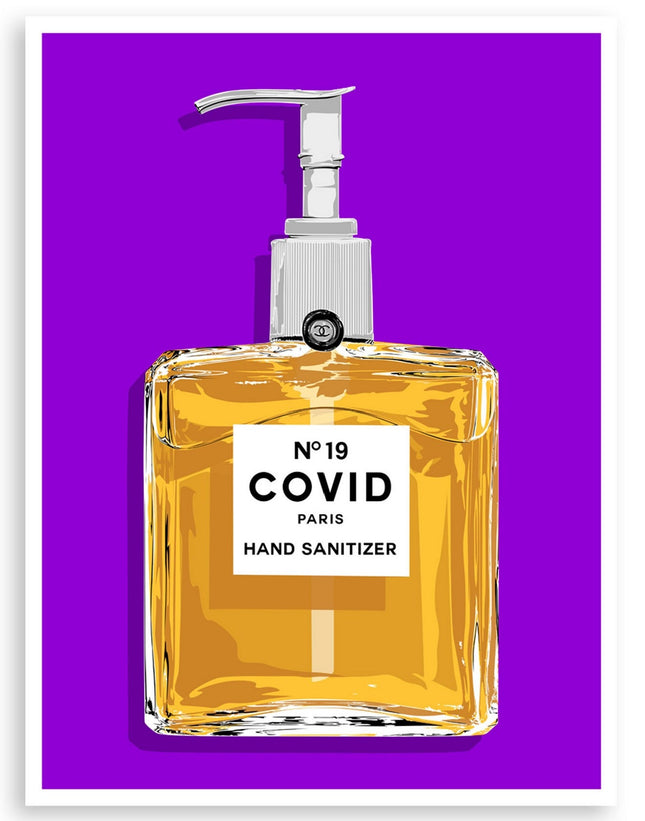
Covid No 19- Rouge Limited Edition Archival Pigment Print on 290gsm MOAB Fine Art Paper by Graffiti Pop Art and Street Artist Denial. 2021 Signed & Numbered Limited Edition of 19 Rouge Covid19 Chanel Hand Sanitizer Virus Variant. Numbered, Signed, Stamped on Reverse Archival Pigment Print on MOAB Fine Art Paper 290 GSM Size 18" x 24" Denial’s COVID No. 19: Luxury Branding in the Age of Global Crisis Denial’s COVID No. 19 is a striking archival pigment print released in 2021 as a limited edition of 19, each hand-signed, numbered, and stamped on 290gsm MOAB fine art paper. The work appropriates the form of a Chanel No. 5 perfume bottle, replacing its iconic label with a fictional product name: COVID No. 19 Hand Sanitizer. Rendered with hyper-clean digital precision, the image reconfigures the aesthetics of high fashion to comment on the absurdities of pandemic-era consumerism. The hand sanitizer bottle is presented with all the visual authority of a luxury good, transforming an object of necessity into a parody of status and desire. At the core of this piece is a brutal cultural observation: during a global health emergency, everyday tools of survival—like sanitizer and masks—were elevated to symbols of identity, fashion, and economic access. Denial’s rebranding of Chanel’s perfume into a virus-era commodity confronts this shift head-on. The artwork doesn’t merely lampoon luxury—it reveals how systems of marketing can absorb trauma, repackage it, and sell it back to the public. The Chanel-style labeling is clinical yet elegant, a nod to how visual minimalism often masks corporate manipulation. Commercial Aesthetics as Subversive Weaponry Denial’s artistic strategy centers on the theft and recontextualization of commercial language. With COVID No. 19, the use of vector-sharp line work, realistic light reflections, and exacting product design mimics advertising to the point of deception. This imitation is intentional. The viewer is meant to initially read the image as authentic—something from a fashion magazine or cosmetics campaign—before the irony of the label snaps into focus. The dissonance between form and content invites a critique of the capitalist tendency to aestheticize suffering. This visual methodology ties directly into the ethos of Street Pop Art & Graffiti Artwork. Denial’s roots in unauthorized public messaging and subcultural image disruption remain present, even as the work exists in a fine art format. The absence of spray drips or rough textures does not diminish the rebellion. Instead, it retools the graphic language of commercial persuasion to undermine itself from within. What looks like a product pitch is, in fact, a visual accusation. The pandemic is not the subject—it is the branding of the pandemic that comes under fire. Street Pop Art as Pandemic Documentation COVID No. 19 operates as both satire and historical record. It captures a cultural moment when survival tools became luxury statements, when scarcity was linked to exclusivity, and when branding extended even to medical supplies. Denial’s artwork speaks to the way modern crises are not only experienced but marketed—how the fear of illness was filtered through the same systems that sell beauty, fashion, and lifestyle. The sanitizer bottle becomes a symbol not of protection, but of consumption. By fusing the iconography of fashion with the reality of a global pandemic, Denial forces the viewer to reconsider the boundaries between design and ethics, branding and survival. The visual simplicity of COVID No. 19 hides a layered indictment of how quickly commercial aesthetics can strip events of meaning. In the tradition of Street Pop Art & Graffiti Artwork, this piece turns familiar symbols against themselves, exposing the fragility of culture’s glossy surfaces when confronted with real human urgency.
$313.00
-
LushSux LushSux Condom White Art Object by LushSux
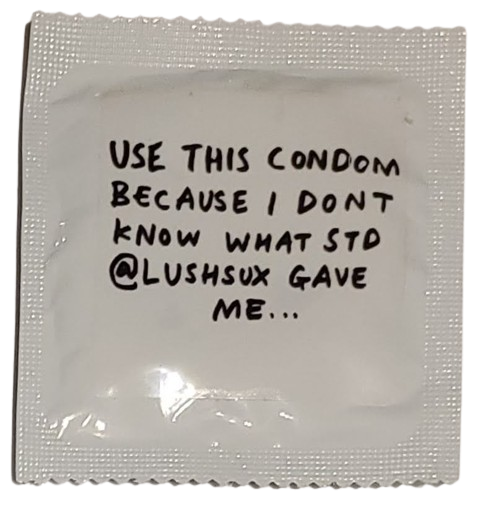
LushSux Condom- White Limited Edition Condom Art Collectible Artwork by street graffiti artist Lussux. 2013 Custom Condom Art Object Limited Edition, Not for use; this is artwork only! Unopened custom packaging from 2013 reads: Use This Condom Because I Don't Know What STD @Lushsux Gave Me...
$16.00
-
Ron Guyatt Buy Z-Bonds Silkscreen Print by Ron Guyatt
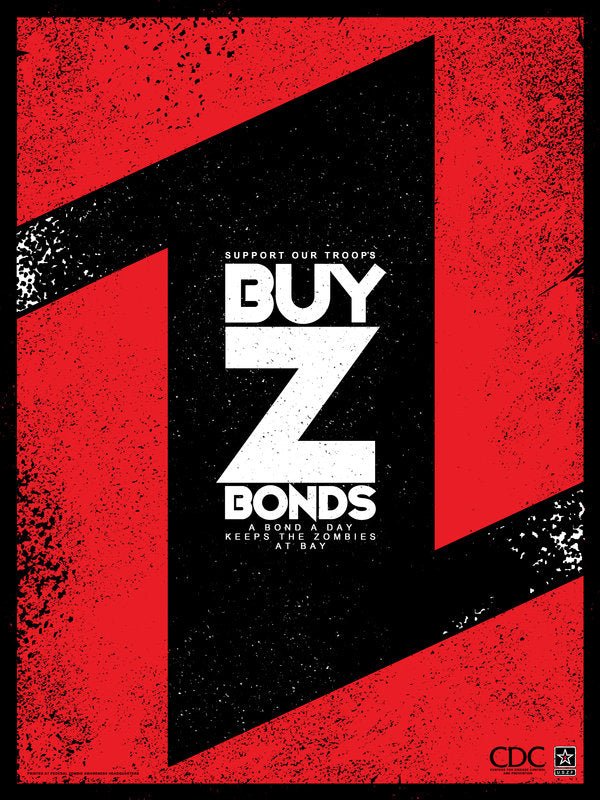
Buy Z-Bonds- Zombie Apocalypse Propaganda Limited Edition 2-Color Hand-Pulled Silkscreen Print on Fine Art Paper by Ron Guyatt Graffiti Street Artist Modern Pop Art. Artist Ron Guyatt created this great propaganda poster to help support our fight against the looming zombie apocalypse. The posters educate the population to the need to military respond to the threat. Each poster is signed and numbered, measures 18″ x 24″, and is available in a limited edition of 100.
$103.00
-
Denial- Daniel Bombardier Covid No 19 Sarcelle Archival Print by Denial- Daniel Bombardier
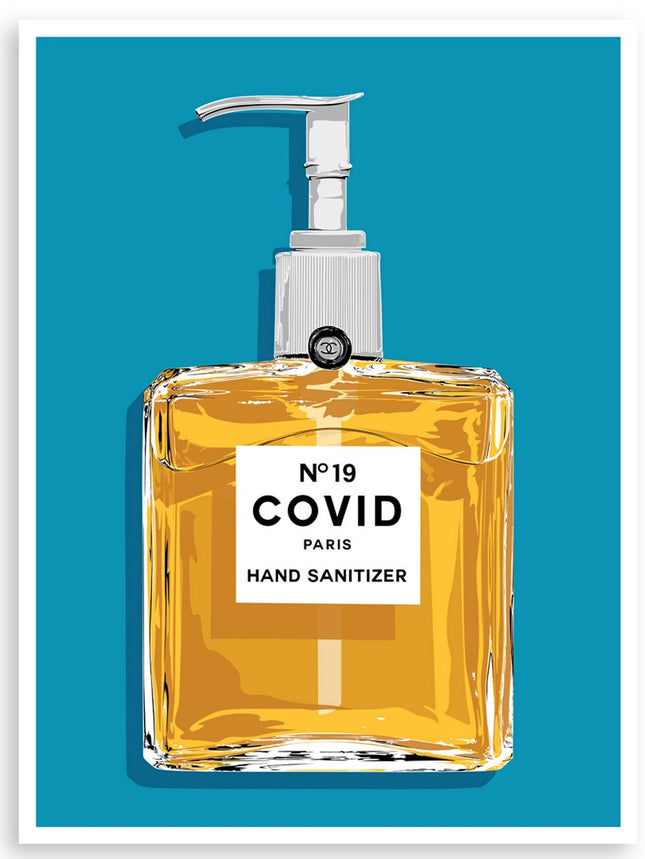
Covid No 19- Sarcelle Limited Edition Archival Pigment Print on 290gsm MOAB Fine Art Paper by Graffiti Pop Art and Street Artist Denial. 2021 Signed & Numbered Limited Edition of 19 Sarcelle Covid19 Chanel Hand Sanitizer Virus Variant. Numbered, Signed, Stamped on Reverse Archival Pigment Print on MOAB Fine Art Paper 290 GSM Size 18" x 24" Denial’s COVID No. 19: Luxury Branding in the Age of Global Crisis Denial’s COVID No. 19 is a striking archival pigment print released in 2021 as a limited edition of 19, each hand-signed, numbered, and stamped on 290gsm MOAB fine art paper. The work appropriates the form of a Chanel No. 5 perfume bottle, replacing its iconic label with a fictional product name: COVID No. 19 Hand Sanitizer. Rendered with hyper-clean digital precision, the image reconfigures the aesthetics of high fashion to comment on the absurdities of pandemic-era consumerism. The hand sanitizer bottle is presented with all the visual authority of a luxury good, transforming an object of necessity into a parody of status and desire. At the core of this piece is a brutal cultural observation: during a global health emergency, everyday tools of survival—like sanitizer and masks—were elevated to symbols of identity, fashion, and economic access. Denial’s rebranding of Chanel’s perfume into a virus-era commodity confronts this shift head-on. The artwork doesn’t merely lampoon luxury—it reveals how systems of marketing can absorb trauma, repackage it, and sell it back to the public. The Chanel-style labeling is clinical yet elegant, a nod to how visual minimalism often masks corporate manipulation. Commercial Aesthetics as Subversive Weaponry Denial’s artistic strategy centers on the theft and recontextualization of commercial language. With COVID No. 19, the use of vector-sharp line work, realistic light reflections, and exacting product design mimics advertising to the point of deception. This imitation is intentional. The viewer is meant to initially read the image as authentic—something from a fashion magazine or cosmetics campaign—before the irony of the label snaps into focus. The dissonance between form and content invites a critique of the capitalist tendency to aestheticize suffering. This visual methodology ties directly into the ethos of Street Pop Art & Graffiti Artwork. Denial’s roots in unauthorized public messaging and subcultural image disruption remain present, even as the work exists in a fine art format. The absence of spray drips or rough textures does not diminish the rebellion. Instead, it retools the graphic language of commercial persuasion to undermine itself from within. What looks like a product pitch is, in fact, a visual accusation. The pandemic is not the subject—it is the branding of the pandemic that comes under fire. Street Pop Art as Pandemic Documentation COVID No. 19 operates as both satire and historical record. It captures a cultural moment when survival tools became luxury statements, when scarcity was linked to exclusivity, and when branding extended even to medical supplies. Denial’s artwork speaks to the way modern crises are not only experienced but marketed—how the fear of illness was filtered through the same systems that sell beauty, fashion, and lifestyle. The sanitizer bottle becomes a symbol not of protection, but of consumption. By fusing the iconography of fashion with the reality of a global pandemic, Denial forces the viewer to reconsider the boundaries between design and ethics, branding and survival. The visual simplicity of COVID No. 19 hides a layered indictment of how quickly commercial aesthetics can strip events of meaning. In the tradition of Street Pop Art & Graffiti Artwork, this piece turns familiar symbols against themselves, exposing the fragility of culture’s glossy surfaces when confronted with real human urgency.
$313.00
-
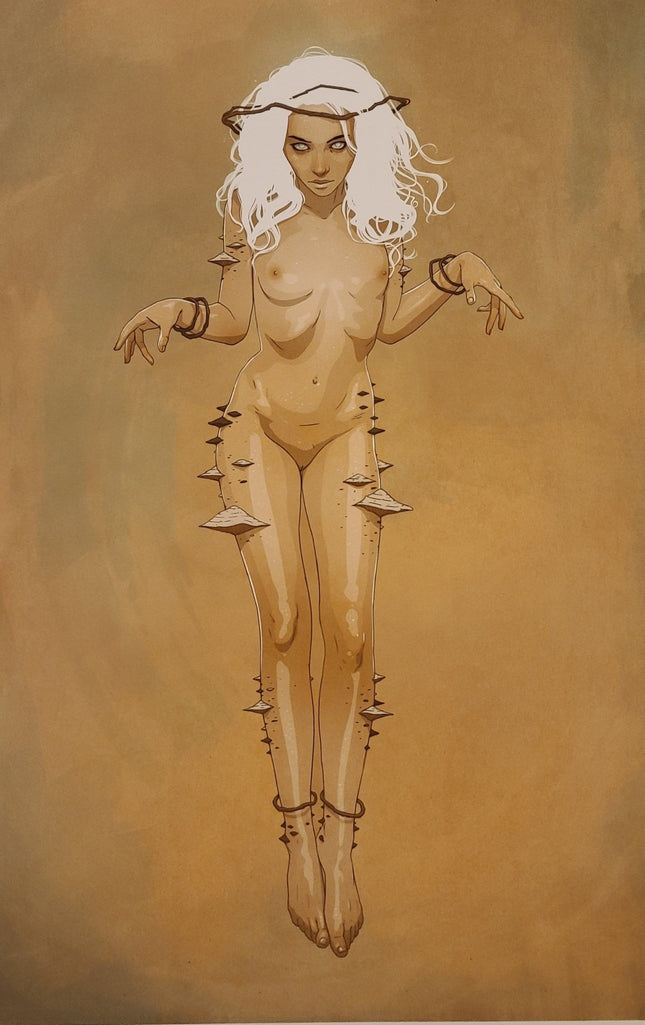
Jason Levesque Feral Nude Giclee Print by Jason Levesque
Feral Nude Artwork Giclee Limited Edition Print on Fine Art Paper by Pop Culture Graffiti Artist Jason Levesque. 2014 Signed & Numbered Limited Edition of 50 Artwork Size 12x18
$134.00
-
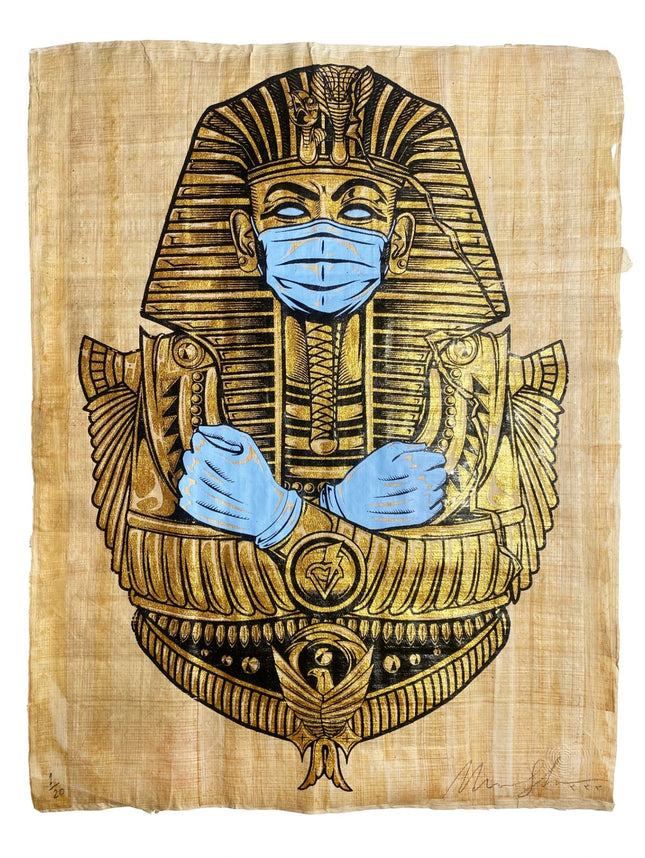
Marwan Shahin The Masked Pharaoh Silkscreen Print by Marwan Shahin
The Masked Pharaoh 3-Color Hand-Pulled Diamond Dust Limited Edition Silkscreen Print on Egyptian Papyrus Paper by Marwan Shahin Rare Street Art Famous Pop Artwork Artist. 2022 Signed & Numbered Limited Edition of 20 Size 14x17.5 & "NFT" "Shahin Studios is delighted to present The Masked Pharaoh Papyrus by Marwan Shahin, The Artwork was first to be created in lockdown during the Covid-19 pandemic, imagining TutAnkhAmoun staying safe and protecting himself against the modern-day plague. this edition of the artwork is interpreted with hand-pulled Silkscreen print on Authentic Egyptian Papyrus, and each print is intricately arranged with a filigree of black Diamond Dust, to produce visually intoxicating kaleidoscope-like effects. contains an NFT crypto-chip by the Fine Art Ledger. Each print is Authenticated and registered on the blockchain by The Fine Art Ledger comes with a digital Certificate of Authenticity containing its cryptographic stamp." -Marwan Shahin
$748.00 $673.00
-
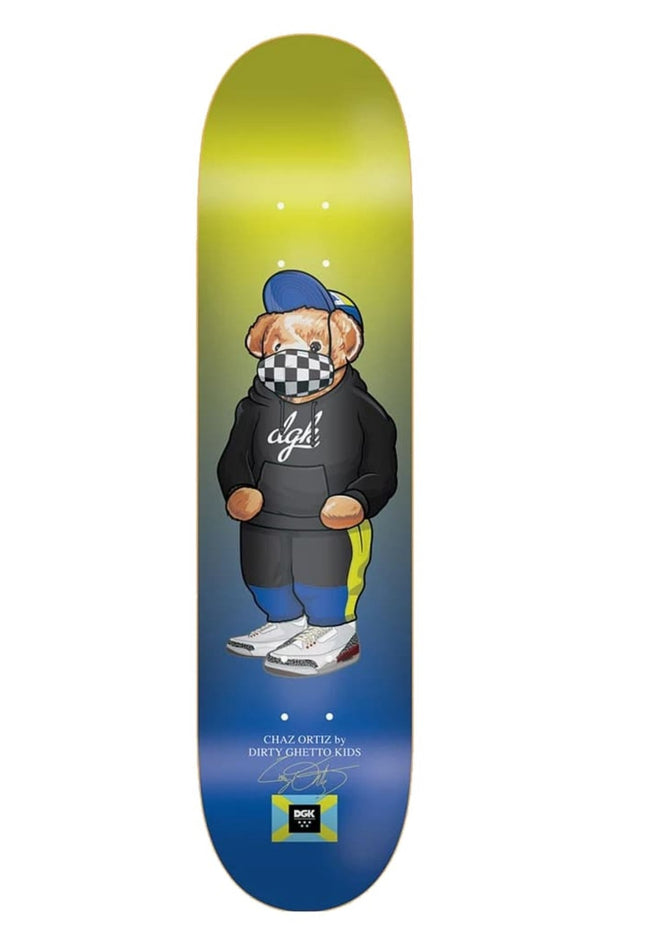
DGK Ortiz Masked 7.7 Skateboard Art Deck by DGK
Ortiz Masked- 7.75 Deck Deck Limited Edition Silkscreen Skateboard deck art by street pop culture artist DGK. Traditional 7-PlyWood, Medium Concave`
$113.00
-
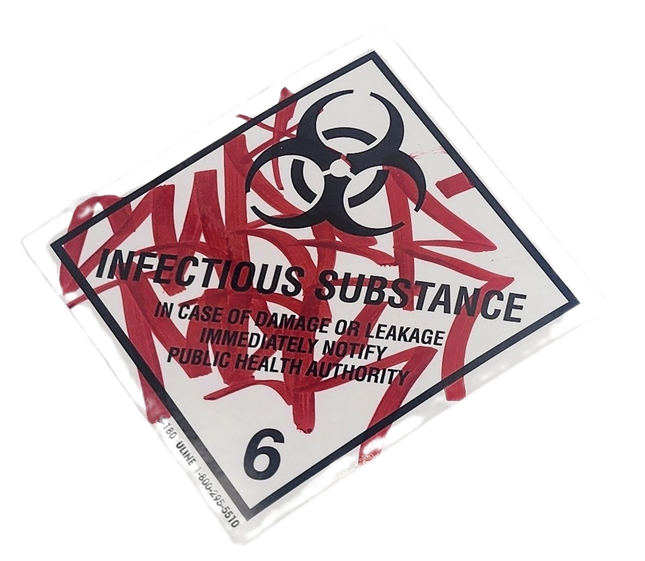
Saber Infectious Substance Slap-Up Label Sticker Original Tag Art by Saber
Infectious Substance Slap-Up Label Sticker Original Tag Art by Saber Original Permanent Marker Art Drawing on Mailing Glossy Biohazard Sticker by Graffiti Artist Modern Street Artwork. 2020 Signed Original Slap Up Graffiti Art Tag 4x4 Marker Tagged on Infectious Substance Warning Bio-Hazard Label Uline S-180 Sticker. Slap Up In Perfect Condition. Reframing Perception through Street Pop Art Street pop art and graffiti artwork, characterized by their vibrant immediacy and cultural resonance, have a way of capturing the zeitgeist of the era in which they were born. The "Infectious Substance Warning Bio-Hazard Label Uline S-180 Sticker" series by graffiti artist Saber, whose real name is Ryan Weston Shook, exemplifies this phenomenon. With his 2020 collection of signed original slap-up graffiti art tags, Saber converges the world of hazardous material warnings with the rebellious spirit of street art. Each 4x4 marker-tagged piece carries his unique interpretation, transforming the ominous implications of the bio-hazard symbol into a canvas that speaks to the broader impact of what is genuinely infectious in our societies. Saber's Artistic Intervention on Bio-Hazard Symbols Saber's choice of the bio-hazard label as a substrate for his art is particularly telling. The symbol, designed to alert to dangerous pathogens, is recontextualized in his work to question the infectious nature of ideas, the virulence of art, and the power of expression to permeate and affect the public psyche. The contagious substance label, meant to protect by warning, is overlaid with Saber's tags that neither obscure the message nor dilute its significance. Instead, they add a layer of meaning, an artist's signature that challenges the viewer to question the boundaries between safety, censorship, public health, and public discourse. Modern Street Artwork as Social Commentary In modern street artwork, Saber's creations are a powerful testament to the artist's role as a social commentator. His work on the Uline S-180 stickers is a visual metaphor for 2020, a period marked by global health crises and a heightened awareness of biological hazards. By tagging these stickers, Saber connects the dots between the literal infectious agents the labels warn against and the metaphorical contagion of fear, misinformation, and societal unrest that characterized the year. The permanence of the marker on the glossy sticker mirrors the lasting impact of the year's events on the collective consciousness, ensuring that while the hazards may be contained, the dialogue they incite is not. In every line and color choice, Saber's art on the bio-hazard stickers demands engagement and reflects the unyielding nature of Street Pop Art and Graffiti Artwork. As a documented figure in the graffiti community, Saber's American roots and contributions continue to shape the conversation around the power of street art to reframe our perception of the symbols that dominate our public spaces. Each tag is a deliberate reclamation, a declaration that even the most exemplary of symbols can become a medium for enduring artistic expression.
$16.00
-
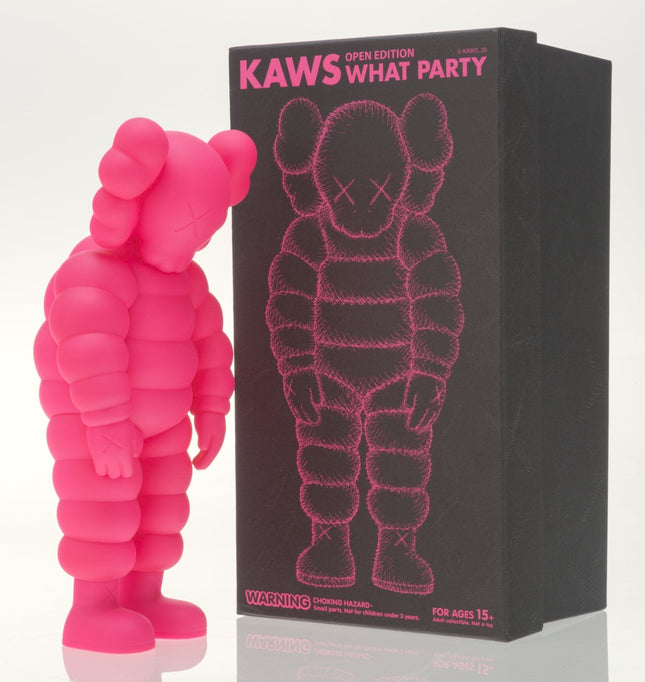
Kaws- Brian Donnelly What Party Figure Pink Fine Art Toy by Kaws- Brian Donnelly
What Party Figure- Pink Limited Edition Vinyl Art Toy Sculpture Collectible Artwork by Legendary Modern Artist Kaws. 2020 Out of Print COVID Open Edition Size 5.1x11.3x3.7. New In Box Printed Foot. Pink Chum is wondering what happened to the parties in 2020? The What Party Figure in Pink emerges as a poignant symbol in the oeuvre of Kaws, the influential modern artist whose works have continuously blurred the boundaries between commercial and fine art. This limited edition vinyl art toy sculpture stands at 5.1x11.3x3.7 inches, a size that is intimate yet substantial, allowing it to make a statement in any collection. Released in 2020, a year marked globally by the COVID-19 pandemic, this collectible piece adds resonance as its title, "What Party," echoes the year's isolation and the sudden absence of communal gatherings and celebrations. Crafted in bright Pink, the figure is instantly recognizable as a Kaws creation, with its characteristic crossed-out eyes and exaggerated hands, elements that have become synonymous with the artist’s unique visual language. The toy is not merely a playful item; it is a legitimate and impactful piece of art that comments on the human condition. Its vivid color can be interpreted as a beacon of hope or a siren call to attention, forcing viewers to ponder on the changes our society faced, especially during a time when the world came to an abrupt pause. Each sculpture comes brand new in its original box, indicating that it has never been displayed or handled. The printed foot of the figure ensures authenticity, an essential aspect for collectors and admirers of Kaws' work. While this piece was categorized as an open edition, its availability became scarce as the demand outpaced supply, and it swiftly transitioned out of print, turning it into a sought-after artifact. The What Party Figure stands not just as a testament to Kaws' enduring influence in the intersection of pop art, street art, and graffiti art but also as a cultural commentary encapsulated in vinyl. It captures the essence of a unique moment in history, symbolizing the collective yearning for connection in a time of global upheaval and the enduring power of art to reflect and resonate with the zeitgeist.
$1,051.00
-
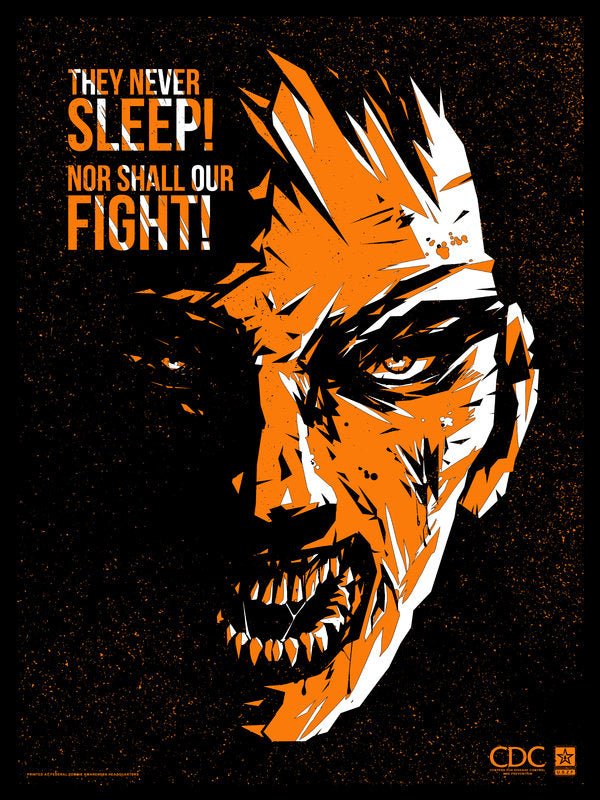
Ron Guyatt The Never Sleep Silkscreen Print by Ron Guyatt
The Never Sleep- Zombie Apocalypse Propaganda Limited Edition 2-Color Hand-Pulled Silkscreen Print on Fine Art Paper by Ron Guyatt Graffiti Street Artist Modern Pop Art. Artist Ron Guyatt created this great propaganda poster to help support our fight against the looming zombie apocalypse. The posters educate the population to the need to military respond to the threat. Each poster is signed and numbered, measures 18″ x 24″, and is available in a limited edition of 100.
$103.00
-
Nimit Malavia Forever | Never Giclee Print by Nimit Malavia
Forever | Never Artwork Giclee Limited Edition Print on Hahnemuhle Fine Art Rag Paper by Pop Culture Graffiti Artist Nimit Malavia. Nimit Malavia is a Canadian visual artist and illustrator known for his intricate and imaginative artworks. His style often combines delicate line work with a strong sense of narrative, drawing inspiration from various sources such as mythology, fairy tales, and contemporary culture. Malavia's work typically incorporates a mix of traditional and digital media, including ink, watercolor, and Photoshop.
$159.00
-
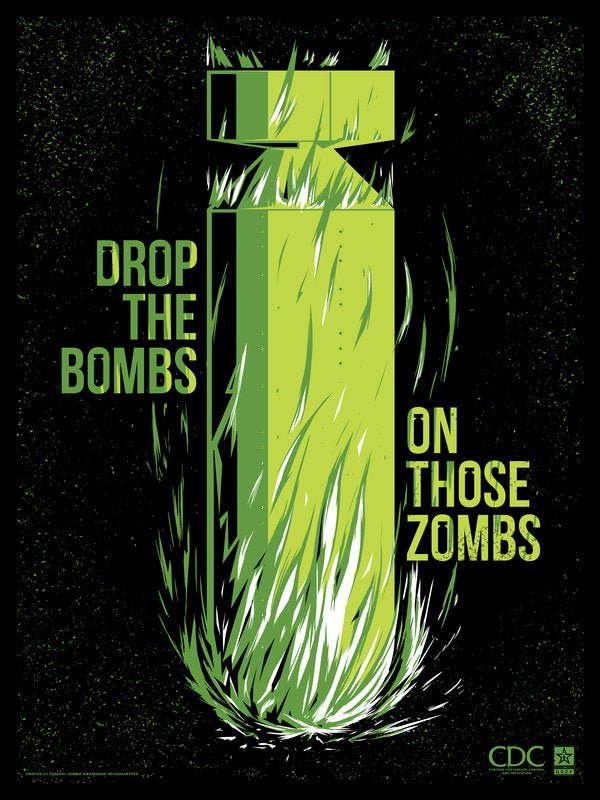
Ron Guyatt Drop the Bomb Silkscreen Print by Ron Guyatt
Drop the Bomb- Zombie Apocalypse Propaganda Limited Edition 2-Color Hand-Pulled Silkscreen Print on Fine Art Paper by Ron Guyatt Graffiti Street Artist Modern Pop Art. Artist Ron Guyatt created this great propaganda poster to help support our fight against the looming zombie apocalypse. The posters educate the population to the need to military respond to the threat. Each poster is signed and numbered, measures 18″ x 24″, and is available in a limited edition of 100.
$103.00
-
Saber Inhalation Hazard Skull Slap-Up Label Sticker Original Tag Art by Saber
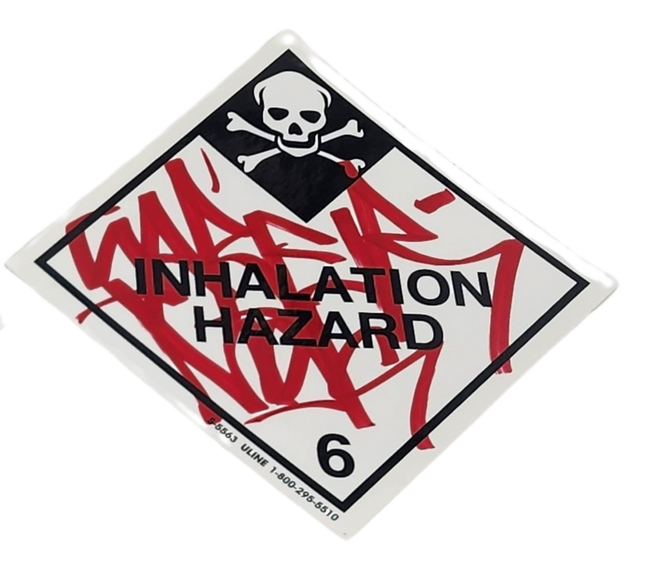
Inhalation Hazard Skull Slap-Up Label Sticker Original Tag Art by Saber Original Permanent Marker Art Drawing on Mailing Glossy Skull Sticker by Graffiti Artist Modern Street Artwork. 2020 Signed Original Slap Up Graffiti Art Tag 4x4 Marker Tagged on Inhalation Hazard Skull and Cross Bones Jolly Roger Warning Label Uline S-5563 Sticker. Slap Up In Perfect Condition. Subversive Aesthetics in Street Pop Art Street Pop Art and Graffiti Artwork are distinguished by their raw, pulsating energy and penchant for transforming the ordinary into the extraordinary. The "Inhalation Hazard Skull Slap-Up Label Sticker" vividly embodies this transformative power. American artist Saber, born Ryan Weston Shook, has redefined the boundaries of art by bringing his original permanent marker drawings to the glossy skull stickers typically found in shipping and packaging. Each 4x4 piece is not just a slap-up graffiti art tag; it is a signed original that stands as a testament to the creativity and rebellious spirit of the street art movement. The series, marked by the jolly Roger skull and crossbones of the Uline S-5563 sticker, represents a provocative fusion of danger and artistry. Saber's Visual Commentary on Risk and Art Historically associated with piracy and poison, the skull and crossbones symbol takes on new life under Saber's hand. His work on these inhalation hazard labels is a bold commentary on the risks inherent in the act of creation itself, especially within the often illicit world of graffiti. Combined with the bold, chaotic lines of Saber's tag, this imagery creates a striking juxtaposition – a dialogue between the formal symbolism of danger and street art's personal, anarchic language. The pieces, created in the tumultuous year of 2020, resonate with the global atmosphere of anxiety and the need for an outlet, a voice amidst the chaos. Street Pop Art as Cultural Narrative In the context of modern street artwork, Saber's "Inhalation Hazard Skull Slap-Up Label Sticker" is more than an artistic act; it is a cultural narrative. These stickers, once indicators of physical danger, now signal the presence of a different kind of hazard – the stifling of expression and the toxic environments that threaten creativity. Through his artwork, Saber challenges observers to reconsider the implications of the symbols that populate our world and recognize graffiti's power as a form of social and political discourse. Each sticker is a bold declaration of presence, a signature that marks the world with a message of resilience and resistance. In the face of adversity, Saber's art stands as a beacon of the enduring power of Street Pop Art and Graffiti Artwork, testifying to the indomitable urge to leave one's mark on the world.
$16.00
-
Shepard Fairey- OBEY Just Future Rising Silkscreen Print by Shepard Fairey- OBEY
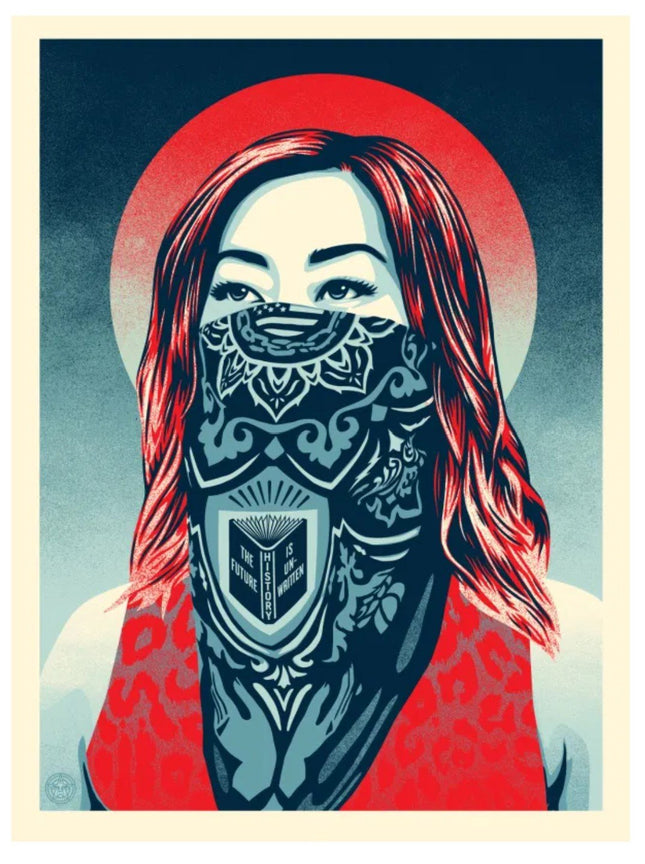
Just Future Rising 4-Color Hand-Pulled Limited Edition Silkscreen Print on Fine Speckletone Art Paper by Shepard Fairey Rare Street Art OBEY Pop Artwork Artist. 2021 Signed & Numbered, Just Future Rising 18 inches by 24 inches Edition of 450 June 23, 2021 "I created for the Time “VOTE” cover just before the 2020 election. At the time, I wanted to address the very unique situation we were in as a country as we faced the Covid-19 pandemic, unrest around police brutality and racial discrimination, voter suppression, and intense political division. We are still facing all of those things, though the development of Covid vaccines has significantly improved public safety and benefitted the fight to end the pandemic. In this illustration, the usually clear-cut rebel symbol of a bandana covering a face takes on a different meaning during Covid, becoming an emblem of safety, respect for one’s fellow citizens, and a sign that the wearer believes in science." -Shepard Fairey The "Just Future Rising" is a striking silkscreen print by Shepard Fairey, an artist renowned for his profound impact on street and pop art through the OBEY series. This limited edition artwork, measuring 18 by 24 inches, was released on June 23, 2021, in a numbered series of 450 pieces. Each print is hand-pulled, utilizing four colors on fine speckle tone paper, highlighting Fairey's signature style that merges art with social commentary. This piece is an extension of his engagement with contemporary issues, as it initially accompanied the Time magazine “VOTE” cover crafted in the lead-up to the 2020 election. Fairey's work consistently echoes themes of political activism and cultural critique, and "Just Future Rising" is a vivid representation of that ethos. The image reflects the turbulent climate of its creation: a nation grappling with the COVID-19 pandemic, societal upheaval stemming from racial injustice, the challenges to democracy through voter suppression, and deep-seated political polarization. In this print, the image of a woman with a bandana covering her face symbolizes a multifaceted narrative—transforming a traditional sign of rebellion into a symbol of safety and solidarity in the face of a public health crisis. The bandana, adorned with intricate patterns, carries a badge that reads "The Future is Unwritten," reinforcing the message that change is possible and the future is in the hands of the people. Fairey's choice to depict the bandana, a classic rebel icon, as a protective mask denotes a profound shift in cultural symbols due to the pandemic. It reflects a respect for science and an acknowledgment of the collective effort required to navigate the crisis. The artwork transcends mere aesthetics, embodying the message that caring for one's community and being considerate of public health are now acts of rebellion in their own right. This resonates deeply with the artist's long-standing commitment to using his craft to support social and political change. In the portfolio of Shepard Fairey's creations, "Just Future Rising" is not just a piece of pop artwork; it is a cultural artifact born out of an era defined by upheaval and a call to action. It stands as a reminder of the power of art to influence discourse, inspire action, and reflect the complexities of the human experience in times of adversity.
$384.00
-
Denial- Daniel Bombardier Covid No 19 Rose Archival Print by Denial- Daniel Bombardier
Covid No 19- Rose Limited Edition Archival Pigment Print on 290gsm MOAB Fine Art Paper by Graffiti Pop Art and Street Artist Denial. 2021 Signed & Numbered Limited Edition of 19 Rose Covid19 Chanel Hand Sanitizer Virus Variant. Numbered, Signed, Stamped on Reverse Archival Pigment Print on MOAB Fine Art Paper 290 GSM Size 18" x 24" Denial’s COVID No. 19: Luxury Branding in the Age of Global Crisis Denial’s COVID No. 19 is a striking archival pigment print released in 2021 as a limited edition of 19, each hand-signed, numbered, and stamped on 290gsm MOAB fine art paper. The work appropriates the form of a Chanel No. 5 perfume bottle, replacing its iconic label with a fictional product name: COVID No. 19 Hand Sanitizer. Rendered with hyper-clean digital precision, the image reconfigures the aesthetics of high fashion to comment on the absurdities of pandemic-era consumerism. The hand sanitizer bottle is presented with all the visual authority of a luxury good, transforming an object of necessity into a parody of status and desire. At the core of this piece is a brutal cultural observation: during a global health emergency, everyday tools of survival—like sanitizer and masks—were elevated to symbols of identity, fashion, and economic access. Denial’s rebranding of Chanel’s perfume into a virus-era commodity confronts this shift head-on. The artwork doesn’t merely lampoon luxury—it reveals how systems of marketing can absorb trauma, repackage it, and sell it back to the public. The Chanel-style labeling is clinical yet elegant, a nod to how visual minimalism often masks corporate manipulation. Commercial Aesthetics as Subversive Weaponry Denial’s artistic strategy centers on the theft and recontextualization of commercial language. With COVID No. 19, the use of vector-sharp line work, realistic light reflections, and exacting product design mimics advertising to the point of deception. This imitation is intentional. The viewer is meant to initially read the image as authentic—something from a fashion magazine or cosmetics campaign—before the irony of the label snaps into focus. The dissonance between form and content invites a critique of the capitalist tendency to aestheticize suffering. This visual methodology ties directly into the ethos of Street Pop Art & Graffiti Artwork. Denial’s roots in unauthorized public messaging and subcultural image disruption remain present, even as the work exists in a fine art format. The absence of spray drips or rough textures does not diminish the rebellion. Instead, it retools the graphic language of commercial persuasion to undermine itself from within. What looks like a product pitch is, in fact, a visual accusation. The pandemic is not the subject—it is the branding of the pandemic that comes under fire. Street Pop Art as Pandemic Documentation COVID No. 19 operates as both satire and historical record. It captures a cultural moment when survival tools became luxury statements, when scarcity was linked to exclusivity, and when branding extended even to medical supplies. Denial’s artwork speaks to the way modern crises are not only experienced but marketed—how the fear of illness was filtered through the same systems that sell beauty, fashion, and lifestyle. The sanitizer bottle becomes a symbol not of protection, but of consumption. By fusing the iconography of fashion with the reality of a global pandemic, Denial forces the viewer to reconsider the boundaries between design and ethics, branding and survival. The visual simplicity of COVID No. 19 hides a layered indictment of how quickly commercial aesthetics can strip events of meaning. In the tradition of Street Pop Art & Graffiti Artwork, this piece turns familiar symbols against themselves, exposing the fragility of culture’s glossy surfaces when confronted with real human urgency.
$313.00
-
Phantom City Creative The Strain Version 1 Silkscreen Print by Phantom City Creative
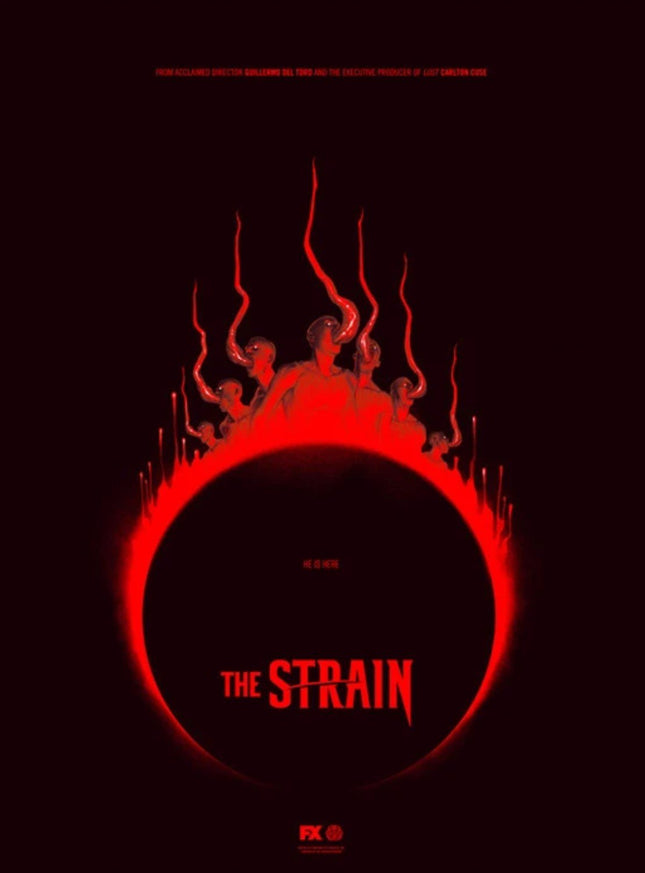
The Strain- Version 1 1-Color Hand-Pulled Limited Edition Silkscreen Print on Fine Art Paper by Phantom City Creative Rare Street Art Famous Pop Artwork Artist. The Strain FX TV Show Fine Art From Mondo.
$217.00
-
Denial- Daniel Bombardier Covid No 19 Mauve Archival Print by Denial- Daniel Bombardier
Covid No 19- Mauve Limited Edition Archival Pigment Print on 290gsm MOAB Fine Art Paper by Graffiti Pop Art and Street Artist Denial. 2021 Signed & Numbered Limited Edition of 19 Mauve Covid19 Chanel Hand Sanitizer Virus Variant. Numbered, Signed, Stamped on Reverse Archival Pigment Print on MOAB Fine Art Paper 290 GSM Size 18" x 24" Denial’s COVID No. 19: Luxury Branding in the Age of Global Crisis Denial’s COVID No. 19 is a striking archival pigment print released in 2021 as a limited edition of 19, each hand-signed, numbered, and stamped on 290gsm MOAB fine art paper. The work appropriates the form of a Chanel No. 5 perfume bottle, replacing its iconic label with a fictional product name: COVID No. 19 Hand Sanitizer. Rendered with hyper-clean digital precision, the image reconfigures the aesthetics of high fashion to comment on the absurdities of pandemic-era consumerism. The hand sanitizer bottle is presented with all the visual authority of a luxury good, transforming an object of necessity into a parody of status and desire. At the core of this piece is a brutal cultural observation: during a global health emergency, everyday tools of survival—like sanitizer and masks—were elevated to symbols of identity, fashion, and economic access. Denial’s rebranding of Chanel’s perfume into a virus-era commodity confronts this shift head-on. The artwork doesn’t merely lampoon luxury—it reveals how systems of marketing can absorb trauma, repackage it, and sell it back to the public. The Chanel-style labeling is clinical yet elegant, a nod to how visual minimalism often masks corporate manipulation. Commercial Aesthetics as Subversive Weaponry Denial’s artistic strategy centers on the theft and recontextualization of commercial language. With COVID No. 19, the use of vector-sharp line work, realistic light reflections, and exacting product design mimics advertising to the point of deception. This imitation is intentional. The viewer is meant to initially read the image as authentic—something from a fashion magazine or cosmetics campaign—before the irony of the label snaps into focus. The dissonance between form and content invites a critique of the capitalist tendency to aestheticize suffering. This visual methodology ties directly into the ethos of Street Pop Art & Graffiti Artwork. Denial’s roots in unauthorized public messaging and subcultural image disruption remain present, even as the work exists in a fine art format. The absence of spray drips or rough textures does not diminish the rebellion. Instead, it retools the graphic language of commercial persuasion to undermine itself from within. What looks like a product pitch is, in fact, a visual accusation. The pandemic is not the subject—it is the branding of the pandemic that comes under fire. Street Pop Art as Pandemic Documentation COVID No. 19 operates as both satire and historical record. It captures a cultural moment when survival tools became luxury statements, when scarcity was linked to exclusivity, and when branding extended even to medical supplies. Denial’s artwork speaks to the way modern crises are not only experienced but marketed—how the fear of illness was filtered through the same systems that sell beauty, fashion, and lifestyle. The sanitizer bottle becomes a symbol not of protection, but of consumption. By fusing the iconography of fashion with the reality of a global pandemic, Denial forces the viewer to reconsider the boundaries between design and ethics, branding and survival. The visual simplicity of COVID No. 19 hides a layered indictment of how quickly commercial aesthetics can strip events of meaning. In the tradition of Street Pop Art & Graffiti Artwork, this piece turns familiar symbols against themselves, exposing the fragility of culture’s glossy surfaces when confronted with real human urgency.
$313.00
-
Saber Quarantine Neon Orange Slap-Up Label Sticker Original Tag Art by Saber
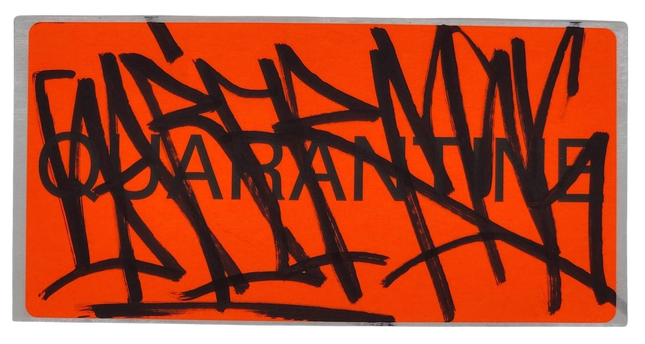
Quarantine High Vis Tagged Original Slap-Up Label Marker Painting/Drawing Art on Mailing Label by Tru Graffiti Legend Saber Urban Street Artist. 2020 Signed Marker Original Quarantine Collection Slap Up Graffiti Art Tag 6.5x3 Tagged on Virus Covid Quarantine High Visibility Neon Orange Warning Label.
$44.00
-
DGK Fagundes Masked 7.9 Skateboard Art Deck by DGK
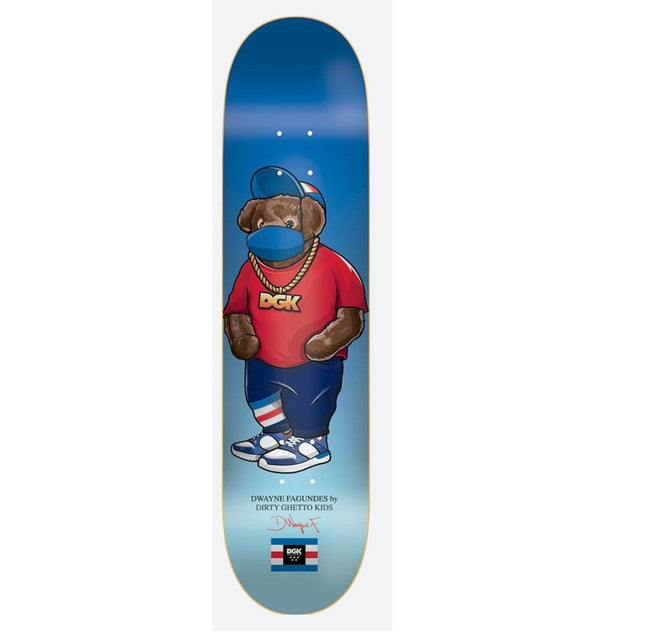
Fagundes Masked- 7.9 Deck Limited Edition Silkscreen Skateboard deck art by street pop culture artist DGK. Dwayne Fagundes Popsicle Deck, Traditional 7-PlyWood, Medium Concave
$89.00
-
Brandon Sopinsky Sick Icky Mouse Giclee Print by Brandon Sopinsky
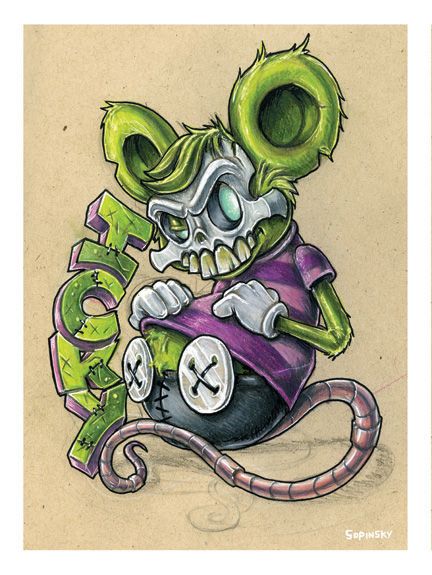
Sick Icky Mouse Artwork Giclee Limited Edition Print on Fine Art Paper by Pop Culture Graffiti Artist Brandon Sopinsky. Sick Icky Mouse by Brandon Sopinsky- A ghastly play n Disney's Mickey Mouse, this creature's skull is bared raw as his fur turns a sickly green. Limited edition Giclée art print artwork by famous artist Brandon Sopinsky.
$134.00