


Doctor/Medical/Medicine
-
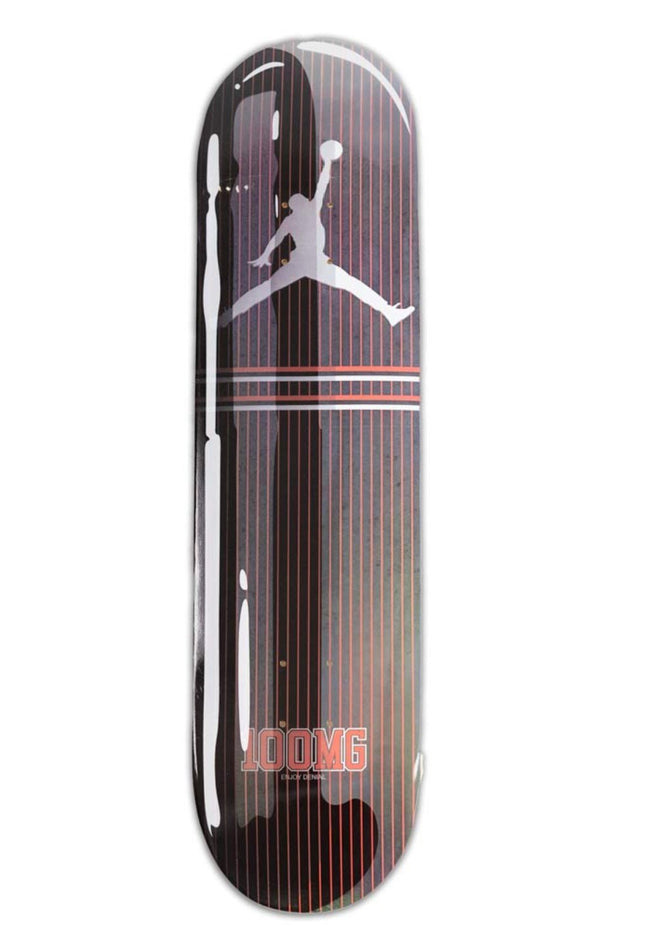
Denial- Daniel Bombardier Alternative Medicine Archival Skateboard Deck by Denial- Daniel Bombardier
Alternative Medicine Fine Art Limited Edition Archival Pigment Print Transfer on Cold Pressed Steep Natural Skateboard Deck by Street Artwork Graffiti Artist Denial. Archival Pigment Print Transfer on Cold Pressed Steep Natural Skate Deck Size: 8.25 x 31.875 Inches Release: July 14, 2021 Denial has evolved as one the most prominent figures of contemporary pop artists, who nonetheless, continue to stay relevant and is interested in generating thought-provoking commentary. He has a long history of exploring the boundaries of appropriation, which he uses as a means of subverting the value of cultural products, imprinted in the collective memory of the Western civilization. His work, in other words, is inviting the viewer to re-imagine our dystopian society as a way of confronting it, with humor and irony as the biggest tools of the artist.
$466.00
-
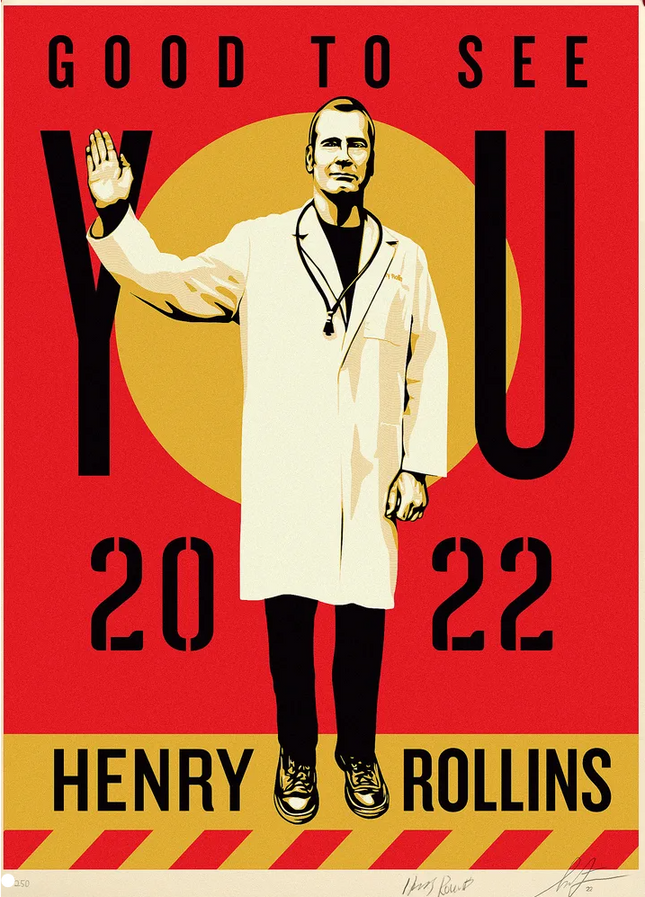
Shepard Fairey- OBEY Good To See You Henry Rollins Silkscreen Print by Shepard Fairey- OBEY
Good To See You Henry Rollins 3-Color Hand-Pulled Limited Edition Silkscreen Print on Cream Speckletone Fine Art Paperby Shepard Fairey Rare Street Art OBEY Pop Artwork Artist. 2022 Signed & Numbered Limited Edition of 250 Artwork Size 18x24 Silkscreen Print by Shepard Fairey- OBEY "My good friend Henry Rollins is on his “Good to See You” spoken word tour that kicked off earlier this year. I’ve collaborated with Henry many times. I’m constantly in awe and impressed by him. He is the hardest-working guy I know and stays up on social and political issues. I’m excited that he is on the road again and honored to design his 2022 tour art. The posters are available to purchase on his tour if you see him on the upcoming dates, signed by Henry and me." -Shepard Fairey
$472.00
-

Luke Chueh Oxycontin The Prisoner Drug Bear Art Toy by Luke Chueh
Oxycontin The Prisoner Drug Bear Art Toy by Luke Chueh Limited Edition Vinyl Collectible Artwork by Street Graffiti Artist. 2017 Limited Edition Artwork of 300 with Cotton, Bag, and Tube. Based on Luke Chueh's original painting, The Prisoner ponders captivity in its many forms—physical, mental, or pharmaceutical. Post-traumatic stress disorder is a mental health problem that can develop after experiencing or witnessing a life-threatening event like combat, natural disaster, car accident, or sexual assault. And the dependency on prescription medications such as Percocet has led to widespread addiction problems. Oxycontin The Prisoner Drug Bear by Luke Chueh: Sculpting the Weight of Dependency in Street Pop Art & Graffiti Artwork Oxycontin The Prisoner is a limited edition vinyl art toy released in 2017 by Los Angeles-based artist Luke Chueh. Produced in a run of 300 pieces, each figure comes enclosed in a pill bottle-style tube with custom label design, cotton padding, and a bag. This piece belongs to Chueh’s emotionally raw and conceptually provocative The Prisoner series, which explores the psychological and chemical captivity imposed by trauma and prescription drug dependency. The figure, seated with arms wrapped around bent knees and head tilted in surrender, is rendered in pale pink vinyl, an intentionally vulnerable hue evoking fragility and exposure. This edition bears the pharmaceutical branding of Oxycontin, one of the most widely debated painkillers associated with both relief and addiction. Within the visual canon of Street Pop Art & Graffiti Artwork, this piece functions as a sculptural protest against the medicalization of mental health and the commodification of comfort. Pharmaceutical Captivity Encapsulated in Minimalist Design The use of the pill bottle as both packaging and contextual anchor is integral to the conceptual weight of Oxycontin The Prisoner. Rather than being decorative, it serves as a metaphorical cell. The orange plastic container, a familiar object in American medicine cabinets, becomes a prison of muted pain. The bear figure inside is soft in tone but rigid in posture, exuding silent anguish and immobility. Its simplified features are part of Luke Chueh’s signature visual style—clean, anthropomorphic, and emotionally loaded. The minimalist approach allows viewers to project their own experiences and emotional responses onto the character, whether that be isolation, anxiety, numbness, or resignation. In the tradition of Street Pop Art & Graffiti Artwork, this piece reclaims consumer iconography and transforms it into a statement about personal and collective mental health struggles. Luke Chueh and the Voice of Emotional Vulnerability in Contemporary Art Luke Chueh, born and based in the United States, has established himself as a leading figure in vinyl art culture and emotional visual narrative. His work consistently uses characters—especially his iconic bear—as symbols of psychological realism masked in pop iconography. Oxycontin The Prisoner deepens this approach by explicitly referencing the epidemic of opioid addiction and the reliance on pharmacological solutions for mental health issues such as post-traumatic stress disorder, depression, and chronic anxiety. Chueh’s work does not seek to offer resolution; instead, it offers recognition. The bear is not posed in resistance or hope but in stillness, reflecting the physical and emotional sedation often experienced by those relying on medications like Oxycontin. His use of sculpture within the Street Pop Art & Graffiti Artwork world broadens the category’s potential to include introspective, honest, and therapeutically charged storytelling. A Collectible of Pain and Awareness in Street Pop Art & Graffiti Artwork Oxycontin The Prisoner is not just a toy or a figure for display—it is a contemporary artifact that documents an era of widespread psychological struggle and the societal response to it. By combining collectible vinyl with real-world pharmaceutical references, Luke Chueh exposes the fragility that often lies beneath manufactured relief. The packaging, labeled with details that mimic prescription information, reinforces the institutional control surrounding mental health treatment. With only 300 produced, this edition is highly sought after, not only for its rarity but for its role in confronting important themes through tangible, expressive art. As part of The Prisoner series, it anchors Luke Chueh’s position in the Street Pop Art & Graffiti Artwork movement as a storyteller of the internal human experience, voiced through form, posture, and silence.
$350.00
-
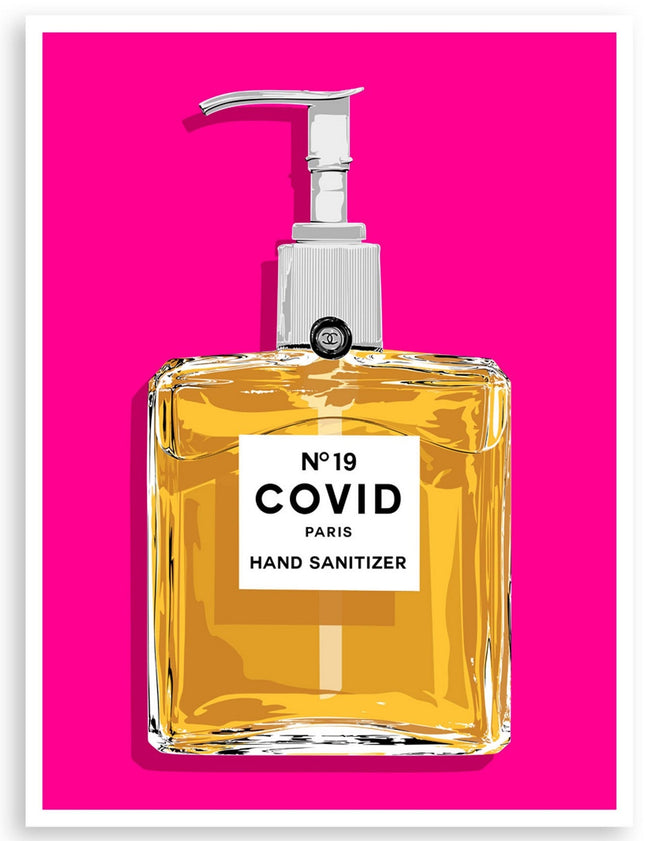
Denial- Daniel Bombardier Covid No 19 Rose Archival Print by Denial- Daniel Bombardier
Covid No 19- Rose Limited Edition Archival Pigment Print on 290gsm MOAB Fine Art Paper by Graffiti Pop Art and Street Artist Denial. 2021 Signed & Numbered Limited Edition of 19 Rose Covid19 Chanel Hand Sanitizer Virus Variant. Numbered, Signed, Stamped on Reverse Archival Pigment Print on MOAB Fine Art Paper 290 GSM Size 18" x 24" Denial’s COVID No. 19: Luxury Branding in the Age of Global Crisis Denial’s COVID No. 19 is a striking archival pigment print released in 2021 as a limited edition of 19, each hand-signed, numbered, and stamped on 290gsm MOAB fine art paper. The work appropriates the form of a Chanel No. 5 perfume bottle, replacing its iconic label with a fictional product name: COVID No. 19 Hand Sanitizer. Rendered with hyper-clean digital precision, the image reconfigures the aesthetics of high fashion to comment on the absurdities of pandemic-era consumerism. The hand sanitizer bottle is presented with all the visual authority of a luxury good, transforming an object of necessity into a parody of status and desire. At the core of this piece is a brutal cultural observation: during a global health emergency, everyday tools of survival—like sanitizer and masks—were elevated to symbols of identity, fashion, and economic access. Denial’s rebranding of Chanel’s perfume into a virus-era commodity confronts this shift head-on. The artwork doesn’t merely lampoon luxury—it reveals how systems of marketing can absorb trauma, repackage it, and sell it back to the public. The Chanel-style labeling is clinical yet elegant, a nod to how visual minimalism often masks corporate manipulation. Commercial Aesthetics as Subversive Weaponry Denial’s artistic strategy centers on the theft and recontextualization of commercial language. With COVID No. 19, the use of vector-sharp line work, realistic light reflections, and exacting product design mimics advertising to the point of deception. This imitation is intentional. The viewer is meant to initially read the image as authentic—something from a fashion magazine or cosmetics campaign—before the irony of the label snaps into focus. The dissonance between form and content invites a critique of the capitalist tendency to aestheticize suffering. This visual methodology ties directly into the ethos of Street Pop Art & Graffiti Artwork. Denial’s roots in unauthorized public messaging and subcultural image disruption remain present, even as the work exists in a fine art format. The absence of spray drips or rough textures does not diminish the rebellion. Instead, it retools the graphic language of commercial persuasion to undermine itself from within. What looks like a product pitch is, in fact, a visual accusation. The pandemic is not the subject—it is the branding of the pandemic that comes under fire. Street Pop Art as Pandemic Documentation COVID No. 19 operates as both satire and historical record. It captures a cultural moment when survival tools became luxury statements, when scarcity was linked to exclusivity, and when branding extended even to medical supplies. Denial’s artwork speaks to the way modern crises are not only experienced but marketed—how the fear of illness was filtered through the same systems that sell beauty, fashion, and lifestyle. The sanitizer bottle becomes a symbol not of protection, but of consumption. By fusing the iconography of fashion with the reality of a global pandemic, Denial forces the viewer to reconsider the boundaries between design and ethics, branding and survival. The visual simplicity of COVID No. 19 hides a layered indictment of how quickly commercial aesthetics can strip events of meaning. In the tradition of Street Pop Art & Graffiti Artwork, this piece turns familiar symbols against themselves, exposing the fragility of culture’s glossy surfaces when confronted with real human urgency.
$313.00
-
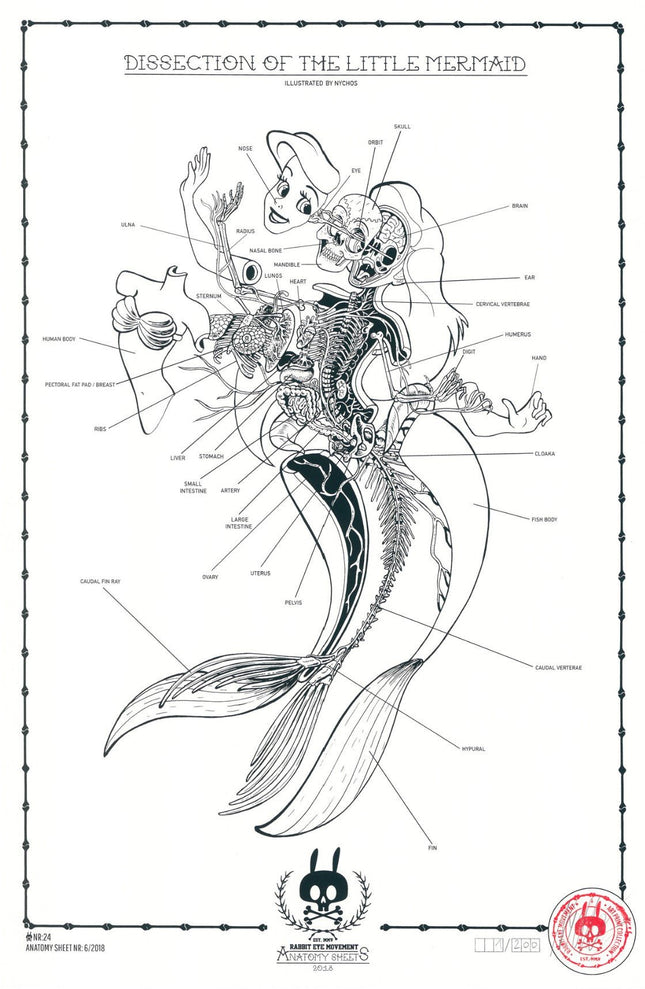
Nychos Dissection of Little Mermaid Anatomy Sheet No 24 Silkscreen Print by Nychos
Dissection of Little Mermaid- Anatomy Sheet No 24 Hand-Pulled 1-Color Limited Edition Silkscreen Print on 300gsm Munken Pure Paper by Medical Pop Artist Nychos. 2018 Signed & Numbered Limited Edition of 200 11x17 Illustrated by NYCHOS 1-color Screen Print on 300 g/m² Munken Pure Paper Size: 11 x 17 Inches / 27,94 x 43,18 cm Limited Edition of 200 Year: 2018 Imprint & stamp of authenticity Numbered and signed by the artist The REM Anatomy Sheets focus on the anatomy of pop culture cartoon characters. In this new collection of black and white limited edition screenprints, Nychos lets the viewer engage with details of the anatomy of toons.
$159.00
-
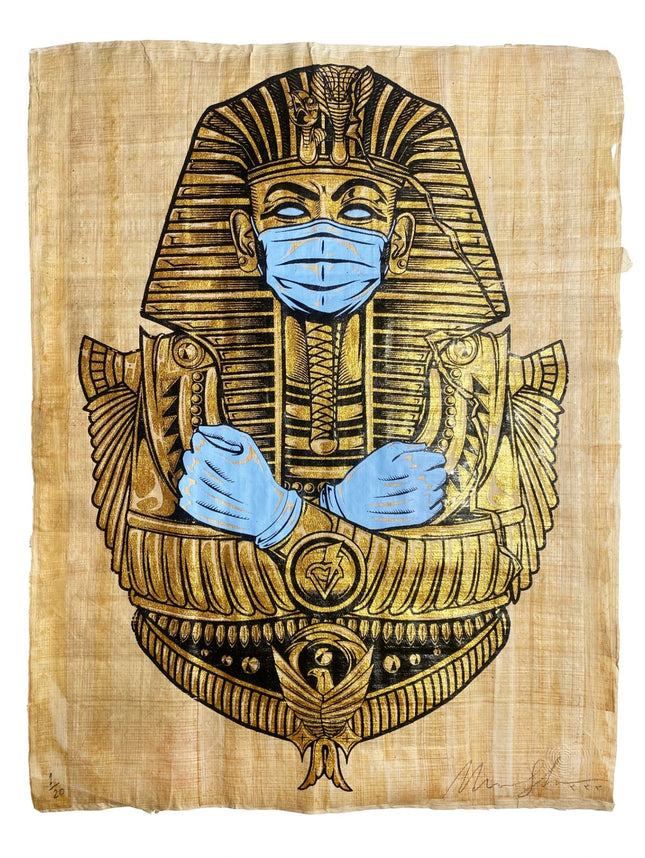
Marwan Shahin The Masked Pharaoh Silkscreen Print by Marwan Shahin
The Masked Pharaoh 3-Color Hand-Pulled Diamond Dust Limited Edition Silkscreen Print on Egyptian Papyrus Paper by Marwan Shahin Rare Street Art Famous Pop Artwork Artist. 2022 Signed & Numbered Limited Edition of 20 Size 14x17.5 & "NFT" "Shahin Studios is delighted to present The Masked Pharaoh Papyrus by Marwan Shahin, The Artwork was first to be created in lockdown during the Covid-19 pandemic, imagining TutAnkhAmoun staying safe and protecting himself against the modern-day plague. this edition of the artwork is interpreted with hand-pulled Silkscreen print on Authentic Egyptian Papyrus, and each print is intricately arranged with a filigree of black Diamond Dust, to produce visually intoxicating kaleidoscope-like effects. contains an NFT crypto-chip by the Fine Art Ledger. Each print is Authenticated and registered on the blockchain by The Fine Art Ledger comes with a digital Certificate of Authenticity containing its cryptographic stamp." -Marwan Shahin
$748.00
-
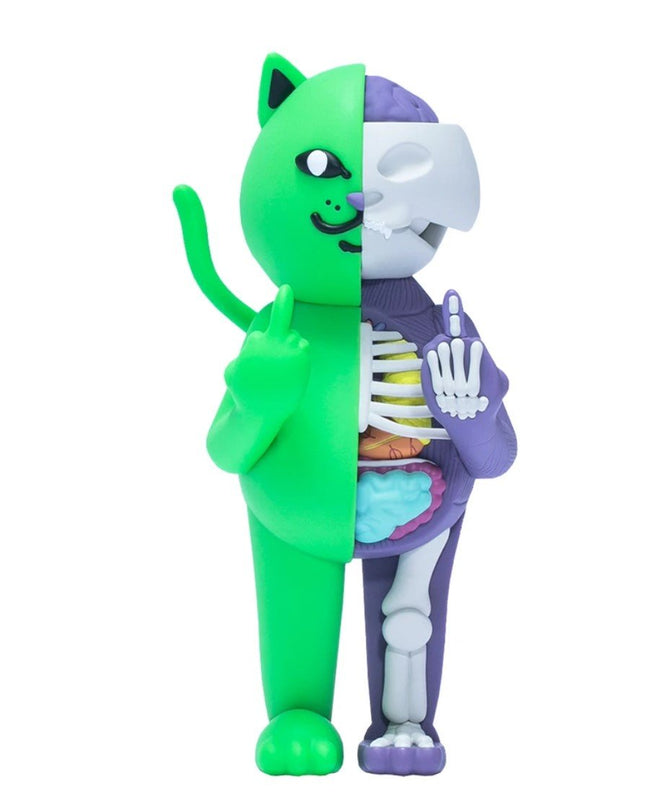
Rip N Dip Radioactive R Nerm Æ-09 Nermal Art Toy Figure by Rip N Dip
Radioactive R Nerm Æ-09 Nermal Limited Anatomy Vinyl Art Toy Collectible Artwork by street graffiti artist Rip N Dip. 14 inch R NERM Æ-09 VINYL FIGURE Glow In The Dark
$256.00 $192.00
-
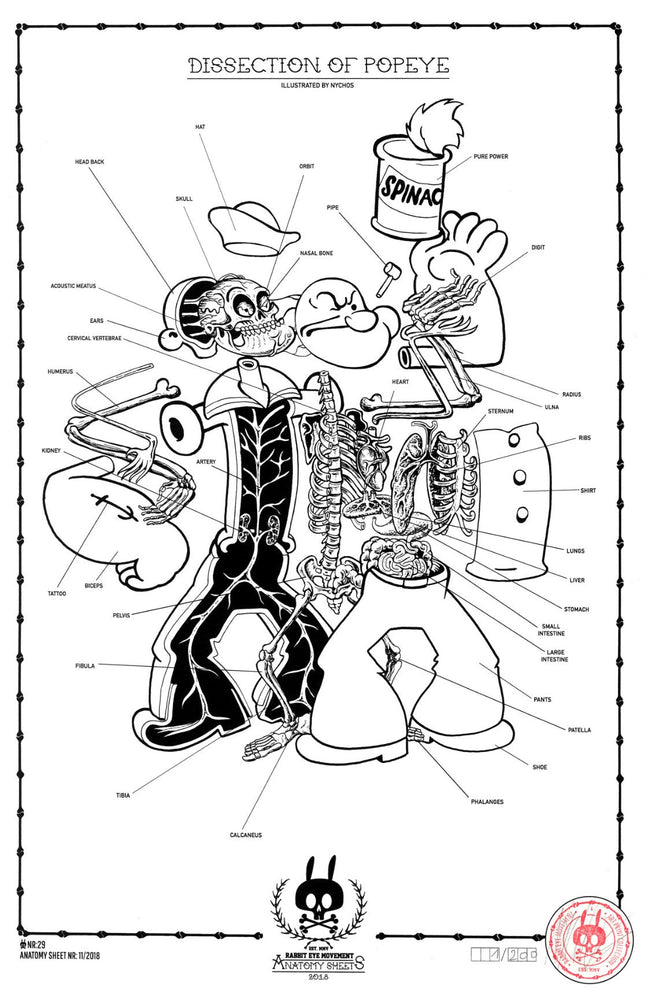
Nychos Dissection of Popeye Anatomy Sheet No 29 Silkscreen Print by Nychos
Dissection of Popeye- Anatomy Sheet No 29 Hand-Pulled 1-Color Limited Edition Silkscreen Print on 300gsm Munken Pure Paper by Medical Pop Artist Nychos. 2018 Signed & Numbered Limited Edition of 200 11x17 Illustrated by NYCHOS 1-color Screen Print on 300 g/m² Munken Pure Paper Size: 11 x 17 Inches / 27,94 x 43,18 cm Limited Edition of 200 Year: 2018 Imprint & stamp of authenticity Numbered and signed by the artist The REM Anatomy Sheets focus on the anatomy of pop culture cartoon characters. In this new collection of black and white limited edition screenprints, Nychos lets the viewer engage with details of the anatomy of toons.
$159.00
-
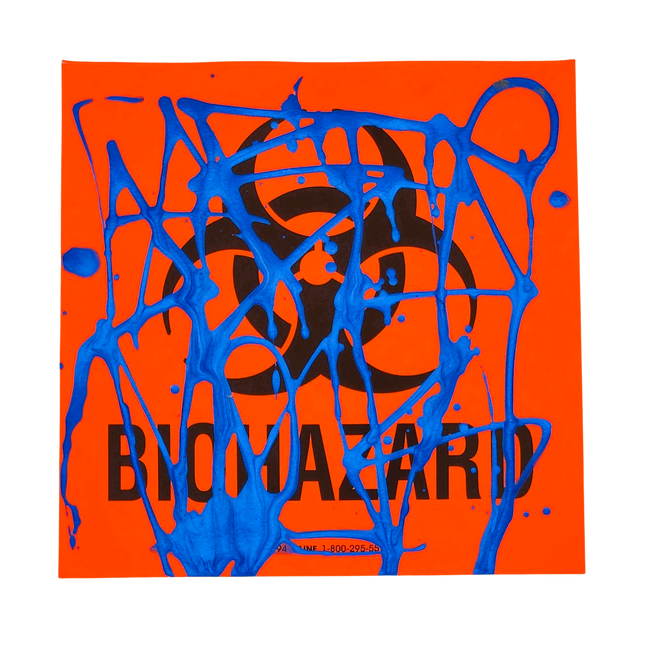
Saber Biohazard Slap-Up Label Sticker Original Tag Art by Saber
This Biohazard Neon Orange Slap-Up Label Sticker Original Tag Art by Saber Original Acrylic Paint Art Drawing on Biohazard Label Sticker by Graffiti Artist Modern Street Artwork. 2020 Signed Original Slap Up Graffiti Art Tag 6x6 Acrylic Paint Tagged on Medical Biohazard Label Sticker. Neon High Visibility Orange Biohazard Symbol Uline label #S-20794. Exploring the Fusion of Street Pop Art and Graffiti Artwork In the dynamic sphere of contemporary visual culture, street pop art and graffiti artwork stand out as potent forms of expression that encapsulate urban life's rhythm and raw sentiments. Among the luminaries of this genre is the renowned graffiti artist Saber, known for his striking contributions to the street art panorama. The piece under scrutiny is a vibrant example of his ingenuity—a 6x6 acrylic or marker piece tagged on a medical biohazard label sticker featuring a neon high visibility orange biohazard symbol from Uline label #S-20794. Distinctive Aesthetic of Saber's Tag Art Saber's original permanent marker art drawing on a mailing glossy arrow sticker presents a striking visual paradox. The neon orange of the biohazard symbol evokes a sense of caution, typically used to warn of dangerous substances. Contrasted with the blue drips of paint that appear haphazardly splashed across the surface, there is intentional defiance and palpable tension between structure and chaos. This work is a signed 2020 original slap-up graffiti art tag that showcases not just the artist's signature style but also his ability to transform ordinary objects into powerful statements. The choice of a biohazard label as a canvas is a commentary on the infectious nature of art and ideas. Saber effectively takes a symbol that denotes hazard and contamination and recontextualizes it within the aesthetic of street pop art. By doing so, he challenges the viewer to reconsider the connotations of biohazards, not just in the physical sense but in the metaphorical contagion of art in public spaces. Impact and Significance in Modern Street Art Saber is an American artist whose real name has been as influential in the graffiti community as the images he creates on walls and in galleries. His use of a mailing label as a medium is a nod to the guerrilla tactics of early street art culture, where quick, impactful statements were essential, and materials were often repurposed or found objects. This sticker art, often called a 'slap-up,' is a form of street art that is quickly applied, or 'slapped up,' onto a surface in a public space. It allows for transient yet assertive communication, echoing urban life's fast-paced and often impermanent nature. The neon orange and blue artwork transcends its simple components, becoming a canvas for a larger discourse on visibility, legality, and the permanence of art. As a form of street pop art, it retains the accessibility and mass appeal of pop culture while embedding itself in the more subversive and counter-cultural roots of graffiti. This duality is where its power lies; it is both a bold declaration and a subliminal whisper, a fixture on the streets that can be as quickly removed as it is noticed. In the context of graffiti artwork, Saber's biohazard label sticker becomes an artifact of the streets, a testament to the artist's ability to command attention and communicate through symbols and color. With its saturated hues and deliberate drips, the piece resonates with the energy of the streets and the people's voices. It is a piece that marks a physical space and stamps a moment in time, encapsulating the essence of street pop art in its ability to capture the pulse of contemporary urban life. The interplay of color, symbol, and medium in this piece illustrates the innovative potential of street pop art. Saber's work disrupts the monotony of urban environments, offering passersby a moment of aesthetic arrest amidst the concrete canvas of the city. In modern street artwork, such interventions are not just decorative but are vital narratives that articulate the identity and the undercurrents of a city's cultural dialogue. Through works like this, Saber and his contemporaries continue to influence the trajectory of street pop art, ensuring its evolution and relevance. They remind us that the streets remain a powerful platform for artistic expression, where the voices of the marginalized and the spirit of rebellion can find their visual lexicon. Saber's neon orange slap-up label sticker is not just a mark made with acrylic or marker; it is a statement, a challenge, and a vibrant echo of the energy that drives the city's heart.
$49.00
-

MEUBON Panacea Silkscreen Print by MEUBON
Panacea Silkscreen Print by MEUBON Hand-Pulled on Superfine Eggshell White Fine Art Paper Limited Edition Screenprint Artwork. 2022 Signed & Numbered Limited Edition of 300 Artwork Size 20.25x15.75 Silkscreen Print. ยาตำราหลวง สถานที่จำหน่าย มาตำราหง เภสัชกรรม- Royal Medicine, Place of Sale, Ma Tamra Hong Pharmacy Panacea by MUEBON – Satirical Remedy in Street Pop Art & Graffiti Artwork Panacea is a 2022 limited edition silkscreen print by Thai artist MUEBON, hand-pulled on Superfine Eggshell White fine art paper and sized at 20.25 x 15.75 inches. Signed and numbered in an edition of 300, the print fuses traditional Thai aesthetics with a satirical street art vocabulary. The composition mimics the layout and tone of a vintage Thai pharmacy sign, including typographic references to royal medicine, location details, and regulatory insignia. Into this framework, MUEBON inserts his signature character—a mischievous black bird with a human-like stance—tending to rows of vibrant cannabis plants. The juxtaposition of state authority, medical legitimacy, and pop rebellion is executed with surgical visual clarity and conceptual sharpness. Every line, crack, and graphic element contributes to a broader message about legality, hypocrisy, and shifting cultural norms. Medicinal Symbolism and Sociopolitical Irony MUEBON’s use of the title Panacea speaks to the idea of a cure-all, a universal solution to societal ailments—yet the print suggests that what is marketed as remedy is often framed through layers of control and contradiction. The character, rendered in precise color and personality, waters marijuana plants with the casual indifference of someone who has normalized the taboo. The background replicates worn wall textures and weathered signage, suggesting an official public notice, now subverted. Thai script boldly states phrases such as ยาตำราหลวง and สถานที่จำหน่าย—Royal Medicine and Place of Sale—while the central figure undermines the bureaucratic tone with punk defiance. This visual collision is classic MUEBON: combining cartoonish humor with institutional critique in the style of Street Pop Art & Graffiti Artwork that functions as both documentation and protest. Silkscreen Technique and Aesthetic Precision The print is produced through traditional silkscreen methods, allowing each color to hold intense saturation and edge integrity. Printed on Superfine Eggshell White paper, the artwork’s subtle surface texture enhances the vintage signage effect, reinforcing the piece’s illusion of age and wear. The controlled layering of imagery—grime, text, plants, stamps, and character—demonstrates MUEBON’s precision in translating complex political narratives into vibrant, accessible artworks. While rich in local cultural codes, the piece is globally readable, making it a standout example within Street Pop Art & Graffiti Artwork of how regional voice can achieve international resonance through strong visual composition and thematic clarity. MUEBON and the Cultural Anatomy of Legitimacy Panacea is not merely a print—it is a conversation between law, commerce, and personal autonomy. MUEBON uses humor and pop-inflected satire to explore Thailand’s evolving relationship with medical cannabis, government oversight, and cultural taboos. His signature bird character becomes a stand-in for the everyday citizen, navigating a system that selectively legalizes what it once criminalized. The work functions as a visual metaphor for the ways power, propaganda, and public health intertwine. In the context of Street Pop Art & Graffiti Artwork, Panacea delivers a multilayered narrative disguised as public signage. It invites laughter, sparks dialogue, and challenges viewers to reconsider what authority looks like when it is repackaged in colorful ink and symbolic contradiction. MUEBON continues to assert himself as a master of visual irony and cultural dissection through the lens of urban resistance.
$500.00
-
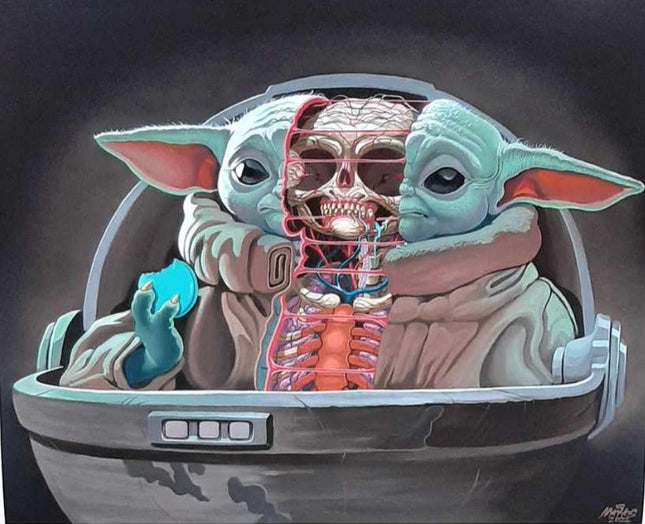
Nychos Dissection of Grogu 24x20 Archival Print by Nychos
Dissection of Grogu- 24x20 Archival Pigment Fine Art Limited Edition Print on Velvet Cotton Fine Art Paper by Artist Nychos, Street Pop Art Graffiti Legend. 2021 Signed & Numbered Fine art print by NYCHOS Size: 24 x 19,7 inch / 61 x 50 cm Limited Edition of 111 Velvet Fine Art cotton fiber paper Hand-signed & numbered Nychos Dissection of Grogu Archival Pigment Print Dissection of Grogu is a 2021 signed and numbered limited edition archival pigment print by Austrian street art legend Nychos. Measuring approximately 24 x 19.7 inches (61 x 50 cm), this fine art edition was produced on velvet cotton fiber paper in a run of 111. Hand-signed and numbered, the print exemplifies Nychos’ internationally recognized “dissection” style within contemporary street and pop surrealist art. Anatomy Meets Pop Culture Iconography In this striking composition, Nychos applies his signature anatomical cross-section technique to the beloved pop culture character Grogu. The figure is split vertically, revealing a detailed internal structure of skull, musculature, organs, and vascular systems beneath the familiar outer form. The contrast between the cute, wide-eyed exterior and the exposed anatomical interior creates a compelling tension—balancing humor, science illustration, and subversive commentary. The precision of the internal rendering reflects Nychos’ fascination with biology and layered visual storytelling. Street Art Craftsmanship on Velvet Cotton Paper Printed as a high-quality archival pigment edition on velvet fine art cotton paper, Dissection of Grogu captures the smooth gradients and intricate detailing central to Nychos’ work. Limited to just 111 hand-signed examples, this 2021 release stands as a collectible piece that bridges graffiti culture, fine art printmaking, and contemporary pop icon reinterpretation. Bold, technically refined, and unmistakably Nychos, the artwork continues his legacy of transforming familiar characters into complex anatomical studies.
$500.00
-
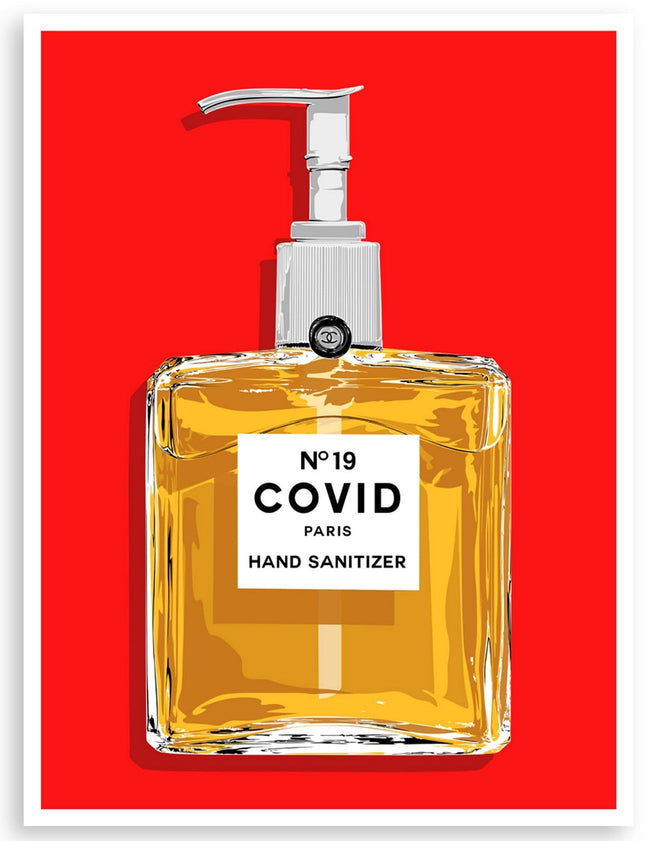
Denial- Daniel Bombardier Covid No 19 Rouge Archival Print by Denial- Daniel Bombardier
Covid No 19- Rouge Limited Edition Archival Pigment Print on 290gsm MOAB Fine Art Paper by Graffiti Pop Art and Street Artist Denial. 2021 Signed & Numbered Limited Edition of 19 Rouge Covid19 Chanel Hand Sanitizer Virus Variant. Numbered, Signed, Stamped on Reverse Archival Pigment Print on MOAB Fine Art Paper 290 GSM Size 18" x 24" Denial’s COVID No. 19: Luxury Branding in the Age of Global Crisis Denial’s COVID No. 19 is a striking archival pigment print released in 2021 as a limited edition of 19, each hand-signed, numbered, and stamped on 290gsm MOAB fine art paper. The work appropriates the form of a Chanel No. 5 perfume bottle, replacing its iconic label with a fictional product name: COVID No. 19 Hand Sanitizer. Rendered with hyper-clean digital precision, the image reconfigures the aesthetics of high fashion to comment on the absurdities of pandemic-era consumerism. The hand sanitizer bottle is presented with all the visual authority of a luxury good, transforming an object of necessity into a parody of status and desire. At the core of this piece is a brutal cultural observation: during a global health emergency, everyday tools of survival—like sanitizer and masks—were elevated to symbols of identity, fashion, and economic access. Denial’s rebranding of Chanel’s perfume into a virus-era commodity confronts this shift head-on. The artwork doesn’t merely lampoon luxury—it reveals how systems of marketing can absorb trauma, repackage it, and sell it back to the public. The Chanel-style labeling is clinical yet elegant, a nod to how visual minimalism often masks corporate manipulation. Commercial Aesthetics as Subversive Weaponry Denial’s artistic strategy centers on the theft and recontextualization of commercial language. With COVID No. 19, the use of vector-sharp line work, realistic light reflections, and exacting product design mimics advertising to the point of deception. This imitation is intentional. The viewer is meant to initially read the image as authentic—something from a fashion magazine or cosmetics campaign—before the irony of the label snaps into focus. The dissonance between form and content invites a critique of the capitalist tendency to aestheticize suffering. This visual methodology ties directly into the ethos of Street Pop Art & Graffiti Artwork. Denial’s roots in unauthorized public messaging and subcultural image disruption remain present, even as the work exists in a fine art format. The absence of spray drips or rough textures does not diminish the rebellion. Instead, it retools the graphic language of commercial persuasion to undermine itself from within. What looks like a product pitch is, in fact, a visual accusation. The pandemic is not the subject—it is the branding of the pandemic that comes under fire. Street Pop Art as Pandemic Documentation COVID No. 19 operates as both satire and historical record. It captures a cultural moment when survival tools became luxury statements, when scarcity was linked to exclusivity, and when branding extended even to medical supplies. Denial’s artwork speaks to the way modern crises are not only experienced but marketed—how the fear of illness was filtered through the same systems that sell beauty, fashion, and lifestyle. The sanitizer bottle becomes a symbol not of protection, but of consumption. By fusing the iconography of fashion with the reality of a global pandemic, Denial forces the viewer to reconsider the boundaries between design and ethics, branding and survival. The visual simplicity of COVID No. 19 hides a layered indictment of how quickly commercial aesthetics can strip events of meaning. In the tradition of Street Pop Art & Graffiti Artwork, this piece turns familiar symbols against themselves, exposing the fragility of culture’s glossy surfaces when confronted with real human urgency.
$313.00